Kirjojen hintavertailu. Mukana 12 390 323 kirjaa ja 12 kauppaa.

Kirjahaku

Etsi kirjoja tekijän nimen, kirjan nimen tai ISBN:n perusteella.

1000 tulosta hakusanalla U. Mukherjee

U.S. Women in Struggle

U.S. Women in Struggle

University of Illinois Press
1995
nidottu
This collection of essays from the pioneering journal Feminist Studies focuses on women engaged in struggles of many kinds over the course of United States history. From its inception, Feminist Studies and its contributors have linked scholarship to activism and made major contributions to the development of women's history. U.S. Women in Struggle gathers a selection of the strongest pieces published in the journal from the mid-1970s to the mid-1990s-a dynamic time in women's history and activism.
U.S. Foreign Policy after the Cold War
This timely reader focuses on the broad foreign policy agenda that is emerging in the 1990s. Traditional as well as new policy issues are considered in light of the recent and far-reaching changes that are occurring abroad. The 23 articles selected from The Washington Quarterly address such important concerns as the United States in a new era, transformed alliances, regional policies, updated policy instruments, a more complex agenda, and the question of U.S. leadership. Brad Roberts is a Research Fellow in International Security Studies at the Center for Strategic and International Studies in Washington, D.C.ContentsStarting at Zero: U.S. Foreign Policy for the 1990s, Robert Hunter * The Crisis of Leninism and the U.S. Response, Robert Scalapino * The Emerging European Security Order, Hans Binnendijk * Germany, Japan, and the False Glare of War, Dan Hamilton and James Clad * The Japan-U.S. Bilateral Relationship: Its Role in the Global Economy, Raymond Vernon * East Central Europe: Democracy in Retreat? Jan Zielonka * Who Killed the Third World? Richard Bissell * Regional Order in the 1990s: Challenge of the Middle East, Richard Haass * Southern Asia After the Cold War, Rodney Jones * In Search of a Latin America Policy, William Perry * After the Cold War: U.S. Interests in SubSaharan Africa, David Newsom * Can Arms Control Survive Peace? James Goodby * U.S. Intelligence in an Age of Uncertainty, Paula Scalingi * Foreign Aid for a New World Order, John Sewell * Public Diplomacy in the Post-Cold War Era, Paul Blackburn * The Security Challenges of Global Environmental Change, Ian Rowland The Future of the International Trading System, Peter Ludlow * The Geopolitical Implications of a Global Capital Shortage, Penelope HartlandThurberg * Global Demographic Trends into the Year 2010, Gregory D. Foster * Democracy, Conflict, and Development in the Third World, Robert L. Rothstein * Democracy and World Order, Brad Roberts * The Quest for Bipartisanship: A New Beginning for a New World Order, Jay Winik * Congress and Foreign Policy, Robert Pastor * Morality and Foreign Policy in America's Third Century, George Weigel * The Comeback of Liberal Internationalism, Richard N. Gardner
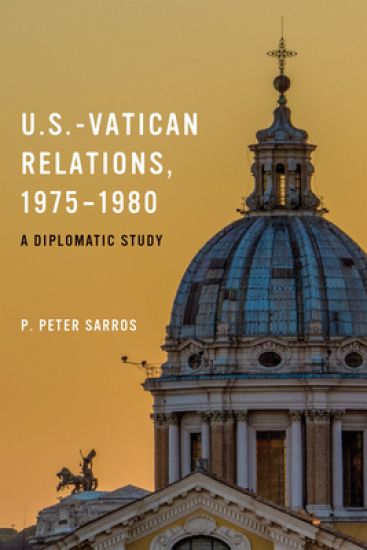
U.S.-Vatican Relations, 1975–1980

U.S.-Vatican Relations, 1975–1980

P. Peter Sarros

University of Notre Dame Press
2020
sidottu
This book explores the bilateral relations between the United States and the Vatican from 1975 to 1980, a turbulent period that had two presidents, three presidential envoys, and three popes. This previously untold story shows how the United States and the Vatican worked quietly together behind the scenes to influence the international response to major issues of the day. Peter Sarros examines the Iran hostage crisis, the tensions of the Cold War, the Helsinki process, and the Beagle Channel dispute, among other issues. These interactions produced a tacit alliance in the foreign policies of the United States and the Vatican even before the establishment of full diplomatic relations. This unique book is based largely on official documents from the archives of the Office of the U.S. Special Envoy of the United States to the Vatican, supplemented by Sarros's contemporaneous diaries, notes, and other unpublished sources. The confidential consultations at the Vatican by three special envoys and by Sarros in his role as chargé and ambassador at the Vatican were critical in obtaining Vatican support on major international issues. The Vatican also derived substantial benefits from the partnership through U.S. support of Vatican initiatives in Lebanon and elsewhere, and by U.S. policies that gave Vatican diplomacy the flexibility to play a larger role in the international sphere. Sarros concludes that American diplomacy was successful at the Holy See during this period because it took advantage of the Vatican's overarching international strategy, which was to increase its influence through support for the global balance of power while blocking the expansion of Soviet power and communism in Europe. U.S.-Vatican Relations, 1975–1980 will be of interest to students and scholars of history and political science, especially in the fields of diplomatic relations and church history.
U.S. Intelligence and the Confrontation in Poland, 1980–1981

U.S. Intelligence and the Confrontation in Poland, 1980–1981

Douglas MacEachin; Jeannine O’Grody

Pennsylvania State University Press
2002
sidottu
Despite the U.S. government’s sophisticated intelligence capabilities, policy makers repeatedly seemed to be caught off guard when major crises took place during the Cold War. Were these surprises the result of inadequate information, or rather the use made of the information available? In seeking an answer to this question, former CIA analyst Douglas MacEachin carefully examines the crisis in Poland during 1980–81 to determine what information the U.S. government had about Soviet preparations for military intervention and the Polish regime’s plans for martial law, and what prevented that information from being effectively employedDrawing on his experience in intelligence reporting at the time, as well as on recently declassified U.S. documents and materials from Soviet, Polish, and other Eastern European archives, MacEachin contrasts what was known then with what is known now, and seeks to explain why, despite the evidence available to them, U.S. policy makers did not take the threat of a crackdown seriously enough to prevent it.It was the mind-set of those who processed the information, not the lack or accuracy of information, that was the fundamental problem, MacEachin argues. By highlighting this cognitive obstacle, his analysis points the way toward developing practices to overcome it in the future.
U.S. Intelligence and the Confrontation in Poland, 1980–1981

U.S. Intelligence and the Confrontation in Poland, 1980–1981

Douglas MacEachin; Jeannine O’Grody

Pennsylvania State University Press
2002
pokkari
Despite the U.S. government’s sophisticated intelligence capabilities, policy makers repeatedly seemed to be caught off guard when major crises took place during the Cold War. Were these surprises the result of inadequate information, or rather the use made of the information available? In seeking an answer to this question, former CIA analyst Douglas MacEachin carefully examines the crisis in Poland during 1980–81 to determine what information the U.S. government had about Soviet preparations for military intervention and the Polish regime’s plans for martial law, and what prevented that information from being effectively employedDrawing on his experience in intelligence reporting at the time, as well as on recently declassified U.S. documents and materials from Soviet, Polish, and other Eastern European archives, MacEachin contrasts what was known then with what is known now, and seeks to explain why, despite the evidence available to them, U.S. policy makers did not take the threat of a crackdown seriously enough to prevent it.It was the mind-set of those who processed the information, not the lack or accuracy of information, that was the fundamental problem, MacEachin argues. By highlighting this cognitive obstacle, his analysis points the way toward developing practices to overcome it in the future.
U.S. National Economic Policy, 1917-1985

U.S. National Economic Policy, 1917-1985

Anthony S. Campagna

Praeger Publishers Inc
1987
sidottu
Rewarding is Campagna's broad-sweep analysis of US macroeconomic policy under the several political regimes since WW I, evaluating whether these policies were justified, successful, and rational. Impressive historical scholarship brings alive the views and personalities of the times and provides immense detail concerning economic settings and problems of each period. ChoiceThis book examines the various economic problems of the past 70 years and critically evaluates what has been done to solve them. Claiming that previous macroeconomic policies have not been successful largely because of political problems, the book presents a cogent argument for the need for new institutions to conduct rational policies in the future.
U.S. National Economic Policy, 1917-1985

U.S. National Economic Policy, 1917-1985

Anthony S. Campagna

Praeger Publishers Inc
1988
nidottu
Rewarding is Campagna's broad-sweep analysis of US macroeconomic policy under the several political regimes since WW I, evaluating whether these policies were `justified,' `successful,' and `rational.' Impressive historical scholarship brings alive the views and personalities of the times and provides immense detail concerning economic settings and problems of each period. ChoiceThis book examines the various economic problems of the past 70 years and critically evaluates what has been done to solve them. Claiming that previous macroeconomic policies have not been successful largely because of political problems, the book presents a cogent argument for the need for new institutions to conduct rational policies in the future.
U.S.-Mexican Economic Relations

U.S.-Mexican Economic Relations

Khosrow Fatemi

Praeger Publishers Inc
1988
sidottu
Fatemi's edited volume is a refreshing contribution to the already voluminous literature on US-Mexican economic relation. . . . This list is broad enough to provide an introduction to US-Mexican economic relations for the novice reader, while US-Mexico specialists will benefit from the analysis of current data and new perspectives on familiar issues. In short, a valuable addition to both academic and public library collections. ChoiceThis volume examines the major issues facing the United States and Mexico as the two countries atempt to forge mutually acceptable economic relations. As Fatemi notes in his introduction, a great deal of interdependency--an `invisible integration'--does exist between the United States and Mexico. He adds that these relations are destined to expand in coming years, thus necessitating the satisfaction of economic, social, and political needs of each partner. These essays initiate this process via a balanced articulation of the diverse issues involved.
U.S. International Competitiveness

U.S. International Competitiveness

John C. Hilke; Philip B. Nelson

Praeger Publishers Inc
1988
sidottu
U.S. International Competitiveness challenges the common assertions concerning causes of America's growing trade deficit. The authors' unique empirical analysis of industry specific trade flows using numerous explanatory variables provides a vigorous test of the view that deficit growth is primarily due to unfair foreign trade practices, overzealous antitrust laws, slack U.S. management, and other microeconomic factors. Their conclusions on the actual culprits offer a sobering reassessment of current and proposed trade policies. American and foreign public policy makers, as well as trade and industrial organization scholars, will find this volume to be enlightening and provocative reading.The first two chapters establish the parameters and theoretical background for the study. The authors then review the microeconomic explanations for sudden trade deficit growth, identify industry characteristics included in the study, and specify the model to be tested. Turning to an examination of the empirical results, they initially look at whether changes in industry characteristics over time could have increased the deficit. They then highlight microeconomic explanations for changes in the U.S. trade balance. Concluding chapters present detailed case studies of particular industries as well as the policy implications to be drawn from the study.
U.S.-Soviet Cooperation

U.S.-Soviet Cooperation

Nish Jamgotch

Praeger Publishers Inc
1989
sidottu
In this thought-provoking new study of the cooperation between the people of the United States and the Soviet Union, the contributors analyze joint ventures in academic and cultural exchange; trade, conservation and environmental controls; space; medicine and public health; security and communications; and cooperative diplomacy in Antarctica. U.S.-Soviet Cooperation: A New Future demonstrates that joint enterprises have heightened the dependability of both sides to maintain the peaceful status quo and makes a firm case for the strengthening and expanding of such ventures. Students of political science, the informed public, as well as government officials will find this book a source of stimulating ideas that challenge the generally accepted views concerning U.S.-Soviet relations.By emphasizing the positive benefits of joint ventures between the two countries--agreements in crisis communication, trade, science, agriculture, environmental protection, space, and medicine--the contributors are reversing the tendency of students of International Relations to focus on disagreement, controversy, and war. This book points out significant public policy implications in this spirit of cooperation, including promising material for a new future in superpower relations.
U.S. Immigration Policy Reform in the 1980s

U.S. Immigration Policy Reform in the 1980s

Francsco Rivera Batiz; Ira Gang; Selig Sechzer

Praeger Publishers Inc
1991
sidottu
Using the most current data available, the essays collected here offer a timely assessment of the impact of the Immigration Reform and Control Act of 1986 (IRCA), which constitutes the most significant U.S. immigration policy initiative of recent years. The contributors--all well-known researchers active in analyzing immigration issues--examine such key questions as: How has the implementation of IRCA proceeded? What have been its effects so far? Have the goals of the immigration policy reform been fulfilled? What potential impact on the U.S. economy can the policy reforms be expected to have over the next few years? Taken together, their essays provide a comprehensive picture of the state of the art in the area of immigration policy research and a first look at the actual effects of IRCA on undocumented immigration to America. Each chapter analyzes a particular aspect or aspects of IRCA. Francisco Rivera-Batiz begins with an introduction and overview of U.S. immigration policy reform in the 1980s. Michael Hoefer then describes in detail the provisions of IRCA and shows how the law has been implemented to date. In the next essay, Barry Chiswick analyzes the effectiveness of the employer sanctions mandated by the bill. Subsequent chapters examine such issues as the critical role played by undocumented workers in the agricultural sector of the U.S. southwest, substitution and complementarity between immigrant and native labor, and the economic implications of immigration law reform. The contributors are united in the view that IRCA has worked well in its legalization aspects, reaching a large portion of the undocumented population. They raise questions about the employer sanctions provisions, however, and express doubts as to whether IRCA can be expected to have any major constraining effect on illegal immigration over the next few years.
U.S. Intervention in Lebanon, 1958 and 1982

U.S. Intervention in Lebanon, 1958 and 1982

Agnes Gerges Korbani

Praeger Publishers Inc
1991
sidottu
This work examines and contrasts U.S. decisions concerning military intervention in Lebanon in 1958 and 1982, and how the decisions made by Presidents Eisenhower and Reagan resulted in certain outcomes and avoided others. To bring each administration's decisions into perspective, the events that shaped foreign policy are examined, while the quality of the decisions are assessed in terms of each leader's managerial style and cognition. Among the topics addressed with regard to the formulation and conduct of U.S. policy are the premises and rationale behind each president's policy decisions, the events that shaped specific responses, and the resulting lessons that apply to crisis situations.Following a brief introduction, Agnes Korbani offers a concise review of the systematic and motivational opportunities for military intervention in Lebanon. A pair of chapters cover the 1958 intervention, beginning with a survey of the 1955-57 period and the circumstances that shaped U.S. responses, followed by a discussion of how the decision to intervene was formulated and why the action took the form it did. The 1982 interventions are the focus of the next chapters, which review President Reagan's intervention objective, the regional issues that influenced the decision to intervene, and the rationale behind the move. Two concluding chapters suggest ways to apply theory and decision models to the crises, and detail major errors that could have been avoided and lessons that should be learned. This is the first book to deal with decision making in an Arab country from a comparative perspective, and should be an essential reference source for scholars of U.S. foreign policy, Middle Eastern studies, and presidential studies.
U.S. Intelligence: Evolution and Anatomy

U.S. Intelligence: Evolution and Anatomy

Mark M. Lowenthal

Praeger Publishers Inc
1992
nidottu
No major twentieth-century power has so short a history of national intelligence agencies or activities as does the United States, and few have been as public or as tumultuous. A major debate has now opened over the future structure, size, and role of U.S. intelligence in the aftermath of the cold war. This unique and fully updated book is a history of the U.S. intelligence community--as well as a detailed description of the organization and function of the major components of the community as they existed at the beginning of 1992. A welcome and timely update of one of the most concise and objective guides to the history and structure of U.S. intelligence. Representative Dave McCurdy, Chairman, Permanent Select Committee on Intelligence, U.S. House of Representatives The history of the intelligence community can be divided into three distinct periods. From its creation in 1947 until the revelations and investigations of 1974-1975, the intelligence community operated under fairly broad grants of authority based on trust. After the Nixon administration, a previously dormant Congress was galvanized to write new oversight provisions and also took on a greater role as a shaper and consumer of intelligence. With the collapse of the Soviet Union and the end of the cold war in 1991, the intelligence community found its role and even its necessity questioned due to the sudden absence of its major target. Lowenthal emphasizes that a competent and challenged intelligence capability is an essential part of the U.S. national security structure, despite the status of external events or threats. The major requirement of this structure, he says, is providing timely, objective, and pointed analysis to policymakers across a wide range of issues.
U.S.-Russian Naval Cooperation

U.S.-Russian Naval Cooperation

Boris Makeev; Charles Meconis

Praeger Publishers Inc
1995
sidottu
This book is an effort by two naval experts, one a retired Russian Naval officer, the other an American naval arms control analyst, to look at the future relationship of the world's two greatest navies following the end of the Cold War and the demise of the Soviet Union. For the first time in English, readers are provided with a detailed examination of the sweeping changes in the strategy, doctrine, operations and size of both the U.S. and Russian navies in the last few years. The often frightening naval confrontations of the Cold War era have declined dramatically (but not entirely). The first tentative steps are outlined. The book offers a series of specific proposals to expand the current level of cooperation between the U.S. and Russian navies and even envisions a strategic partnership in the long term.
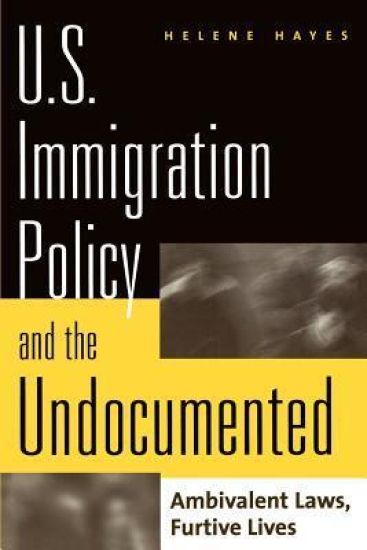
U.S. Immigration Policy and the Undocumented

U.S. Immigration Policy and the Undocumented

Helene Hayes

Praeger Publishers Inc
2001
sidottu
Hayes analyzes the situation of undocumented immigrants in the U.S. and what happens to them in the aftermath of implementation of two key provisions of the 1986 Immigration Reform and Control Act (IRCA) legalization and employer sanctions. Referred to by legislators as a generous and compassionate bill that would legalize much of the undocumented population in our midst, it resulted instead in placing a highly vulnerable silent subclass in deeper jeopardy. Hayes traces the history of undocumented immigration, Congressional debate and implementation of IRCA and provides direct access to the faces of the undocumented through original empirical research on the social and economic impact of IRCA on specific groups of undocumented Haitian, Irish, and Salvadoran immigrants. The general theme is America's ambivalence towards its historic lifeline, new immigrants whether legal or undocumented, and how the two central provisions of IRCA uniquely embodied within the same piece of legislation contradictory and ambivalent attitudes toward immigrants which became the seeds of its implementation difficulties. Hayes looks at the issue of undocumented immigration from a legislative, policy, human rights, and implementation perspective, but she also points beyond national strategies to push factors emanating from the home countries of the undocumented and makes the case that undocumented immigration is a global social problem that needs global solutions. The book is of particular interest to policy makers, scholars, and other researchers and students involved with social policy and welfare, immigration law, and ethnic studies.
U.S. Immigration Policy and the Undocumented

U.S. Immigration Policy and the Undocumented

Helene Hayes

Praeger Publishers Inc
2001
nidottu
Hayes analyzes the situation of undocumented immigrants in the U.S. and what happens to them in the aftermath of implementation of two key provisions of the 1986 Immigration Reform and Control Act (IRCA) legalization and employer sanctions. Referred to by legislators as a generous and compassionate bill that would legalize much of the undocumented population in our midst, it resulted instead in placing a highly vulnerable silent subclass in deeper jeopardy. Hayes traces the history of undocumented immigration, Congressional debate and implementation of IRCA and provides direct access to the faces of the undocumented through original empirical research on the social and economic impact of IRCA on specific groups of undocumented Haitian, Irish, and Salvadoran immigrants.The general theme is America's ambivalence towards its historic lifeline, new immigrants whether legal or undocumented, and how the two central provisions of IRCA uniquely embodied within the same piece of legislation contradictory and ambivalent attitudes toward immigrants which became the seeds of its implementation difficulties. Hayes looks at the issue of undocumented immigration from a legislative, policy, human rights, and implementation perspective, but she also points beyond national strategies to push factors emanating from the home countries of the undocumented and makes the case that undocumented immigration is a global social problem that needs global solutions. The book is of particular interest to policy makers, scholars, and other researchers and students involved with social policy and welfare, immigration law, and ethnic studies.