Russian aggression in 2014 caught U.S. policy and strategy off guard, forcing reactive measures and reevaluation of the U.S. approach toward Russia. Moscow employed nonlinear methodologies and operated just beneath traditional thresholds of conflict to take full advantage of U.S. and NATO policy and process limitations. In light of this strategic problem, the U.S. Army War College (USAWC), conducted a wargame that revealed four key considerations for future policy and strategy.
Through the prism of operations in Afghanistan, this monograph examines how the U.S. Government's Strategic Communication (SC) and, in particular, the Department of Defense's (DoD) Information Operations (IO) and Military Information Support to Operations (MISO) programs, have contributed to U.S. strategic and foreign policy objectives. It will assess whether current practice is fit for purpose in possible future operations and will argue that the U.S. Government has for many years been encouraged by large contractors to approach communications objectives through techniques heavily influenced by advertising and marketing. These techniques attempt to change hostile attitudes to the United States and its foreign policy in the belief that this will subsequently reduce hostile behavior. The author will argue that while an attitudinal approach may work in convincing U.S. citizens to buy consumer products, it does not easily translate to the conflict- and crisis-riven societies to which it has been applied. In these cases, the United States would have been far better advised to work directly to mitigate undesired behaviors, and forego attempts to change the underlying attitudes.The author argues that the United States must now actively operationalize the significant body of social and behavioral science research which has become available, in order to mitigate specific undesired behaviors on the ground: either in advance, as a tool of strategic deterrence in Phase 0 operations or in Phase 1, 2, 3, and 4 operations as a component coupled to conventional military and diplomatic responses. The monograph closes with a brief examination of Chinese and Russian developments in this highly specialized area.
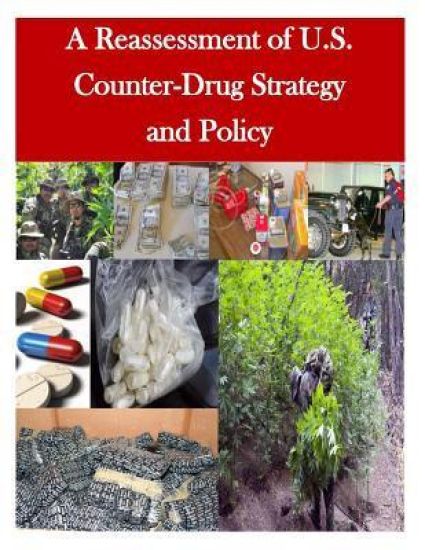
In the four decades since President Nixon first declared war on drugs the U.S.counterdrug strategy has remained virtually unchanged - favoring supply-reduction, law enforcement and criminal sanctions over demand-reduction, treatment and education. While the annual counterdrug budget has ballooned from $100 million to $25 billion, drug availability of most illicit drugs remains at an all-time high. The human cost is staggering - nearly 40,000 drug-related deaths in the U.S. annually. The societal impact, in purely economic terms, is now estimated to be approximately $200 billion per year. And the global illicit drug industry now accounts for 1 percent of all commerce on the planet - approximately $320 billion annually. Legalization is almost certainly not theanswer; however, an objective analysis of available data confirms that: 1) the U.S. has pursued essentially the same flawed supply-reduction strategy for forty years; and 2) simply increasing the amount of money invested each year in this strategy will not make it successful. Faced with impending budget cuts and a future of budget austerity, policymakers must replace the longstanding U.S. counterdrug strategy with a pragmatic, science-based, demand-reduction strategy that offers some prospect of reducing the economic and societal impacts of illicit drugs on American society
U.S. foreign policy toward Iran focuses on a dual-track approach, engaging in diplomacy and leveraging economic sanctions. Despite more than 30 years of pursuing this approach, the U.S. has failed to lessen Iran's threat to regional and international stability. Iran continues to pursue and come ever-closer to establishing a nuclear capability. This historical approach has only proven to be a mild distraction to Iran's goal. The U.S. should pursue an aggressive third approach - establishing red lines backed a credible and sustained threat of military action. Instruments of statecraft or "power" refer to the diplomatic, military, economic, and informational means used to achieve national military objectives - yet, efforts to prevent Iran from acquiring nuclear capabilities have not benefitted from the use of all of these instruments. Thus, U.S. policy undervalues the military instrument in changing Tehran's pursuit of nuclear weapons, support to terrorism, and threats against its neighbors.Although U.S. administration officials continue to state "all options" are on the table, Iran seemingly continues to hedge its bet that the military instrument will not be used against them in a lethal capacity. Prudently implemented, the military instrument provides a level of synergy needed to strengthen diplomatic and economic pressure against Iran.
The War on Drugs has been waged for decades with little net effect on the flow of illicit drugs into the United States. High profit potential, poverty, and corruption within source countries coupled with steady US demand and porous borders have created what seems to have become a lasting condition. To-date, the immutable law of supply and demand has provena more potent factor in governing the flow of illicit drugs than all the instruments of US national power combined. Current US strategy focuses a majority of effort on existential causes and on lower-level actors, expending resources without significantly affecting the drug trade itself. A shift in focus to profit, as the financial center of gravity, and to internal demand may have much greater impact on curtailing the drug trade and better serve long-term US national security interests.What is the nature of this war? What drives national policy? How do second and third order effects impact US interests and the way the United States is perceived? Is there a better alternative? This book explores these issues in view of the current threat and in consideration of a future environment in which resources may be further constrained.
The region around the Paracel Islands and the South China Sea is important to the economies of the surrounding states in terms of the fish resources and potential for energy reserves, which result in diplo¬matic and physical clashes. The large flow of maritime commerce around the Paracel Islands is also crucial to the economic well-being of the region and the world, and occupation of the islands dictates control of the surrounding sea's maritime traffic, security, and economic exploitation. Although China currently occupies all of the Paracels, they are also vigorously claimed by Vietnam.The use of customary law and the United Nations Convention on the Law of the Sea (UNCLOS) in estab¬lishing claims to the Paracels and surrounding waters helps explain the perspectives of the disputants. Their legal positions are especially important for Ameri¬can policymakers as they inform possible solutions and suggest how to contribute to peace and prosper¬ity in the region. Three key legal questions must be answered to help sort the disputes: sovereignty over the islets, the nature of a claimed land feature, and the delimitation of maritime jurisdiction. Sovereignty is claimed through customary law, with China and Viet¬nam using historic doctrine to claim the entire South China Sea, while both have also used the doctrine of occupation, which now works to the advantage of China.Once sovereignty and feature type are deter¬mined, zones of authority may be established by the occupying state depending on the distance from its established shore baseline. Internal, archipelagic, and historic waters are maritime variations of near full sovereign control, which could be disruptive to economic and navigation activities if awarded to Viet¬nam or China, who make such claims. Islands above the high tide mark establish territorial waters and a contiguous zone, which would carve out 24 nautical mile (nm) zones around the Paracels but should allow innocent passage. The length of the 200-nm exclusive economic zones (EEZ) allows much potential overlap among land masses and islands in the semi-enclosed South China Sea. Like territorial waters, Vietnam and China restrict military activities within the EEZ. Although such arguments by claimants for more re¬strictions in these zones are tenuous, they could be useful justification to cover military actions by states like China, which is the most active in enforcing a restrictive EEZ.Freedom of navigation in the South China Sea is the most immediate U.S. concern to ensure naval ves-sels retain all rights of access. Current policy by China and Vietnam restricts foreign naval activities in their zones beyond that normally attributed to UNCLOS. Concluding an Incidents at Sea Agreement with China would clarify the rights and responsibilities between the two. Other forms of government-to-government interaction could build confidence in present and fu¬ture agreements, and leverage common interests. U.S. ratification of UNCLOS is another important step to in¬fluence the evolution of future interpretations of free¬dom of navigation toward more open use. Although a more difficult proposition, the United States should demand the clarification of the historic claims made in the South China Sea in order to facilitate negotiating a settlement and accelerate economic development.
This book, completed in August 2012, analyzes the developments in Egypt from January 2011 to August 2012 and addresses the following questions that are pertinent to U.S. policymakers: How does the United States maintain good relations and preserve its strategic partnership with Egypt under Cairo's new political leadership and the changing political environment in the country? How does it do so while adhering to American values such as supporting democracy even when those coming to power do not share U.S. strategic goals?The book first examines Egypt's strategic importance for the United States by exploring Egypt's role in the Arab-Israeli peace process, its geographical role (providing air and naval access) for U.S. military assets heading to the Persian Gulf, and joint training programs. With so much at stake in the Middle East, "losing" Egypt as a strategic ally would be a significant setback for the United States.The Egyptian revolution of early 2011 was welcomed by U.S. officials because the protestors wanted democratic government, which conformed to U.S. ideals, and the institution that would shepherd the transition, the Egyptian military, had close ties to the United States. However, the transition was marked by many difficulties, including violence by military authorities against protestors, a crackdown on American nongovernment organizations (NGOs), and the military's reluctance to cede real power to civilian authorities. Nonetheless, U.S. officials continued to court the military because they believed it had equities they needed to protect, and they developed relations with the Muslim Brotherhood, an organization that was critical of many U.S. foreign policy goals, because the Brotherhood had emerged as the strongest political organization in the country. In the process, many Egyptian liberals felt slighted by this "two-stop shopping" by high-ranking U.S. officials.The first round of Egypt's presidential elections divided the polity, and the top two vote-getters were a former Mubarak prime minister and a Brotherhood official, both of whom alarmed many Egyptians. When it appeared that the Brotherhood candidate, Mohammed Morsi, won the election in the second round, the Egyptian military hesitated to announce the winner, prompting criticism from the United States. The military relented, but not before issuing declarations that gave itself vast powers and restricted the president's powers. Less than 2 months later, Morsi felt confident enough to change the military's leadership, and claimed vast powers for himself. Morsi appears to have won this power play, but many in Egypt fear that he could become an authoritarian figure and use the Brotherhood organization to monopolize power. The book argues that an ideal outcome for Egypt, and one that would preserve the U.S. Egyptian strategic relationship, would be for Morsi not to interfere in the drafting of the new Constitution, nor in the parliamentary elections, and allow all political factions to compete fairly. A political system with parliament not dominated by the Brotherhood, with checks and balances put in place, plus the military retaining its autonomy, would help to foster emocracy in Egypt and maintain the U.S.-Egyptian strategic relationship, even though public opinion might make Egypt less likely to cooperate with some U.S. initiatives.The book then examines scenarios where Morsi acts in an authoritarian manner, pursues a narrow Islamist agenda, and moves to purge the military of elements not supportive of the Brotherhood. In such scenarios, the U.S.-Egyptian strategic relationship would suffer not only because anti-U.S. elements would come to dominate Egypt but because the U.S. Congress would likely reduce or cut off U.S. assistance in reaction to such moves.
It is the intent of this book to explore the importance of national will regarding America as a nation at war. The importance of national will is tied to keeping America informed about the war. This book will consider the role of Strategic Communication in WWII to develop national will and contrast it with today's efforts.One National Defense Strategy (NDS) objective is to "Win the Long War." Winning "the long war" will take more than military might, it will take national will. The enemy believes this war can be won in the media. But for America winning is more about national resolve which has waned over time. What has happened in America since September 11, 2001 is that "America went to the mall" while the military went to war.This paper will review the premise that in order to win the long war it is essential to regain national will. Americans today do not adequately understand or support the long war because it is not adequately presented with clarity or consistency. Strategic Communication (SC) is critical to regaining American resolve and it is the responsibility of national and military leaders to present this case to the American people.
The attack of our nation on September 11, 2001by nineteen Islamic terrorists was well planned, calculated, and carried with the purpose to hit our nation with a simultaneous concentrated effort of death and destruction. The United States of America and the world will never be the same since that terrible day.As the military combat operation concludes in Iraq and within the next two years in Afghanistan, what are some approaches to be examined coupled with conflict resolution paradigms to achieve this from a strategic and diplomatic approach? Recent shortfalls in dealing with Islamic nations, and the wars in Iraq and Afghanistan have shown a gap between acknowledging and examining the religious strands that link the Islamic faith.In looking closely at the Islamic terrorists, one can look at the "religious link or strands" and examine some reasons why these Islamic terrorists and extremists have used religious justifications for violence and acts of terrorism. Examining these religious strands and extreme interpretations can effectively enhance the United States' national strategy, security, both domestically and globally, and policy to ultimately achieve conflict resolution and peace.