Kirjojen hintavertailu. Mukana 11 244 527 kirjaa ja 12 kauppaa.

Kirjahaku

Etsi kirjoja tekijän nimen, kirjan nimen tai ISBN:n perusteella.

1000 tulosta hakusanalla Upton Sinclair

The Jungle

The Jungle

Upton Sinclair

Penguin Classics
1985
pokkari
One of the most powerful, provocative and enduring novels to expose social injustice ever published in the United States, Upton Sinclair's The Jungle contains an introduction by Ronald Gottesman in Penguin Classics.Upton Sinclair's dramatic and deeply moving story exposed the brutal conditions in the Chicago stockyards at the turn of the nineteenth century and brought into sharp moral focus the appalling odds against which immigrants and other working people struggled for their share of the American Dream. Denounced by the conservative press as an un-American libel on the meatpacking industry, and condemned for Sinclair's unabashed promotion of Socialism and unionisation as a solution to the exploitation of workers, the book was championed by more progressive thinkers, including then President Theodore Roosevelt, and was a major catalyst to the passing of the Pure Food and Meat Inspection act, which has tremendous impact to this day.Upton Sinclair (1878-1968) was born into an impoverished Baltimore family, the son of an alcoholic liquor salesman. At fifteen, he began writing a series of dime novels to pay for his education at the City College of New York, and he was later accepted to do graduate work at Columbia. While there, he published a number of novels, but his breakthrough was The Jungle (1906), a scathing indictment of the vile health and working conditions of the Chicago meat-packing industry. After a dalliance with politics, Sinclair returned to novel-writing, winning the Pulitzer Prize for his account of the Nazi takeover of Germany in Dragon's Teeth (1942).If you enjoyed The Jungle, you might like Saul Bellow's The Adventures of Augie March, also available in Penguin Classics.
The Jungle

The Jungle

Upton Sinclair

Penguin Classics
2006
pokkari
Upton Sinclair's dramatic and deeply moving story exposed the brutal conditions in the Chicago stockyards at the turn of the nineteenth century and brought into sharp moral focus the apalling odds against which immigrants and other working people struggled for their share of the American dream. Denounced by the conservative press as an un-American libel on the meatpacking industry, the book was championed by more progressive thinkers, including then president Theodore Roosevelt, and was a major catalyst to the passing of the Pure Food and Meat Inspection act, which has tremendous impact to this day.
Oil!

Oil!

Upton Sinclair

PENGUIN BOOKS
2007
nidottu
The classic novel that inspired the Academy award-winning film, There Will Be Blood. Penguin Books is proud to now be the sole publisher of Oil , the classic 1927 novel by Upton Sinclair. After writing The Jungle, his scathing indictment of the meatpacking industry, Sinclair turned his sights on the early days of the California oil industry in a highly entertaining story featuring a cavalcade of characters including senators, oil magnets, Hollywood film starlets, and a crusading evangelist.This lively and panoramic book, which was recently cited by David Denby in the New Yorker as being Sinclair's "most readable" novel, is now the inspiration for the Paramount Vantage major motion picture, There Will Be Blood. It is the long-awaited film from Paul Thomas Anderson, one of the most admired filmmakers working today whose previous movies, Boogie Nights and Magnolia were both multiple Academy Award nominees. The movie stars Oscar-winner Daniel Day-Lewis (Gangs of New York, My Left Foot) and Paul Dano (Little Miss Sunshine).Paramount Vantage will be releasing the film in New York and Los Angeles on December 26, 2007 and go nationwide in January. This is the same company responsible for Babel and A Mighty Heart and the current releases, Into the Wild, Margot at the Wedding, and The Kite Runner.As wars rage on in the oil region and as anxiety over natural resources rise, the subject of this book, which celebrates its 80th anniversary in 2007, is more timely than ever.
Oil!

Oil!

Upton Sinclair

PENGUIN BOOKS LTD
2024
pokkari
'A classic tale of greed and corruption' Erich Schlosser, author of Fast Food NationUpton Sinclair's searing, prophetic indictment of fossil fuels, and the inspiration for the film There Will Be BloodBased on the oil scandals of the Harding administration, Upton Sinclair's novel Oil! burst into the literary limelight amid soaring petroleum profits and gaping inequalities in 1927. Whether telling the story of the land, the ordinary civilian, or the heirs to oil fortune, Sinclair skilfully paints a vivid picture of the effects of corporate corruption, greed and how the so called 'American Century' was born.By turns a gripping family saga and anti-capitalist warning, Oil! ranks among the most important critiques of fossil energy ever written. An exhilarating novel, which anticipated how fossil fuels would shape the dilemmas of our present, Oil! looks toward a greener, more inclusive, and altogether more livable world yet to come.
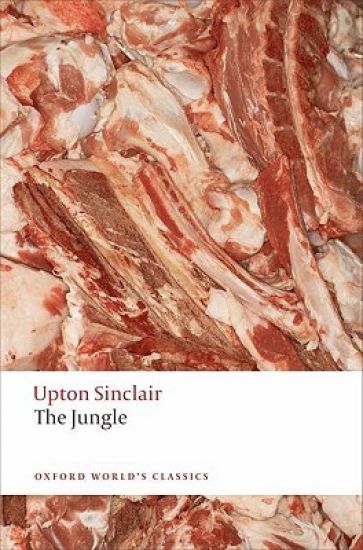
The Jungle

The Jungle

Upton Sinclair

Oxford University Press
2010
nidottu
A searing novel of social realism, Upton Sinclair's The Jungle follows the fortunes of Jurgis Rudkus, an immigrant who finds in the stockyards of turn-of-the-century Chicago a ruthless system that degrades and impoverishes him, and an industry whose filthy practices contaminate the meat it processes. From the stench of the killing-beds to the horrors of the fertilizer-works, the appalling conditions in which Jurgis works are described in intense detail by an author bent on social reform. So powerful was the book's message that it caught the eye of President Theodore Roosevelt and led to changes to the food hygiene laws. In his Introduction to this new edition, Russ Castronovo highlights the aesthetic concerns that were central to Sinclair's aspirations, examining the relationship between history and historical fiction, and between the documentary impulse and literary narrative. As he examines the book's disputed status as novel (it is propaganda or literature?), he reveals why Sinclair's message-driven fiction has relevance to literary and historical matters today, now more than a hundred years after the novel first appeared in print.
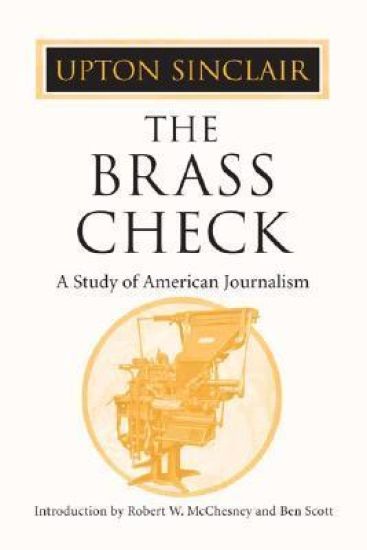
The Brass Check

The Brass Check

Upton Sinclair

University of Illinois Press
2002
nidottu
In this systematic critique of the structural basis of U.S. media -- arguably the first one ever published -- Upton Sinclair writes that “American journalism is a class institution serving the rich and spurning the poor.” Likening journalists to prostitutes, the title of the book refers to a chit that was issued to patrons of urban brothels of the era. Fueled by mounting disdain for newspapers run by business tycoons and conservative editors, Sinclair self-published The Brass Check in the years after The Jungle had made him a household name. Despite Sinclair’s claim that this was his most important book, it was dismissed by critics and shunned by reviewers. Yet it sold over 150,000 copies and enjoyed numerous printings. A substantial introduction to this paperback edition by Robert W. McChesney and Ben Scott asserts the book’s importance as a cornerstone critique of commercial journalism and a priceless resource for understanding the political turbulence of the Progressive Era.
The Jungle

The Jungle

Upton Sinclair

St Martin's Press
2005
nidottu
Upton Sinclair's novel The Jungle, which inspired the 1906 Pure Food and Drug Act and the Meat Inspection Act, stands as a classic of Twentieth-century American literature and social protest. In this accessible and thorough edition by Christopher Phelps, a critical introduction addresses the wide range of issues raised by the text, including early twentieth-century working conditions, immigrant community, race and gender, political reform, and the continuing relevance of Sinclair's investigation. This edition uses the most widely recognized text of The Jungle and provides an illuminating supporting document: President Theodore Roosevelt's delivery to Congress of the official report that confirmed The Jungle's shocking allegations about the Chicago meatpacking industry.
The Brass Check: A Study of American Journalism; Evidence and Reasons Behind the Media’s Corruption
Turning his muckraking talents to journalism itself, Upton Sinclair exposes a variety of the news media's ingrained biases and its agenda-serving corruption.Upton Sinclair became famous for exposing filthy and inhumane conditions in the American meat packing industry at the turn of the 20th century. Following these revelations, new laws were made protecting factory workers and their conditions. Sinclair afterwards became a figure for condemnation - his personal life was scrutinized and subjected to spurious gossip and rumor, the cause being that the vast majority of newspaper corporations opposed his pro-worker, pro-regulation views.The title of this book alludes to a common practice in brothels: those frequenting these establishments would buy `brass checks' to hand to the woman of their choice. Sinclair draws a parallel between such customers and the proprietors of the media, who delegate the promotion of their political, financial and social agendas to journalists willing to propagate such ideas.
The Brass Check: A Study of American Journalism; Evidence and Reasons Behind the Media’s Corruption (Hardcover)
Turning his muckraking talents to journalism itself, Upton Sinclair exposes a variety of the news media's ingrained biases and its agenda-serving corruption.Upton Sinclair became famous for exposing filthy and inhumane conditions in the American meat packing industry at the turn of the 20th century. Following these revelations, new laws were made protecting factory workers and their conditions. Sinclair afterwards became a figure for condemnation - his personal life was scrutinized and subjected to spurious gossip and rumor, the cause being that the vast majority of newspaper corporations opposed his pro-worker, pro-regulation views.The title of this book alludes to a common practice in brothels: those frequenting these establishments would buy `brass checks' to hand to the woman of their choice. Sinclair draws a parallel between such customers and the proprietors of the media, who delegate the promotion of their political, financial and social agendas to journalists willing to propagate such ideas.
The Jungle (The Norton Library)

The Jungle (The Norton Library)

Upton Sinclair

WW NORTON CO
2022
nidottu
Part of the Norton Library series The Norton Library edition of The Jungle features the complete text of the first (1906) edition. An introduction by Kenneth W. Warren discusses the novel’s biographical and historical contexts, its literary merits, and its successes (and shortcomings) in affecting social change. The Norton Library is a growing collection of high-quality texts and translations—influential works of literature and philosophy—introduced and edited by leading scholars. Norton Library editions prepare readers for their first encounter with the works that they’ll re-read over a lifetime. Inviting introductions highlight the work’s significance and influence, providing the historical and literary context students need to dive in with confidence.Endnotes and an easy-to-read design deliver an uninterrupted reading experience, encouraging students to read the text first and refer to endnotes for more information as needed.An affordable price (most $10 or less) encourages students to buy the book and to come to class with the assigned edition. About the Editor: Kenneth W. Warren is Fairfax M. Cone Distinguished Service Professor in the Department of English at the University of Chicago. He is the author of Black and White Strangers: Race and American Literary Realism (1993), So Black and Blue: Ralph Ellison and the Occasion of Criticism (2003), and What Was African American Literature (2011).
The Jungle

The Jungle

Upton Sinclair

Signet Book
2015
pokkari
Upton Sinclair's classic revelatory novel about turn-of-the-century business and immigrant labor practices. Jurgis Rudkus, a young Lithuanian immigrant in search of a better life, faces instead an epic struggle for survival. His story of factory life in Chicago in the early twentieth century is a saga of barbarous working conditions, crushing poverty, crime, disease, and despair. Upton Sinclair's vivid depiction of the horrors of Chicago's stockyards and slaughterhouses aroused such public indignation that a government investigation was called, eventually resulting in the passage of pure food laws. More than a hundred years later, The Jungle continues to pack the same emotional power it did when it was first published. Includes an Introduction by Alicia Mischa Renfroeand an Afterword by Dr. Barry Sears
The Jungle

The Jungle

Upton Sinclair

Dover Publications Inc.
2001
nidottu
1906 best-seller shockingly reveals intolerable labor practices and unsanitary working conditions in the Chicago stockyards as it tells the brutally grim story of a Slavic family that emigrates to America full of optimism but soon descends into numbing poverty, moral degradation, and despair. A fiercely realistic American classic that will haunt readers long after they've finished the last page.
Oil!

Oil!

Upton Sinclair

DOVER PUBLICATIONS INC.
2023
nidottu
Published in 1927, this masterpiece of realist fiction portrays a gripping tale of corruption and greed alongside a son's coming-of-age story. The basis for Paul Thomas Anderson's 2007 film There Will Be Blood, the saga follows the rise of an oil magnate through the eyes of his loving but increasingly pessimistic son. After writing The Jungle, a groundbreaking book that exposed harsh labor conditions, novelist Upton Sinclair was inspired by the 1920s Teapot Dome Scandal during Warren G. Harding's presidency. Sinclair delivers a scathing, satirical critique of social injustice during the early years of the California oil boom.
The Jungle

The Jungle

Upton Sinclair

DOVER PUBLICATIONS
2025
sidottu
This stunning hardcover addition to Dover Bookshelf, with easy-to-read type of the unabridged original text, is a gripping expos of the harsh realities of early 20th-century industrial America. Following the plight of Jurgis Rudkus, a Lithuanian immigrant striving for a better life, the narrative exposes the brutal exploitation and unsanitary conditions of the Chicago meatpacking industry. Sinclair's riveting prose not only sparked the United States Congress to enact significant food safety reforms and led to the establishment of the FDA, but also drew attention to workers' rights and the plight of immigrants. An ardent muckraker and social reformer, Upton Sinclair wielded his pen to challenge the status quo and advocate for societal change. Sinclair's tale of hardship, resilience, and the fight for justice remains as powerful today as when it was first published in 1906. An affordable literary classic designed to delight the eyes as well as the mind for booklovers and gifting.
I, Candidate for Governor

I, Candidate for Governor

Upton Sinclair

University of California Press
1994
pokkari
Here, reprinted for the first time since its original publication, is muckraking journalist Upton Sinclair's lively, caustic account of the 1934 election campaign that turned California upside down and almost won him the governor's mansion. Using his 'End Poverty in California' movement (more commonly called EPIC) as a springboard, Sinclair ran for governor as a Democrat, equipped with a bold plan to end the Depression in California by taking over idle land and factories and turning them into cooperative ventures for the unemployed. To his surprise, thousands rallied to the idea, converting what he had assumed would be another of his utopian schemes into a mass political movement of extraordinary dimensions. With a loosely knit organization of hundreds of local EPIC clubs, Sinclair overwhelmed the moderate Democratic opposition to capture the primary election. When it came to the general election, however, his opposition employed highly effective campaign tactics: overwhelming media hostility, vicious red-baiting and voter intimidation, high-priced dirty tricks. The result was a resounding defeat in November. "I, Candidate" tells the story of Sinclair's campaign while also capturing the turbulent political mood of the 1930s. Employing his trademark muckraking style, Sinclair exposes the conspiracies of power that ensured big-money control over the media and other powerful institutions.