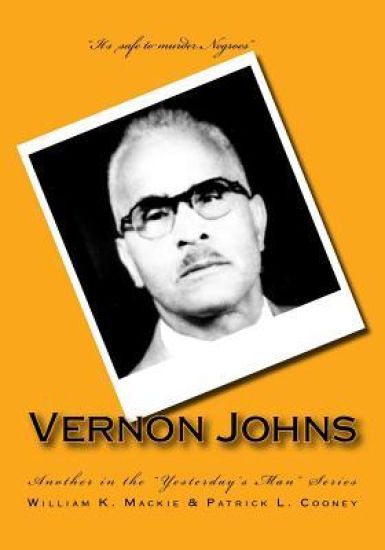
Before there was the Rev. Martin Luther King, there was the Rev. Vernon Johns.A visionary, fire-breathing Baptist preacher in segregationist Montgomery, Ala., in the early 1950's, Johns helped ignite the tinder of the civil rights movement that ultimately would transfix and change the nation.
Vernon Lee was the pseudonym of the British writer Violet Paget (14 October 1856 - 13 February 1935). She is remembered today primarily for her supernatural fiction and her work on aesthetics. An early follower of Walter Pater, she wrote over a dozen volumes of essays on art, music, and travel.Violet Paget was born in France on 14 October 1856, at Ch teau St Leonard, Boulogne, to British expatriate parents, Henry Ferguson Paget and Matilda Lee-Hamilton (n e Abadam). Violet Paget was the half-sister of Eugene Jacob Lee-Hamilton (1845-1907) by her mother's first marriage, and from whose surname she adapted her own pseudonym. Although she primarily wrote for an English readership and made many visits to London, she spent the majority of her life on the continent, particularly in Italy Her longest residence was just outside Florence in the Palmerino villa from 1889 until her death at San Gervasio, with a brief interruption during World War I. Her library was left to the British Institute of Florence and can still be inspected by visitors. In Florence she knit lasting friendships with the painter Telemaco Signorini and the learned Mario Praz, and she encouraged his love of learning and English literature. An engaged feminist, she always dressed la gar onne. During the First World War, Lee adopted strong pacifist views, and was a member of the anti-militarist organisation, the Union of Democratic Control. She was also a lesbian, and had long-term passionate friendships with three women, Mary Robinson, Kit Anstruther-Thomson, and British author Amy Levy
Vernon Lee was the pseudonym of the British writer Violet Paget (14 October 1856 - 13 February 1935). She is remembered today primarily for her supernatural fiction and her work on aesthetics. An early follower of Walter Pater, she wrote over a dozen volumes of essays on art, music, and travel.Violet Paget was born in France on 14 October 1856, at Ch teau St Leonard, Boulogne, to British expatriate parents, Henry Ferguson Paget and Matilda Lee-Hamilton (n e Abadam). Violet Paget was the half-sister of Eugene Jacob Lee-Hamilton (1845-1907) by her mother's first marriage, and from whose surname she adapted her own pseudonym. Although she primarily wrote for an English readership and made many visits to London, she spent the majority of her life on the continent, particularly in Italy Her longest residence was just outside Florence in the Palmerino villa from 1889 until her death at San Gervasio, with a brief interruption during World War I. Her library was left to the British Institute of Florence and can still be inspected by visitors. In Florence she knit lasting friendships with the painter Telemaco Signorini and the learned Mario Praz, and she encouraged his love of learning and English literature. An engaged feminist, she always dressed la gar onne. During the First World War, Lee adopted strong pacifist views, and was a member of the anti-militarist organisation, the Union of Democratic Control. She was also a lesbian, and had long-term passionate friendships with three women, Mary Robinson, Kit Anstruther-Thomson, and British author Amy Levy
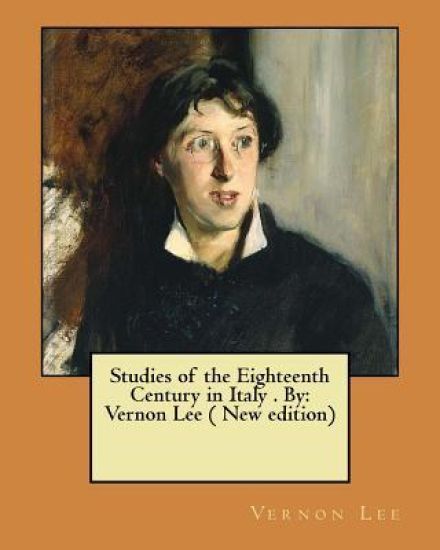
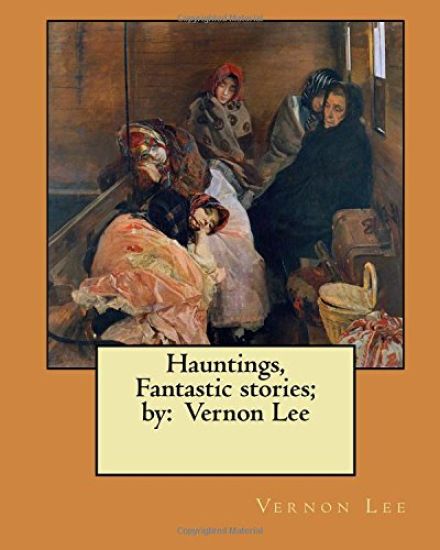
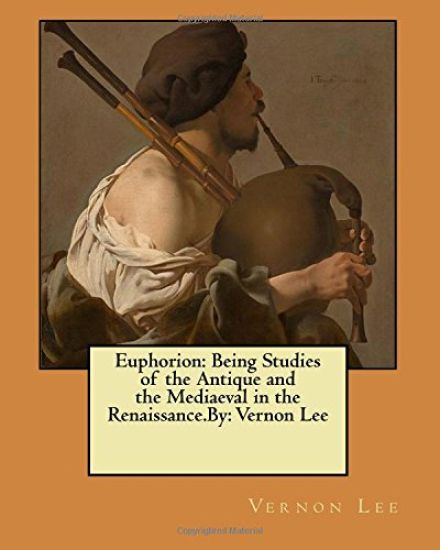
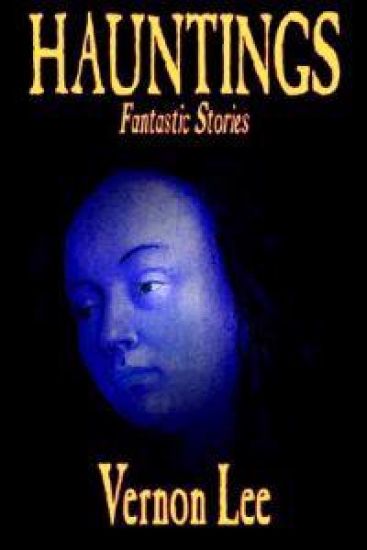
Vernon Lee was the pseudonym of the British writer Violet Paget (14 October 1856 - 13 February 1935). She is remembered today primarily for her supernatural fiction and her work on aesthetics. An early follower of Walter Pater, she wrote over a dozen volumes of essays on art, music, and travel.Violet Paget was born in France on 14 October 1856, at Ch teau St Leonard, Boulogne, to British expatriate parents, Henry Ferguson Paget and Matilda Lee-Hamilton (n e Abadam). Violet Paget was the half-sister of Eugene Jacob Lee-Hamilton (1845-1907) by her mother's first marriage, and from whose surname she adapted her own pseudonym. Although she primarily wrote for an English readership and made many visits to London, she spent the majority of her life on the continent, particularly in Italy Her longest residence was just outside Florence in the Palmerino villa from 1889 until her death at San Gervasio, with a brief interruption during World War I. Her library was left to the British Institute of Florence and can still be inspected by visitors. In Florence she knit lasting friendships with the painter Telemaco Signorini and the learned Mario Praz, and she encouraged his love of learning and English literature. An engaged feminist, she always dressed la gar onne. During the First World War, Lee adopted strong pacifist views, and was a member of the anti-militarist organisation, the Union of Democratic Control. She was also a lesbian, and had long-term passionate friendships with three women, Mary Robinson, Kit Anstruther-Thomson, and British author Amy Levy.She played the harpsichord and her appreciation of music animates her first major work, Studies of the Eighteenth Century in Italy (1880). In her preface to the second edition of 1907, she recalled her excitement as a girl when she came across a bundle of 18th-century music. She was so nervous that it wouldn't live up to her expectations that she escaped to the garden and listened rapturously through an open window as her mother worked out the music on the piano. Along with Pater and John Addington Symonds, she was considered an authority on the Italian Renaissance, and wrote two works that dealt with it explicitly, Euphorion (1884) and Renaissance Fancies and Studies (1895)Her short fiction explored the themes of haunting and possession. The most famous were collected in Hauntings (1890) and her story "Prince Alberic and the Snake Lady" (1895) was first printed in the notorious The Yellow Book. She was instrumental in the introduction of the German concept of 'Einf hlung', or 'empathy' into the study of aesthetics in the English-speaking world
Vernon Lee was the pseudonym of the British writer Violet Paget (14 October 1856 - 13 February 1935). She is remembered today primarily for her supernatural fiction and her work on aesthetics. An early follower of Walter Pater, she wrote over a dozen volumes of essays on art, music, and travel.Violet Paget was born in France on 14 October 1856, at Ch teau St Leonard, Boulogne, to British expatriate parents, Henry Ferguson Paget and Matilda Lee-Hamilton (n e Abadam). Violet Paget was the half-sister of Eugene Jacob Lee-Hamilton (1845-1907) by her mother's first marriage, and from whose surname she adapted her own pseudonym. Although she primarily wrote for an English readership and made many visits to London, she spent the majority of her life on the continent, particularly in Italy Her longest residence was just outside Florence in the Palmerino villa from 1889 until her death at San Gervasio, with a brief interruption during World War I. Her library was left to the British Institute of Florence and can still be inspected by visitors. In Florence she knit lasting friendships with the painter Telemaco Signorini and the learned Mario Praz, and she encouraged his love of learning and English literature. An engaged feminist, she always dressed la gar onne. During the First World War, Lee adopted strong pacifist views, and was a member of the anti-militarist organisation, the Union of Democratic Control. She was also a lesbian, and had long-term passionate friendships with three women, Mary Robinson, Kit Anstruther-Thomson, and British author Amy Levy.She played the harpsichord and her appreciation of music animates her first major work, Studies of the Eighteenth Century in Italy (1880). In her preface to the second edition of 1907, she recalled her excitement as a girl when she came across a bundle of 18th-century music. She was so nervous that it wouldn't live up to her expectations that she escaped to the garden and listened rapturously through an open window as her mother worked out the music on the piano. Along with Pater and John Addington Symonds, she was considered an authority on the Italian Renaissance, and wrote two works that dealt with it explicitly, Euphorion (1884) and Renaissance Fancies and Studies (1895)Her short fiction explored the themes of haunting and possession. The most famous were collected in Hauntings (1890) and her story "Prince Alberic and the Snake Lady" (1895) was first printed in the notorious The Yellow Book. She was instrumental in the introduction of the German concept of 'Einf hlung', or 'empathy' into the study of aesthetics in the English-speaking world
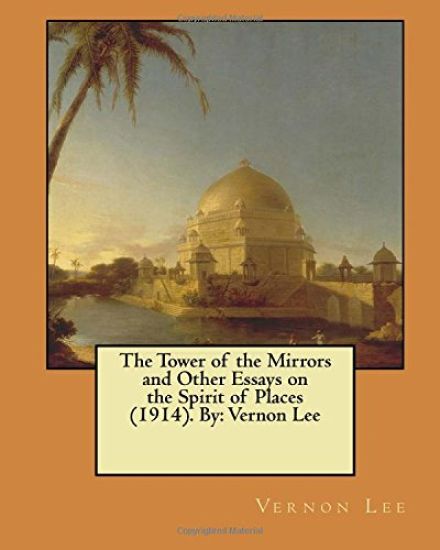
The love of the saints; The imaginative art of the Renaissance; Tuscan sculpture; A seeker of pagan perfection, being the life of Domenico Neroni, pictor sacrilegus; Valedictory Vernon Lee was the pseudonym of the British writer Violet Paget (14 October 1856 - 13 February 1935). She is remembered today primarily for her supernatural fiction and her work on aesthetics. An early follower of Walter Pater, she wrote over a dozen volumes of essays on art, music, and travel.Violet Paget was born in France on 14 October 1856, at Ch teau St Leonard, Boulogne, to British expatriate parents, Henry Ferguson Paget and Matilda Lee-Hamilton (n e Abadam). Violet Paget was the half-sister of Eugene Jacob Lee-Hamilton (1845-1907) by her mother's first marriage, and from whose surname she adapted her own pseudonym. Although she primarily wrote for an English readership and made many visits to London, she spent the majority of her life on the continent, particularly in Italy Her longest residence was just outside Florence in the Palmerino villa from 1889 until her death at San Gervasio, with a brief interruption during World War I. Her library was left to the British Institute of Florence and can still be inspected by visitors. In Florence she knit lasting friendships with the painter Telemaco Signorini and the learned Mario Praz, and she encouraged his love of learning and English literature. An engaged feminist, she always dressed la gar onne. During the First World War, Lee adopted strong pacifist views, and was a member of the anti-militarist organisation, the Union of Democratic Control. She was also a lesbian, and had long-term passionate friendships with three women, Mary Robinson, Kit Anstruther-Thomson, and British author Amy Levy.She played the harpsichord and her appreciation of music animates her first major work, Studies of the Eighteenth Century in Italy (1880). In her preface to the second edition of 1907, she recalled her excitement as a girl when she came across a bundle of 18th-century music. She was so nervous that it wouldn't live up to her expectations that she escaped to the garden and listened rapturously through an open window as her mother worked out the music on the piano. Along with Pater and John Addington Symonds, she was considered an authority on the Italian Renaissance, and wrote two works that dealt with it explicitly, Euphorion (1884) and Renaissance Fancies and Studies (1895)Her short fiction explored the themes of haunting and possession. The most famous were collected in Hauntings (1890) and her story "Prince Alberic and the Snake Lady" (1895) was first printed in the notorious The Yellow Book. She was instrumental in the introduction of the German concept of 'Einf hlung', or 'empathy' into the study of aesthetics in the English-speaking world
Vernon Lee was the pseudonym of the British writer Violet Paget (14 October 1856 - 13 February 1935). She is remembered today primarily for her supernatural fiction and her work on aesthetics. An early follower of Walter Pater, she wrote over a dozen volumes of essays on art, music, and travel.Violet Paget was born in France on 14 October 1856, at Ch teau St Leonard, Boulogne, to British expatriate parents, Henry Ferguson Paget and Matilda Lee-Hamilton (n e Abadam). Violet Paget was the half-sister of Eugene Jacob Lee-Hamilton (1845-1907) by her mother's first marriage, and from whose surname she adapted her own pseudonym. Although she primarily wrote for an English readership and made many visits to London, she spent the majority of her life on the continent, particularly in Italy Her longest residence was just outside Florence in the Palmerino villa from 1889 until her death at San Gervasio, with a brief interruption during World War I. Her library was left to the British Institute of Florence and can still be inspected by visitors. In Florence she knit lasting friendships with the painter Telemaco Signorini and the learned Mario Praz, and she encouraged his love of learning and English literature. An engaged feminist, she always dressed la gar onne. During the First World War, Lee adopted strong pacifist views, and was a member of the anti-militarist organisation, the Union of Democratic Control. She was also a lesbian, and had long-term passionate friendships with three women, Mary Robinson, Kit Anstruther-Thomson, and British author Amy Levy.She played the harpsichord and her appreciation of music animates her first major work, Studies of the Eighteenth Century in Italy (1880). In her preface to the second edition of 1907, she recalled her excitement as a girl when she came across a bundle of 18th-century music. She was so nervous that it wouldn't live up to her expectations that she escaped to the garden and listened rapturously through an open window as her mother worked out the music on the piano. Along with Pater and John Addington Symonds, she was considered an authority on the Italian Renaissance, and wrote two works that dealt with it explicitly, Euphorion (1884) and Renaissance Fancies and Studies (1895)Her short fiction explored the themes of haunting and possession. The most famous were collected in Hauntings (1890) and her story "Prince Alberic and the Snake Lady" (1895) was first printed in the notorious The Yellow Book. She was instrumental in the introduction of the German concept of 'Einf hlung', or 'empathy' into the study of aesthetics in the English-speaking world
Vernon Lee was the pseudonym of the British writer Violet Paget (14 October 1856 - 13 February 1935). She is remembered today primarily for her supernatural fiction and her work on aesthetics. An early follower of Walter Pater, she wrote over a dozen volumes of essays on art, music, and travel.Violet Paget was born in France on 14 October 1856, at Ch teau St Leonard, Boulogne, to British expatriate parents, Henry Ferguson Paget and Matilda Lee-Hamilton (n e Abadam). Violet Paget was the half-sister of Eugene Jacob Lee-Hamilton (1845-1907) by her mother's first marriage, and from whose surname she adapted her own pseudonym. Although she primarily wrote for an English readership and made many visits to London, she spent the majority of her life on the continent, particularly in Italy Her longest residence was just outside Florence in the Palmerino villa from 1889 until her death at San Gervasio, with a brief interruption during World War I. Her library was left to the British Institute of Florence and can still be inspected by visitors. In Florence she knit lasting friendships with the painter Telemaco Signorini and the learned Mario Praz, and she encouraged his love of learning and English literature. An engaged feminist, she always dressed la gar onne. During the First World War, Lee adopted strong pacifist views, and was a member of the anti-militarist organisation, the Union of Democratic Control. She was also a lesbian, and had long-term passionate friendships with three women, Mary Robinson, Kit Anstruther-Thomson, and British author Amy Levy.She played the harpsichord and her appreciation of music animates her first major work, Studies of the Eighteenth Century in Italy (1880). In her preface to the second edition of 1907, she recalled her excitement as a girl when she came across a bundle of 18th-century music. She was so nervous that it wouldn't live up to her expectations that she escaped to the garden and listened rapturously through an open window as her mother worked out the music on the piano. Along with Pater and John Addington Symonds, she was considered an authority on the Italian Renaissance, and wrote two works that dealt with it explicitly, Euphorion (1884) and Renaissance Fancies and Studies (1895)Her short fiction explored the themes of haunting and possession. The most famous were collected in Hauntings (1890) and her story "Prince Alberic and the Snake Lady" (1895) was first printed in the notorious The Yellow Book. She was instrumental in the introduction of the German concept of 'Einf hlung', or 'empathy' into the study of aesthetics in the English-speaking world
As a young college student in Atlanta, Vernon E. Jordan, Jr. had a summer job driving a white banker around town. During the man's post-luncheon siestas, Jordan passed the time reading books, a fact that astounded his boss."Vernon can read!” the man exclaimed to his relatives. Nearly fifty years later, Vernon Jordan, now a senior executive at Lazard Freres, long-time civil rights leader, adviser and close friend to presidents and business leaders and one of the most charismatic figures in America, has written an unforgettable book about his life and times. The story of Vernon Jordan's life encompasses the sweeping struggles, changes, and dangers of African-American life in the civil rights revolution of the second half of the twentieth century.
For the first time, this volume presents Vernon Bailey's correspondences and field notes spanning the majority of his life and career, collected and annotated by David J. Schmidly. Born in 1864 and raised on a Minnesota farm, Vernon Bailey became the first person to conduct extensive biological surveys of Texas, New Mexico, North Dakota, and Oregon. He was one of the founding members of the American Society of Mammalogists and pioneered the humane treatment of animals during fieldwork, developing and patenting traps designed to limit injuries or unnecessary stress.From an early age, Bailey developed an affinity for animals, observing their behaviors and eventually collecting specimens for closer study. He developed his own traps for catching mammals, birds, and reptiles and taught himself taxidermy from a book. When he was twenty-one, Bailey began sending samples of the animals he preserved to C. H. Merriam, the chief of the newly created Division of Economic Ornithology and Mammalogy of the USDA, later renamed the Bureau of Biological Survey and now the US Fish and Wildlife Service. Merriam was so impressed with Baily's work that he hired him, appointed him special field agent, and promptly sent him to the “inner frontiers” of the western and southwestern United States, despite the fact that Bailey had no formal training in biology.During his long career, Bailey kept detailed field notes, chronicling his travels and wildlife observations. These writings provide fascinating insight into not only people's relationships with and efforts to understand wildlife but also the ways the country was rapidly growing and changing at the beginning of the twentieth century.
The Okanagan people settled around the city's two lakes, Okanagan Lake and Swan Lake, obtaining seasonal sources of food. Fur traders camped in Vernon as it started to develop in 1863, following a gold discovery at the Cherry Creek, Monashee Mountains, Mission Creek and east side of the Okanagan Lake. Vernon was home to many cattle ranches and fruit orchards.Vernon expanded after the Canadian Pacific Railway was opened in the Okanagan and Shuswap regions in 1891. The stern-wheeler S.S. Aberdeen was launched by the Canadian Pacific Railway for use on Okanagan Lake in 1893 connecting Vernon to Penticton at the south end of Okanagan Lake, and points between.Chase is located at the outlet of Little Shuswap Lake which is the source of the South Thompson River. Chase Creek, which drops over three small waterfalls before flowing through the town, enters the South Thompson just below the lake's outlet. The main industries in Chase are forestry and tourism.The town was named after a flamboyant character named Whitfield Chase, an American from New York State. After originally coming to Canada during the 1858 gold rush he settled in the area in 1865. He was the first non-native settler that farmed and raised a family, in what was then called, The Shuswap Prairie.Sorrento is on the south shore of Shuswap Lake, 28 kilometers west of Salmon Arm and 80 kilometers east of Kamloops. You can fish in the lake, enjoy water sports and boating, and view scenic landscapes.Salmon Arm is located on Shuswap Lake midway between Calgary and Vancouver on the Trans-Canada Highway. It has the longest curved wooden wharf in North America which draws tourists from around the World.By 1904, Salmon Arm had acquired a reputation for having an excellent fruit harvest. The local businessmen grew fruit as a main export, sending it to the larger, more populated towns that surrounded it.