Kirjojen hintavertailu. Mukana 11 244 527 kirjaa ja 12 kauppaa.

Kirjahaku

Etsi kirjoja tekijän nimen, kirjan nimen tai ISBN:n perusteella.

1000 tulosta hakusanalla Vernon Watkins

Vernon's Farmers and Business Directory for the Counties of Dufferin, Halton, Peel, Waterloo & Wellington for the Year
This work has been selected by scholars as being culturally important, and is part of the knowledge base of civilization as we know it. This work was reproduced from the original artifact, and remains as true to the original work as possible. Therefore, you will see the original copyright references, library stamps (as most of these works have been housed in our most important libraries around the world), and other notations in the work.This work is in the public domain in the United States of America, and possibly other nations. Within the United States, you may freely copy and distribute this work, as no entity (individual or corporate) has a copyright on the body of the work.As a reproduction of a historical artifact, this work may contain missing or blurred pages, poor pictures, errant marks, etc. Scholars believe, and we concur, that this work is important enough to be preserved, reproduced, and made generally available to the public. We appreciate your support of the preservation process, and thank you for being an important part of keeping this knowledge alive and relevant.
Vernon's Glory. Containing Fifteen New Songs, Occasion'd by the Taking of Porto-Bello and Fort Chagre
The 18th century was a wealth of knowledge, exploration and rapidly growing technology and expanding record-keeping made possible by advances in the printing press. In its determination to preserve the century of revolution, Gale initiated a revolution of its own: digitization of epic proportions to preserve these invaluable works in the largest archive of its kind. Now for the first time these high-quality digital copies of original 18th century manuscripts are available in print, making them highly accessible to libraries, undergraduate students, and independent scholars.Western literary study flows out of eighteenth-century works by Alexander Pope, Daniel Defoe, Henry Fielding, Frances Burney, Denis Diderot, Johann Gottfried Herder, Johann Wolfgang von Goethe, and others. Experience the birth of the modern novel, or compare the development of language using dictionaries and grammar discourses. ++++The below data was compiled from various identification fields in the bibliographic record of this title. This data is provided as an additional tool in helping to insure edition identification: ++++Bodleian Library (Oxford)T181191London: printed by W. Webb, 1740. 40p.; 8
Vernon's Glory. Part II. Containing Several new Songs, Occasion'd by the Taking of Porto-Bello, Fort Chagre, and the Admiral's Birth-day. To Which are Added, two new City Songs
The 18th century was a wealth of knowledge, exploration and rapidly growing technology and expanding record-keeping made possible by advances in the printing press. In its determination to preserve the century of revolution, Gale initiated a revolution of its own: digitization of epic proportions to preserve these invaluable works in the largest archive of its kind. Now for the first time these high-quality digital copies of original 18th century manuscripts are available in print, making them highly accessible to libraries, undergraduate students, and independent scholars.Western literary study flows out of eighteenth-century works by Alexander Pope, Daniel Defoe, Henry Fielding, Frances Burney, Denis Diderot, Johann Gottfried Herder, Johann Wolfgang von Goethe, and others. Experience the birth of the modern novel, or compare the development of language using dictionaries and grammar discourses. ++++The below data was compiled from various identification fields in the bibliographic record of this title. This data is provided as an additional tool in helping to insure edition identification: ++++Bodleian Library (Oxford)T181193London: printed by W. Webb, 1740. 40p.: ill.; 8
Vernon Lee

Vernon Lee

Patricia Pulham; Catherine Maxwell

Palgrave Macmillan
2006
sidottu
This, the first collection of essays on the aesthete and intellectual Vernon Lee, offers a wide range of critical writings by scholars. Key works are examined including Euphorion, Hauntings: Fantastic Stories and Music and Its Lovers . New light is shed on Lee's relationships with contemporaries such as Lee-Hamilton, Pater and Wilde.
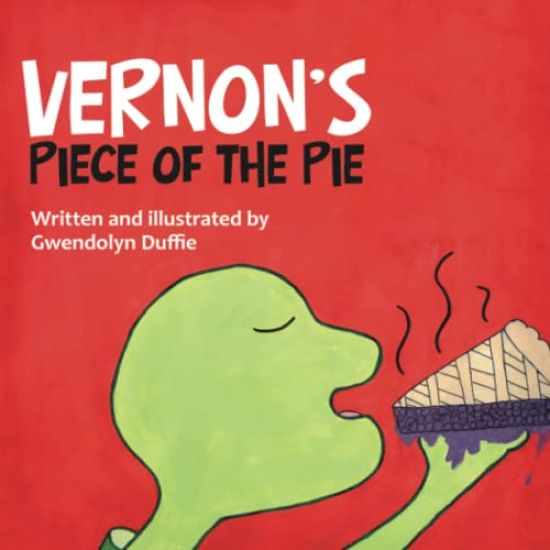
Vernon's Piece of the Pie

Vernon's Piece of the Pie

Gwendolyn Duffie

Lulu Publishing Services
2014
pokkari
Everyone has a "not so good day" sometimes, but we must remember not to take this out on others. This book teaches a lesson on how to treat and respect others, even when you are upset. It also teaches one how to respond to someone who is not being so nice to them. Come along and take a ride with Vernon as he takes a journey through the woods. Everyone watch out!!! Vernon is on the way and he is not having a very good day.
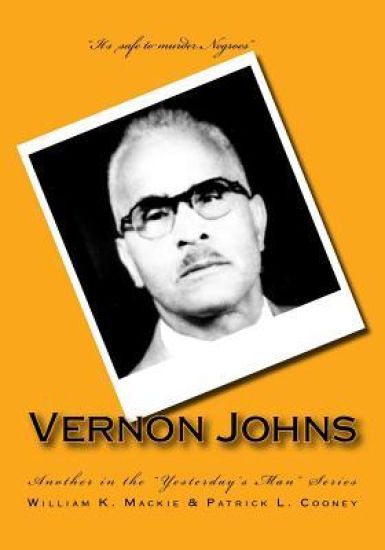
Vernon Johns: "it's Safe to Murder Negroes"

Vernon Johns: "it's Safe to Murder Negroes"

Patrick Louis Cooney Ph. D.; William K. MacKie

Createspace Independent Publishing Platform
2016
nidottu
Before there was the Rev. Martin Luther King, there was the Rev. Vernon Johns.A visionary, fire-breathing Baptist preacher in segregationist Montgomery, Ala., in the early 1950's, Johns helped ignite the tinder of the civil rights movement that ultimately would transfix and change the nation.
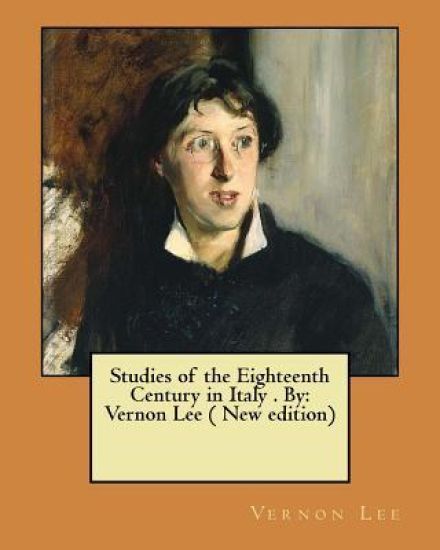
Studies of the Eighteenth Century in Italy . By: Vernon Lee ( New edition)

Studies of the Eighteenth Century in Italy . By: Vernon Lee ( New edition)

Vernon Lee

Createspace Independent Publishing Platform
2017
nidottu
Vernon Lee was the pseudonym of the British writer Violet Paget (14 October 1856 - 13 February 1935). She is remembered today primarily for her supernatural fiction and her work on aesthetics. An early follower of Walter Pater, she wrote over a dozen volumes of essays on art, music, and travel.Violet Paget was born in France on 14 October 1856, at Ch teau St Leonard, Boulogne, to British expatriate parents, Henry Ferguson Paget and Matilda Lee-Hamilton (n e Abadam). Violet Paget was the half-sister of Eugene Jacob Lee-Hamilton (1845-1907) by her mother's first marriage, and from whose surname she adapted her own pseudonym. Although she primarily wrote for an English readership and made many visits to London, she spent the majority of her life on the continent, particularly in Italy Her longest residence was just outside Florence in the Palmerino villa from 1889 until her death at San Gervasio, with a brief interruption during World War I. Her library was left to the British Institute of Florence and can still be inspected by visitors. In Florence she knit lasting friendships with the painter Telemaco Signorini and the learned Mario Praz, and she encouraged his love of learning and English literature. An engaged feminist, she always dressed la gar onne. During the First World War, Lee adopted strong pacifist views, and was a member of the anti-militarist organisation, the Union of Democratic Control. She was also a lesbian, and had long-term passionate friendships with three women, Mary Robinson, Kit Anstruther-Thomson, and British author Amy Levy
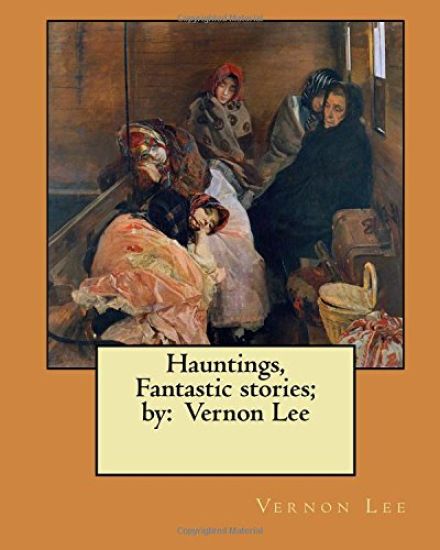
Hauntings, Fantastic stories; by: Vernon Lee

Hauntings, Fantastic stories; by: Vernon Lee

Vernon Lee

Createspace Independent Publishing Platform
2017
nidottu
Vernon Lee was the pseudonym of the British writer Violet Paget (14 October 1856 - 13 February 1935). She is remembered today primarily for her supernatural fiction and her work on aesthetics. An early follower of Walter Pater, she wrote over a dozen volumes of essays on art, music, and travel.Violet Paget was born in France on 14 October 1856, at Ch teau St Leonard, Boulogne, to British expatriate parents, Henry Ferguson Paget and Matilda Lee-Hamilton (n e Abadam). Violet Paget was the half-sister of Eugene Jacob Lee-Hamilton (1845-1907) by her mother's first marriage, and from whose surname she adapted her own pseudonym. Although she primarily wrote for an English readership and made many visits to London, she spent the majority of her life on the continent, particularly in Italy Her longest residence was just outside Florence in the Palmerino villa from 1889 until her death at San Gervasio, with a brief interruption during World War I. Her library was left to the British Institute of Florence and can still be inspected by visitors. In Florence she knit lasting friendships with the painter Telemaco Signorini and the learned Mario Praz, and she encouraged his love of learning and English literature. An engaged feminist, she always dressed la gar onne. During the First World War, Lee adopted strong pacifist views, and was a member of the anti-militarist organisation, the Union of Democratic Control. She was also a lesbian, and had long-term passionate friendships with three women, Mary Robinson, Kit Anstruther-Thomson, and British author Amy Levy
The Countess of Albany. By: Vernon Lee

The Countess of Albany. By: Vernon Lee

Vernon Lee

Createspace Independent Publishing Platform
2017
nidottu
Vernon Lee was the pseudonym of the British writer Violet Paget (14 October 1856 - 13 February 1935). She is remembered today primarily for her supernatural fiction and her work on aesthetics. An early follower of Walter Pater, she wrote over a dozen volumes of essays on art, music, and travel.Violet Paget was born in France on 14 October 1856, at Ch teau St Leonard, Boulogne, to British expatriate parents, Henry Ferguson Paget and Matilda Lee-Hamilton (n e Abadam). Violet Paget was the half-sister of Eugene Jacob Lee-Hamilton (1845-1907) by her mother's first marriage, and from whose surname she adapted her own pseudonym. Although she primarily wrote for an English readership and made many visits to London, she spent the majority of her life on the continent, particularly in Italy Her longest residence was just outside Florence in the Palmerino villa from 1889 until her death at San Gervasio, with a brief interruption during World War I. Her library was left to the British Institute of Florence and can still be inspected by visitors. In Florence she knit lasting friendships with the painter Telemaco Signorini and the learned Mario Praz, and she encouraged his love of learning and English literature. An engaged feminist, she always dressed la gar onne. During the First World War, Lee adopted strong pacifist views, and was a member of the anti-militarist organisation, the Union of Democratic Control. She was also a lesbian, and had long-term passionate friendships with three women, Mary Robinson, Kit Anstruther-Thomson, and British author Amy Levy.She played the harpsichord and her appreciation of music animates her first major work, Studies of the Eighteenth Century in Italy (1880). In her preface to the second edition of 1907, she recalled her excitement as a girl when she came across a bundle of 18th-century music. She was so nervous that it wouldn't live up to her expectations that she escaped to the garden and listened rapturously through an open window as her mother worked out the music on the piano. Along with Pater and John Addington Symonds, she was considered an authority on the Italian Renaissance, and wrote two works that dealt with it explicitly, Euphorion (1884) and Renaissance Fancies and Studies (1895)Her short fiction explored the themes of haunting and possession. The most famous were collected in Hauntings (1890) and her story "Prince Alberic and the Snake Lady" (1895) was first printed in the notorious The Yellow Book. She was instrumental in the introduction of the German concept of 'Einf hlung', or 'empathy' into the study of aesthetics in the English-speaking world
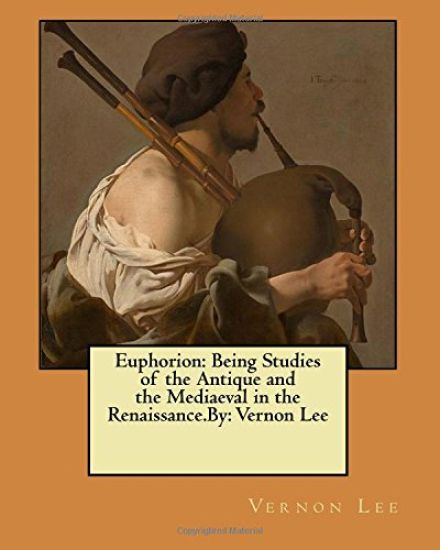
Euphorion: Being Studies of the Antique and the Mediaeval in the Renaissance.By: Vernon Lee
Vernon Lee was the pseudonym of the British writer Violet Paget (14 October 1856 - 13 February 1935). She is remembered today primarily for her supernatural fiction and her work on aesthetics. An early follower of Walter Pater, she wrote over a dozen volumes of essays on art, music, and travel.Violet Paget was born in France on 14 October 1856, at Ch teau St Leonard, Boulogne, to British expatriate parents, Henry Ferguson Paget and Matilda Lee-Hamilton (n e Abadam). Violet Paget was the half-sister of Eugene Jacob Lee-Hamilton (1845-1907) by her mother's first marriage, and from whose surname she adapted her own pseudonym. Although she primarily wrote for an English readership and made many visits to London, she spent the majority of her life on the continent, particularly in Italy Her longest residence was just outside Florence in the Palmerino villa from 1889 until her death at San Gervasio, with a brief interruption during World War I. Her library was left to the British Institute of Florence and can still be inspected by visitors. In Florence she knit lasting friendships with the painter Telemaco Signorini and the learned Mario Praz, and she encouraged his love of learning and English literature. An engaged feminist, she always dressed la gar onne. During the First World War, Lee adopted strong pacifist views, and was a member of the anti-militarist organisation, the Union of Democratic Control. She was also a lesbian, and had long-term passionate friendships with three women, Mary Robinson, Kit Anstruther-Thomson, and British author Amy Levy.She played the harpsichord and her appreciation of music animates her first major work, Studies of the Eighteenth Century in Italy (1880). In her preface to the second edition of 1907, she recalled her excitement as a girl when she came across a bundle of 18th-century music. She was so nervous that it wouldn't live up to her expectations that she escaped to the garden and listened rapturously through an open window as her mother worked out the music on the piano. Along with Pater and John Addington Symonds, she was considered an authority on the Italian Renaissance, and wrote two works that dealt with it explicitly, Euphorion (1884) and Renaissance Fancies and Studies (1895)Her short fiction explored the themes of haunting and possession. The most famous were collected in Hauntings (1890) and her story "Prince Alberic and the Snake Lady" (1895) was first printed in the notorious The Yellow Book. She was instrumental in the introduction of the German concept of 'Einf hlung', or 'empathy' into the study of aesthetics in the English-speaking world