Kirjojen hintavertailu. Mukana 11 627 484 kirjaa ja 12 kauppaa.

Kirjahaku

Etsi kirjoja tekijän nimen, kirjan nimen tai ISBN:n perusteella.

1000 tulosta hakusanalla Victor Bailey

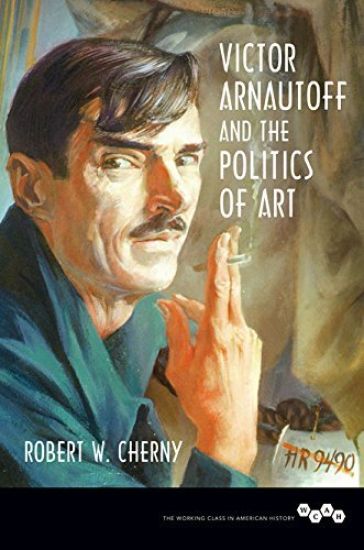
Victor Arnautoff and the Politics of Art

Victor Arnautoff and the Politics of Art

Robert W. Cherny

University of Illinois Press
2017
sidottu
Victor Arnautoff reigned as San Francisco's leading mural painter during the New Deal era. Yet that was only part of an astonishing life journey from Tsarist officer to leftist painter. Robert W. Cherny's masterful biography of Arnautoff braids the artist's work with his increasingly leftist politics and the tenor of his times. Delving into sources on Russian émigrés and San Francisco's arts communities, Cherny traces Arnautoff's life from refugee art student and assistant to Diego Rivera to prominence in the New Deal's art projects and a faculty position at Stanford University. As Arnautoff's politics moved left, he often incorporated working people and people of color into his treatment of the American past and present. In the 1950s, however, his participation in leftist organizations and a highly critical cartoon of Richard Nixon landed him before the House Un-American Activities Committee and led to calls for his dismissal from Stanford. Arnautoff eventually departed America, a refugee of another kind, now fleeing personal loss and the disintegration of the left-labor culture that had nurtured him, before resuming his artistic career in the Soviet Union that he had fought in his youth to destroy.
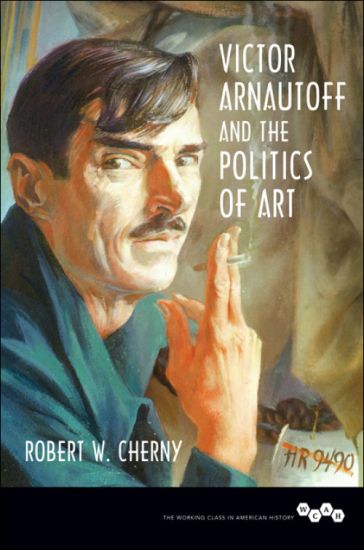
Victor Arnautoff and the Politics of Art

Victor Arnautoff and the Politics of Art

Robert W. Cherny

University of Illinois Press
2017
nidottu
Victor Arnautoff reigned as San Francisco's leading mural painter during the New Deal era. Yet that was only part of an astonishing life journey from Tsarist officer to leftist painter. Robert W. Cherny's masterful biography of Arnautoff braids the artist's work with his increasingly leftist politics and the tenor of his times. Delving into sources on Russian émigrés and San Francisco's arts communities, Cherny traces Arnautoff's life from refugee art student and assistant to Diego Rivera to prominence in the New Deal's art projects and a faculty position at Stanford University. As Arnautoff's politics moved left, he often incorporated working people and people of color into his treatment of the American past and present. In the 1950s, however, his participation in leftist organizations and a highly critical cartoon of Richard Nixon landed him before the House Un-American Activities Committee and led to calls for his dismissal from Stanford. Arnautoff eventually departed America, a refugee of another kind, now fleeing personal loss and the disintegration of the left-labor culture that had nurtured him, before resuming his artistic career in the Soviet Union that he had fought in his youth to destroy.
Victor Turner and the Construction of Cultural Criticism
During the past twenty years of intellectual boundary-crossing and widespread borrowing between fields, Turner's notions of "liminality" and the "processual" have been adopted by many theorists of art and society. This is the first volume to place individual Turner concepts into the context of his entire career and to spell out their implications for literary studies.
Victor Papanek

Victor Papanek

Alison J. Clarke

MIT Press
2021
sidottu
The history and controversial roots of the social design movement, explored through the life and work of its leading pioneer, Victor Papanek.In Victor Papanek- Designer for the Real World, Alison Clarke explores the social design movement through the life of its leading pioneer, the Austrian American designer, theorist, and activist Victor Papanek. Papanek's 1971 best seller, Design for the Real World- Human Ecology and Social Change has been translated into 22 languages and never fallen out of print. Its politics of social design, anti-corporatism, and environmental sustainability have found renewed pertinence in the twenty-first century and dominate the agendas of design schools today. Drawing extensively on previously unexplored archival sources, Clarke uncovers and contextualizes the movement's controversial origins and contradictions.
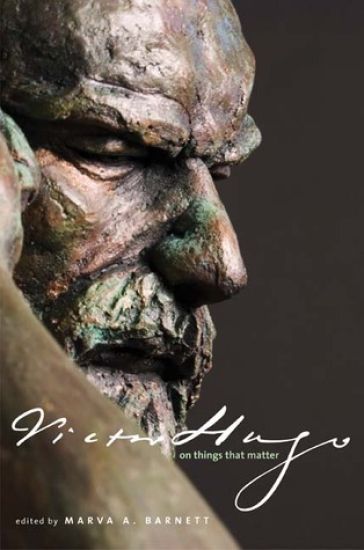
Victor Hugo on Things That Matter
Victor Hugo on Things That Matter gives English speakers the social, historical, cultural, and biographical context that is essential for enjoying the writing and art of this genius of nineteenth-century France. The book’s topical organization lets readers investigate Hugo’s ideas about private and personal concerns—love, children, grief, nature, God—as well as public and politically important issues—liberty and democracy, tyranny, social justice, humanity, peace, and war. Unlike other Hugo anthologies, Victor Hugo on Things That Matter offers introductions and notes in English and includes twenty-five of Hugo’s watercolors and drawings. Readers will find key Hugo texts in the original French, along with the following supplemental information in English: an overview of Hugo’s importance and his private and public personas;introductions to each chapter;historical and cultural explanatory notes;a time line of Hugo’s life and work;suggestions for further reading.Marva Barnett is professor at the University of Virginia, where she also serves as director of the Teaching Resource Center.
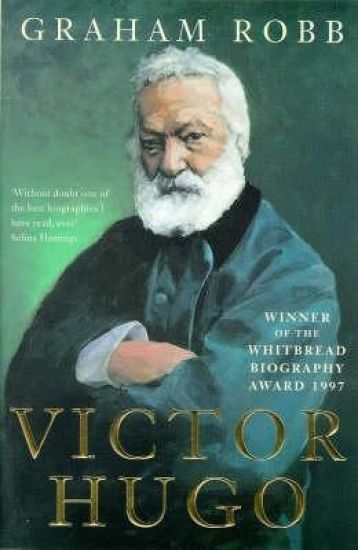
Victor Hugo

Victor Hugo

Graham Robb

Picador
1998
pokkari
Victor Hugo was the most important writer of the nineteenth century in France: leader of the Romantic movement, Revolutionary playwright, poet, epic novelist, author of the last universally accessible masterpieces in the European tradition, among them Les Misérables and The Hunchback of Notre Dame. He was also a radical political thinker and eventual exile from France, a gifted painter and architect, and a visionary who conversed with Virgil, Shakespeare, and Jesus Christ – in short, a tantalizing personality who dominated and maddened his contemporaries. Graham Robb has written an extraordinary biography that does full justice to the drama of his subject’s life – a life that Robb calls ‘the most lucid case of madness in literature’. By grasping the giant in his entirety and in his many disguises, Robb, bestselling author of The Discovery of France, rewards us with a panorama of French and European society from the Revolution to the dawn of the twentieth century. Victor Hugo won the Whitbread Award for Biography and the Royal Society of Literature award.
Victor Frankenstein, the Monster and the Shadows of Technology
In Victor Frankenstein, the Monster and the Shadows of Technology: The Frankenstein Prophecies, Romanyshyn asks eight questions that uncover how Mary Shelley’s classic work Frankenstein haunts our world. Providing a uniquely interdisciplinary assessment, Romanyshyn combines Jungian theory, literary criticism and mythology to explore answers to the query at the heart of this book: who is the monster?In the first six questions, Romanyshyn explores how Victor’s story and the Monster’s tale linger today as the dark side of Frankenstein’s quest to create a new species that would bless him as its creator. Victor and the Monster are present in the guises of climate crises, the genocides of our "god wars," the swelling worldwide population of refugees, the loss of place in digital space, the Western obsession with eternal youth and the eclipse of the biological body in genetic and computer technologies that are redefining what it means to be human. In the book’s final two questions, Romanyshyn uncovers some seeds of hope in Mary Shelley’s work and explores how the Monster’s tale reframes her story as a love story. This important book will be essential reading for academics and students of Jungian and post-Jungian theory, literature, philosophy and psychology, psychotherapists in practice and in training, and for all who are concerned with the political, social and cultural crises we face today.
Victor Frankenstein, the Monster and the Shadows of Technology
In Victor Frankenstein, the Monster and the Shadows of Technology: The Frankenstein Prophecies, Romanyshyn asks eight questions that uncover how Mary Shelley’s classic work Frankenstein haunts our world. Providing a uniquely interdisciplinary assessment, Romanyshyn combines Jungian theory, literary criticism and mythology to explore answers to the query at the heart of this book: who is the monster?In the first six questions, Romanyshyn explores how Victor’s story and the Monster’s tale linger today as the dark side of Frankenstein’s quest to create a new species that would bless him as its creator. Victor and the Monster are present in the guises of climate crises, the genocides of our "god wars," the swelling worldwide population of refugees, the loss of place in digital space, the Western obsession with eternal youth and the eclipse of the biological body in genetic and computer technologies that are redefining what it means to be human. In the book’s final two questions, Romanyshyn uncovers some seeds of hope in Mary Shelley’s work and explores how the Monster’s tale reframes her story as a love story. This important book will be essential reading for academics and students of Jungian and post-Jungian theory, literature, philosophy and psychology, psychotherapists in practice and in training, and for all who are concerned with the political, social and cultural crises we face today.
Victor Hugo) Biography

Victor Hugo) Biography

G. Robb

WW NORTON CO
1999
nidottu
Victor Hugo was the most important writer of the nineteenth century in France: leader of the Romantic movement; revolutionary playwright; poet; epic novelist; author of the last universally accessible masterpieces in the European tradition, among them Les Mis rables and The Hunchback of Notre Dame. He was also a radical political thinker and eventual exile from France; a gifted painter and architect; a visionary who conversed with Virgil, Shakespeare, and Jesus Christ; in short, a tantalizing personality who dominated and maddened his contemporaries.
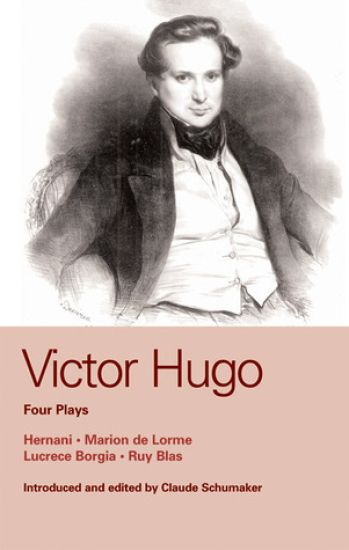
Victor Hugo: Four Plays

Victor Hugo: Four Plays

Victor Hugo

Methuen Drama
2004
nidottu
Four previously untranslated plays for the World Classics series Here are four characteristic and hugely important dramas by one of the most famous and influential European writers of the last two hundred years, translated into English for the first time, and in highly playable versions. An essential collection for students of both French and Drama
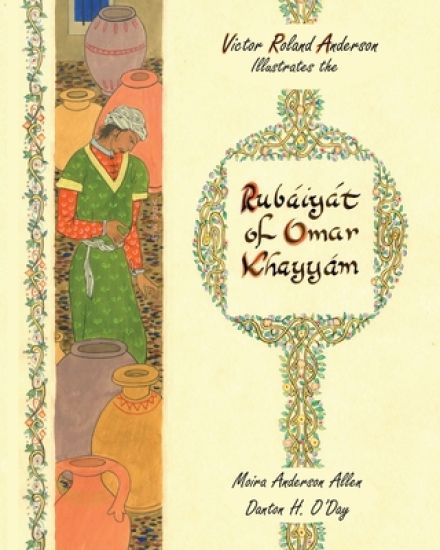
Victor Roland Anderson Illustrates the Rubaiyat of Omar Khayyam
A true artistic talent, the American artist Victor Roland Anderson illustrated verses of Edward FitzGerald's Rubaiyat of Omar Khayyam. His poetic interpretations were originally done on parchment around 1936. Now, for the first time, they are presented in this softcover book by Moira Anderson Allen, the granddaughter of Victor, and Danton O'Day, a researcher of Rubaiyat artists. After a short introduction to the artist and how the book came to be, Victor Anderson's beautifully designed pages are presented in their full glory. This is a visually appealing book that is a pleasure to read. It is perfect as a gift for anyone who loves poetry especially those who love the Rubaiyat, one of the worlds most famous collections of verse.
Victor Horta

Victor Horta

David Dernie; Alastair Carew-Cox

Thames Hudson Ltd
2018
sidottu
Victor Horta (1861–1947) is well known as the creator of Art Nouveau architecture. Following the design of the Hôtel Tassel, Brussels, in 1893, Horta produced more than 40 buildings during the following decade. This new book discusses the many influences on his designs, and his legacy. Detailed descriptions of 19 projects, including Edicule Lambeaux, Hôtel Autrique, Hôtel Max Hallet and the Brugmann Hospital, are illustrated with Horta’s original drawings and specially commissioned photographs by award-winning architectural photographer Alastair Carew-Cox. Included in this book are extensive photographs of Hôtel Solvay, one of Horta’s most important works; access to photographers had been denied for 20 years, but special access was granted to Alastair Carew-Cox in the summer of 2016 in recognition of his and Professor David Dernie’s significant contribution to the study of Horta. Victor Horta: The Architect of Art Nouveau has been prepared in close collaboration with the Horta Museum, Brussels, ensuring that it is both accurate and up to date. It will appeal to anyone interested in Art Nouveau, one of the great aesthetic movements of the early 20th century. Its richly ornamental style of fluid lines based on natural forms expressed a desire to abandon the historical styles of the 19th century and to develop a language that was beautifully crafted and thoroughly contemporary, laying the foundations for the development of modernism in architecture and interior design.
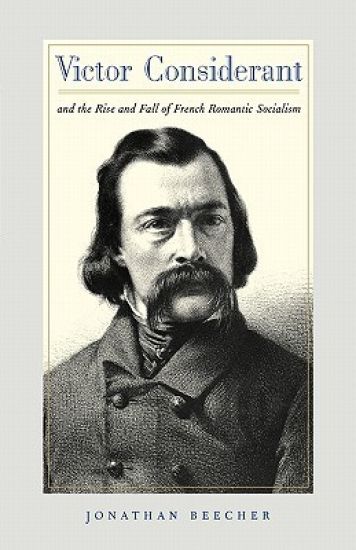
Victor Considerant and the Rise and Fall of French Romantic Socialism

Victor Considerant and the Rise and Fall of French Romantic Socialism

Jonathan Beecher

University of California Press
2001
sidottu
Jonathan F. Beecher's accomplished study is both a lively life story of one of the most engaging figures among the French romantic intellectuals of the 1840s and a compelling chronicle of early French socialism. Victor Considerant (1808-1893), a follower of the great utopian thinker Charles Fourier, played an important role in the creation of a Fourierist movement and the development of socialist journalism. In the process of conveying a rich understanding of Considerant's life, Beecher traces the rise and fall of French romantic socialism and demonstrates how the utopian visions of thinkers such as Charles Fourier came to inspire a whole generation of young radicals and reformers not only in France but also in Dostoevky's Russia and in the America of Horace Greeley and Margaret Fuller. He paints a vivid portrait of a particularly important period of European intellectual history and gives his readers insight into the experience of a generation of thinkers and political activists. This comprehensive history will become the definitive work on Victor Considerant, and - along with Beecher's classic study of Fourier - a major contribution to the history of French socialism in the nineteenth century.