Kirjojen hintavertailu. Mukana 11 627 425 kirjaa ja 12 kauppaa.

Kirjahaku

Etsi kirjoja tekijän nimen, kirjan nimen tai ISBN:n perusteella.

1000 tulosta hakusanalla Victor-Gilbert Petitjean

Victor

Victor

Sacha Black

Atlas Black Publishing
2018
pokkari
When Eden East kills someone, she expects them to stay dead. It's only polite, after all.Exhausted from battle and finally bound to her soulmate, all Eden wants to do is attend university and spend time with Trey. When her demon-ex, Victor, suddenly returns from the afterlife, Eden's convinced he's out for revenge. The last thing she expects is for him to ask for help, especially when he's being controlled by evil forces.But when an enchanted lock and key go missing, she's no longer sure who she can trust. If Eden can't find them in time, not only will her life, and her heart, be torn apart, the very world she lives in could be destroyed - forever. Victor will transport fans of The Red Queen, The Young Elites, and The Lunar Chronicles to a world unlike any other...The Eden East Novels: Book 0 - Sirens (coming soon) Book 1 - Keepers Book 2 - Victor
Adams & Victor's Manual of Neurology

Adams & Victor's Manual of Neurology

Victor Maurice; Ropper Allan

MCGRAW-HILL EDUCATION - EUROPE
2001
nidottu
Principles of Neurology, 7/e Companion Handbook--the at a glance summary of the clinical portions of its market-leading parent text...now in its new edition. Key features include: * Authoritative guidelines for diagnosis and treatment referenced to Adams & Victoris Principles of Neurology, 7/e * New tables, algorithms and charts make the book a quick reference for all neurologic clinicians * The most current information in the rapidly changing area of neurology, such as stroke, Parkinson's and Alzheimeris
Victor Segalen and the Aesthetics of Diversity

Victor Segalen and the Aesthetics of Diversity

Charles Forsdick

Oxford University Press
2000
sidottu
From his premature death in 1919 until the final decades of the twentieth century, the French traveller, author, and naval doctor Victor Segalen remained relatively obscure, his extensive work on exoticism largely unavailable. With the appearance of the Complete Works in 1995, the dramatic scope and wide-ranging implications of his reflections on diversity were at last fully apparent. Segalen's understanding of the exotic is radically different from that of his colonial contemporaries. His exoticism - or Aesthetics of Diversity - focuses on the instability of contact between different cultures and represents a unique response to the decline of diversity triggered by colonialism and Westernization. Recent attention to Segalen in a variety of fields - post-modern sociology, post-colonialism, literary criticism, anthropology - indicates his role as a precursory theorist of the exotic whose work is of increasing contemporary relevance. At a moment when exoticism is rapidly emerging as a term of critical currency, this study of the genesis of Segalen's aesthetics is a timely contribution to work in this area.
Victor Cousin

Victor Cousin

Delphine Antoine-Mahut; Daniel Whistler

Oxford University Press
2025
sidottu
The first English translation of some of Victor Cousin's most important philosophical writings for over 150 years, accompanied by extensive contextual and analytic resources from a team of internationally recognized Cousin scholars. Victor Cousin was a towering philosophical figure of the nineteenth century: no French philosopher since has fully escaped his shadow. This edition of Philosophical Fragments brings together a series of Cousin's most accessible and significant texts to introduce English-language readers to his thought, along with commentaries on his relationship to Cartesianism, his role in the invention of the historiography of philosophy, as well as his lasting institutional legacy. The edition includes many of Cousin's most significant shorter pieces, such as his 1826 Preface to Philosophical Fragments, the 'manifesto' by means of which he relaunched the French spiritualist project and set out his own eclectic project in the history of philosophy; his 1833 Preface to Philosophical Fragments, in which he responds to mounting criticism of his version of spiritualism by setting out definitively his relations to Descartes, eighteenth-century sensualism, German Idealism, and Catholic theology; and a selection of the Fragments themselves, charting the genesis of his philosophy from the 1810s to the 1840s.
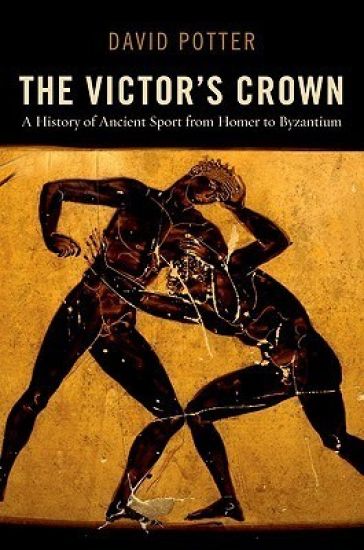
Victor's Crown: A History of Ancient Sport from Homer to Byzantium
The Victor's Crown brings to vivid life the signal role of sport in the classical world. Ranging over a dozen centuries--from Archaic Greece through to the late Roman and early Byzantine empires--David Potter's lively narrative shows how sport, to the ancients, was not just a dim reflection of religion and politics but a potent social force in its own right. The passion for sport among the participants and fans of antiquity has been matched in history only by our own time. Potter first charts the origins of competitive athletics in Greece during the eighth century BC and the emergence of the Olympics as a preeminent cultural event. He focuses especially on the experiences of spectators and athletes, especially in violent sports such as boxing and wrestling, and describes the physiology of conditioning, training techniques, and sport's role in education. Throughout, we meet the great athletes of the past and learn what made them great. The rise of the Roman Empire transformed the sporting world by popularizing new entertainments, particularly gladiatorial combat, a specialized form of chariot racing, and beast hunts. Here, too, Potter examines sport from the perspectives of both athlete and spectator, as he vividly describes competitions held in such famous arenas as the Roman Coliseum and the Circus Maximus. The Roman government promoted and organized sport as a central feature of the Empire, making it a sort of common cultural currency to the diverse inhabitants of its vast territory. While linking ancient sport to events such as religious ceremonies and aristocratic displays, Potter emphasizes above all that it was the thrill of competition--to those who competed and those who watched--that ensured sport's central place in the Greco-Roman world. "Vivid and authoritative. Potter skillfully reveals how the gymnasium lay at the heart of Greek life and culture, but his passion is clearly for the Olympics. When Potter moves on to Roman sport, things get livelier still. He meticulously traces the origins, careers and lifestyles of athletes, gladiators and charioteers alike, and demolished some cherished myths along the way. Most gladiatorial combats apparently ended in surrender, not death, although a crowd might well call out "ingula " (kill ), running their thousands of thumbs under their throats in the original 'thumbs up' gesture. Fascinating and impressive."--James McConnachie, Sunday Times
Selected Poems of Victor Hugo – A Bilingual Edition

Selected Poems of Victor Hugo – A Bilingual Edition

Victor Hugo; E.h. Blackmore; A.m. Blackmore

University of Chicago Press
2004
nidottu
Though known as the author of Notre Dame de Paris and Les Miserables, Victor Hugo was primarily a poet - one of the most important and prolific in French history, Illustrated with Hugo's own paintings and graphic work, this lucid, award-winning translation of a generous selection of Hugo's poetry pays homage to a towering figure of nineteenth-century literature, capturing the energy, beauty, and drama of a visionary artist.
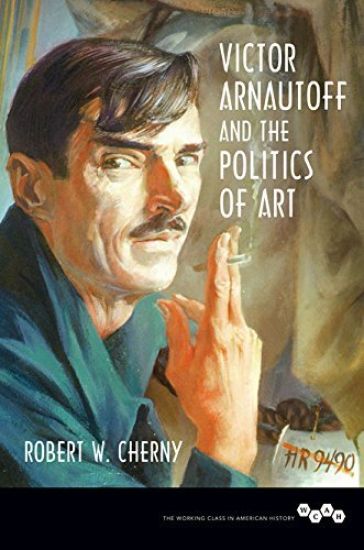
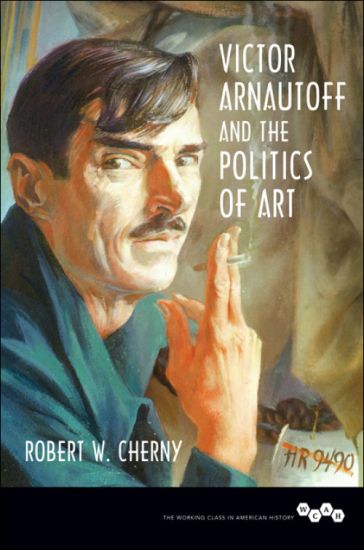
Victor Arnautoff and the Politics of Art

Victor Arnautoff and the Politics of Art

Robert W. Cherny

University of Illinois Press
2017
sidottu
Victor Arnautoff reigned as San Francisco's leading mural painter during the New Deal era. Yet that was only part of an astonishing life journey from Tsarist officer to leftist painter. Robert W. Cherny's masterful biography of Arnautoff braids the artist's work with his increasingly leftist politics and the tenor of his times. Delving into sources on Russian émigrés and San Francisco's arts communities, Cherny traces Arnautoff's life from refugee art student and assistant to Diego Rivera to prominence in the New Deal's art projects and a faculty position at Stanford University. As Arnautoff's politics moved left, he often incorporated working people and people of color into his treatment of the American past and present. In the 1950s, however, his participation in leftist organizations and a highly critical cartoon of Richard Nixon landed him before the House Un-American Activities Committee and led to calls for his dismissal from Stanford. Arnautoff eventually departed America, a refugee of another kind, now fleeing personal loss and the disintegration of the left-labor culture that had nurtured him, before resuming his artistic career in the Soviet Union that he had fought in his youth to destroy.
Victor Arnautoff and the Politics of Art

Victor Arnautoff and the Politics of Art

Robert W. Cherny

University of Illinois Press
2017
nidottu
Victor Arnautoff reigned as San Francisco's leading mural painter during the New Deal era. Yet that was only part of an astonishing life journey from Tsarist officer to leftist painter. Robert W. Cherny's masterful biography of Arnautoff braids the artist's work with his increasingly leftist politics and the tenor of his times. Delving into sources on Russian émigrés and San Francisco's arts communities, Cherny traces Arnautoff's life from refugee art student and assistant to Diego Rivera to prominence in the New Deal's art projects and a faculty position at Stanford University. As Arnautoff's politics moved left, he often incorporated working people and people of color into his treatment of the American past and present. In the 1950s, however, his participation in leftist organizations and a highly critical cartoon of Richard Nixon landed him before the House Un-American Activities Committee and led to calls for his dismissal from Stanford. Arnautoff eventually departed America, a refugee of another kind, now fleeing personal loss and the disintegration of the left-labor culture that had nurtured him, before resuming his artistic career in the Soviet Union that he had fought in his youth to destroy.
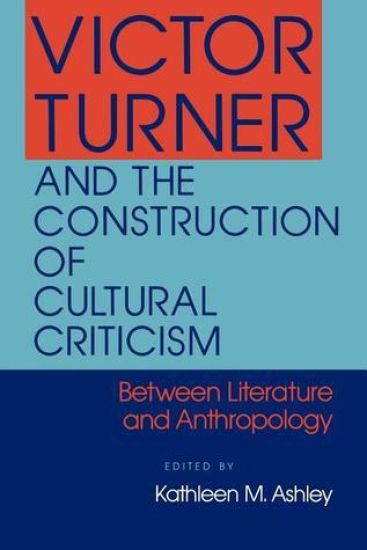
Victor Turner and the Construction of Cultural Criticism
During the past twenty years of intellectual boundary-crossing and widespread borrowing between fields, Turner's notions of "liminality" and the "processual" have been adopted by many theorists of art and society. This is the first volume to place individual Turner concepts into the context of his entire career and to spell out their implications for literary studies.
Victor Papanek

Victor Papanek

Alison J. Clarke

MIT Press
2021
sidottu
The history and controversial roots of the social design movement, explored through the life and work of its leading pioneer, Victor Papanek.In Victor Papanek- Designer for the Real World, Alison Clarke explores the social design movement through the life of its leading pioneer, the Austrian American designer, theorist, and activist Victor Papanek. Papanek's 1971 best seller, Design for the Real World- Human Ecology and Social Change has been translated into 22 languages and never fallen out of print. Its politics of social design, anti-corporatism, and environmental sustainability have found renewed pertinence in the twenty-first century and dominate the agendas of design schools today. Drawing extensively on previously unexplored archival sources, Clarke uncovers and contextualizes the movement's controversial origins and contradictions.
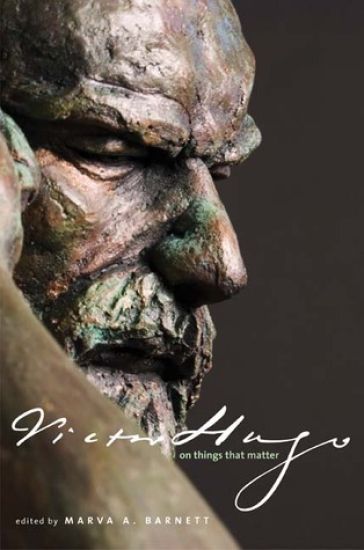
Victor Hugo on Things That Matter
Victor Hugo on Things That Matter gives English speakers the social, historical, cultural, and biographical context that is essential for enjoying the writing and art of this genius of nineteenth-century France. The book’s topical organization lets readers investigate Hugo’s ideas about private and personal concerns—love, children, grief, nature, God—as well as public and politically important issues—liberty and democracy, tyranny, social justice, humanity, peace, and war. Unlike other Hugo anthologies, Victor Hugo on Things That Matter offers introductions and notes in English and includes twenty-five of Hugo’s watercolors and drawings. Readers will find key Hugo texts in the original French, along with the following supplemental information in English: an overview of Hugo’s importance and his private and public personas;introductions to each chapter;historical and cultural explanatory notes;a time line of Hugo’s life and work;suggestions for further reading.Marva Barnett is professor at the University of Virginia, where she also serves as director of the Teaching Resource Center.
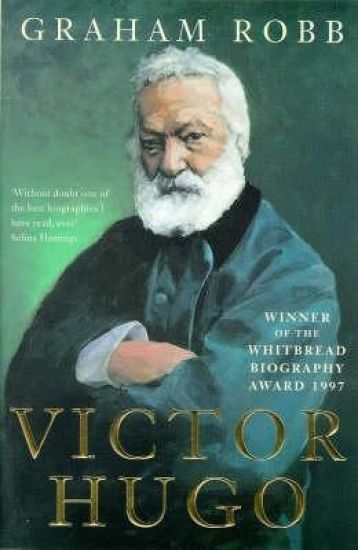
Victor Hugo

Victor Hugo

Graham Robb

Picador
1998
pokkari
Victor Hugo was the most important writer of the nineteenth century in France: leader of the Romantic movement, Revolutionary playwright, poet, epic novelist, author of the last universally accessible masterpieces in the European tradition, among them Les Misérables and The Hunchback of Notre Dame. He was also a radical political thinker and eventual exile from France, a gifted painter and architect, and a visionary who conversed with Virgil, Shakespeare, and Jesus Christ – in short, a tantalizing personality who dominated and maddened his contemporaries. Graham Robb has written an extraordinary biography that does full justice to the drama of his subject’s life – a life that Robb calls ‘the most lucid case of madness in literature’. By grasping the giant in his entirety and in his many disguises, Robb, bestselling author of The Discovery of France, rewards us with a panorama of French and European society from the Revolution to the dawn of the twentieth century. Victor Hugo won the Whitbread Award for Biography and the Royal Society of Literature award.