Kirjahaku
Etsi kirjoja tekijän nimen, kirjan nimen tai ISBN:n perusteella.
1000 tulosta hakusanalla Virginia L Back

36til recently, natural gas has not been in the limelight, but that situation is changing fast. Complex issues of energy use and safety are being brought down to in my backyard context for millions of Americans. This book provides balanced information about LNG so people can make informed decisions about whether they want to be neighbors of an LNG facility.


Elements of Moral Experience in Clinical Ethics Training and Practice
Virginia L. Bartlett
TAYLOR FRANCIS LTD
2023
nidottu
Elements of Moral Experience in Clinical Ethics Training and Practice: Sharing Stories with Strangers is a philosophical and professional memoir of the education, training, and professional development of becoming a clinical ethics consultant. Utilizing a phenomenological and narrative lens, this book offers a fresh and energizing window into the field of healthcare ethics by pairing compelling clinical narratives of what it is like to do clinical ethics consultation with clear reflections and accessible introductions to key philosophical, professional, and humanistic roots for responsible practice. Each chapter contains a firsthand account of a clinical ethics encounter – with vivid detail, verbatim dialogue, and internal monologues that reveal the consultant’s reflections throughout the consultation. Following or at times woven into the clinical story, each chapter explores elements of practice by highlighting philosophical, professional, and humanistic resources that connect to and shape meaning in everyday clinical ethics work, drawing from phenomenologically and narratively oriented ethicists (Richard Zaner, Andrea Frolic, Mark Bliton, and Stuart Finder), influential thinkers in adjacent fields (Alfred Schutz, Kurt Wolff, and Pierre Bourdieu), and creative writers and artists (Barry Lopez, Joe Henry, Audre Lorde, Robert M. Pirsig, and Dar Williams). The innovative structure signposts and illustrates distinct elements of clinical ethics experience and practice, inviting the reader to move through the book in different ways, according to their own learning goals, as graduate students, advanced trainees, practicing clinical ethicists, or ethics educators. By focusing on themes identified in the unique instances or experiences of first-hand accounts, or by tracing the philosophical reflections on grounding and orienting texts from the field, readers can access different elements of clinical ethics practice while the book as a whole models a process for considering and interrogating these elements. Elements of Moral Experience in Clinical Ethics Training and Practice: Sharing Stories With Strangers invites readers to articulate, reflect on, share, and ultimately learn from their own experiences in clinical ethics consultation.

Elements of Moral Experience in Clinical Ethics Training and Practice
Virginia L. Bartlett
TAYLOR FRANCIS LTD
2023
sidottu
Elements of Moral Experience in Clinical Ethics Training and Practice: Sharing Stories with Strangers is a philosophical and professional memoir of the education, training, and professional development of becoming a clinical ethics consultant. Utilizing a phenomenological and narrative lens, this book offers a fresh and energizing window into the field of healthcare ethics by pairing compelling clinical narratives of what it is like to do clinical ethics consultation with clear reflections and accessible introductions to key philosophical, professional, and humanistic roots for responsible practice. Each chapter contains a firsthand account of a clinical ethics encounter – with vivid detail, verbatim dialogue, and internal monologues that reveal the consultant’s reflections throughout the consultation. Following or at times woven into the clinical story, each chapter explores elements of practice by highlighting philosophical, professional, and humanistic resources that connect to and shape meaning in everyday clinical ethics work, drawing from phenomenologically and narratively oriented ethicists (Richard Zaner, Andrea Frolic, Mark Bliton, and Stuart Finder), influential thinkers in adjacent fields (Alfred Schutz, Kurt Wolff, and Pierre Bourdieu), and creative writers and artists (Barry Lopez, Joe Henry, Audre Lorde, Robert M. Pirsig, and Dar Williams). The innovative structure signposts and illustrates distinct elements of clinical ethics experience and practice, inviting the reader to move through the book in different ways, according to their own learning goals, as graduate students, advanced trainees, practicing clinical ethicists, or ethics educators. By focusing on themes identified in the unique instances or experiences of first-hand accounts, or by tracing the philosophical reflections on grounding and orienting texts from the field, readers can access different elements of clinical ethics practice while the book as a whole models a process for considering and interrogating these elements. Elements of Moral Experience in Clinical Ethics Training and Practice: Sharing Stories With Strangers invites readers to articulate, reflect on, share, and ultimately learn from their own experiences in clinical ethics consultation.

Anticipatory Grief: A Time to Grow Spiritually
Virginia L. Campbell
Independently-Published
2019
nidottu
Anticipatory Grief is different from the grief that is felt when a loved one passes quickly and unexpectedly. Sometimes our loved ones take the long road to leave this earth and pass to their Heavenly home. This time frame creates a period of time called Anticipatory Grief. The death is anticipated, but time moves slowly and the long sad grieving period makes life difficult for all involved. Emotions run the gambit from being thankful they are still alive, to wishing it were all over. The guilt, the emotional pain, the fear of not having the loved one in the future all takes its toll on family and close friends. The purpose of this book is to turn this time frame from something that is a negative on the surface to a positive that can serve you for the rest of your life. The anticipatory grieving time is a perfect time to grow spiritually as you learn more about and practice love, compassion, harmony and service to others. As the title suggests, using this time to grow spiritually can turn this time into a blessing and the skills learned can make the time easier after the death does occur. Many other good books focus on the time frame after death that can help you to work through the grief that still happens after the death does occur. This book focuses on the time before, while one is anticipating the death that is taking a long time to happen. This information is presented for everyone and for all different religious persuasions.How would you benefit by putting the suggestions in this book into practice? At the very least, it will make you a nicer person. At the very most, it will help you to grow more spiritual. That is a win-win situation for you, your loved ones and our planet. If all of humanity would find a way to become nicer it would raise the spiritual energy level exponentially and the whole world would benefit. It starts with one person at a time... You.

The Pagan Princess: A Story of the Greatest Career Women of Ancient Times, the Vestal Virgins of Rome
Virginia L. Montgomery
Literary Licensing, LLC
2011
sidottu
The Pagan Princess is a historical novel written by Virginia L. Montgomery, which tells the story of the Vestal Virgins of Rome, who were considered the greatest career women of ancient times. The book follows the life of a young girl named Julia, who is born into a wealthy family in ancient Rome. Julia is chosen to become a Vestal Virgin, a prestigious role that requires her to remain celibate for thirty years and dedicate her life to the goddess Vesta. As Julia begins her training, she faces many challenges, including jealousy from other girls, pressure from her family, and the temptation to break her vow of celibacy. However, she perseveres and becomes one of the most respected Vestal Virgins in Rome. The story also explores the political and social climate of ancient Rome, including the power struggles between the emperor and the Vestal Virgins, and the role of women in society. Through Julia's journey, readers gain insight into the inner workings of the Vestal Virgins and the importance of their role in Roman society. Overall, The Pagan Princess is a fascinating and engaging novel that offers a unique perspective on ancient Rome and the women who played a crucial role in its history.This scarce antiquarian book is a facsimile reprint of the old original and may contain some imperfections such as library marks and notations. Because we believe this work is culturally important, we have made it available as part of our commitment for protecting, preserving, and promoting the world's literature in affordable, high quality, modern editions, that are true to their original work.

The Pagan Princess: A Story of the Greatest Career Women of Ancient Times, the Vestal Virgins of Rome
Virginia L. Montgomery
Literary Licensing, LLC
2011
nidottu
A key factor in the failure of the intelligence community is the resistance to information sharing. Organizational culture is an essential link in understanding the resistance to information sharing. Using Edgar Schein's organizational culture model, this paper analyzes the organizational culture of the Department of Homeland Security and the Federal Bureau Investigation with an eye toward how organizational cultures of the Department of Homeland Security and the Federal Bureau impact information sharing. The Department of Homeland Security must identify, understand, and work through the barriers of organizational cultures within the intelligence community. Part of creating a culture of information sharing involves changing the way people value information sharing and collaboration by encouraging behaviors that foster sharing and discouraging those that do not. The Department of Homeland Security lacks several key characteristics in building an organizational culture such as a stable membership and shared history. The Department of Homeland Security is a newly structured organization with multiple agencies and departments with diverse missions. The creation of a unified organizational culture within the Department of Homeland Security will take time to develop because of the magnitude and complexity of the organization. In comparison, the Federal Bureau of Investigation was established in 1908 as a law enforcement-centric organization. However, the Federal Bureau of Investigation's Director, Robert Mueller, changed the organization to threat-based and intelligence driven organization after the events of 9/11. The Federal Bureau of Investigation has maintained its organizational culture while undertaking reorganization. The Department of Homeland Security and the Federal Bureau of Investigation have an opportunity to bridge the information sharing gap through the development of joint threat assessments. The Federal Bureau of Investigation and the Department of Homel This work has been selected by scholars as being culturally important, and is part of the knowledge base of civilization as we know it. This work was reproduced from the original artifact, and remains as true to the original work as possible. Therefore, you will see the original copyright references, library stamps (as most of these works have been housed in our most important libraries around the world), and other notations in the work. This work is in the public domain in the United States of America, and possibly other nations. Within the United States, you may freely copy and distribute this work, as no entity (individual or corporate) has a copyright on the body of the work. As a reproduction of a historical artifact, this work may contain missing or blurred pages, poor pictures, errant marks, etc. Scholars believe, and we concur, that this work is important enough to be preserved, reproduced, and made generally available to the public. We appreciate your support of the preservation process, and thank you for being an important part of keeping this knowledge alive and relevant.

The Novels of Zsigmond Móricz in the Context of European Realism
Virginia L. Lewis
PETER LANG PUBLISHING INC
2022
sidottu
The Novels of Zsigmond Móricz in the Context of European Realism is the first English-language monograph on one of Hungary’s—and Central Europe’s—most important modern authors. Using a thematic approach that privileges literary characters as stand-ins for real human beings, Virginia L. Lewis investigates Móricz’s thematization of individual agency in seven realist novels that form the foundation of the author’s reputation as a major twentieth-century novelist. Lewis does an outstanding job of showcasing the research results of the many Hungarian scholars who have studied Móricz’s narrative output over the past century, while also bringing decidedly new perspectives to the table in introducing the author to an English-speaking audience. Utilizing the theoretical impulses of scholars such as Horst and Ingrid Daemmrich, Margaret Archer, Jean-Paul Sartre, and Ibrahim Taha, among others, Lewis forges a new and productive path in Móricz scholarship, while also making his oeuvre accessible to a global audience. Any reader with an interest in Hungarian and Central European narrative will find this study enormously useful for the revelations it brings regarding Móricz’s poignant and brilliant critique of the corrosive influence of commodification and greed on human agency in modern society. "Informed by theory and grounded in a critical understanding of Hungarian social history in the first half of the twentieth century, Lewis’s engaging study of the realist novels of Zsigmond Móricz compels readers to think in new ways about questions of human agency amongst Hungary’s lower and middle classes as this played out against the backdrop of capitalist transformation and pronounced social conflicts and injustices in the decades leading up to World War II. Skillfully structured around succinct analyses of seven of Móricz’s key texts, Lewis’s book addresses a sizable gap in the English-language scholarship on one of Hungary’s greatest writers, and will be a welcome addition to the libraries of literary scholars and social and intellectual historians alike." —Steven Jobbitt, Associate Professor of Central and Eastern European History, Lakehead University, Thunder Bay, Canada
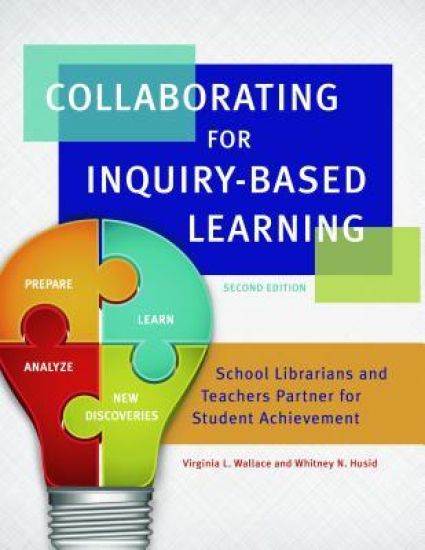
Collaborating for Inquiry-Based Learning
Virginia L. Wallace; Whitney N. Husid
Libraries Unlimited Inc
2016
nidottu
This newly updated and expanded second edition of Collaborating for Inquiry-Based Learning explains effective IBL scaffolding and the school librarian's role as the lead in the collaborative process of inquiry-based teaching.Want to learn how to easily put inquiry theory into practice in your school library? This newly revised and expanded practical resource links pedagogical theory, research, and practical application of Inquiry-Based Learning (IBL). An important resource for school librarians, classroom teachers, and school library preparation programs, this thoroughly updated second edition of Collaborating for Inquiry-Based Learning explores Inquiry-Based Learning in greater depth and addresses new educational insights. Readers will learn the new research model PLAN and understand how the steps Prepare, Learn, Analyze, and New Discoveries define a deliberative, metacognitive process that offers simplicity and flexibility. This step-by-step guide moves new and experienced educators seamlessly from assessment of students' needs and prior knowledge through formative and summative assessments to reflection. It offers practical applications for immediate use by educators with students and makes it clear why the school librarian is ideally suited to be the lead in the collaborative process of inquiry-based teaching. This comprehensive guide to IBL is appropriate as a main text or supplementary reading for courses in instructional design and curriculum.


Gwendolyn Claire VS The Foxfield Four
Virginia L. Pulitzer
Createspace Independent Publishing Platform
2010
nidottu

On Tugboats: Stories of Work and Life Aboard
Virginia L. Thorndike
Createspace Independent Publishing Platform
2010
nidottu



For the Young and Old I'm Tadpole: Volume 5
Virginia L. Woods
Createspace Independent Publishing Platform
2012
nidottu

What in the World Happened in the Kingdom of Judah?
Virginia L Smith
TEACH Services, Inc.
2023
pokkari
The Impact of Organizational Culture on Information Sharing
Virginia L. Egli
Createspace Independent Publishing Platform
2012
nidottu