Kirjojen hintavertailu. Mukana 11 342 296 kirjaa ja 12 kauppaa.

Kirjahaku

Etsi kirjoja tekijän nimen, kirjan nimen tai ISBN:n perusteella.

1000 tulosta hakusanalla W D Westervelt

W.D. Ehrhart in Conversation
Named by Studs Turkel as ""the poet of the Vietnam War,"" W.D. Ehrhart has written and lectured on a wide variety of topics and has been a preëminent voice on the Vietnam War for decades. Revered in academia, he has been the subject of many master’s theses, doctoral dissertations, journals and books for which he was interviewed. Yet only two major interviews have been published to date. This complete collection of unpublished interviews from 1991 through 2016 presents Ehrhart's developing views on a range of subjects over three decades.
W.D. Gann Interview by Richard D. Wyckoff

W.D. Gann Interview by Richard D. Wyckoff

W D Gann; Richard D Wyckoff

WWW.THERICHESTMANINBABYLON.ORG
2009
sidottu
It appears to be a fact that Mr. W. D. Gann has developed an entirely new idea as to the principles governing market movements. He bases his operations upon certain natural laws which, though existing since the world began, have only in recent years been subjected to the will of man and added to the list of so-called modern discoveries. We have asked Mr. Gann for an outline of his work, and have secured some remarkable evidence as to the results obtained there from. W. D. Gann's description of his experience and methods is given herewith. It should be read with recognition of the established fact that Mr. Gann's predictions have proved correct in a large majority of instances...
W.D. Webster Illustrated Catalogue of Ethnographical Specimens - Second Edition

W.D. Webster Illustrated Catalogue of Ethnographical Specimens - Second Edition

W D Webster

Createspace Independent Publishing Platform
2017
pokkari
William Downing Webster (1868 - 1913) was a British ethnographic dealer and collector. In 1895 he began to issue illustrated ethnographic catalogues, 17 with illustrations, 14 with photographs.The 14 catalogues with photographs (18 - 31) are color corrected, cleaned and bundled in this publication.Includes indexes for object type and region that can be cross referenced to find specific items on exact pages.This Second Edition also includes and index for collection numbers.This publication is meant for academics, researchers and collectors
Finding W.D. Fard

Finding W.D. Fard

John Andrew Morrow

Cambridge Scholars Publishing
2019
sidottu
Since his arrival in Detroit on July 4, 1930, W.D. Fard, known also as Wallace Fard Muhammad and over fifty other aliases, has elicited an enormous amount of curiosity. Who was this man who claimed that he was both the Messiah and the Mahdi, and who was identified as God in Person by his disciple, Elijah Muhammad, whom he reportedly appointed as his Final Messenger? The people who actually met him, and the scholars who have studied him, have suggested that he was variously an African American, an Arab from Syria, Lebanon, Algeria, Morocco or Saudi Arabia, a Jamaican, a Turk, an Afghan, an Indo-Pakistani, an Iranian, an Azeri, a white American, a Bosnian, a Mexican, a Greek or even a Jew. In an attempt to determine the origins of W.D. Fard, most scholars have relied on his teachings as passed down, and perhaps modified, by Elijah Muhammad. Some have suggested that he was a member of the Moorish Science Temple of America or the Ahmadiyyah Movement. Others have suggested that he was a Druze or a Shiite.Finding W.D. Fard: Unveiling the Identity of the Founder of the Nation of Islam provides an overview of the scholarly literature related to this mysterious subject and the theories concerning his ethnic and racial origins. It provides the most detailed analysis of his teachings to date in order to identify their original and multifarious sources. Finding W.D. Fard considers the conflicting views shared by his early followers to decipher the doctrine he actually taught. Did W.D. Fard really profess to be Allah, or was he deified after his death by Elijah Muhammad? The book features a meticulous study of any and all subjects who fit the profile of W.D. Fard, and provides the most detailed information regarding his life to date. It also offers an overview of turn-of-the-20th-century Islam in the state of Oregon, demonstrating how much W.D. Fard learned about the Muslim faith while residing in the Pacific Northwest. The work finishes with a series of conclusions and suggestions for further scholarship.
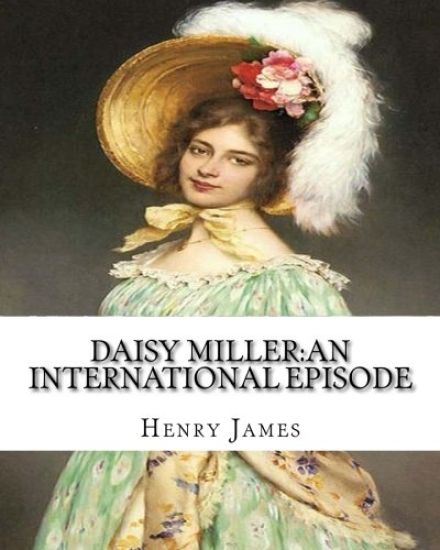
Daisy Miller: an international episode, By Henry James introdutcion By W.D.Howells: William Dean Howells (March 1, 1837 - May 11, 1920)
Daisy Miller is a novella by Henry James that first appeared in Cornhill Magazine in June-July 1878, and in book form the following year. 1] It portrays the courtship of the beautiful American girl Daisy Miller by Winterbourne, a sophisticated compatriot of hers. His pursuit of her is hampered by her own flirtatiousness, which is frowned upon by the other expatriates when they meet in Switzerland and Italy.Plot summary Annie "Daisy" Miller and Frederick Winterbourne first meet in Vevey, Switzerland, in a garden of the grand hotel 2] where Winterbourne is allegedly vacationing from his studies (an attachment to an older lady is rumoured). They are introduced by Randolph Miller, Daisy's 9-year-old brother. Randolph considers their hometown of Schenectady, New York, to be absolutely superior to all of Europe. Daisy, however, is absolutely delighted with the continent, especially the high society she wishes to enter. Winterbourne is at first confused by her attitude, and though greatly impressed by her beauty, he soon determines that she is nothing more than a young flirt. He continues his pursuit of Daisy in spite of the disapproval of his aunt, Mrs. Costello, who spurns any family with so close a relationship to their courier as the Millers have with their Eugenio. She also thinks Daisy is a shameless girl for agreeing to visit the Ch teau de Chillon with Winterbourne after they have known each other for only half an hour. The next day, the two travel to Ch teau de Chillon and although Winterbourne had paid the janitor for privacy, Daisy is not quite impressed. Winterbourne then informs Daisy that he must go to Geneva the next day. Daisy feels disappointment and chaffs him, eventually asking him to visit her in Rome later that year. In Rome, Winterbourne and Daisy meet unexpectedly in the parlor of Mrs. Walker, an American expatriate. Her moral values have adapted to those of Italian society. Rumors about Daisy meeting with young Italian gentlemen make her socially exceptionable under these criteria. Winterbourne learns of Daisy's increasing intimacy with a young Italian of questionable society, Giovanelli, as well as the growing scandal caused by the pair's behavior. Daisy is undeterred by the open disapproval of the other Americans in Rome, and her mother seems quite unaware of the underlying tensions. Winterbourne and Mrs. Walker attempt to persuade Daisy to separate from Giovanelli, but she refuses any help that is offered. One night, Winterbourne takes a walk through the Colosseum and sees a young couple sitting at its center. He realizes that they are Giovanelli and Daisy. Winterbourne, infuriated with Giovanelli, asks him how he could dare to take Daisy to a place where she runs the risk of catching "Roman Fever". Daisy says she does not care and Winterbourne leaves them. Daisy falls ill and dies a few days later.......... Henry James (15 April 1843 - 28 February 1916) was an American-born writer. He is regarded as one of the key figures of 19th-century literary realism. He was the son of Henry James, Sr. and the brother of philosopher and psychologist William James and diarist Alice James. He is best known for a number of novels showing Americans encountering Europe and Europeans. His method of writing from a character's point of view allowed him to explore issues related to consciousness and perception, and his style in later works has been compared to impressionist painting. His imaginative use of point of view, interior monologue and unreliable narrators brought a new depth to narrative fiction....