

Kirjahaku
Etsi kirjoja tekijän nimen, kirjan nimen tai ISBN:n perusteella.
1000 tulosta hakusanalla W G Simms
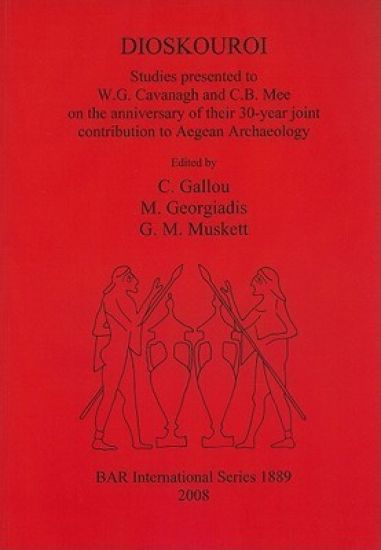
DIOSKOUROI Studies presented to W.G. Cavanagh and C.B. Mee on the anniversary of their 30-year joint contribution to Aegean Archaeology
BAR Publishing
2008
nidottu
31 essays on the Bronze Age Aegean which cover a wide range of topics. They are grouped under the following headings: cult and death; Bronze Age material culture; gender; approaches to art; themes of ancient and modern identity; Homer once again; landscape and survey; ancient geography and regional studies; Sparta and Laconia.

D.A.W.G. Tales Down Ass White Girls Volume One
Q. Grover; D. King
Createspace Independent Publishing Platform
2015
nidottu

Raum und Zeit in W.G. Sebalds Erzählung "Paul Bereyter" aus "Die Ausgewanderten"
Anonymous
GRIN Verlag
2022
nidottu
Fotografie als Erinnerung in W.G. Sebalds "Austerlitz"
GRIN Verlag
2024
nidottu
Die Erzählperspektive in W.G. Sebalds "Max Aurach" aus "Die Ausgewanderten"
Jennifer Keller
Grin Publishing
2007
pokkari


Osobennosti olimpijskogo stroitel'stwa w g.Sochi
Lada Nikitina
Lap Lambert Academic Publishing
2019
nidottu
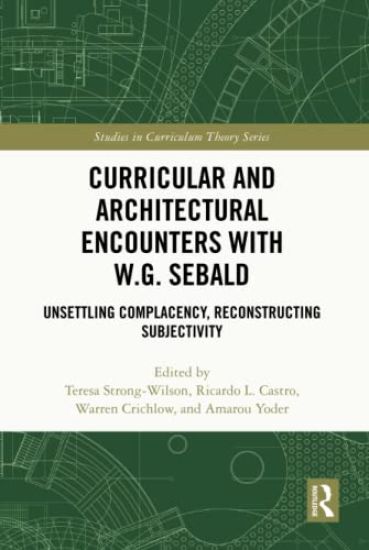
Curricular and Architectural Encounters with W.G. Sebald
TAYLOR FRANCIS LTD
2022
sidottu
This book engages with the writings of W.G. Sebald, mediated by perspectives drawn from curriculum and architecture, to explore the theme of unsettling complacency and confront difficult knowledge around trauma, discrimination and destruction. Moving beyond overly instrumentalist and reductive approaches, the authors combine disciplines in a scholarly fashion to encourage readers to stretch their understandings of currere. The chapters exemplify important, timely and complicated conversations centred on ethical response and responsibility, in order to imagine a more just and aesthetically experienced world. In the analysis of BILDUNG as human formation, the book illuminates the pertinent lessons to be learned from the works of Sebald and provokes further investigations into the questions of memory, grief, and limits of language. Through its juxtaposition of curriculum and architecture, and using the prose of Sebald as a prism, the book revitalizes questions about education and ethics, probes the unsettling of complacency, and enables conversation around difficult knowledge and ethical responsibility, as well as offering hope and resolve.An important intervention in standard approaches to understanding currere, this book provides essential context for scholars and educators with interests in the history of education, curriculum architectural education and practice studies, memory studies, narrative research, Sebaldian studies, and educational philosophy.
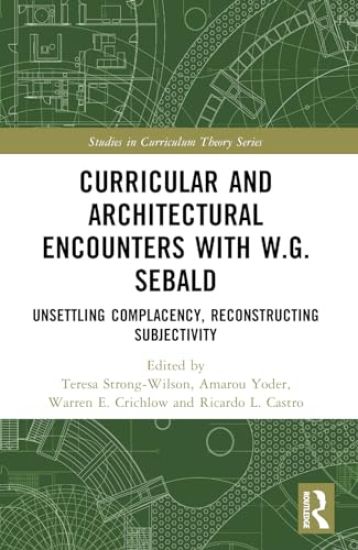
Curricular and Architectural Encounters with W.G. Sebald
TAYLOR FRANCIS LTD
2024
nidottu
This book engages with the writings of W.G. Sebald, mediated by perspectives drawn from curriculum and architecture, to explore the theme of unsettling complacency and confront difficult knowledge around trauma, discrimination and destruction. Moving beyond overly instrumentalist and reductive approaches, the authors combine disciplines in a scholarly fashion to encourage readers to stretch their understandings of currere. The chapters exemplify important, timely and complicated conversations centred on ethical response and responsibility, in order to imagine a more just and aesthetically experienced world. In the analysis of BILDUNG as human formation, the book illuminates the pertinent lessons to be learned from the works of Sebald and provokes further investigations into the questions of memory, grief, and limits of language. Through its juxtaposition of curriculum and architecture, and using the prose of Sebald as a prism, the book revitalizes questions about education and ethics, probes the unsettling of complacency, and enables conversation around difficult knowledge and ethical responsibility, as well as offering hope and resolve.An important intervention in standard approaches to understanding currere, this book provides essential context for scholars and educators with interests in the history of education, curriculum architectural education and practice studies, memory studies, narrative research, Sebaldian studies, and educational philosophy.

Sir Ernest Satow's Private Letters to W.G. Aston and F.V. Dickins: the Correspondence of a Pioneer Japanologist from 1870 to 1918
Ian C. Ruxton
Lulu.com
2007
pokkari
The distinguished British scholar-diplomat Ernest Mason Satow (1843-1929) was one of the most prominent and pre-eminent Japanologists in the Victorian era when the subject was newly created as Japan began to open its doors to foreigners from the mid-1850s. He shared this honour with Basil Hall Chamberlain (1850-1935) and the two addressees of the letters reproduced here by permission of the U.K. National Archives: co-worker William George Aston (1841-1911) and Frederick Victor Dickins (1838-1915). This book is part of a series in which Ian Ruxton is making some of the extensive Satow Papers publicly available for the first time. It includes an introduction by Professor Peter Kornicki of the East Asia Institute at the University of Cambridge, eight black & white illustrations, 166 annotations, two appendices, a select bibliography and a full index for ease of reference. (xvi + 330 pp.) Reasonably priced for students and researchers. Library of Congress Control Number: 2008901176
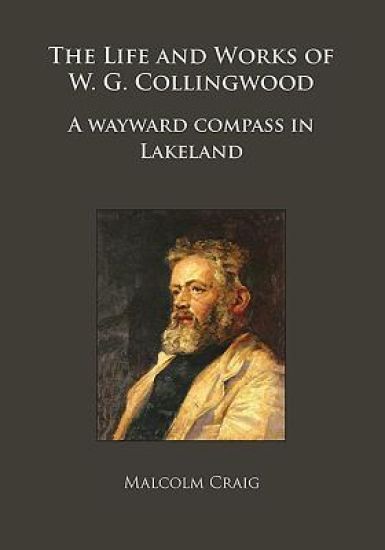
The son of a watercolour artist, William Gershom Collingwood (1854-1932) studied at University College, Oxford where he met John Ruskin, whose secretary he later became and with whom he shared a wide range of interests. Collingwood travelled extensively, sketching as he went, and after studying at the Slade School of Art, moved to the Lake District where he wrote extensively about the Lakes, Icelandic sagas and Norse mythology, as well as publishing a biography on Ruskin in 1893. He was an accomplished artist, founding the Lake Artists Society in 1904 and serving as Professor of Fine Art at the University of Reading from 1905-11. His interest in art and Scandinavia prompted his research into the Pre-Norman Crosses of Cumbria and the North of England. In 1927 he published ‘Northumbrian Crosses of the Pre-Norman Age’, illustrated with his own drawings. He was also an accomplished musician, climber, swimmer and walker. His son was the noted archaeologist (a leading authority on Roman Britain), philosopher and historian R. G. Collingwood. This well researched biography provides a comprehensive account of the life and works of a nineteenth century polymath whose story should be better known.
Zur Funktion der Fotografie in W.G. Sebalds Roman "Austerlitz"
Christian Appel
GRIN Verlag
2021
nidottu
Die Ringe des Saturn von W.G. Sebald und die 'speziellen Raume'
Kordula Marisa Hildebrandt
Grin Publishing
2008
nidottu
Die Ästhetik und Poetik der Erinnerung in W.G. Sebalds Roman Austerlitz
Jana Richter
Grin Publishing
2010
pokkari


Die Funktion der Bilder in W.G. Sebalds Erzählung "Dr. Henry Selwyn" aus "Die Ausgewanderten"
Sylvia Ellert
Grin Publishing
2016
pokkari
VISUALVM: MONITOROWANIE I ANALIZOWANIE APLIKACJI JAVA W G¿¿BOKO¿CI
Jardel Gugel
Wydawnictwo Nasza Wiedza
2025
nidottu