Kirjahaku
Etsi kirjoja tekijän nimen, kirjan nimen tai ISBN:n perusteella.
1000 tulosta hakusanalla W. Keppel Honnywill
The letters in this volume, the majority never before published, vividly document the period in which Yeats, having left the family house in Bedford Park, began a new life in Bloomsbury; as he later recalled, `a new scene was set, new actors appeared'. With his association with the Savoy magazine and its circle of decadents, he achieved the financial emancipation that enabled him to begin his first affair with Olivia Shakespear. 1896 also saw the beginning of the most important and creative friendship of his life, that with Lady Gregory; other influential friendships, such as those with Synge and W. T. Horton, were forged. In 1898, Yeats's friendship with George Moore expanded, only to contract with the disastrous collaboration on Diarmuid and Grania. It was a period of considerable unhappiness for Yeats. His love for Maud Gonne was hopeless; in December 1898, she was to tell him of her long-standing affair with Lucian Millevoye (by whom she had two children). The crisis produced a run of confused and incoherent letters to Lady Gregory. The letters also document Yeats's greatest early period of political activity. He organized the centenary celebrations of the 1798 uprising, while combating double agents within the Irish Revolutionary Brotherhood. In 1897, he began planning a National Theatre and letters chart a massive expansion of theatrical activity. Letter by letter, we see how private concerns, artistic quarrels and exhausting political life forced him to develop a public persona. Rich and readable notes provide a narrative of these years, explaining allusions and setting the correspondence in its cultural and political contexts, as well as relating it to the emergence of Yeats's canon. The Collected Letters of W. B. Yeats is redefining the territory of modern literary history and this volume, with its valuable biographical and thematic appendices, is indispensable to anyone interested in the development of modern poetry, Irish drama and cultural history.
The Collected Letters of W. B. Yeats: Volume III: 1901-1904
W. B. Yeats
Clarendon Press
1994
sidottu
The letters in this volume, the majority never before published, vividly document a tunultuous period in Yeats's life. They chart his transformation from a late Romantic, `Celtic' poet into a powerful and astringent modernist, the foundation of the Abbey Theatre and development of his own palywriting career, the emotional devastation of his beloved Maud Gonne's marriage to a man he despised, the encouragement of promising young writers including Joyce and Synge, and the impact of his first exposure to the United States. Letter by letter we see how private concerns and public controversies forced him to redefine his views on artistic freedom and responsibility, and to reshape his style. Rich and readable notes provide a narrative of these years, explaining allusions, and setting the correspondence in its cultural and political contexts as well as relating it to Yeats's canon as a whole. This book will be indispenable to anyone interested in the development of modern poetry, drama, and cultural history.
W. B. Yeats and George Yeats
Oxford University Press
2011
sidottu
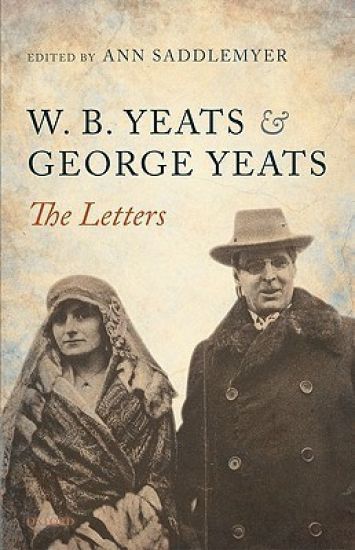
During the twenty-two years of their married life, W. B. and George Yeats corresponded regularly and fully whenever they were apart. They discussed his writing and other projects, their family and friends, and the social, artistic, and political scene in Ireland and the United Kingdom in far more detail than with anyone else. Both were splendid and enchanting storytellers. This edition includes 149 letters from George, 436 from W. B., and 29 written to their children. Anne, who lived at home, preserved 22 from her father and several important ones from her mother; when both her parents were away. The letters include fascinating drafts of poems, statements of belief, candid descriptions of people and events, and in some cases offer biographical and historical corrections to the popular narrative of Yeats's life. Like Oscar Wilde, Yeats frequently practised a phrase or an anecdote to provide the best effect in his correspondence. And not for nothing would he write to his wife, 'you are much the best letter writer I know, or have known'. The letters between them not only tell the story of the marriage of two minds and the world they created, but also illuminate how Yeats worked on his writing and reveal a refreshing image of the poet as a family man.
The second and final volume in Roy Foster's biography of W. B. Yeats covers the second half of Yeats's life, taking in his controversial political involvements, continued supernatural experiments, his extraordinary marriage, a series of love affairs, and the writing of his greatest poetry.
Narrow Roads of Gene Land - The Collected Papers of W. D. Hamilton
W. D. Hamilton
Oxford University Press
2005
nidottu
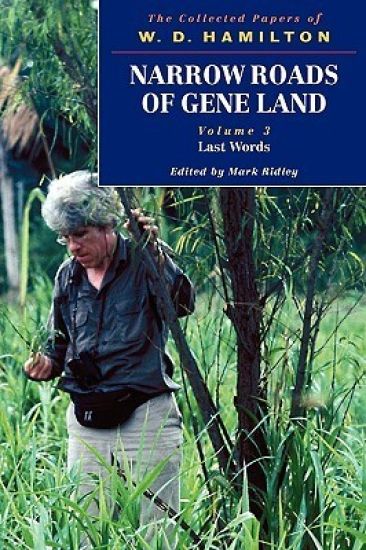
W. D. Hamilton (1936-2000) has been described by Richard Dawkins as 'a good candidate for the title of most distinguished Darwinian since Darwin'. His work on evolutionary biology continues to influence scientists working across a wide variety of disciplines, including evolution, population genetics, animal behaviour, genetics, anthropology, and ecology. This third and final volume of Narrow Roads of Gene Land contains Hamilton's key papers published between 1990 and 2000, a period in which he covered a great diversity of topics, often in collaboration with other scientists. Many of the papers in this volume continue his work on sex, and particularly its relation to parasitic disease, but other topics covered include the Gaia theory, the colours of autumn leaves, and the still-controversial hypothesis that the AIDS pandemic accidentally originated in a polio vaccination campaign in Africa. Each of the co-authored papers in this volume is preceded by an introduction written by one of Hamilton's co-authors, following the model of the previous two volumes in this series, which brings the reader closer to Hamilton's extraordinary personality and intellect, providing the intellectual and physical contexts within which each piece of research was developed. Also included are a chapter by Jeremy Leighton John on the Hamilton archive - 'Bill's last great work' - complete with irresistible pictures, and Alan Grafen's biographical memoir, which presents an overview of Bill's life and work. Together, this unique collection of papers with their biographical introductions provides a profound portrait of one of the twentieth century's most innovative scientists.
W.B. Yeats and the Muses explores how nine fascinating women inspired much of W.B. Yeats's poetry. These women are particularly important because Yeats perceived them in terms of beliefs about poetic inspiration akin to the Greek notion that a great poet is inspired and possessed by the feminine voices of the Muses. Influenced by the Pre-Raphaelite idea of woman as 'romantic and mysterious, still the priestess of her shrine', Yeats found his Muses in living women. His extraordinarily long and fruitful poetic career was fuelled by passionate relationships with women to and about whom he wrote some of his most compelling poetry. The book summarizes the different Muse traditions that were congenial to Yeats and shows how his perception of these women as Muses underlies his poetry. Newly available letters and manuscripts are used to explore the creative process and interpret the poems. Because Yeats believed that lyric poetry 'is no rootless flower, but the speech of a man,' exploring the relationship between poem and Muse brings new coherence to the poetry, illuminates the process of its creation, and unlocks the 'second beauty' to which Yeats referred when he claimed that 'works of lyric genius, when the circumstances of their origin is known, gain a second a beauty, passing as it were out of literature and becoming life.' As life emerges from the literature, the Muses are shown to be vibrant, multi-faceted personalities who shatter the idea of the Muse as a passive stereotype and take their proper place as begetters of timeless poetry.
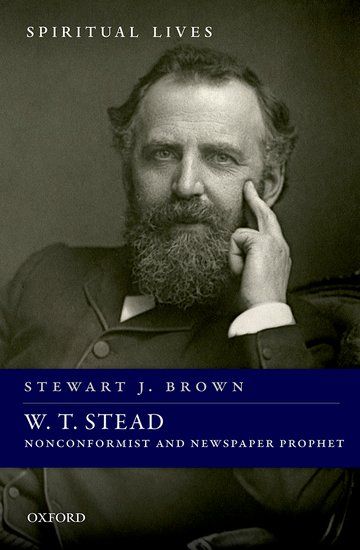
W. T. Stead (1849-1912) was a newspaper editor, author, social reformer, advocate for women rights, peace campaigner, spiritualist, and one of the best-known public figures in the late Victorian and Edwardian Britain. W. T. Stead: Nonconformist and Newspaper Prophet provides a compelling religious biography of Stead, offering particular attention to his conception of journalism--in an age of growing mass literacy--as a means to communicate religious truth and morality, and his view of the editor's desk as a modern pulpit. Leading scholar, Stewart J. Brown explores how his Nonconformist Conscience and sense of divine calling infused Stead's newspaper crusades-most famously his 'Maiden Tribute' campaign against child prostitution. The biography also examines Stead's growing interest in spiritualism and the occult, as he searched for the evidence of an afterlife that might draw people in a more secular age back to faith. It discusses his imperialism and his belief in the English-speaking peoples of the British Empire and American Republic as God's new chosen people for the spread of civilisation; and it highlights how his growing understanding of other faiths and cultures--but more especially his moral revulsion over the South African War of 1899-1902--brought him to question those beliefs. Finally, it assesses the influence of religious faith on his campaigns for world peace and the arbitration of international disputes.
Black Folk Then and Now (The Oxford W.E.B. Du Bois)
W. E. B. Du Bois; Wilson J. Moses
Oxford University Press Inc
2014
nidottu
W. E. B. Du Bois was a public intellectual, sociologist, and activist on behalf of the African American community. He profoundly shaped black political culture in the United States through his founding role in the NAACP, as well as internationally through the Pan-African movement. Du Bois's sociological and historical research on African-American communities and culture broke ground in many areas, including the history of the post-Civil War Reconstruction period. Du Bois was also a prolific author of novels, autobiographical accounts, innumerable editorials and journalistic pieces, and several works of history. In Black Folk Then and Now, W. E. B. Du Bois embarks on a mission to correct the omissions, misinterpretations, and deliberate lies he detected in previous depictions of black history. An exemplary revisionist exploration of history and sociology, this essay reflects Du Bois's lifelong mission to bring to light the truths of Black history and expose the African peoples' noble heritage. W. E. B. Du Bois writes extensively about the color line, which he believed at the time of publication to be the defining problem of the twentieth century. In 1946, following the Holocaust, Du Bois revised his arguments, reshaping them into the narrative we find in The World and Africa. With a series introduction by editor Henry Louis Gates, Jr., and an introduction by Wilson Moses, this edition is essential for anyone interested in African American history.
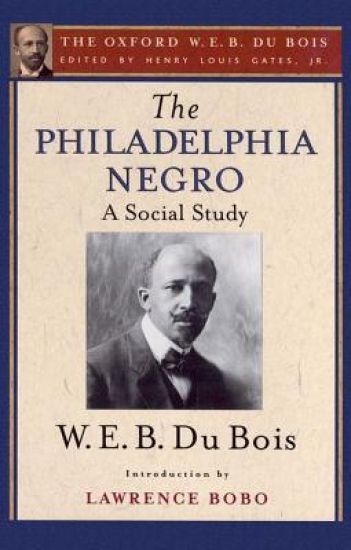
The Philadelphia Negro (The Oxford W. E. B. Du Bois)
W. E. B. Du Bois; Lawrence Bobo
Oxford University Press Inc
2014
nidottu
W. E. B. Du Bois was a public intellectual, sociologist, and activist on behalf of the African American community. He profoundly shaped black political culture in the United States through his founding role in the NAACP, as well as internationally through the Pan-African movement. Du Bois's sociological and historical research on African-American communities and culture broke ground in many areas, including the history of the post-Civil War Reconstruction period. Du Bois was also a prolific author of novels, autobiographical accounts, innumerable editorials and journalistic pieces, and several works of history. First published in 1899 at the dawn of sociology, The Philadelphia Negro: A Social Study is a landmark in empirical sociological research. Du Bois was the first sociologist to document the living circumstances of urban Black Americans. The Philadelphia Negro provides a framework for studying black communities, and it has steadily grown in importance since its original publication. Today, it is an indispensable model for sociologists, historians, political scientists, anthropologists, educators, philosophers, and urban studies scholars. With a series introduction by editor Henry Louis Gates, Jr., and an introduction by Lawrence Bobo, this edition is essential for anyone interested in African American history and sociology.
The Souls of Black Folk (The Oxford W. E. B. Du Bois)
W. E. B. Du Bois; Arnold Rampersad
Oxford University Press Inc
2014
nidottu
W. E. B. Du Bois was a public intellectual, sociologist, and activist on behalf of the African American community. He profoundly shaped black political culture in the United States through his founding role in the NAACP, as well as internationally through the Pan-African movement. Du Bois's sociological and historical research on African-American communities and culture broke ground in many areas, including the history of the post-Civil War Reconstruction period. Du Bois was also a prolific author of novels, autobiographical accounts, innumerable editorials and journalistic pieces, and several works of history. "Herein lie buried many things which if read with patience may show the strange meaning of being black here in the dawning of the Twentieth Century." More than one hundred years after its first publication in 1903, The Souls of Black Folk remains possibly the most important book ever penned by a black American. This collection of previously published essays and one short story, on topics varying from history to sociology to music to religion, expounds on the African American condition and life behind the "Veil," the world outside of the white experience in America. This important collection holds a mirror up to the face of black America, revealing its complete form, slavery, Jim Crow, and all. With a series introduction by editor Henry Louis Gates, Jr., and an introduction by Arnold Rampersad, this edition is essential for anyone interested in African American history.
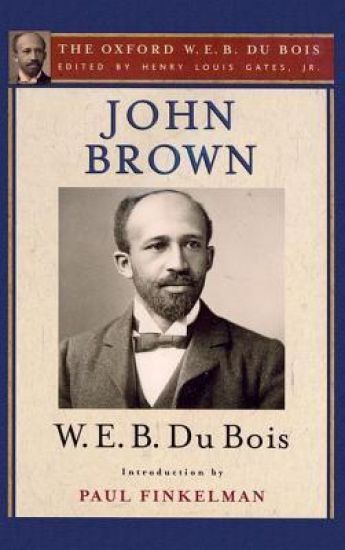
John Brown (The Oxford W. E. B. Du Bois)
W. E. B. Du Bois; Paul Finkelman
Oxford University Press Inc
2014
nidottu
W. E. B. Du Bois was a public intellectual, sociologist, and activist on behalf of the African American community. He profoundly shaped black political culture in the United States through his founding role in the NAACP, as well as internationally through the Pan-African movement. Du Bois's sociological and historical research on African-American communities and culture broke ground in many areas, including the history of the post-Civil War Reconstruction period. Du Bois was also a prolific author of novels, autobiographical accounts, innumerable editorials and journalistic pieces, and several works of history. John Brown is W. E. B. Du Bois's groundbreaking political biography that paved the way for his transition from academia to a lifelong career in social activism. This biography is unlike Du Bois's earlier work; it is intended as a work of consciousness-raising on the politics of race. Less important are the historical events of John Brown's life than the political revelations found within the pages of this biography. At the time that he wrote it in 1909, Du Bois had begun his transformation into the most influential civil rights leader of his time. With a series introduction by editor Henry Louis Gates, Jr., and an introduction by Paul Finkelman, this edition is essential for anyone interested in African American history.
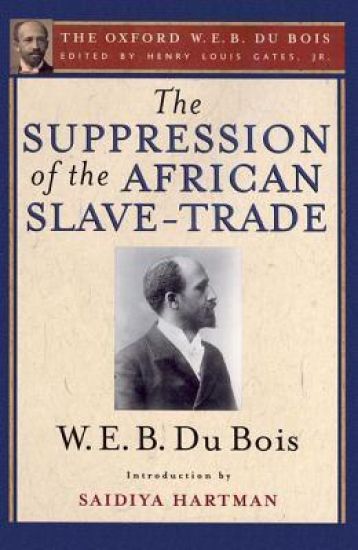
The Suppression of the African Slave-Trade to the United States of America (The Oxford W. E. B. Du Bois)
W. E. B. Du Bois; Saidya Hartman
Oxford University Press Inc
2014
nidottu
W. E. B. Du Bois was a public intellectual, sociologist, and activist on behalf of the African American community. He profoundly shaped black political culture in the United States through his founding role in the NAACP, as well as internationally through the Pan-African movement. DuBois's sociological and historical research on African-American communities and culture broke ground in many areas, including the history of the post-Civil War Reconstruction period. Du Bois was also a prolific author of novels, autobiographical accounts, innumerable editorials and journalistic pieces, and several works of history. The Suppression of the African Slave Trade to the United States of America, 1638-1870, W. E. B. Du Bois's groundbreaking monograph, recounts the moral failures and missed opportunities of the American Revolution and the consequences of compromising with slavery. As Du Bois's first published work and doctoral dissertation, Suppression lays the groundwork for his early commitment to the study of the African American experience. At the time of its publication in 1896, Du Bois's monograph was at the forefront of developments in historiography, embodying a new, empirical approach to history. Suppression is integral to understanding Du Bois's early theories and his evolution into a leading scholar and activist. With a series introduction by editor Henry Louis Gates, Jr., and an introduction by Saidiya Hartman, this edition is essential for anyone interested in African American history.
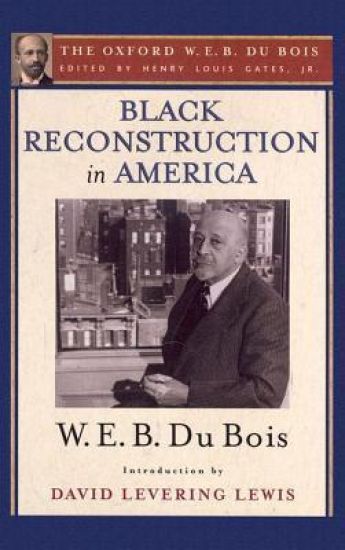
Black Reconstruction in America (The Oxford W. E. B. Du Bois)
W. E. B. Du Bois; David Levering Lewis
Oxford University Press Inc
2014
nidottu
W. E. B. Du Bois was a public intellectual, sociologist, and activist on behalf of the African American community. He profoundly shaped black political culture in the United States through his founding role in the NAACP, as well as internationally through the Pan-African movement. Du Bois's sociological and historical research on African-American communities and culture broke ground in many areas, including the history of the post-Civil War Reconstruction period. Du Bois was also a prolific author of novels, autobiographical accounts, innumerable editorials and journalistic pieces, and several works of history. Black Reconstruction in America tells and interprets the story of the twenty years of Reconstruction from the point of view of newly liberated African Americans. Though lambasted by critics at the time of its publication in 1935, Black Reconstruction has only grown in historical and literary importance. In the 1960s it joined the canon of the most influential revisionist historical works. Its greatest achievement is weaving a credible, lyrical historical narrative of the hostile and politically fraught years of 1860-1880 with a powerful critical analysis of the harmful effects of democracy, including Jim Crow laws and other injustices. With a series introduction by editor Henry Louis Gates, Jr., and an introduction by David Levering Lewis, this edition is essential for anyone interested in African American history.
Africa, Its Geography, People and Products and Africa-Its Place in Modern History (The Oxford W. E. B. Du Bois)
W. E. B. Du Bois; Emmanuel Akyeampong
Oxford University Press Inc
2014
nidottu
W. E. B. Du Bois was a public intellectual, sociologist, and activist on behalf of the African American community. He profoundly shaped black political culture in the United States through his founding role in the NAACP, as well as internationally through the Pan-African movement. Du Bois's sociological and historical research on African-American communities and culture broke ground in many areas, including the history of the post-Civil War Reconstruction period. Du Bois was also a prolific author of novels, autobiographical accounts, innumerable editorials and journalistic pieces, and several works of history. Written in very accessible prose, these two booklets, originally published in 1930, allowed W. E. B. Du Bois to reach a wide audience with an interest in Africa. What is so incredible about the two Africa booklets is their lasting relevance and value to the study of Africa today. Coupling Du Bois's breadth of scholarship with his passion for the subjects, the analyses in these booklets are integral to the study of Africa. Many of his arguments foreshadowed the issues and debates regarding Africa in the twentieth century. Expertly synthesized in an introduction by Emmanuel Akyeampong, this edition of the two Africa booklets is essential for anyone interested in African history.
Dusk of Dawn (The Oxford W. E. B. Du Bois)
W. E. B. Du Bois; Kwame Anthony Appiah
Oxford University Press Inc
2014
nidottu
W. E. B. Du Bois was a public intellectual, sociologist, and activist on behalf of the African American community. He profoundly shaped black political culture in the United States through his founding role in the NAACP, as well as internationally through the Pan-African movement. Du Bois's sociological and historical research on African-American communities and culture broke ground in many areas, including the history of the post-Civil War Reconstruction period. Du Bois was also a prolific author of novels, autobiographical accounts, innumerable editorials and journalistic pieces, and several works of history. Dusk of Dawn, published in 1940, is an explosive autobiography of the foremost African American scholar of his time. Du Bois writes movingly of his own life, using personal experience to elucidate the systemic problem of race. He reflects on his childhood, his education, and his intellectual life, including the formation of the NAACP. Though his views eventually got him expelled from the association, Du Bois continues to develop his thoughts on separate black economic and social institutions in Dusk of Dawn. Readers will find energetic essays within these pages, including insight into his developing Pan-African consciousness. With a series introduction by editor Henry Louis Gates, Jr., and an introduction by Kwame Anthony Appiah, this edition is essential for anyone interested in African American history.
The World and Africa and Color and Democracy (The Oxford W. E. B. Du Bois)
W. E. B. Du Bois; Mahmood Mamdani; Gerald Horne
Oxford University Press Inc
2014
nidottu
W. E. B. Du Bois was a public intellectual, sociologist, and activist on behalf of the African American community. He profoundly shaped black political culture in the United States through his founding role in the NAACP, as well as internationally through the Pan-African movement. Du Bois's sociological and historical research on African-American communities and culture broke ground in many areas, including the history of the post-Civil War Reconstruction period. Du Bois was also a prolific author of novels, autobiographical accounts, innumerable editorials and journalistic pieces, and several works of history. Collected in one volume for the first time, The World and Africa and Color and Democracy are two of W E. B. Du Bois's most powerful essays on race. He explores how to tell the story of those left out of recorded history, the evils of colonialism worldwide, and Africa's and African's contributions to, and neglect from, world history. More than six decades after W. E. B. Du Bois wrote The World and Africa and Color and Democracy, they remain worthy guides for the twenty-first century. With a series introduction by editor Henry Louis Gates, Jr., and two introductions by top African scholars, this edition is essential for anyone interested in world history.
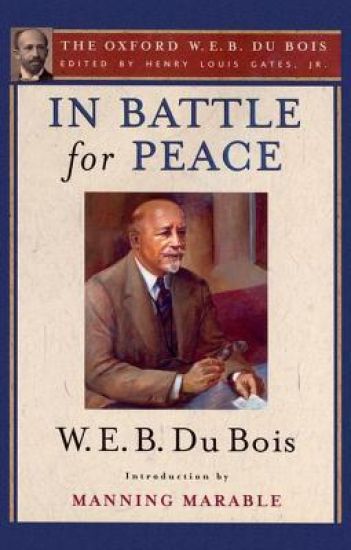
In Battle for Peace (The Oxford W. E. B. Du Bois)
W. E. B. Du Bois; Manning Marable
Oxford University Press Inc
2014
nidottu
W. E. B. Du Bois was a public intellectual, sociologist, and activist on behalf of the African American community. He profoundly shaped black political culture in the United States through his founding role in the NAACP, as well as internationally through the Pan-African movement. Du Bois's sociological and historical research on African-American communities and culture broke ground in many areas, including the history of the post-Civil War Reconstruction period. Du Bois was also a prolific author of novels, autobiographical accounts, innumerable editorials and journalistic pieces, and several works of history. One of the most neglected and obscure books by W. E. B. Du Bois, In Battle for Peace frankly documents Du Bois's experiences following his attempts to mobilize Americans against the emerging conflict between the United States and the Soviet Union. A victim of McCarthyism, Du Bois endured a humiliating trial-he was later acquitted-and faced political persecution for over a decade. Part autobiography and part political statement, In Battle for Peace remains today a powerful analysis of race in America. With a series introduction by editor Henry Louis Gates, Jr., and an introduction by Manning Marable, this edition is essential for anyone interested in African American history.
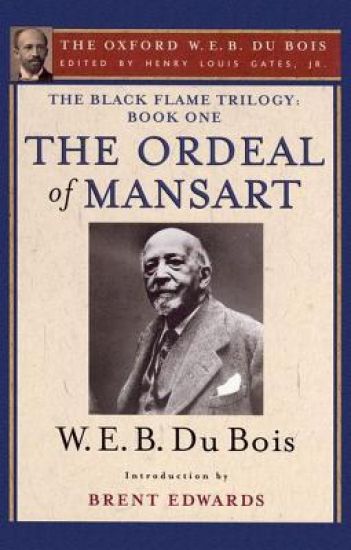
The Ordeal of Mansart (The Oxford W. E. B. Du Bois)
W. E. B. Du Bois; Brent Hayes Edwards
Oxford University Press Inc
2014
nidottu
W. E. B. Du Bois was a public intellectual, sociologist, and activist on behalf of the African American community. He profoundly shaped black political culture in the United States through his founding role in the NAACP, as well as internationally through the Pan-African movement. Du Bois's sociological and historical research on African-American communities and culture broke ground in many areas, including the history of the post-Civil War Reconstruction period. Du Bois was also a prolific author of novels, autobiographical accounts, innumerable editorials and journalistic pieces, and several works of history. Du Bois called his epic Black Flame trilogy a fiction of interpretation. It acts as a representative biography of African American history by following one man, Manuel Mansart, from his birth in 1876 until his death. The Black Flame attempts to use this historical fiction of interpretation to recast and revisit the African American experience. Readers will appreciate The Black Flame trilogy as a clear articulation of Du Bois's perspective at the end of his life. The first book in this profound trilogy, The Ordeal of Mansart, chronicles Mansart's early life during the time of Reconstruction through his involvement in black education in Atlanta. Written with lyrical, vivid prose and with accurate historical context, The Ordeal of Mansart offers readers a peek into African American life and struggle through the lens of Mansart's humble life. With a series introduction by editor Henry Louis Gates, Jr., and an introduction by Brent Hayes Edwards, this edition is essential for anyone interested in African American literature.
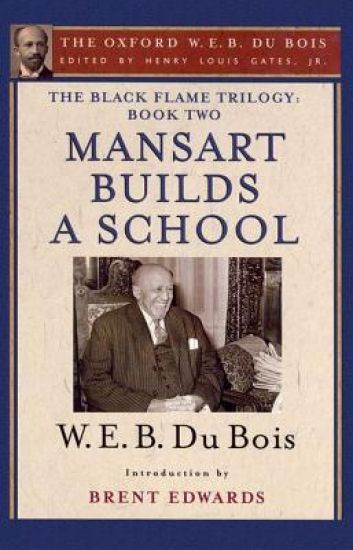
The Black Flame Trilogy: Book Two, Mansart Builds a School(The Oxford W. E. B. Du Bois)
W. E. B. Du Bois; Brent Hayes Edwards
Oxford University Press Inc
2014
nidottu
W. E. B. Du Bois was a public intellectual, sociologist, and activist on behalf of the African American community. He profoundly shaped black political culture in the United States through his founding role in the NAACP, as well as internationally through the Pan-African movement. Du Bois's sociological and historical research on African-American communities and culture broke ground in many areas, including the history of the post-Civil War Reconstruction period. Du Bois was also a prolific author of novels, autobiographical accounts, innumerable editorials and journalistic pieces, and several works of history. Du Bois called his epic Black Flame trilogy a fiction of interpretation. It acts as a representative biography of African American history by following one man, Manuel Mansart, from his birth in 1876 until his death. The Black Flame attempts to use this historical fiction of interpretation to recast and revisit the African American experience. Readers will appreciate The Black Flame trilogy as a clear articulation of Du Bois's perspective at the end of his life. The second book in this profound trilogy, Mansart Builds a School, opens with Mansart's election to superintendent of Negro schools in Atlanta and follows him as he ascends to the position of president of Georgia State A&M College. The book provides a damning portrait of the state of education for African Americans in the south. Building upon the drama and intrigue of The Ordeal of Mansart in Du Bois's signature lyrical style, Mansart Builds a School delves into the realities of the ordinary southern black experience of the early twentieth century. With a series introduction by editor Henry Louis Gates, Jr., and an introduction by Brent Hayes Edwards, this edition is essential for anyone interested in African American literature.
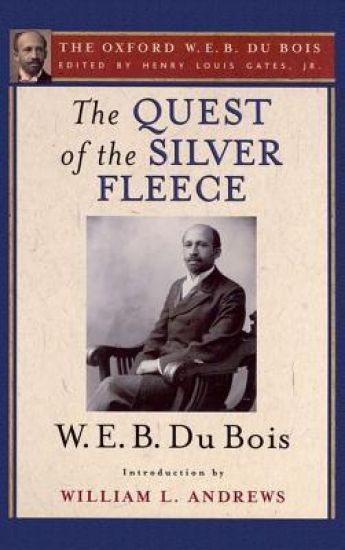
The Quest of the Silver Fleece (The Oxford W. E. B. Du Bois)
W. E. B. Du Bois; William L. Andrews
Oxford University Press Inc
2014
nidottu
W. E. B. Du Bois was a public intellectual, sociologist, and activist on behalf of the African American community. He profoundly shaped black political culture in the United States through his founding role in the NAACP, as well as internationally through the Pan-African movement. Du Bois's sociological and historical research on African-American communities and culture broke ground in many areas, including the history of the post-Civil War Reconstruction period. Du Bois was also a prolific author of novels, autobiographical accounts, innumerable editorials and journalistic pieces, and several works of history. Arguably a contender for the Great American Novel, The Quest of the Silver Fleece is W. E. B. Du Bois's powerful first novel about Zora, a determined, strong Southern black woman who seeks to transcend race and social class in the late nineteenth century. Following the same path of the Greek myth after which it was named, Du Bois's novel confronts not only economic and political circumstances, but also racial and social issues of the time. Over a century after its original publication, we return to The Quest again and again for its political boldness about sexual, gender, and economic institutions. Zora, a breakthrough in the portrayal of black women, stands as a model of courage in a volatile moment in history. The novel portrays not only a story of economics but also of love, gender, and race. With a series introduction by editor Henry Louis Gates, Jr., and an introduction by William L. Andrews, this edition is essential for anyone interested in African American history.