Kirjojen hintavertailu. Mukana 12 390 323 kirjaa ja 12 kauppaa.

Kirjahaku

Etsi kirjoja tekijän nimen, kirjan nimen tai ISBN:n perusteella.

1000 tulosta hakusanalla W.Dale Nelson

Stabilization of a Bipropellant Liquid Rocket Motor
This work has been selected by scholars as being culturally important and is part of the knowledge base of civilization as we know it.This work is in the public domain in the United States of America, and possibly other nations. Within the United States, you may freely copy and distribute this work, as no entity (individual or corporate) has a copyright on the body of the work.Scholars believe, and we concur, that this work is important enough to be preserved, reproduced, and made generally available to the public. To ensure a quality reading experience, this work has been proofread and republished using a format that seamlessly blends the original graphical elements with text in an easy-to-read typeface.We appreciate your support of the preservation process, and thank you for being an important part of keeping this knowledge alive and relevant.

Over

Over

Dale W Buhr

IngramSpark
2023
pokkari
Ryan Zimm is a middle aged widower who isn't coping very well with life after losing his childhood sweetheart and wife to an act of God. After finding a mysterious jewel while at work, he takes it home and makes a drunken wish that he could go back in time to the day he met his wife. The next morning he wakes up in the house he grew up in back in 1989. He quickly realizes that it is the day he met his wife for the first time. Should he pursue her again or change the life he knew for something completely different. He is enlisted in the Army and leaves for basic training in a few days, so he has to come up with a plan quickly. Could he use his knowledge of the future to his benefit and possibly help others as well? Read on to find out.
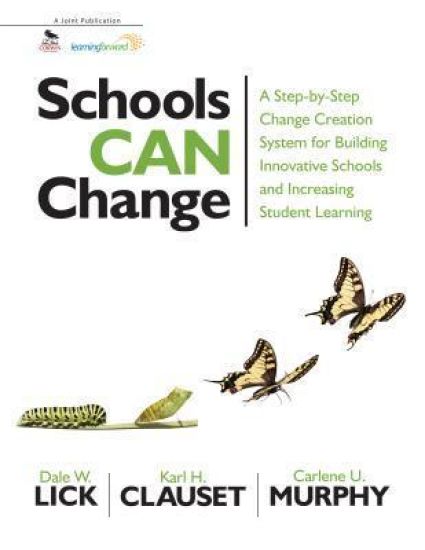
Schools Can Change

Schools Can Change

Lick Dale W.; Clauset Karl H.; Murphy Carlene U.

SAGE Publications Inc
2013
nidottu
When it comes to school improvement, there is no silver bullet. Genuine effective school improvement requires leaders and teachers to be part of a broad-based, creative change system that focuses on generating improved teacher practices for enhancing student learning. Based on more than two decades of success with the Whole Faculty Study Group (WFSG) approach to professional learning, this leading-edge guide provides educators with a step-by-step, systemic change creation approach for: Forming action teams to develop teaching and learning approaches that measurably improve student performance Nurturing the right leadership, vision, culture, and relationships within schools for innovation and creativity The companion website includes practical online resources, including templates, checklists, action team assessment forms, and an action team rubric.
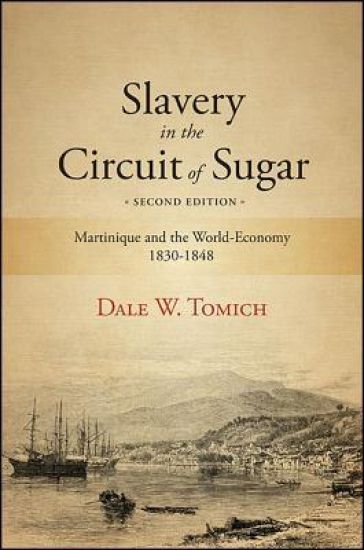
Slavery in the Circuit of Sugar

Slavery in the Circuit of Sugar

Dale W. Tomich

State University of New York Press
2016
sidottu
Traces the historical development of slave labor and plantation agriculture in nineteenth-century Martinique.A classic text long out of print, Slavery in the Circuit of Sugar traces the historical development of slave labor and plantation agriculture in Martinique during the period immediately preceding slave emancipation in 1848. Interpreting these events against the broader background of the world-economy, Dale W. Tomich analyzes the importance of topics such as British hegemony in the nineteenth century, related developments of the French economy, and competition from European beet sugar producers. He shows how slaves' adaptation-and resistance-to changing working conditions transformed the plantation labor regime and the very character of slavery itself. Based on archival sources in France and Martinique, Slavery in the Circuit of Sugar offers a vivid reconstruction of the complex and contradictory interrelations among the world market, the material processes of sugar production, and the social relations of slavery. In this second edition, Tomich includes a new introduction in which he offers an explicit discussion of the methodological and theoretical issues entailed in developing and extending the world-systems perspective and clarifies the importance of the approach for the study of particular histories.This book is freely available in an open access edition thanks to Knowledge Unlatched-an initiative that provides libraries and institutions with a centralized platform to support OA collections and from leading publishing houses and OA initiatives. Learn more at the Knowledge Unlatched website at https://www.knowledgeunlatched.org/.
Spokane International Railway

Spokane International Railway

Dale W. Jones

Arcadia Publishing (SC)
2019
nidottu
The last half of the 19th century was typified by tycoons and shrewd railroad barons. A key figure in the development of the Spokane International Railway was James Jerome Hill, or simply Jim Hill. Spokane businessmen regarded Hill as a tyrant and considered his Great Northern and Northern Pacific railroads unwelcome monopolies in Northeast Washington and the Idaho Panhandle. In 1905, Daniel Chase D.C. Corbin broke the Hill lines' stronghold by forming the Spokane International Railway as a 140-mile rail line from Spokane, Washington, to Eastport, Idaho, to interchange traffic from the Canadian border to the Pacific. Today, the route continues to be profitable under Union Pacific Railroad ownership with commodities shipped to Western markets via the Canadian Pacific Railway. This book shares the story of the Spokane International Railway and traces its international and local connections with every major railroad in the Pacific Northwest.
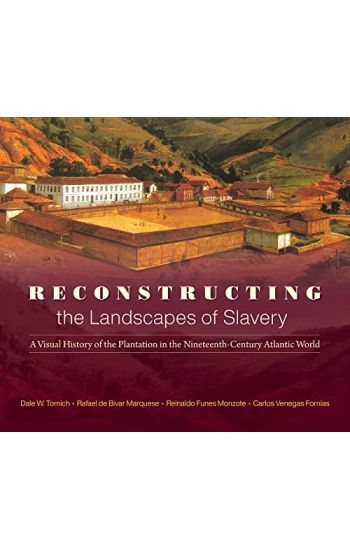
Reconstructing the Landscapes of Slavery

Reconstructing the Landscapes of Slavery

Dale W. Tomich; Reinaldo Funes Monzote; Carlos Venegas Fornias; Rafael de Bivar Marquese

The University of North Carolina Press
2021
sidottu
Assessing a unique collection of more than eighty images, this innovative study of visual culture reveals the productive organization of plantation landscapes in the nineteenth-century Atlantic world. These landscapes-from cotton fields in the Lower Mississippi Valley to sugar plantations in western Cuba and coffee plantations in Brazil's Paraiba Valley-demonstrate how the restructuring of the capitalist world economy led to the formation of new zones of commodity production. By extension, these environments radically transformed slave labor and the role such labor played in the expansion of the global economy.Artists and mapmakers documented in surprising detail how the physical organization of the landscape itself made possible the increased exploitation of enslaved labor. Reading these images today, one sees how technologies combined with evolving conceptions of plantation management that reduced enslaved workers to black bodies. Planter control of enslaved people's lives and labor maximized the production of each crop in a calculated system of production. Nature, too, was affected: the massive increase in the scale of production and new systems of cultivation increased the land's output. Responding to world economic conditions, the replication of slave-based commodity production became integral to the creation of mass markets for cotton, sugar, and coffee, which remain at the center of contemporary life.
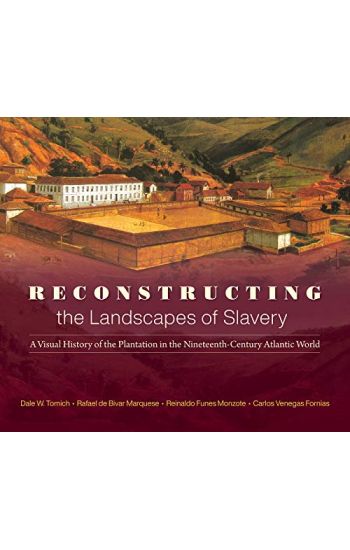
Reconstructing the Landscapes of Slavery

Reconstructing the Landscapes of Slavery

Dale W. Tomich; Reinaldo Funes Monzote; Carlos Venegas Fornias; Rafael de Bivar Marquese

The University of North Carolina Press
2021
pokkari
Assessing a unique collection of more than eighty images, this innovative study of visual culture reveals the productive organization of plantation landscapes in the nineteenth-century Atlantic world. These landscapes-from cotton fields in the Lower Mississippi Valley to sugar plantations in western Cuba and coffee plantations in Brazil's Paraiba Valley-demonstrate how the restructuring of the capitalist world economy led to the formation of new zones of commodity production. By extension, these environments radically transformed slave labor and the role such labor played in the expansion of the global economy.Artists and mapmakers documented in surprising detail how the physical organization of the landscape itself made possible the increased exploitation of enslaved labor. Reading these images today, one sees how technologies combined with evolving conceptions of plantation management that reduced enslaved workers to black bodies. Planter control of enslaved people's lives and labor maximized the production of each crop in a calculated system of production. Nature, too, was affected: the massive increase in the scale of production and new systems of cultivation increased the land's output. Responding to world economic conditions, the replication of slave-based commodity production became integral to the creation of mass markets for cotton, sugar, and coffee, which remain at the center of contemporary life.
Guardian

Guardian

Dale W Watts

Liferich
2018
sidottu
Billy Crains father went missing without a trace almost a year ago. When Billy is rescued from a pit by the village Hermit, he discovers the Hermit knows where his father is. Theres another world involved called Palithion. The Hermit takes Billy and his two friends to aid in his quest to awaken the sleeping wizard and help in the search of Billys father. There, they experience many adventures, encounter danger and see many wonders. Can they wake the sleeping wizard? Can Billy find his father is this vast new world?
Guardian

Guardian

Dale W Watts

Liferich
2018
pokkari
Billy Crains father went missing without a trace almost a year ago. When Billy is rescued from a pit by the village Hermit, he discovers the Hermit knows where his father is. Theres another world involved called Palithion. The Hermit takes Billy and his two friends to aid in his quest to awaken the sleeping wizard and help in the search of Billys father. There, they experience many adventures, encounter danger and see many wonders. Can they wake the sleeping wizard? Can Billy find his father is this vast new world?