
Kirjahaku
Etsi kirjoja tekijän nimen, kirjan nimen tai ISBN:n perusteella.
1000 tulosta hakusanalla Walter Benjamin

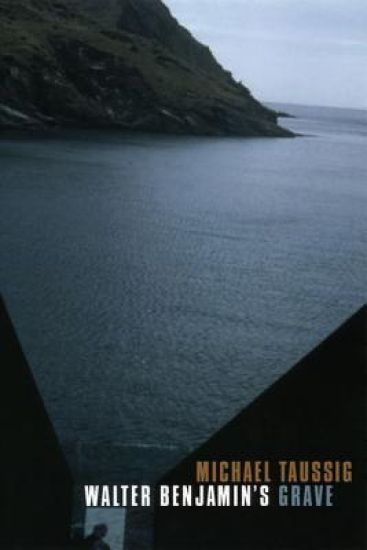
In September 1940, Walter Benjamin committed suicide in Port Bou on the Spanish-French border when it appeared that he and his travelling partners would be denied passage into Spain in their attempt to escape the Nazis. In 2002, one of anthropology's - and indeed today's - most distinctive writers, Michael Taussig, visited Benjamin's grave in Port Bou. The result is "Walter Benjamin's Grave," a moving essay about the cemetery, eyewitness accounts of Benjamin's border travails, and the circumstances of his demise. It is the most recent of eight revelatory essays collected in this volume of the same name. "Looking over these essays written over the past decade," writes Taussig, "I think what they share is a love of muted and defective storytelling as a form of analysis. Strange love indeed; love of the wound, love of the last gasp." Although thematically these essays run the gamut - covering the monument and graveyard at Port Bou, discussions of peasant poetry in Colombia, a pact with the devil, the peculiarities of a shaman's body, transgression, the disappearance of the sea, New York City cops, and the relationship between flowers and violence - each shares Taussig's highly individual brand of storytelling, one that depends on a deep appreciation of objects and things as a way to retrieve even deeper philosophical and anthropological meanings. Whether he finds himself in Australia, Colombia, Manhattan, or Spain, in the midst of a book or a beach, whether talking to friends or staring at a monument, Taussig makes clear through these marvelous essays that materialist knowledge offers a crucial alternative to the increasingly abstract, globalized, homogenized, and digitized world we inhabit. Pursuing an adventure that is part ethnography, part autobiography, and part cultural criticism refracted through the object that is Walter Benjamin's grave, Taussig, with this collection, provides his own literary memorial to the twentieth century's greatest cultural critic.
In September 1940, Walter Benjamin committed suicide in Port Bou on the Spanish-French border when it appeared that he and his travelling partners would be denied passage into Spain in their attempt to escape the Nazis. In 2002, one of anthropology's - and indeed today's - most distinctive writers, Michael Taussig, visited Benjamin's grave in Port Bou. The result is "Walter Benjamin's Grave," a moving essay about the cemetery, eyewitness accounts of Benjamin's border travails, and the circumstances of his demise. It is the most recent of eight revelatory essays collected in this volume of the same name. "Looking over these essays written over the past decade," writes Taussig, "I think what they share is a love of muted and defective storytelling as a form of analysis. Strange love indeed; love of the wound, love of the last gasp." Although thematically these essays run the gamut - covering the monument and graveyard at Port Bou, discussions of peasant poetry in Colombia, a pact with the devil, the peculiarities of a shaman's body, transgression, the disappearance of the sea, New York City cops, and the relationship between flowers and violence - each shares Taussig's highly individual brand of storytelling, one that depends on a deep appreciation of objects and things as a way to retrieve even deeper philosophical and anthropological meanings. Whether he finds himself in Australia, Colombia, Manhattan, or Spain, in the midst of a book or a beach, whether talking to friends or staring at a monument, Taussig makes clear through these marvelous essays that materialist knowledge offers a crucial alternative to the increasingly abstract, globalized, homogenized, and digitized world we inhabit. Pursuing an adventure that is part ethnography, part autobiography, and part cultural criticism refracted through the object that is Walter Benjamin's grave, Taussig, with this collection, provides his own literary memorial to the twentieth century's greatest cultural critic.
Walter Benjamin and the Aesthetics of Change
Palgrave Macmillan
2010
sidottu
Following the spirit of Benjamin's Arcades Project, this book acts as a kaleidoscope of change in the 21st century, tracing its different reflections in the international contemporary while seeking to understand individual/collective reactions to change through a series of creative methodologies.
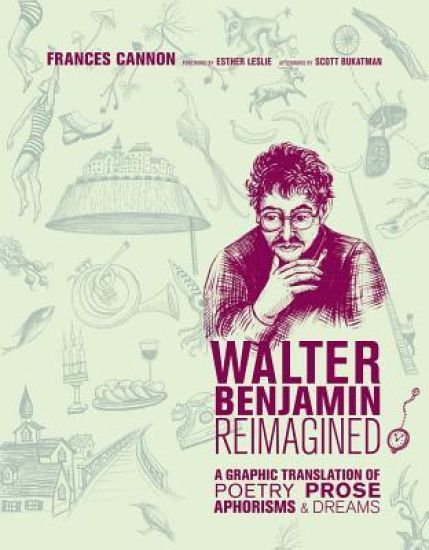
An illuminated tour of Walter Benjamin's ideas; a graphic translation; an encyclopedia of fragments.Walter Benjamin was a man of letters, an art critic, an essayist, a translator, a philosopher, a collector, and an urban flaneur. In his writings, he ambles, samples, and explores. With Walter Benjamin Reimagined, Frances Cannon offers a visual and literary response to Benjamin's work. With detailed and dreamlike pen-and-ink drawings and hand-lettered text, Cannon gives readers an illuminated tour of Walter Benjamin's thoughts-a graphic translation, an encyclopedia of fragments.Cannon has not created a guide to Benjamin's greatest ideas-this is not an illustrated Walter Benjamin cheat sheet-but rather a beautifully rendered work of graphic literature. Cannon doesn't plod through thickets of minutiae; she strolls-a flaneuse herself-using Benjamin's words and her own drawings to construct a creative topography of Benjamin's writing. Phrases from "Unpacking My Library," for example, are accompanied by images of flying papers, stray books, stacked books-books "not yet touched by the mild boredom of order"-and a bearded mage. Cannon takes the reader through different periods of Benjamin's writing: "Artifacts of Youth," nostalgic musings on his childhood; "Fragments of a Critical Eye," early writings, political observations, and cultural criticism; "Athenaeum of Imagination," meditations on philosophy and psychology; "A Stroll through the Arcades," Benjamin's unfinished magnum opus; and "A Collection of Dreams and Stories," experimental and fantastical writings.With drawings and text, Cannon offers a phantasmagorical tribute to Benjamin's wandering eye.
This book provides a study of Walter Benjamin’s first philosophy in two senses: it focuses on his early philosophy as a source of insight into his later works, and it explores his thinking about the nature of truth, method, experience, the relation of body and mind, and the limits of human knowledge.While most attention is paid to Benjamin’s later works, his writings from roughly 1914-1925 explore philosophical themes and develop a critical method. This book argues that this early work founds a series of original and lasting questions and insights. Benjamin understands experience as a broken continuum of diverse forms of spiritual expression, each of which is ephemeral. This leads Benjamin to a series of thought figures: the notion of language as a medium of experience; a philosophy of perception based in the natural history of the human body; an emphasis on mimesis as a faculty of creative assimilation; and a discovery of memory as a power for excavation of meaning in past experience. This book demonstrates that the need for a new understanding of the metaphysical structure of experience, as well as a new conception of truth, play a special role in shaping Benjamin’s subsequent work.Walter Benjamin’s First Philosophy will be of interest to scholars and advanced students working on the thought of Walter Benjamin, 20th-century Continental philosophy, comparative literature, and modern German thought.

This book provides a study of Walter Benjamin’s first philosophy in two senses: it focuses on his early philosophy as a source of insight into his later works, and it explores his thinking about the nature of truth, method, experience, the relation of body and mind, and the limits of human knowledge.While most attention is paid to Benjamin’s later works, his writings from roughly 1914-1925 explore philosophical themes and develop a critical method. This book argues that this early work founds a series of original and lasting questions and insights. Benjamin understands experience as a broken continuum of diverse forms of spiritual expression, each of which is ephemeral. This leads Benjamin to a series of thought figures: the notion of language as a medium of experience; a philosophy of perception based in the natural history of the human body; an emphasis on mimesis as a faculty of creative assimilation; and a discovery of memory as a power for excavation of meaning in past experience. This book demonstrates that the need for a new understanding of the metaphysical structure of experience, as well as a new conception of truth, play a special role in shaping Benjamin’s subsequent work.Walter Benjamin’s First Philosophy will be of interest to scholars and advanced students working on the thought of Walter Benjamin, 20th-century Continental philosophy, comparative literature, and modern German thought.

Walter Benjamin's Philosophy
Routledge
1993
sidottu
This collection explores, in Adorno's description, `philosophy directed against philosophy'. The essays cover all aspects of Benjamin's writings, from his early work in the philosophy of art and language, through to the concept of history. The experience of time and the destruction of false continuity are identified as the key themes in Benjamin's understanding of history.
Walter Benjamin:Critical Evaluations 3V
Routledge
2004
muu
No other single author has so commanding a critical presence across so many disciplines within the arts and humanities, in so many national contexts, as Walter Benjamin (1892-1940). The belated reception of his work as a literary critic (dating from the late 1950s) has been followed by a rapid series of critical receptions in different contexts: Frankfurt Critical Theory and Marxism, Judaism, Film Theory, Post-structuralism, Philosophical Romanticism, and Cultural Studies. This collection brings together a selection of the most critically important items in the literature, across the full range of Benjamin's cultural-theoretical interests, from all periods of the reception of his writings, but focusing upon the most recent, to produce a comprehensive overview of the best critical literature.
Walter Benjamin and Architecture
Routledge
2009
sidottu
The essays compiled in this book explore aspects of Walter Benjamin’s discourse that have contributed to the formation of contemporary architectural theories. Issues such as technology and history have been considered central to the very modernity of architecture, but Benjamin’s reflection on these subjects has elevated the discussion to a critical level. The contributors in this book consider Walter Benjamin's ideas in the context of digitalization of architecture where it is the very technique itself that determines the processes of design and the final form. This book was published as a special issue of Architectural Theory Review.

Walter Benjamin and Architecture
Routledge
2013
nidottu
The essays compiled in this book explore aspects of Walter Benjamin’s discourse that have contributed to the formation of contemporary architectural theories. Issues such as technology and history have been considered central to the very modernity of architecture, but Benjamin’s reflection on these subjects has elevated the discussion to a critical level. The contributors in this book consider Walter Benjamin's ideas in the context of digitalization of architecture where it is the very technique itself that determines the processes of design and the final form. This book was published as a special issue of Architectural Theory Review.
Walter Benjamin's Philosophy
Routledge
2013
nidottu
This collection explores, in Adorno's description, `philosophy directed against philosophy'. The essays cover all aspects of Benjamin's writings, from his early work in the philosophy of art and language, through to the concept of history. The experience of time and the destruction of false continuity are identified as the key themes in Benjamin's understanding of history.

Walter Benjamin, Religion, and Aesthetics is an innovative and creative attempt to unsettle and reconceive the key concepts of religious studies through a reading with, and against, Walter Benjamin. Constructing what he calls an "allegorical aesthetics," Plate sifts through Benjamin's writings showing how his concepts of art, allegory, and experience undo traditionally stabilizing religious concepts such as myth, symbol, memory, narrative, creation, and redemption.

Walter Benjamin, Religion, and Aesthetics is an innovative and creative attempt to unsettle and reconceive the key concepts of religious studies through a reading with, and against, Walter Benjamin. Constructing what he calls an "allegorical aesthetics," Plate sifts through Benjamin's writings showing how his concepts of art, allegory, and experience undo traditionally stabilizing religious concepts such as myth, symbol, memory, narrative, creation, and redemption.

Long considered to be an impenetrable, hermetic treatise, Walter Benjamin's The Origin of German Tragic Drama has rarely received the attention it deserves as a key text, central to a full understanding of his work. In this critically acclaimed study, distinguished Benjamin scholar Beatrice Hanssen unlocks the philosophical and ethical dimensions of his thought with great clarity and sophisitication.
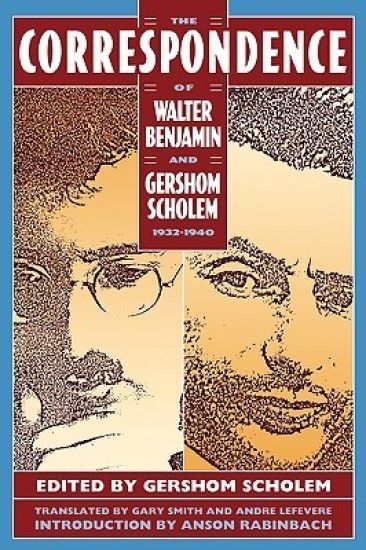
The Correspondence of Walter Benjamin and Gershom Scholem 1932-1940
Walter Benjamin; Gershom Scholem; Gary (TRN) Smith
Harvard University Press
1992
pokkari
The legendary correspondence between the critic Walter Benjamin and the historian Gershom Scholem bears witness to the inner lives of two remarkable and enigmatic personalities. Benjamin, acknowledged as one of the leading literary and social critics of his day, was known during his lifetime by only a small circle of friends and intellectual confreres. Scholem recognized the genius of his friend and mentor during their student days in Berlin, and the two began to correspond after Scholem's emigration to Palestine. Their impassioned exchange draws the reader into the very heart of their complex relationship during the anguished years from 1932 until Benjamin's death in 1940.
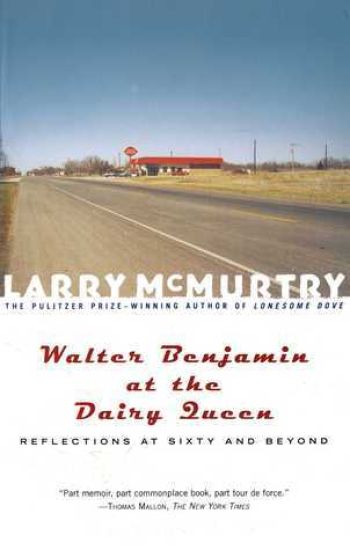
In a lucid, brilliant work of nonfiction -- as close to an autobiography as his readers are likely to get -- Larry McMurtry has written a family portrait that also serves as a larger portrait of Texas itself, as it was and as it has become. Using as a springboard an essay by the German literary critic Walter Benjamin that he first read in Archer City's Dairy Queen, McMurtry examines the small-town way of life that big oil and big ranching have nearly destroyed. He praises the virtues of everything from a lime Dr. Pepper to the lost art of oral storytelling, and describes the brutal effect of the sheer vastness and emptiness of the Texas landscape on Texans, the decline of the cowboy, and the reality and the myth of the frontier. McMurtry writes frankly and with deep feeling about his own experiences as a writer, a parent, and a heart patient, and he deftly lays bare the raw material that helped shape his life's work: the creation of a vast, ambitious, fictional panorama of Texas in the past and the present. Throughout, McMurtry leaves his readers with constant reminders of his all-encompassing, boundless love of literature and books.