

Kirjahaku
Etsi kirjoja tekijän nimen, kirjan nimen tai ISBN:n perusteella.
1000 tulosta hakusanalla Walter H Godfrey




This book is intended for those who use Earned Value Management (EVM), including project managers, engineers and performance analysts. Earned Schedule (ES) is a significant enhancement to EVM, extending its cost-based features to the management and control of schedule performance. By using ES and EVM together, project management of cost and schedule can now be treated in a truly integrated sense. The book builds from the fundamentals of EVM to derive the concept of ES. The performance measurement baseline and earned value from EVM are utilized to extract time-based performance measures, indicators, and predictors. From this foundation, complexity is incrementally added with descriptions and examples for performance analysis, prediction and project control. Specific features of ES useful to project management are included and illustrated for the following: forecasting of completion date, analysis of critical path, drill-down identification of process constraints, impediments, and areas of concern for rework.

The Little Guitar Book That Could
Walter H Klosowski; Walter Klosowski
Omni Music Press
2020
pokkari
This LITTLE GUITAR BOOK THAT COULD showcases the ever prevalent C A G E D guitar chord and scale sequence exclusively in the TWELFTH POSITION, for all to see and use. But, before thumbing through this book, there's some material that the guitarist may need reminding of...even though he or she may have played for years. For example, in this book, six is the exact number of consecutive frets involved in the TWELFTH POSITION, and it spans a full two octaves plus a perfect fourth when in standard tuning. Plus when in the TWELFTH POSITION, the second and third fingers on the fretting hand are to remain stationary in their respective frets or "slots", initially, as their stationary qualities allow the first and or fourth finger to stretch or slide that additional space. For the picking hand though, a very important plucking pattern occurs down by the sound hole or bridge where that hand happens to be. The pattern is best evidenced when the C A G E D main root note sequence is plucked alphabetically, starting with the G root on the first or thinnest guitar string. To discover it, start by picking the G there (first string, fourth finger); then A (third string, third finger); C (second string, second finger); D (second string, fourth finger); E (fourth string, third finger) and conclude with the G (sixth string, fourth finger). The string pattern naturally fits the picking hand and is looped, forwards or backwards as the G roots on the first / third / sixth string(s) are deemed interchangeable. There are three musical terms that also need clarification for the purposes of THE LITTLE GUITAR BOOK THAT COULD...those being main root notes, octaves and unisons. What are main root notes? Generally speaking, main root notes represent a specific set of root notes that fall or cluster under the second and third fingers of the fretting hand. Once the location of each main root note is learned in the TWELFTH POSITION, the attention then moves to their octaves. An octave is defined as the interval between one musical pitch and another, with half or double its own frequency. Some correctly call the interval a perfect octave, and in guitarland, octaves are usually "one string one fret away". This handy fact helps memorize their location even though, occasionally, two strings and or two frets are involved (the same concept applies in that there will be some sort of string skipping). And lastly, unisons are defined as when two or more notes in music happen to sound the same pitch. In guitarland, it usually means "same note different string or fret". The term also implies that the unison occurs in the guitar position at hand. To keep clear, THE LITTLE GUITAR BOOK THAT COULD for the TWELFTH POSITION is uncomplicated, straightforward and super easy to use. Its picture worth a thousand words visual based format allows one to take full advantage of the guitar fretboard material straight away. You'll have fun discovering some fresh perspectives on the same old same old, while also adding some new twists and turns to your own technique. THE LITTLE GUITAR BOOK THAT COULD for the TWELFTH POSITION also functions as a guitar journal of sorts, it containing generous amounts of manuscript and tablature paper too. Lastly, thank you very kindly for including THE LITTLE GUITAR BOOK THAT COULD in your library of fretboard knowledge needs...Enjoy

This LITTLE GUITAR BOOK THAT COULD showcases the popular C A G E D guitar chord and scale sequence exclusively in the THIRTEENTH POSITION for all to see, use and reference. The book incorporates four different chord types, the augmented, major, minor and diminished, along with four different scale types, the descending melodic minor, harmonic minor, melodic ascending minor and major. The pentatonic minor scale is placed below the usual descending melodic minor example in this book, and all modes are considered to be derived from the major scale. Before thumbing through this book, there are some subject areas that the guitarist needs to be reminded of...even though he or she may have played for years. For example, in this book, six is the exact number of consecutive frets involved in the THIRTEENTH POSITION and it spans a full two octaves plus a perfect fourth when in standard tuning. Also, the second and third fingers on the fretting hand remain stationary in their respective frets or "slots", initially, as their stationary qualities allow the first and/or fourth finger to stretch that additional fret. It is very important that the guitarist understands this at the beginning. As for the picking hand, a one-three-five-two-four-six string picking pattern also occurs. This very useful and important picking pattern involves every other string and is best evidenced when the C A G E D main root note sequence is plucked alphabetically, starting with the G root on the first or thinnest guitar string. Start by picking the high G there (first string, third finger); then A (third string, second finger); C (fifth string, third finger); D (second string, third finger); E (fourth string, second finger) and conclude with the low G (sixth string, third finger). The string pattern (one-three-five-two-four-six) fits the fingers and is looped, forwards or backwards (six-four-two-five-three-one) as the G root notes found on the first /sixth string(s) are deemed interchangeable. There are three music terms that need some brief clarification for the purposes of THE LITTLE GUITAR BOOK THAT COULD...those being main root notes, octaves and unisons. What are main root notes? Main root notes are a specific set of root notes that generally fall or cluster together under the second and third fingers of the fretting hand when in a guitar position. They are used to help orientate the finger work involved. Once the placement of each main root note is memorized, the attention then moves to their matching octaves. An octave is defined as the interval between one musical pitch and another with half or double its own frequency. Some correctly call the interval a "perfect octave", and in guitarland, octaves are usually "one string one fret away". This handy fact helps to memorize and learn their location, even though occasionally there will be two strings and or two frets involved (the same concept still applies when string skipping.) The last musical term in question is unison, a term that defines when two or more music notes sound the same pitch. In guitarland, it means "same note different string or fret" and it is implied that the unison occurs in the given guitar position at hand. So that's it Simple and clear, practical, uncomplicated, straightforward and easy to use, mostly due to its visual based format, this book allows one to take full musical advantage of the fretboard material straight away. You'll have fun discovering some fresh perspectives on the same old same old, while also adding new twists and turns to your own technique. THE LITTLE GUITAR BOOK THAT COULD also contains generous amounts of manuscript and tablature paper for composing, journaling or song writing that may occur. Last, as always, thank you very kindly for welcoming this LITTLE GUITAR BOOK THAT COULD into your library of fretboard knowledge needs...I appreciate you...Enjoy
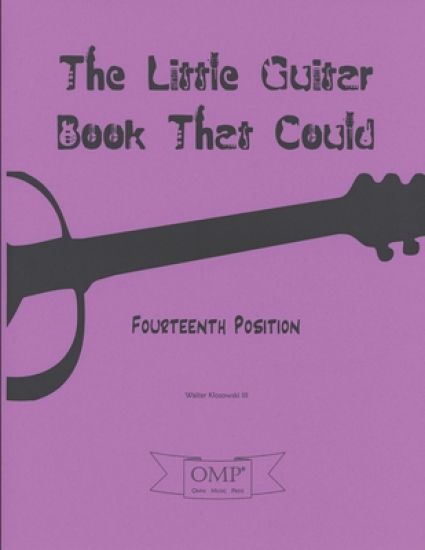
This LITTLE GUITAR BOOK THAT COULD showcases the C A G E D chord and scale sequence exclusively in the FOURTEENTH POSITION, for all to see and use. But, before thumbing through this book, there's some subject matter that the guitarist may need reminding of...even though he or she may have played for years. For example, in this book, six is the exact number of consecutive frets involved in the FOURTEENTH POSITION, and each guitar position spans a full two octaves plus a perfect fourth when in standard tuning. Also, when in this guitar position the second and third fingers on the fretting hand are to remain stationary in their respective frets or "slots", initially, as their stationary qualities allow the first and or fourth finger to stretch or slide to those notes in the outermost frets. As for the picking hand, a very useful and important picking pattern occurs down by the sound hole or bridge where the picking hand spends a majority of its time. This picking pattern involves every other string and is best evidenced when the center most root notes, or main root notes, in the FOURTEENTH POSITION are plucked alphabetically, starting with the G root note located on the first or thinnest guitar string. The specific string picking pattern begins by picking the G root there (first string, second finger); then A (third string, first finger); C (fifth string, second finger); D (second string, second finger); E (fourth string, first finger) and conclude with the G (sixth string, second finger). The one-three-five, two-four-six string pattern naturally fits the picking hand and is looped, forwards or backwards (six-four-two, five-three-one) as the G root notes found on the first / sixth string(s) are interchangeable. That said, there are three additional terms that need some brief clarification for the purposes of THE LITTLE GUITAR BOOK THAT COULD...those being main root notes, octaves and unisons. What are main root notes? Generally speaking, main root notes represent a specific set of root notes that fall or cluster under the second and third fingers of the fretting hand, in the heart of the position itself. However, there are two instances in the FOURTEENTH POSITION where the main root notes are played using the first and fourth fingers, both of which are an exception of sorts and just as valid. Please be aware of this. Once the placement of each C A G E D main root note is memorized, the attention then moves to their octaves. Octaves are defined as the interval between one musical pitch and another with half or double its own frequency. Some correctly call the interval a "perfect octave", and in guitarland, octaves are usually "one string one fret away". This handy fact helps memorize their location even though, occasionally, two strings and or two frets are involved (the same concept applies in that there will be some sort of string skipping.) The last musical term to be discussed is the term unisons, which are defined when two or more music notes happen to sound the exact same pitch. In guitarland, it usually means "same note different string or fret", and the term implies that the unison occurs in the guitar position at hand. So that's it This LITTLE GUITAR BOOK THAT COULD for the FOURTEENTH POSITION remains uncomplicated, straightforward and very practical to use. Its visual based "picture worth a thousand words" format allows one to take full advantage of the documented guitar material right away. You'll have fun discovering some fresh perspectives on the same old technical effort, while also adding some new twists and turns to your own fingering technique. Plus, THE LITTLE GUITAR BOOK THAT COULD for the FOURTEENTH POSITION also contains copious amounts of manuscript and fretboard paper too ...plenty to jot down or journal your musical ideas. To close, thank you very kindly for including THE LITTLE GUITAR BOOK THAT COULD in your library repertoire of fretboard knowledge needs...and as always...enjo

This LITTLE GUITAR BOOK THAT COULD showcases the C A G E D chord and scale sequence exclusively in the FIFTEENTH POSITION, for all to see, use and reference. But, before thumbing through this book, there's some subject matter that the guitarist may need reminding of...even though he or she may have played for years. For example, in this book, six consecutive frets is what constitutes a guitar position, and each position spans a full two octaves plus a perfect fourth so long as the guitar remains in standard tuning. Also when in the FIFTEENTH POSITION the second and third fingers on the fretting hand are to remain stationary in their respective frets or "slots", for the most part, as their stationary qualities are the very thing that allows the first and or fourth finger to stretch or slide to their notes in the outermost frets. On the other hand, literally the picking hand, a very useful and important picking pattern occurs down by the sound hole or bridge, where that hand predominantly resides. This pattern involves every other string, and is best evidenced when the center most C A G E D main root notes are plucked alphabetically, starting with the A note found on the first or thinnest guitar string. Start by picking the A root there (first string, third finger); then pick the C (third string, third finger); then the D (fifth string, third finger); move onto the E (second string, third finger); the G (fourth string, third finger), and conclude with the low A (sixth string, third finger). The one-three-five-two-four-six string pattern naturally fits the picking hand and is looped, forwards or backwards (six-four-two-five-three-one) as the A's on the first/sixth string(s) are deemed interchangeable octaves. Moving on, there are also three important music vocabulary terms used in this book, those three being main root notes, octaves and unisons. Here, main root notes represent a specific set of root notes that fall or cluster underneath the, again mostly stationary second and third fingers of the fretting hand. Typically, both the second and third fingers are involved in fretting them, however in this position the third finger is the only finger used. Even so, once the placement of each main root note is actually memorized, the attention then moves to their matching octaves, which is defined as the interval between one musical pitch and another with half or double its own frequency. Some correctly call the interval a "perfect octave", and in guitarland, octaves are usually "one string one fret away". This handy fact helps memorize their location on the fretboard straightaway, even though, occasionally, two strings and or two frets are involved (the same concept applies in that there will be some sort of string skipping.) The last term used is unison, which occurs when two or more musical notes happen to sound the exact same pitch. In guitarland this usually means "same note different string or fret", and the unison in question typically occurs in the given position. After showcasing all the above C A G E D material, THE LITTLE GUITAR BOOK THAT COULD for the FIFTEENTH POSITION then concludes with an A B C D E F G A or alphabetical appendix, in which the C A G E D material is thus reorganized to include the B and F material. And even there the book's uncomplicated, straightforward "picture worth a thousand words" format allows one to take full musical advantage of the material straight away. You'll have fun discovering some fresh perspectives on the same old same old, while also adding some new twists and turns to your own fingering technique, plus THE LITTLE GUITAR BOOK THAT COULD also contains copious amounts of manuscript and fretboard paper too, for jotting down any technical or compositional aspirations you may get from your own musical ideas. As always, thank you very kindly for welcoming THE LITTLE GUITAR BOOK THAT COULD into your library of fretboard knowledge needs..Enjoy

This LITTLE GUITAR BOOK THAT COULD showcases the C A G E D chord and scale sequence exclusively in the SIXTEENTH POSITION for all to see, use and reference. But, before thumbing through this book, there's some subject matter that the guitarist may need reminding of...even though he or she may have played for years. For example, in this book, six consecutive frets constitutes a guitar position, and each position spans a musical two octaves, plus a perfect fourth, so long as the guitar remains in standard tuning. Also when in this position the second and third fingers on the fretting hand are to remain stationary in their respective frets or "slots", for the most part, as their stationary qualities are the very thing that allows the first and or fourth finger to stretch or slide to the notes in the outermost frets. On the other hand, the picking hand, a very useful and rather important picking pattern occurs down by the sound hole or bridge, where that hand predominantly resides. This pattern involves every other string and is best evidenced when the center most C A G E D main root notes in the SIXTEENTH POSITION are plucked alphabetically, starting with the A note found on the first or thinnest guitar string. Start by picking the A root there (first string, third finger); then pick the C (third string, third finger); then the D (fifth string, third finger); the E (second string, third finger); the G (fourth string, third finger), and conclude with the low A (sixth string, third finger). This string picking pattern, the one-three-five-two-four-six string pattern, naturally fits the picking hand and is looped, forwards or backwards (six-four-two-five-three-one) as the A's on the first/sixth string(s) are deemed interchangeable. The three important music vocabulary terms used in this book are main root notes, octaves and unisons. Here, main root notes represent a specific set of root notes that fall, or cluster, underneath the mostly stationary second and third fingers. Typically, both the second and third fingers are involved in the fretting, however in the SIXTEENTH POSITION C A G E D main root note sequence only the second finger is employed. Even so, the placement of each main root note is memorized prior to memorizing their matching counterparts located in the outer fret areas. Those octaves are defined when an interval between one musical pitch and another with half, or double, its own frequency is voiced. Some correctly call the interval a "perfect octave", and in guitarland, octaves are usually "one string one fret away". This handy fact helps memorize their location on the fretboard straightaway, even though, occasionally, two strings and or two frets are involved (the same concept applies in that there will be some sort of string skipping.) The last vocabulary term used is unison, which occurs when two or more music notes happen to sound the same pitch. In guitarland this usually means "same note different string or fret", and the unison in question typically occurs in the guitar position at hand. After showcasing all the above C A G E D material, THE LITTLE GUITAR BOOK THAT COULD for the SIXTEENTH POSITION then concludes with an A B C D E F G A or alphabetical appendix, in which the C A G E D material is thus reorganized to include the B and F material. So that's it This book's uncomplicated, straightforward "picture worth a thousand words" format allows one to take full advantage of the musical material straight away. You'll have fun discovering some fresh perspectives on the same old same old, while also adding some new twists and turns to your own technique. Plus THE LITTLE GUITAR BOOK THAT COULD for the SIXTEENTH POSITION contains copious amounts of manuscript and fretboard paper too, for jotting down those on the spot compositional ideas. To close, thank you very kindly for welcoming my LITTLE GUITAR BOOK THAT COULD into your library of fretboard knowledge needs...appreciate you...Enjoy


A one night stand with Ellie and Cooney learned he was infected with a venereal disease. When he attempted to hunt her down to let her know, his innocent efforts turned into wild car chases and murder.

"Hannelore Rex" is the story of a young refugee from Nazi Germany, her promiscuous life as a single, her loveless marriage and her adulterous affair with an American general during World War II. Her nagging ambivalence about being Jewish heightens the conflict.

After killing her mother, spending 18-years in prison and knowing she had been told you were dead, how did you suddenly go about winning the affections of a daughter who had become a hooker?

This is the story of a 17 year old private who earned his spurs as a horse cavalryman at Fort Riley, Kansas and then found himself in the jungles of Burma. He was no longer a proud trooper, he became a dogface, an infantryman fighting not only the tenacious Japanese but the jungle monsoons, malaria and other diseases. His life became a series of adventures taking him to China and the ultimate challenge.



Upon its publication in 1957 "A Glossary of Mycology" was acclaimed by scientific and medical journals throughout the United States and Britain. The International Record of Medicine called it "a valuable reference book for every mycologist." Antibiotics and Chemotherapy recommended it as essential for all scientific libraries. The Bryologist said, "The authors are to be congratulated upon the wealth of information . . . the book is highly recommended in every respect." Nearly 7000 terms--technical terms and their derivations; common or popular, vernacular, and obsolete terms; terms used in the field of medical mycology and antibiotics; names of the originators of terms; folklore terms; and color terms--were covered by the original edition. Also included were terms which, though not strictly mycological, occur frequently in literature of particular interest to mycologists. This revision brings the work up to date with the considerable developments in the field since its first publication. Nearly 350 terms have been added, and new definitions for many of the original terms supplied. Excellent diagrammatic line drawings by Henry A. C. Jackson illustrate 191 of the terms.

In this highly perceptive and original study Evert traces Keats' formulation in his early work of mythography of the imagination founded on Apollo through its radical qualification in his later work. Originally published in 1965. The Princeton Legacy Library uses the latest print-on-demand technology to again make available previously out-of-print books from the distinguished backlist of Princeton University Press. These editions preserve the original texts of these important books while presenting them in durable paperback and hardcover editions. The goal of the Princeton Legacy Library is to vastly increase access to the rich scholarly heritage found in the thousands of books published by Princeton University Press since its founding in 1905.

In this highly perceptive and original study Evert traces Keats' formulation in his early work of mythography of the imagination founded on Apollo through its radical qualification in his later work. Originally published in 1965. The Princeton Legacy Library uses the latest print-on-demand technology to again make available previously out-of-print books from the distinguished backlist of Princeton University Press. These editions preserve the original texts of these important books while presenting them in durable paperback and hardcover editions. The goal of the Princeton Legacy Library is to vastly increase access to the rich scholarly heritage found in the thousands of books published by Princeton University Press since its founding in 1905.