

Kirjahaku
Etsi kirjoja tekijän nimen, kirjan nimen tai ISBN:n perusteella.
1000 tulosta hakusanalla Walter Parks



A heartwarming, heart-stopping tale of an unloved street dog. With temperatures below freezing, an abandoned, frightened and hungry hound struggled to survive. Follow the journey of how Walter miraculously found a family to love and completely turned their lives upside down.
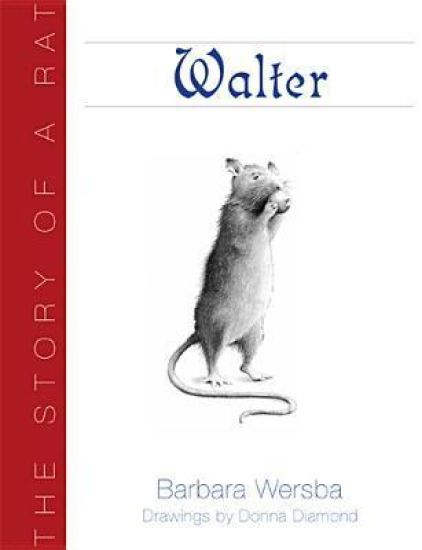
Two lonely creatures find that companionship is closer than they thought in this charming tale of friendshipThis is the story of a writer and a reader. The writer is a person. The reader is a rat. They share an old house on Long Island, but have never met. How these two lonely creatures discover one another is the essence of this story.
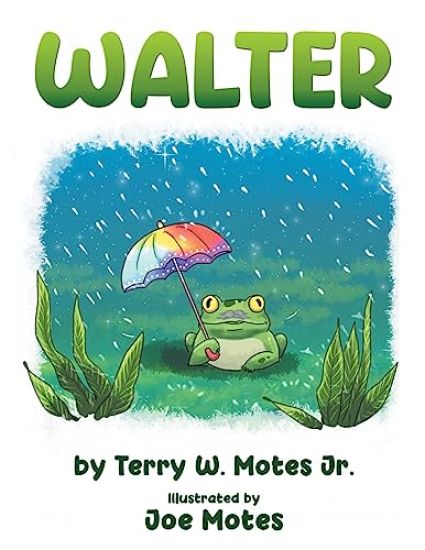
Walter is a children's book about a frog with an umbrella. The umbrella is rainbow colored to representinclusion, acceptance, unity, and diversity. More specifically, the umbrella is a metaphor for Walter's outlook onlife, which is the focus of the book. Walter, older and more seasoned than all his other pond dwelling neighbors, sees life a bit differently than others. Walter's message is one of community, teamwork, understanding, patience, inclusion, and coming together for the common good in times of crisis. Having learned this lesson after aharrowing experience involving a natural disaster, the pond community sees the light and in turn realizes theimportance, truth, and value in Walter's message.
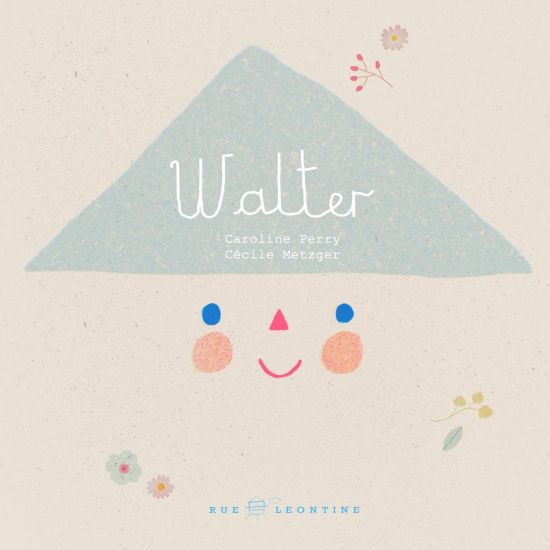
"Some said Walter was an insect...but really, Walter was just Walter."Bilingual book French/ English.


Min roman handlar om Johan Conrad Walter som var född 1744 i Stralsund, om hans liv på Gotland fram till sin död. Han lever i boken som soldat, stuckatör och kakelugnsmakare på Gotland och han gör resor med segelskepp mellan Visby och Stockholm. Han rör sig i Stockholm och reser till Penningby i Uppland och Uppsala i dåtidens Sverige. På sin färd får han vänner och kärleksrelationer som hänger med genom boken. Han utbildar sig till kakelugnsmakare i Stockholm vid Rörstrands slott och blir sedan verksam på Gotland. Följ med till Gustav III,s tid.

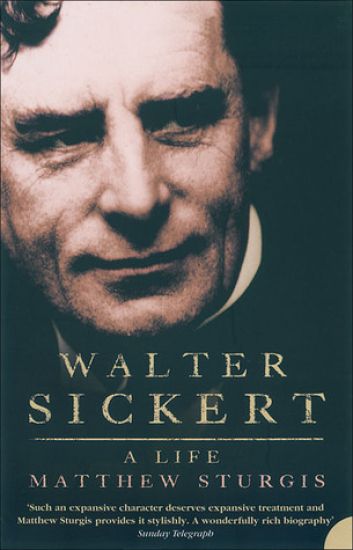
The first major life of the outstanding British painter – and Jack the Ripper suspect – Walter Sickert (1860-1942), by the highly acclaimed biographer of Aubrey Beardsley. Walter Richard Sickert is perhaps the outstanding figure of British art during the last hundred years. Many contemporary painters, from Hodgkin and Bacon to Auerbach and Kossof, acknowledge a debt to his influence. His career spanned six decades of unceasing experiment and achievement. As a young artist, he was welcomed and encouraged by Degas. He was the disciple of Whistler and mentor of Beardsley. He founded the London Impressionists and the Camden Town Group. He was taken up by both the Woolfs and the Sitwells. He gave painting lessons to Winston Churchill. His energy was prodigious and his personality fascinating: he was also an illustrator, cartoonist, writer, polemicist, teacher and wit. He relished controversy: his early paintings of London music halls and his late works, based on 18th-century etchings and contemporary news photographs, provoked outraged criticism from conventional commentators. Sturgis also devotes an appendix to charting in detail Sickert's posthumous life as a player in the 'Jack the Ripper' circus, assessing (and demolishing) the arguments of Patricia Cornwell and others in the light of his own discoveries.
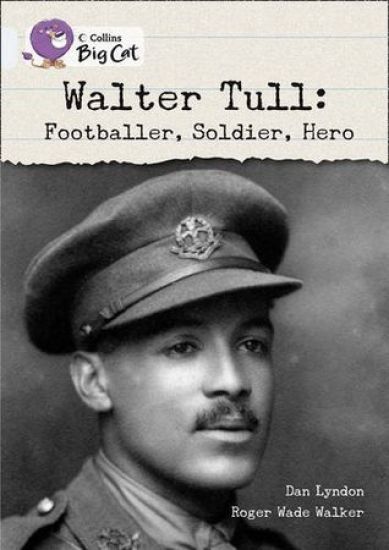
Build your child’s reading confidence at home with books at the right level Walter Tull was a successful footballer and officer in the British Army in World War One. These achievements are even more exceptional because Walter was Afro-Caribbean, succeeding in a world that still considered black people inferior. Follow him from the orphanage to the football field and final days in the trenches, in this inspiring biography. Diamond/Band 17 books offer more complex, underlying themes to give opportunities for children to understand causes and points of view.A biographyA timeline on pages 54 and 55 presents the key events in Walter Tull's life chronologically, allowing plenty of recapping and further discussion.Curriculum Links: History: What was it like to live here in the past?This book has been quizzed for Accelerated Reader.
Introducing the first fantastic tale from the Wonderful World of Walter and Winnie - an enchanting new picture book series from Rachel Bright.
Walter the Farting Dog: Trouble at the Yard Sale
William Kotzwinkle; Glenn Murray
Puffin Books
2006
nidottu
Due to his horrible farting problem, Walter the dog is sold and forced to move away with his new owner who decides to use Walter in his plots to rob banks, but Walter wants no part of the evil plans and so puts a stop to it all--becoming a hero and reuniting with his loving family. Reprint.

Walter the Farting Dog Goes on a Cruise
William Kotzwinkle; Glenn Murray; Elizabeth Gundy
Puffin Books
2008
nidottu
Walter the Farting Dog is now a hero of the high seas Everybody is having a great time on a cruise . . . until a terrible odor permeates the ship. All signs point to Walter, and so he is first banished down below, with the stinky cheeses, and then into a lifeboat to float behind the ocean liner. Then catastrophe strikes How long will the great cruise ship and its frightened passengers be marooned on the high seas? About as long as it takes Walter to digest that cheese

Walter the Farting Dog: Banned from the Beach
Kotzwinkle William; Murray Glenn; Gundy Elizabeth
Penguin USA
2009
pokkari
Mr. and Mrs. Crabbe are enjoying their seaside vacation . . . until a certain dog blows away their umbrella with an enormous fart. Before long, Walter is banned from the beach. While Walter is stuck in the beach house, Betty and Billy hunt for treasure out on a sandbar. As soon as they find a nickel, Mr. and Mrs. Crabbe elbow their way in. Soon all four get marooned during high tide. Will Walter hear their cries for help?
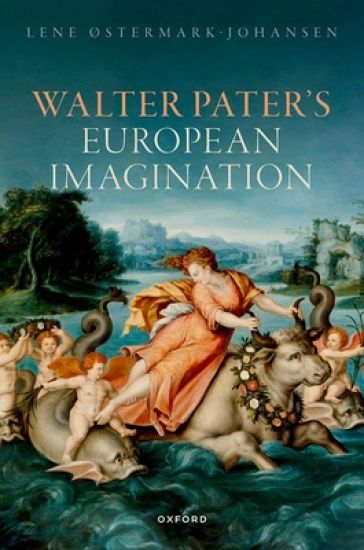
Walter Pater's European Imagination addresses Pater's literary cosmopolitanism as the first in-depth study of his fiction in dialogue with European literature. Pater's short pieces of fiction, the so-called 'imaginary portraits', trace the development of the European self over a period of some two thousand years. They include elements of travelogue and art criticism, together with discourses on myth, history, and philosophy. Examining Pater's methods of composition, use of narrative voice, and construction of character, the book draws on all of Pater's oeuvre and includes discussions of a range of his unpublished manuscripts, essays, and reviews. It engages with Pater's dialogue with the visual portrait and problematises the oscillation between type and individual, the generic and the particular, which characterises both the visual and the literary portrait. Exploring Pater's involvement with nineteenth-century historiography and collective memory, the book positions Pater's fiction solidly within such nineteenth-century genres as the historical novel and the Bildungsroman, while also discussing the portraits as specimens of biographical writing. As the 'Ur-texts' from which generations of modernist life-writing developed, Pater's 'imaginary portraits' became pivotal for such modernist writers as Virginia Woolf and Harold Nicolson. Walter Pater's European Imagination explores such twentieth-century successors, together with French contemporaries like Sainte-Beuve and followers like Marcel Schwob.

Walter Lippmann was arguably the most recognized and respected political journalist of the twentieth century. His "Today and Tomorrow" columns attracted a global readership of well over ten million. Lippmann was the author of numerous books, including the best-selling A Preface to Morals (1929) and U.S. Foreign Policy (1943). His Public Opinion (1922) remains a classic text within American political philosophy and media studies. Lippmann coined or popularized several keywords of the twentieth century, including "stereotype," the "Cold War," and the "Great Society." Sought out by U.S. Presidents and by America's allies and rivals around the world, Lippmann remained one of liberalism's most faithful proponents and harshest critics. Yet few people then or since encountered the "real" Walter Lippmann. That was because he kept crucial parts of himself hiding in plain sight. His extensive commentary on politics and diplomacy was bounded by his sense that America had to adjust to the loss of a common faith and morality in a "post-Christian" era. Over the course of his life, Lippmann traded in his fame as a happy secularist for the stardom of a grumpy Western Christian intellectual. Yet he never committed himself to any religious system, especially his own Jewish heritage. Walter Lippmann: American Skeptic, American Pastor considers the role of religions in Lippmann's life and thought, prioritizing his affirmation and rejection of Christian nationalisms of the left and right. It also yields fresh insights into the philosophical origins of modern American liberalism, including liberalism's blind spots in the areas of sex, race, and class. But most importantly, this biography highlights the constructive power of doubt. For Lippmann, the good life in the good society was lived in irreconcilable tension: the struggle to be free from yet loyal to a way of life; to recognize the dangers yet also necessity of a civil religion; and to strive for a just and enduring world order that can never be. In the end, Lippmann manufactured himself as the prophet of limitation for an extravagant American Century.

Walter Richard Sickert (1860-1942) was a major European artist and critic of the late nineteenth and early twentieth century, whose statements on art from the 1880s to the 1930s have been used by artists and writers on art for more than half a century. His criticism is provocative and penetrating, his writing style brilliant and entertaining. The need for a comprehensive edition of Sickert's art-critical writings is overwhelming, and the texts gathered together here for the first time in one volume by Anna Gruetzner-Robins, a leading expert on the subject, prove that his contribution as an art-writer was a major one in its own right. The texts are presented chronologically and supported by notes which give the information necessary to situate the figures and events to which Sickert refers. Containing over 400 entries this collection offers much new insight into Sickert as an artist and provides valuable information about other British artists of the late nineteenth and early twentieth centuries. Sickert was as much at home in Paris and Venice as in London: his record of conversations with Degas and meetings with other French artists, and the new provenances and exhibition histories he gives of many well-known works of art, make this book indispensable also for the historian of French art.