Kirjojen hintavertailu. Mukana 12 016 292 kirjaa ja 12 kauppaa.

Kirjahaku

Etsi kirjoja tekijän nimen, kirjan nimen tai ISBN:n perusteella.

1000 tulosta hakusanalla Warren S Belding

Mrs Warren'S Profession

Mrs Warren'S Profession

George Bernard Shaw

Double 9 Books
2023
nidottu
"Mrs. Warren's Profession" is a play written by Irish playwright George Bernard Shaw. The play explores themes of social hypocrisy, gender roles, and the morality of prostitution. The main character, Mrs. Kitty Warren, is a successful businesswoman who runs a chain of brothels in various European cities. She is a shrewd and ambitious woman who has built her wealth and status through the sex trade. Despite the controversial nature of her profession, Mrs. Warren is unapologetic about her choices and views her work as a necessary means of survival and financial independence. The play centers around Mrs. Warren's relationship with her daughter, Vivie, who has been raised in the belief that her mother is a respectable woman involved in more legitimate business ventures. However, as Vivie uncovers the truth about her mother's profession, she is confronted with conflicting emotions and moral dilemmas. "Mrs. Warren's Profession" is considered one of Shaw's most controversial plays due to its explicit discussion of prostitution and the moral ambiguity surrounding the characters' actions. It sparked significant debate and censorship efforts during its initial release, but it has since become recognized as a classic work of modern drama for its thought-provoking themes and sharp social commentary.
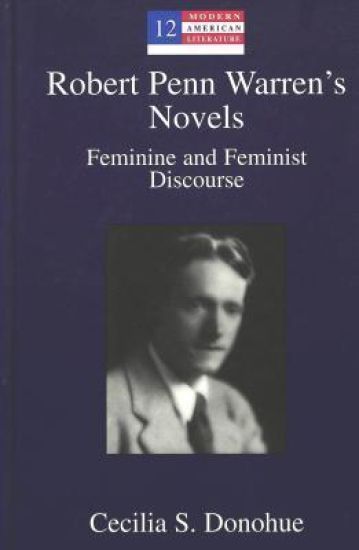
Robert Penn Warren's Novels

Robert Penn Warren's Novels

Cecilia S Donohue

Peter Lang Publishing Inc
1999
sidottu
In presenting an innovative and timely analysis of the novels of one of America's foremost modernists, the author draws on theories of women's speech, voice, and self-realization to illuminate Robert Penn Warren's awareness of gender differences in language and psychological development. This book's joint focus on dialogue contents and motivation of women characters reveals Warren's understanding of and sensitivity to women's ways of speaking and self-actualizing. By reinterpreting these works in the context of postmodernism and feminist criticism, this study argues for a reassessment of Warren's fiction along more contemporary lines.
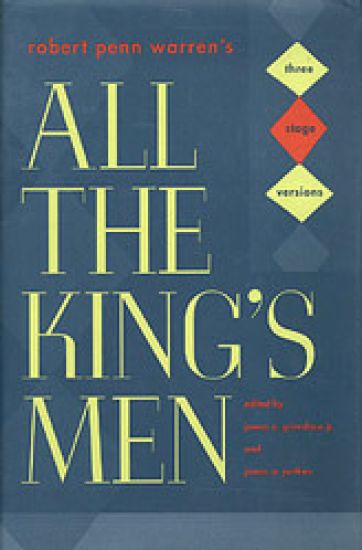
Robert Penn Warren's ""All the King's Men

Robert Penn Warren's ""All the King's Men

Robert Penn Warren; James A. Grimshaw Jr

University of Georgia Press
2000
sidottu
Robert Penn Warren's 1946 Pulitzer Prize-winning novel All the King's Men is one of the undisputed classics of American literature. Fifty years after the novel's publication, Warren's characters still stand as powerful representations of the moral dilemmas faced by individuals in positions of power. All the King's Men had its genesis in Warren's stage play Proud Flesh, unpublished in his lifetime. He also wrote a subsequent unpublished play titled Willie Stark: His Rise and Fall and a later dramatic version of the novel that shared the title All the King's Men. This volume is the first to collect all three dramatic texts and to publish Proud Flesh and Willie Stark. Proud Flesh is particularly fascinating for what it reveals about the development of All the King's Men and Warren's changing perceptions of its characters and themes. The other plays, as post-novel writings, provide a forum for Warren to clarify his intentions in the novel. The editors' introduction to this collection reviews the composition history of the works and their relationship to the novel and to each other. The new perspectives on Warren's writing presented in Robert Penn Warren's "All the King's Men": Three Stage Versions provide a glimpse into a creative mind struggling with a compelling story and offer readers another way of looking at this American classic. This book is an essential reference in Warren studies that will give students of All the King's Men another context from which to consider Warren's novel.
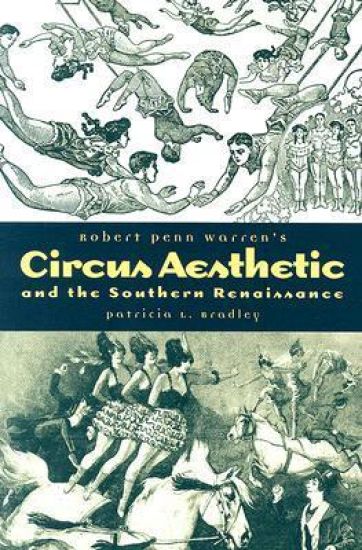
Robert Penn Warren'S Circus Aesthetic

Robert Penn Warren'S Circus Aesthetic

Patricia L. Bradley

University of Tennessee Press
2004
sidottu
The popularity of the circus in the United States reached its zenith in the early 1900s; as the century progressed, the circus gradually came to reflect traditional American values. Observing the growing conservatism of the circus during this period, Robert Penn Warren and other authors of the Southern Renaissance found it complemented their representations of both the mythic Old South and the cultural stagnation resulting from allegiance to it, especially in light of social and moral imperatives to adapt to the New South.In this book, Patricia L. Bradley analyzes the extent to which Warren’s 1947 novella “The Circus in the Attic” and its use of the circus trope establishes a critical matrix for interpreting his fiction, poetry, essays, and literary criticism. She then goes on to examine the ways in which authors such as William Faulkner, Thomas Wolfe, Katherine Anne Porter, Caroline Gordon, Eudora Welty, and Ralph Ellison also use the metaphor alternately to mourn and to celebrate changes in both the tenor of the South and the vehicle of the carnival. Even contemporary heirs to the Southern Renaissance, such as Toni Morrison, use the circus trope to similar effect.Robert Penn Warren’s Circus Aesthetic and the Southern Renaissance aligns Warren’s work with that of other authors of the Southern Renaissance and examines intertextuality among them. Further, it establishes “The Circus in the Attic”—a short, teachable Warren piece—as central to his canon. Finally, this book adroitly reveals the expressive role of the circus in southern history and culture in the first half of the twentieth century.Patricia L. Bradley is assistant professor of English at Middle Tennessee State University. Her articles have appeared in the Companion to Southern Literature, Nathaniel Hawthorne Review, Early American Literature, and other publications.“A thorough, thoughtful, well-informed, and beautifully written examination of the circus theme in Robert Penn Warren’s fiction and in the fiction of the Southern Renaissance generally.” —John Burt, Brandeis University