Kirjojen hintavertailu. Mukana 12 390 323 kirjaa ja 12 kauppaa.

Kirjahaku

Etsi kirjoja tekijän nimen, kirjan nimen tai ISBN:n perusteella.

1000 tulosta hakusanalla Wayne A Valey

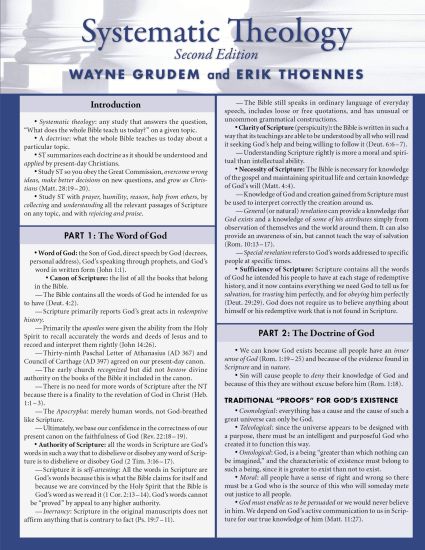
Systematic Theology Laminated Sheet

Systematic Theology Laminated Sheet

Wayne A. Grudem; Erik Thoennes

ZONDERVAN
2020
muu
The Ideal Study Aid for Students and Quick Reference for PastorsThis laminated sheet accompanies Wayne Grudem's Systematic Theology. Packed with critical information in an easy-to-access format this laminated guide is the ideal study aid for students and a quick, helpful reference for pastors. Information on the sheets comes the award-winning Systematic Theology, an introduction with a strong emphasis on the scriptural basis for each doctrine and teaching, clear writing, frequent application to life, and a contemporary approach to subjects of special interest to the church today.No more hunting through textbooks, laboring over self-made study cards, or fumbling with sticky notes. This durable, three-hole-punched, laminated sheet provides a quick overview of systematic theology in a handy, at-a-glance format. Great for understanding the often complex doctrines, preparing for exams, refreshing your memory, writing papers, or preparing sermons.
Christian Beliefs Study Guide

Christian Beliefs Study Guide

Wayne A. Grudem

ZONDERVAN
2022
nidottu
This STUDY GUIDE is a companion resource to Wayne Grudem's Christian Beliefs, revised edition. Not every Christian needs to go to seminary, but there are certain teachings of the Bible that every Christian should know. Whether you're a relatively new believer in Jesus or a mature Christian looking for a better understanding of basics of the faith, the Christian Beliefs Study Guide can help you reflect on and deeply internalize the core teachings of Christianity, when used in conjunction with Christian Beliefs, revised edition (sold separately).This STUDY GUIDE will help you think through important topics like:The Bible and its authority for our livesThe characteristics of GodThe importance of prayerAngels and the reality of spiritual warfareWhat it means that we are created in the image of GodWhat God has done for us in ChristThe purpose of the churchWhat happens when Christ returnsThe biblical understanding of heavenAnd much moreChapter by chapter, this STUDY GUIDE will lead you to examine and reflect on Christian Beliefs, revised edition (sold separately), by providing:Summary: A short summary of the chapter to help remind readers what they read.Key terms: Definitions of important terminology introduced in the chapter.Key quotes: Selection of one or two key quotes from the chapter.Central Scripture Passage: An important biblical passage related to the chapter for reflection or memorization.Content Questions: Questions that reflect on the theological content of the chapter.Practical Application Questions: Questions that help tie the theological content of the chapter to real-life situations.For Further Reading: Lists where to find more information on theological topics in Systematic Theology, second edition, by Wayne Grudem so readers know where to go for a deeper dive into specific subjects they want to know more about.The Christian Beliefs Study Guide is the ideal resource for every Christian who wants a solid foundation for understanding the most basic and essential teachings of the Bible.
Christian Beliefs

Christian Beliefs

Wayne A. Grudem; Elliot Grudem

Zondervan
2005
nidottu
Not every Christian should go to seminary, but there are certain teachings of the Bible that every Christian must know. Theology is important because what we believe affects how we live. Whether you're a relatively new believer in Jesus or a mature Christian looking for a better understanding of basics of the faith, Christian Beliefs is for you. This readable guide to twenty basic Christian beliefs is a condensation of Wayne Grudem’s award-winning book Systematic Theology, prized by pastors and teachers everywhere. He and his son, Elliot, have boiled down the essentials of Christian theology for the layperson and made them both clear and applicable to life. You will learn about the Bible, the characteristics of God, what it means that we are created in the image of God, what God has done for us in Christ, the purpose of the church, and much more. Each chapter includes questions for personal review or group discussion. "These truly are twenty basic beliefs that every Christian should know. Wayne Grudem is a master teacher with the ability to explain profound truths in simple language. He is a man of deep conviction and theological passion--and those who read this book will be both educated and encouraged in the faith."--R. Albert Mohler Jr., President, The Southern Baptist Theological Seminary, Louisville, Kentucky Based on Systematic Theology, this summary will certainly help beginners with Christ to get the hang of their faith."--J. I. Packer, Regent College, Vancouver, British Columbia As Wayne Grudem's Systematic Theology contracts into a compact book, I do not lose my enthusiasm for the truth he loves and the clarity of his words."--John Piper, Bethlehem Baptist Church, Minneapolis, Minnesota
Politics - According to the Bible

Politics - According to the Bible

Wayne A. Grudem

Zondervan
2010
sidottu
Should Christians be involved in political issues?This comprehensive and readable book presents a political philosophy from the perspective that the Gospel pertains to all of life, including politics. Politics—According to the Bible is an in-depth analysis of conservative and liberal plans to do good for the nation, evaluated in light of the Bible and common sense.Evangelical Bible professor, and author of the bestselling book Systematic Theology, Wayne Grudem unpacks and rejects five common views about Christian influence on politics:"compel religion,""exclude religion,""all government is demonic,""do evangelism, not politics," and"do politics, not evangelism."Instead, he defends a position of "significant Christian influence on government" and explains the Bible's teachings about the purpose of civil government and the characteristics of good or bad governments. Grudem provides a thoughtful analysis of over fifty specific and current political issues dealing with:The protection of life.Marriage, the family, and children.Economic issues and taxation.The environment.National defenseRelationships to other nations.Freedom of speech and religion.Quotas.And special interests.Throughout this book, he makes frequent application to the current policies of the Democratic and Republican parties in the United States, but the principles discussed here are relevant for any nation.
Making Sense of Who God Is: One of Seven Parts from Grudem's Systematic Theology 2
Wayne Grudem's Systematic Theology is required reading in many courses on biblical theology--and with good reason. The textbook's emphasis on the scriptural basis for each doctrine, along with its clear writing, and contemporary approach make it an indispensable resource for many Christians.This series presents, as a separate book, each of the seven main parts that make up the 1,600-page Systematic Theology, making it more portable, affordable, and less daunting.Part 2--Making Sense of Who God Is--explores the existence of God through inner knowledge and evidence found in Scripture and in nature.Important Topics Include: Traditional "Proofs" for God's Existence: covering cosmological, teleological, ontological, and moral evidence of the Creator.The Trinity: the three distinct persons each equal to the whole being of God.Creation: including the assertion that, when all the facts are understood, there will be "no final conflicts" between Scripture and natural science.God's Providence: the Creator's continued involvement with all created things and human actions that make a difference within God's providence. Written in a friendly tone, appealing to the emotions and the spirit as well as the intellect, Making Sense of Who God is helps readers overcome wrong ideas, make better decisions on new questions, and grow as Christians.
Making Sense of Man and Sin: One of Seven Parts from Grudem's Systematic Theology 3
Wayne Grudem's Systematic Theology is required reading in many courses on biblical theology--and with good reason. The textbook's emphasis on the scriptural basis for each doctrine, along with its clear writing, and contemporary approach make it an indispensable resource for many Christians.This series presents, as a separate book, each of the seven main parts that make up the 1,600-page Systematic Theology, making it more portable, affordable, and less daunting.Part 3--Making Sense of Man and Sin--explores how mankind is distorted, but not lost, through sin and is renewed through redemption in Christ.Important Topics Include: The creation of male and female, including harmonious personal relationships, equality in personhood and importance, and difference in role and authority.Equality and differences in the Trinity.The essential nature of man.Our inherited guilt and corruption because of Adam's sin. Written in a friendly tone, appealing to the emotions and the spirit as well as the intellect, Making Sense of Man and Sin helps readers overcome wrong ideas, make better decisions on new questions, and grow as Christians.
Making Sense of Christ and the Spirit: One of Seven Parts from Grudem's Systematic Theology 4
Wayne Grudem's Systematic Theology is required reading in many courses on biblical theology--and with good reason. The textbook's emphasis on the scriptural basis for each doctrine, along with its clear writing, and contemporary approach make it an indispensable resource for many Christians.This series presents, as a separate book, each of the seven main parts that make up the 1,600-page Systematic Theology, making it more portable, affordable, and less daunting.Part 4--Making Sense of Christ and the Spirit explores Jesus Christ as fully God and fully man in one person.Important Topics Include: The Person of Christ: including the virgin birth--uniting full deity and humanity in one person while enabling Christ's humanity to be without inherited sin--and the incarnation--the act of God the Son whereby he took himself a human nature.The Doctrine of the Atonement: the work Christ did in his life and death to earn our salvation.Jesus' Resurrection and Ascension: affirming the goodness of God's original creation of man as a creature with a physical body that was "very good", and his rightful place in glory and honor that had not been his before as the God-man. Written in a friendly tone, appealing to the emotions and the spirit as well as the intellect, Making Sense of Christ and the Spirit helps readers overcome wrong ideas, make better decisions on new questions, and grow as Christians.
Making Sense of Salvation: One of Seven Parts from Grudem's Systematic Theology 5
Wayne Grudem's Systematic Theology is required reading in many courses on biblical theology--and with good reason. The textbook's emphasis on the scriptural basis for each doctrine, along with its clear writing, and contemporary approach make it an indispensable resource for many Christians.This series presents, as a separate book, each of the seven main parts that make up the 1,600-page Systematic Theology, making it more portable, affordable, and less daunting.Part 5--Making Sense of Salvation explores God's common grace to redeem those who will be saved, and to demonstrate his goodness, mercy, justice, and glory.Important Topics Include: The order of salvation--from God's choice of people to be saved to the chosen people receiving a resurrection body.Effective calling--the act of God the father speaking through the human proclamation of the gospel to summon people to himself in saving faith.Regeneration--a secret act of God in which he imparts new spiritual life to us.Glorification--when Christ returns and raises from the dead the bodies of all believers for all time who have died. Written in a friendly tone, appealing to the emotions and the spirit as well as the intellect, Making Sense of Salvation helps readers overcome wrong ideas, make better decisions on new questions, and grow as Christians.
Making Sense of the Church: One of Seven Parts from Grudem's Systematic Theology 6
Wayne Grudem's Systematic Theology is required reading in many courses on biblical theology--and with good reason. The textbook's emphasis on the scriptural basis for each doctrine, along with its clear writing, and contemporary approach make it an indispensable resource for many Christians.This series presents, as a separate book, each of the seven main parts that make up the 1,600-page Systematic Theology, making it more portable, affordable, and less daunting.Part 6--Making Sense of the Church explores the community of all true believers for all time--the church.Important Topics Include: The invisible church--the church as God sees it.The visible church--the church as Christians on earth see it.The purity of church--the degree of freedom from wrong doctrine and conduct.The primary purpose of the church--ministry to God, believers, and the world.The power of the church--its God-given authority to carry on spiritual warfare, proclaim the gospel, and exercise church discipline.Spiritual gifts--abilities empowered by the Holy Spirit and used in any ministry of the church. Written in a friendly tone, appealing to the emotions and the spirit as well as the intellect, Making Sense of the Church helps readers overcome wrong ideas, make better decisions on new questions, and grow as Christians.
Making Sense of the Future: One of Seven Parts from Grudem's Systematic Theology 7
Wayne Grudem's Systematic Theology is required reading in many courses on biblical theology--and with good reason. The textbook's emphasis on the scriptural basis for each doctrine, along with its clear writing, and contemporary approach make it an indispensable resource for many Christians.This series presents, as a separate book, each of the seven main parts that make up the 1,600-page Systematic Theology, making it more portable, affordable, and less daunting.Part 7--Making Sense of the Future explores the fulfillment of Scripture--the bodily return of Christ.Important Topics Discuss the primary views of the Millennium (thousand years): Amillennialism--the reign of Christ is now being fulfilled.Postamillennialism--Christ will return after the millennium.Premillennialism--Christ will come back after the millennium.Whichever view the reader subscribes to, the end result is clear: there will be a sudden, personal, visible, bodily return of Christ.Written in a friendly tone, appealing to the emotions and the spirit as well as the intellect, Making Sense of the Church helps readers overcome wrong ideas, make better decisions on new questions, and grow as Christians.
Systematic Theology,: An Introduction to Biblical Doctrine
This new edition of Systematic Theology by Wayne Grudem may be the most important resource you can own for helping you understand Scripture and grow as a Christian.The most widely used resource of the last 30 years in its area with over 1 million copies sold, Systematic Theology by Wayne Grudem has been thoroughly revised and expanded (all 57 chapters) for the first time while retaining the features that have made it the standard in its field: clear explanations, an emphasis on each doctrine's scriptural basis, and practical applications to daily life.Praise for the second edition: "After a quarter century of remarkable usefulness globally . . . it remains remarkable. I thank God for this precious gift to Christ's people worldwide." - John Piper"Stands out for its clarity and accessibility." - Thomas R. Schreiner"One of those rare works that can challenge the scholar and instruct the beginner . . . It is simply indispensable." - Jack DeereWith nearly 250 pages of new content and revisions that took several years, this new edition now includes the following distinctive features, making it even better: Updated, fuller analysis of several recent controversies within evangelicalism, including the eternal relationship between the Father and the Son in the Trinity, the question of God's atemporal eternity, the role of women in the church, "seeker-sensitive" churches, miraculous gifts of the Holy Spirit, and contemporary worship music.New, thoughtful critiques of open theism, the "new perspective on Paul," Molinism (or "middle knowledge"), "Free Grace" theology, and the preterist view of Christ's second comingCompletely revised, stronger chapter on the clarity of ScriptureCompletely revised, stronger chapter on creation and evolution, including a longer critique of theistic evolution and an extensive discussion on the age of the earthNew discussion of how biblical inerrancy applies to some specific "problem verses" in the GospelsAdditional material respectfully explaining evangelical Protestant differences with Roman Catholicism (with extensive interaction with the Catechism of the Roman Catholic Church), Protestant liberalism, and MormonismCompletely updated bibliographiesAll Scripture quotations updated from RSV to ESVAn explanation of why monogenes in John 3:16 and elsewhere should be translated as "only begotten" rather than merely "only" (this is a change from the first edition)A contemporary worship song added at the end of each chapter (while retaining the traditional hymns as well)New discussion on the impassibility of GodAn extensive discussion on the eternal submission of the Son to the Father, taking into account controversies in recent yearsUpdated section on contemporary worship musicA discussion of recent criticisms of the penal substitutionary view of the atonementNumerous other updates and corrections that have be prompted by letters and emails from people around the world and by interaction with the students Wayne has taught over the last 26 years both at Trinity Evangelical Divinity School and at Phoenix SeminaryPart of the brilliance of Systematic Theology over the years has been its simplicity and ease of use. Each chapter follows the same structure. First, there is discussion of the doctrine being considered, such as justification or the Trinity or the deity of Christ. An explanation of that doctrine's biblical support and possible objections follow. Personal application and key terms to know for personal growth are then provided. Chapters also include a Scripture memory passage, references to other literature on the topic, and suggested hymns and worship songs.If you are someone who thinks theology is hard to understand or boring, then this new edition of Systematic Theology will likely change your mind.
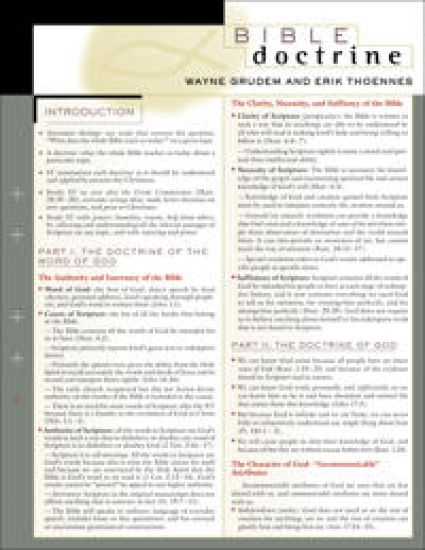
Bible Doctrine Laminated Sheet

Bible Doctrine Laminated Sheet

Wayne A. Grudem; Erik Thoennes

Zondervan
2015
muu
Zondervan Get an A! Study Guides provide trustworthy information and easy access. Six pages packed with critical information provide an ideal study aid for students and a quick, helpful reference for pastors.Information on the sheets comes from Wayne Grudem’s popular Bible Doctrine, a basic introduction with a strong emphasis on the scriptural basis for each doctrine, clear writing, frequent application to life, and a contemporary approach to subjects of special interest to the church today.
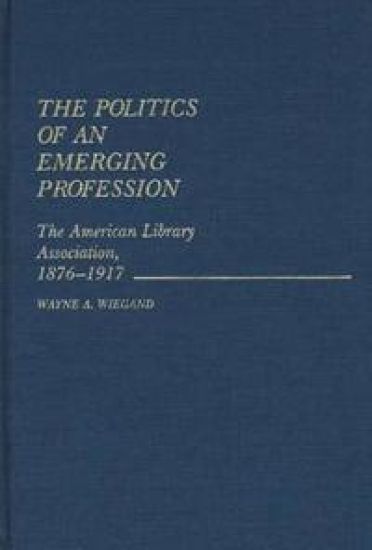
The Politics of an Emerging Profession

The Politics of an Emerging Profession

Wayne A. Wiegand

Praeger Publishers Inc
1986
sidottu
Wiegand examines the development of ALA from 1876 to 1917 in this masterful tale. He looks at the issues that existed during those years, the conflicts, and the changing characteristics of ALA's Executive Board, and succeeds in giving us a particularly revealing picture of the nature of the profession. He analyzes the three elements of Dewey's motto, `The best reading for the largest number at the least cost,' and how they characterized ALA's development as the leaders sought to accomplish those goals. Wiegand makes his points carefully in this story of a `struggle to accommodate shifting pressures and power groups within the world of librarianship. This is a perceptive, reliable recounting of our early history, and will stimulate a great deal of discussion. Wiegand's book deserves a wide audience. Wilson Library Bulletin
An Active Instrument for Propaganda

An Active Instrument for Propaganda

Wayne A. Wiegand

Praeger Publishers Inc
1989
sidottu
This study effectively addresses the question: What was the involvement of the American public library community in The Great War? A comprehensive introduction provides an overview of public library history prior to World War I, touching on such topics as the growth of the public library from the genteel, early nineteenth-century social libraries of New England and the Mid-Atlantic states and the founding of the American Library Association in 1876. The A.L.A. provided for an exchange of information and a means to address common problems encountered in librarianship. It facilitated the adoption of the Dewey classification system, pressed for the publication of periodical indexes, and began publishing its own collection guides. Wiegand details the socioeconomic characteristics of turn-of-the-century library professionals and their determination to address industrialization, urbanization, and immigration as these issues came within their sphere of influence. He identifies two perplexing problems of the period: the inability of public librarians to force Americans to actually use their libraries, and the challenges posed by new forces in the cultural, intellectual, and literary worlds. It is against this background that American public librarians and their institutions responded to the call for united action during World War I. Chapter 1 deals with the response to the Great European War before the United States entered on the allied side in 1917, while Chapters 2 and 3 analyze library-initiated wartime activities on both the local and national levels. The role of the public library in food conservation and the infrequently addressed issue of censorship and book burning are scrutinized in Chapters 4 and 5. Chapter 6 outlines programs for the Americanization of immigrants. A concluding chapter offers a synthesis of the volume. An essay on primary sources is included in the bibliography. An Active Instrument for Propaganda inaugurates the Beta Phi Mu's Monograph Series that, in the tradition of the International Library Science Honor Society's Chapbooks, will add significantly to the scholarly literature of the library profession. The book will be an important addition to collections dealing with World War I, and a valuable resource for historians of that period. Because wide coverage has been given to the wartime activities of hundreds of public libraries across the nation, many local public library collections will be enriched by this important volume.
The Boys Club, How Childhood Trauma Traps Some Men into Child-like Behaviors
The Boys Club is a reflection on men by therapist and author Dr. Wayne Beckles. This honest and insightful work reflects data collected over thirty years of helping men to explore the impact of childhood trauma and factors in the socialization of boys which often result in unhealthy adult male behaviors. While many adult men are able to manage bills, balance budgets, or run corporations and be good husbands and fathers; still there may be something missing. This missing thing shows up as an ache, a yearning, a call that comes from the soul of the world that they hear but cannot appropriately answer. What if we were able to reach the wounded little boy who resides just beneath the surface and help him to become a healthy man?
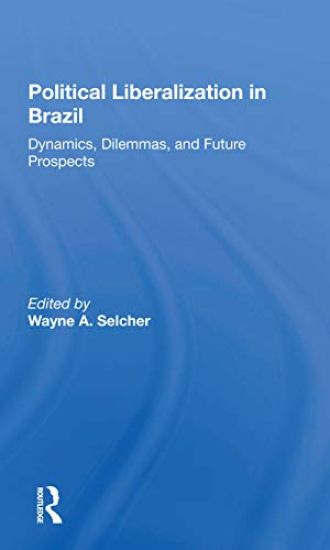
Political Liberalization In Brazil

Political Liberalization In Brazil

Wayne A Selcher

Routledge
2019
sidottu
The civilian government inaugurated in Brazil in March 1985, following twenty-one years of military rule, is the culmination of a slow process of liberalization that has brought greater freedom of political expression, organization, and activity. How the Sarney government responds to the challenges it faces and the institutional choices it must make will shape Brazil’s political evolution for years to come. Should Brazil develop a democratic system, it would be the third most populous democracy in the world. Political trends in Brazil are therefore of considerable significance to Latin America and the United States. In this comprehensive analysis of the forces pushing democratization forward, those opposing it, and the contradictions created by the ad hoc nature of the dynamics between the two, the contributors examine the legacy of two decades of authoritarian rule, the choices facing the civilian government, and possible future developments.
Political Liberalization In Brazil

Political Liberalization In Brazil

Wayne A Selcher

Routledge
2021
nidottu
The civilian government inaugurated in Brazil in March 1985, following twenty-one years of military rule, is the culmination of a slow process of liberalization that has brought greater freedom of political expression, organization, and activity. How the Sarney government responds to the challenges it faces and the institutional choices it must make will shape Brazil’s political evolution for years to come. Should Brazil develop a democratic system, it would be the third most populous democracy in the world. Political trends in Brazil are therefore of considerable significance to Latin America and the United States. In this comprehensive analysis of the forces pushing democratization forward, those opposing it, and the contradictions created by the ad hoc nature of the dynamics between the two, the contributors examine the legacy of two decades of authoritarian rule, the choices facing the civilian government, and possible future developments.
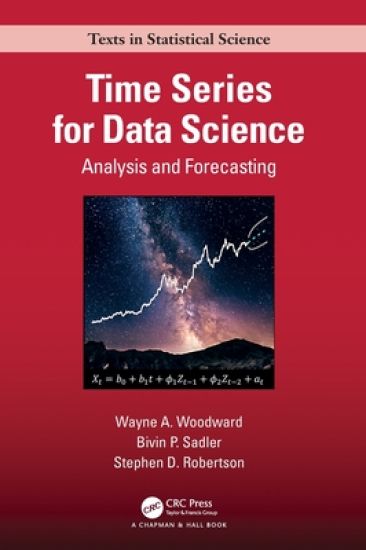
Time Series for Data Science

Time Series for Data Science

Wayne A. Woodward; Bivin Philip Sadler; Stephen Robertson

TAYLOR FRANCIS LTD
2022
sidottu
Data Science students and practitioners want to find a forecast that “works” and don’t want to be constrained to a single forecasting strategy, Time Series for Data Science: Analysis and Forecasting discusses techniques of ensemble modelling for combining information from several strategies. Covering time series regression models, exponential smoothing, Holt-Winters forecasting, and Neural Networks. It places a particular emphasis on classical ARMA and ARIMA models that is often lacking from other textbooks on the subject.This book is an accessible guide that doesn’t require a background in calculus to be engaging but does not shy away from deeper explanations of the techniques discussed.Features:Provides a thorough coverage and comparison of a wide array of time series models and methods: Exponential Smoothing, Holt Winters, ARMA and ARIMA, deep learning models including RNNs, LSTMs, GRUs, and ensemble models composed of combinations of these models.Introduces the factor table representation of ARMA and ARIMA models. This representation is not available in any other book at this level and is extremely useful in both practice and pedagogy.Uses real world examples that can be readily found via web links from sources such as the US Bureau of Statistics, Department of Transportation and the World Bank.There is an accompanying R package that is easy to use and requires little or no previous R experience. The package implements the wide variety of models and methods presented in the book and has tremendous pedagogical use.
Time Series for Data Science

Time Series for Data Science

Wayne A. Woodward; Bivin Philip Sadler; Stephen Robertson

TAYLOR FRANCIS LTD
2024
nidottu
Data Science students and practitioners want to find a forecast that “works” and don’t want to be constrained to a single forecasting strategy, Time Series for Data Science: Analysis and Forecasting discusses techniques of ensemble modelling for combining information from several strategies. Covering time series regression models, exponential smoothing, Holt-Winters forecasting, and Neural Networks. It places a particular emphasis on classical ARMA and ARIMA models that is often lacking from other textbooks on the subject.This book is an accessible guide that doesn’t require a background in calculus to be engaging but does not shy away from deeper explanations of the techniques discussed.Features:Provides a thorough coverage and comparison of a wide array of time series models and methods: Exponential Smoothing, Holt Winters, ARMA and ARIMA, deep learning models including RNNs, LSTMs, GRUs, and ensemble models composed of combinations of these models.Introduces the factor table representation of ARMA and ARIMA models. This representation is not available in any other book at this level and is extremely useful in both practice and pedagogy.Uses real world examples that can be readily found via web links from sources such as the US Bureau of Statistics, Department of Transportation and the World Bank.There is an accompanying R package that is easy to use and requires little or no previous R experience. The package implements the wide variety of models and methods presented in the book and has tremendous pedagogical use.
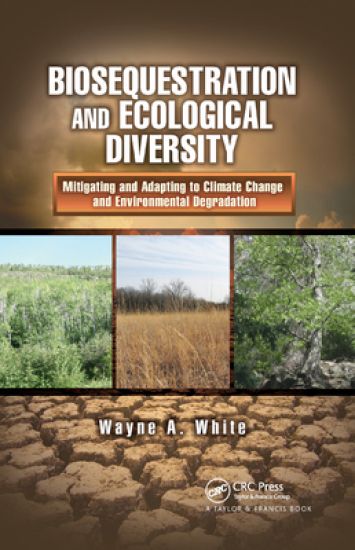
Biosequestration and Ecological Diversity
Increased throughput of carbon-based fossil energy, the destruction of Earth’s forests, and other land use changes have resulted in ever higher levels of waste in the form of greenhouse gases—as well as a diminished capacity of the planet to absorb and store those wastes. This means that to avoid catastrophic global warming and maintain the habitability of Earth by protecting essential soil and water resources, we will need to not only reduce emissions, but also increase carbon storage in the land system. Biosequestration and Ecological Diversity: Mitigating and Adapting to Climate Change and Environmental Degradation discusses ways to remove greenhouse gases from the atmosphere and build soil by changing the way people use and manage land.Principles and Practices for Better Land ManagementExamining biosequestration in social, economic, and political context, the book reviews recent scientific evidence on climate change and global ecological degradation and explains how the carbon cycle has been transformed by destructive land use practices, such as deforestation and the burning of fossil fuels. It describes the principles of biosequestration and restorative land management practices and discusses the potential of carbon storage. The author offers specific examples of inexpensive, proven practices that build soil, protect scarce water resources, and enhance ecological diversity. He also identifies conservation policies that provide technical assistance and financial resources for ecological protection and restoration.How You Can Help Mitigate Climate Change with a Little Piece of LandRestorative land use and land management practices are critical components of any comprehensive strategy for mitigating and adapting to climate change and global environmental degradation. This book explains how anyone who owns or manages land—from an apartment to a city lot to a