Kirjojen hintavertailu. Mukana 12 390 323 kirjaa ja 12 kauppaa.

Kirjahaku

Etsi kirjoja tekijän nimen, kirjan nimen tai ISBN:n perusteella.

1000 tulosta hakusanalla Wayne P Sisson Ma

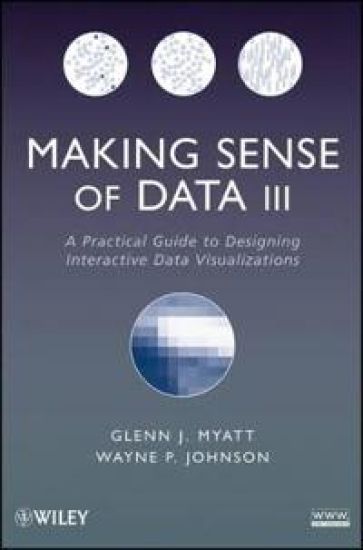
Making Sense of Data III

Making Sense of Data III

Glenn J. Myatt; Wayne P. Johnson

John Wiley Sons Inc
2011
nidottu
Focuses on insights, approaches, and techniques that are essential to designing interactive graphics and visualizations Making Sense of Data III: A Practical Guide to Designing Interactive Data Visualizations explores a diverse range of disciplines to explain how meaning from graphical representations is extracted. Additionally, the book describes the best approach for designing and implementing interactive graphics and visualizations that play a central role in data exploration and decision-support systems. Beginning with an introduction to visual perception, Making Sense of Data III features a brief history on the use of visualization in data exploration and an outline of the design process. Subsequent chapters explore the following key areas: Cognitive and Visual Systems describes how various drawings, maps, and diagrams known as external representations are understood and used to extend the mind's capabilities Graphics Representations introduces semiotic theory and discusses the seminal work of cartographer Jacques Bertin and the grammar of graphics as developed by Leland Wilkinson Designing Visual Interactions discusses the four stages of design process—analysis, design, prototyping, and evaluation—and covers the important principles and strategies for designing visual interfaces, information visualizations, and data graphics Hands-on: Creative Interactive Visualizations with Protovis provides an in-depth explanation of the capabilities of the Protovis toolkit and leads readers through the creation of a series of visualizations and graphics The final chapter includes step-by-step examples that illustrate the implementation of the discussed methods, and a series of exercises are provided to assist in learning the Protovis language. A related website features the source code for the presented software as well as examples and solutions for select exercises. Featuring research in psychology, vision science, statistics, and interaction design, Making Sense of Data III is an indispensable book for courses on data analysis and data mining at the upper-undergraduate and graduate levels. The book also serves as a valuable reference for computational statisticians, software engineers, researchers, and professionals of any discipline who would like to understand how the mind processes graphical representations.
Bulimia

Bulimia

Barbara G. Bauer; Wayne P. Anderson; Robert W. Hyatt

Accelerated Development
1986
nidottu
Bulimia: A Book for Therapist and Client, provides pertinent information to demystify the treatment process, to give clients more complete understanding of their eating disorder and to assist practitioners who treat clients with Bulimia. Questions answered include what are the causes, the primary identifying feature, medical complications, the team of professionals who can help and the process and treatment.
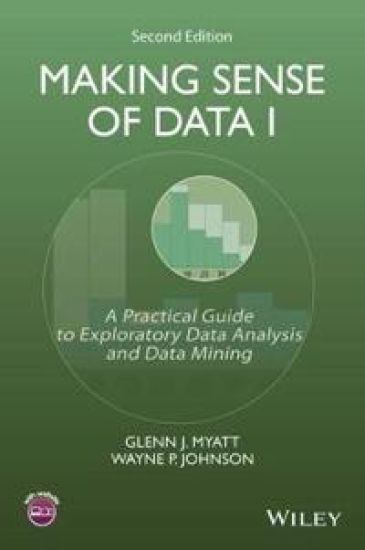
Making Sense of Data I

Making Sense of Data I

Glenn J. Myatt; Wayne P. Johnson

John Wiley Sons Inc
2014
nidottu
Praise for the First Edition “...a well-written book on data analysis and data mining that provides an excellent foundation...” —CHOICE “This is a must-read book for learning practical statistics and data analysis...” —Computing Reviews.com A proven go-to guide for data analysis, Making Sense of Data I: A Practical Guide to Exploratory Data Analysis and Data Mining, Second Edition focuses on basic data analysis approaches that are necessary to make timely and accurate decisions in a diverse range of projects. Based on the authors’ practical experience in implementing data analysis and data mining, the new edition provides clear explanations that guide readers from almost every field of study. In order to facilitate the needed steps when handling a data analysis or data mining project, a step-by-step approach aids professionals in carefully analyzing data and implementing results, leading to the development of smarter business decisions. The tools to summarize and interpret data in order to master data analysis are integrated throughout, and the Second Edition also features: Updated exercises for both manual and computer-aided implementation with accompanying worked examplesNew appendices with coverage on the freely available Traceis™ software, including tutorials using data from a variety of disciplines such as the social sciences, engineering, and financeNew topical coverage on multiple linear regression and logistic regression to provide a range of widely used and transparent approachesAdditional real-world examples of data preparation to establish a practical background for making decisions from data Making Sense of Data I: A Practical Guide to Exploratory Data Analysis and Data Mining, Second Edition is an excellent reference for researchers and professionals who need to achieve effective decision making from data. The Second Edition is also an ideal textbook for undergraduate and graduate-level courses in data analysis and data mining and is appropriate for cross-disciplinary courses found within computer science and engineering departments.
Bulimia

Bulimia

Barbara G. Bauer; Wayne P. Anderson; Robert W. Hyatt

Routledge
2020
sidottu
Bulimia: A Book for Therapist and Client, provides pertinent information to demystify the treatment process, to give clients more complete understanding of their eating disorder and to assist practitioners who treat clients with Bulimia. Questions answered include what are the causes, the primary identifying feature, medical complications, the team of professionals who can help and the process and treatment.
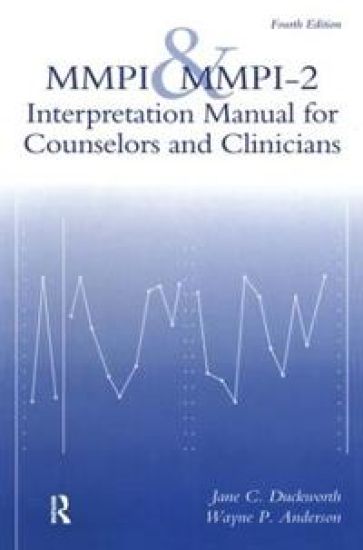
MMPI And MMPI-2

MMPI And MMPI-2

Jane C. Duckworth; Wayne P. Anderson

Taylor Francis Inc
1995
sidottu
This text is intended to be of use as a reference for practitioners and textbook for graduate level courses. The fourth edition correlates validity, clinical and supplementary scales and summarises interpretations for each.; Experts in the field, the authors interpret MMPI and MMPI-2 profiles, applying them to mental health, private practice and counselling center populations. Their expertise is based on a comprehensive review of both research and major authoritative literature.; Updating content with the latest research findings on all three scales - plus additional supplementary scales and content scale - this edition adds a new chapter on the MMPI and MMPI-2 in medical settings. Most important, it interprets in terms of possible behaviours And Thoughts Rather Than Clinical Labels Or Emotionally Laden Words.
Sterilization of Drugs and Devices

Sterilization of Drugs and Devices

Fred M. Nordhauser; Wayne P. Olson

CRC Press Inc
1998
sidottu
Editors Fred M. Nordhauser and Wayne P. Olson have gathered a team of 18 experts from multi-national and leading edge companies to explore the advantages and disadvantages of current sterilization technologies. They cover the theory behind the technology, the practical concerns of installation from engineering and product development perspectives, the "how to validate" concern, and the pragmatics of implementation in a manner that will satisfy the regulatory agencies. The broad range of in-depth information on numerous technologies will help readers design sterile manufacturing processes cost effectively and efficiently.
Grandpappy's Recipes for Hard Times

Grandpappy's Recipes for Hard Times

Robert Wayne Atkins P E

Grandpappy, Inc.
2011
pokkari
This is the book that is mentioned on the "grandpappy.org" Hard Times Survival website. Simple delicious recipes that produce delightful results using the minimum number of common ordinary ingredients. This is a special cookbook that was created for families who are experiencing hard times. When a family is trying to survive during hard times then that family usually has extremely meager financial resources and they cannot afford all the different foods they once had the privilege to consume during normal times. The family has to stretch its food dollar to the limit and they must frequently supplement their weekly menus with wild edible plants and whatever wild game meat they can acquire. This is a cookbook for families in the above situation. It contains a wide assortment of simple recipes that only require the absolute minimum number of ingredients to produce exceptionally delightful and tasty meals. It contains a pleasant variety of delicious recipes for white rice, flour, cornmeal, and canned meats. It also explains how to make your own homemade mayonnaise, sour cream, baking powder, tomato sauce, sugar, and peanut butter. This cookbook also contains my homemade beer recipe and my homemade wine recipe. My homemade wine recipe will allow you to make a delightful wine without any special chemicals or wine yeast. This is a Cookbook for Hard Times when you may have to provide almost everything your family eats.
How to Tan Animal Hides and How to Make High Quality Buckskin Clothing

How to Tan Animal Hides and How to Make High Quality Buckskin Clothing

Robert Wayne Atkins P E

Grandpappy, Incorporated
2012
pokkari
This is the book that is mentioned on the "grandpappy.org" Hard Times Survival website.This book contains complete and detailed instructions on how to skin and butcher a wild animal. It also describes the process of creating delicious smoked meat that has a normal shelf life of approximately one year. The meat can be smoked over a normal fire but instructions and illustrations are also included on how to build a simple efficient smokehouse.You will then be guided through the entire hide tanning process, step by step. Next you will be shown how to take specific measurements at exact locations on the human body so you can create your own clothing patterns at home. You will then be shown how to combine your own homemade clothing patterns with your own tanned animal hides so that you can make your own high quality underwear, shirts, pants, skirts, dresses, jackets, ponchos, caps, and moccasins.This book also contains instructions on how to make ropes, whips, slings, and arrows. Also included are detailed instructions on how to make parchment, homemade ink, and a feather pen.In summary, this book will show you how to use almost every part of a wild game animal so that nothing of any real practical value is wasted.This book uses pictures and hand drawn sketches depending on which one best illustrates the concept being discussed. For example, a neatly drawn sketch of a sewing stitch is far superior to a picture of that same sewing stitch because the hand drawn sketch can show precise details that would not be clearly visible in a picture.If you are a hunter and you do not currently save and process the hides of the wild game animals that your family eats, then this book will clearly explain how to accomplish this task so that you can begin to strategically use a part of the animals that you have been throwing away.If you are currently experiencing hard times and you are eating a lot of wild game meat, then this book will explain how to convert the hides of those animals into soft smooth buckskins that can be used to make high quality clothing for your family that will last for many, many years.In my opinion, every one of the practical skills that are described in this book could be of timeless value to you and to your descendants.
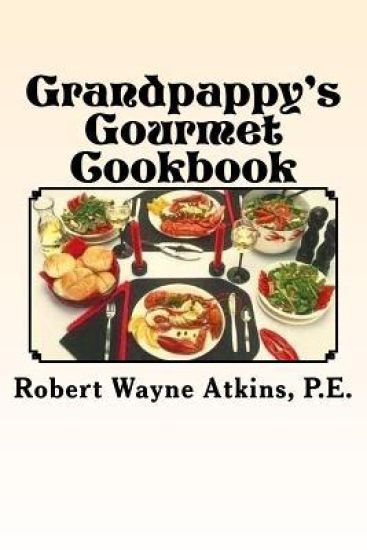
Grandpappy's Gourmet Cookbook

Grandpappy's Gourmet Cookbook

Robert Wayne Atkins P E

Grandpappy, Incorporated
2018
pokkari
At least one of your ancestors was probably a fantastic cook.This cookbook can help you learn the cooking secrets your ancestors had memorized. And as you practice the cooking skills they took for granted then you will gradually become a gourmet cook.This cookbook assumes you know very little, or maybe nothing, about how to prepare delicious food using basic ingredients, such as flour, baking soda, meat, vegetables, fruit, butter, eggs, herbs, and spices.The first 6 chapters contain the really important information you need to know so you can begin your gourmet cooking adventure.The next 26 chapters contain an impressive collection of more than 250 gourmet recipes that have very detailed instructions for each step in the food preparation process. The recipes do not assume that you already know how to cook, or that you know why some things should be done, or why other things should not be done. The recipes in this cookbook clearly explain the reasons why the instructions should be followed in order to produce a culinary miracle.In a very short time you can become a master chef. And after your family and friends taste some of your culinary miracles then they will beg you to share your recipes with them and to please, please, please teach them how to cook the way you do.The reason a gourmet cook is so successful is because he or she normally prepares meals that accomplish all of the following objectives at the same time: 1. The food has an enticing aroma.2. The food has a very desirable appearance.3. The food has a delightful pleasant taste.4. The food satisfies the person's hunger for at least a few hours.5. The food can be easily and quickly digested.6. The vitamins and nutrients in the food have been preserved and they can be easily absorbed into the body.7. The food facilitates the long-term health of the person who eats it.All gourmet cooks gradually modify their recipes as they gain experience and as they learn new things. The best way to become a great gourmet cook is to start with a great recipe. If you start with an average recipe, or with a good recipe, then it will take more of your time, and more of your money invested in ingredients, in order to gradually convert that recipe into something you can take pride in. There is nothing wrong with this approach if you have the patience, and the time, and the money to invest in gradually and slowing enhancing your cooking skills and your favorite recipes. On the other hand, if you start with a superior recipe, then you may discover that you like the recipe exactly the way it is. Or you may decide to gradually make small changes to the recipe to see if those changes impact the results in a favorable or unfavorable manner. By starting very close to your personal finish line, you will be able to arrive there quicker while spending less money.The recipes in this gourmet cookbook are superior recipes. However, no recipe anywhere in this cookbook will please everyone because different people have different taste preferences, and there is nothing unusual about that.Some of the recipes in this cookbook only require two or three ingredients. However, this cookbook also includes recipes that require ten or more ingredients. Some of the recipes are very simple and they can be completed in 5 minute or less. However, some of the recipes require several hours to complete.This cookbook includes recipes for breakfast, lunch, and dinner. There are chapters on appetizers, soups, salads, sandwiches, main dishes, vegetables, desserts, and international cuisine. Each recipe chapter contains between 3 to 29 different recipes, or an average of about 9 recipes per chapter.In conclusion, this cookbook begins by carefully explaining "How to Become a Gourmet Cook," and then this cookbook provides more than 250 gourmet recipes for you to pick from so you can begin your gourmet cooking adventure.
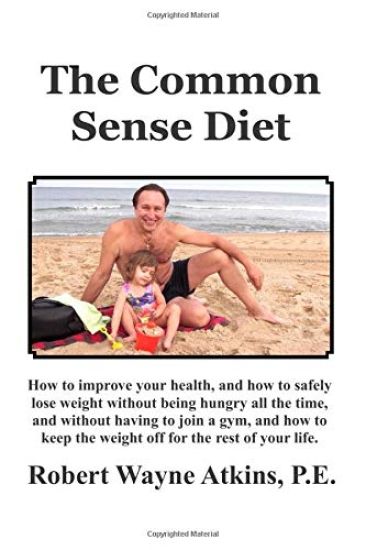
The Common Sense Diet

The Common Sense Diet

Robert Wayne Atkins P E

Grandpappy Inc.
2020
pokkari
The Common Sense Diet is different from most other popular diets because the Common Sense Diet does not forbid the eating of any food you currently enjoy eating. However, foods that contain refined sugar such as candy, cookies, and similar sweets are not recommended.The Common Sense Diet allows you to create a unique diet for yourself based on what you truly enjoy eating. This means you may eat meat, fish, vegetables, fruit, nuts, bread, pasta, and dairy products if you enjoy eating these types of foods. The Common Sense diet also recommends that you include variety in each meal, and in your meals from day to day, and that you should not eat the same exact foods every day. The diet you create for yourself should enhance your short-term health, your long-term health, and it should help you gradually lose weight without being hungry all the time.This book provides detailed information on a lot of different foods so you can strategically select the exact foods you prefer in order to create well-balanced meals that will enhance your health, and help you lose weight, and satisfy your hunger so you are not always thinking about food and your next meal.Unlike other diets this book recommends modest simple exercises that will take about 2 or 3 minutes each morning so you can very gradually firm up your existing muscles, and create new muscles, without experiencing the pain and discomfort of sore muscles.Will the Common Sense Diet actually work for you? I don't know. However, it worked for me. I created this diet, and I wrote this book, and I lost 50 pounds (22.7 kg) in five months without being hungry all the time. However, it was not unusual for me to get a little hungry just before my next regular meal.If you have tried other diets and you did not like having some of your favorite foods on the forbidden food list, and you were hungry most of the time, and food occupied your thoughts during most of the day, and the diet didn't work for you in the long-term, and you gradually regained all the weight you lost, then perhaps now is the time to try something different. Instead of being told what you can eat and what you can't eat, perhaps being able to strategically and carefully select the foods you enjoy eating will help you gradually lose weight, and satisfy your hunger, and improve your health, and allow you to keep the weight you lose off your body for the rest of your life.More information about this diet is on my official website at: https: //www.commonsensediet.org/Please note that the website begins with "https" and it ends with "org" and not with "com."
Atmospheric Chemistry

Atmospheric Chemistry

Ann M Holloway; Richard P Wayne

Royal Society of Chemistry
2010
sidottu
Atmospheric Chemistry provides readers with a basic knowledge of the chemistry of Earth's atmosphere, and an understanding of the role that chemical transformations play in this vital part of our environment. The composition of the 'natural' atmosphere (troposphere, stratosphere and mesosphere) is described in terms of the physical and chemical cycles that govern the behaviour of the major and the many minor species present, and of the atmospheric lifetimes of those species. An extension of these ideas leads to a discussion of the impacts of Man's activities on the atmosphere, and to an understanding of some of the most important environmental issues of our time. One thread of the book explains how living organisms alter the composition and pressures in the atmosphere, modify temperatures, and change the intensity and wavelength-distribution of light arriving from the Sun. Meanwhile, the living organisms on Earth have depended on these very same environmental conditions being satisfactory for the maintenance and evolution of life. There thus appear to be two-way interactions between life and the atmosphere. Man, just one species of living organism, has developed an unfortunate ability to interfere with the feedbacks that seem to have maintained the atmosphere to be supportive of surface life for more than 3.5 billion years. This book will help chemists to understand the background to the problems that arise from such interference. The structure of the book and the development of the subject deviate somewhat from those usually encountered. Important and recurring concepts are presented in outline first, before more detailed discussions of the atmospheric behaviour of specific chemical species. Examples of such themes are the sources and sinks of trace gases, and their budgets and lifetimes. That is, the emphasis is initially on the principles of the subject, with the finer points emerging at later points in the book, sometimes in several successive chapters. In this way, some of the core material gets repeated exposure, but in new ways and in new contexts. The book is written at a level that makes it accessible to undergraduate chemists, and in a manner that should make it interesting to them. However, the material presented forms a solid base for those who are extending their studies to a higher level, and it will also provide non-specialists with the background to an understanding of Man's several and varied threats to the atmosphere. Well-informed citizens can then better assess measures proposed to prevent or alleviate the potential damage, and policy makers more realistically formulate the necessary controls on a sound scientific foundation.
Lockheed P-2V Neptune

Lockheed P-2V Neptune

Wayne Mutza

Schiffer Publishing Ltd
1997
sidottu
This informative and long overdue account provides an extraordinary amount of insight into the Neptune's lengthy history, beginning with its inception during World War II to the present day survivors. Lockheed's Neptune was the first aircraft designed exclusively as an anti-submarine patrol bomber and was progressively developed throughout its operational career. Versatility became a byword as the Neptune's role as the U.S. Navy's premier sub-hunter greatly expanded. A veteran of the Korean and Vietnam wars, the venerable Neptune proved highly adaptable to nearly any mission. More than 1,000 examples were built, many of which thrive today as fire bombers and warbirds. Presented here for the first time are the many fascinating details describing Neptune service with non-U.S. air arms, and obscure operations to include gunships, U.S. Army variants, and CIA operations. Clearly evident is the in-depth research that makes this extensive volume accurate, detailed and redable. Complete with serial and bureau numbers lists that correspond to its many assignments, plus many rare photographs, this comprehensive history does justice to the legendary Neptune. Wayne Mutza is also the author of Grumman Albatross: A History of the Legendary Seaplane(available from Schiffer Publishing Ltd.).
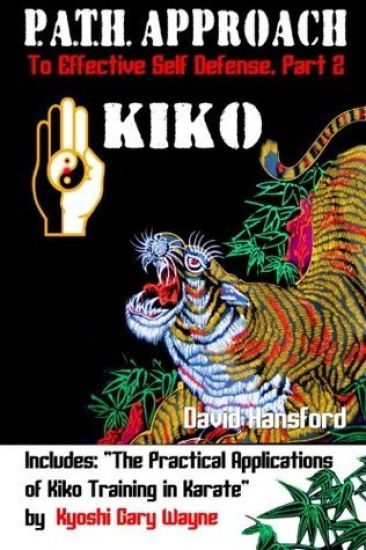
P.A.T.H. Approach to Effective Self Defense, Part 2: Kiko

P.A.T.H. Approach to Effective Self Defense, Part 2: Kiko

Gary Wayne; David Hansford

Createspace Independent Publishing Platform
2014
nidottu
Kiko is the Okinawan Karate method of training the energy of the body. Kiko is inseparably integrated into Karate training. Many of the fundamentals of Kiko are embedded in kata training or targeted in some way toward empty hand combat. So, if one practices Kiko, Karate is being practiced, especially in katas like Sanchin and Tensho and their variations. This is true even in the practice of the combat katas, depending on the speed, power and visualization with which they are practiced. Karate training has four major components: combative techniques, proper mental states, energy (Ki) development and control, and body conditioning. Combative techniques are passed down and trained through kata, short forms, two-person drills and sparring, both controlled and not so controlled. Proper mental states are trained through kata and meditation, both still and moving. Energy development/control and conditioning are the purview of Kiko and are trained by all of the above, but especially kata, using both internal and external exercises.There are legendary stories of aged Karate masters who were able to severely damage a younger, stronger opponent with what appeared as nothing more than a light touch. These masters were said to turn their entire bodies into generators of Ki, releasing it at will without any apparent external visual clues. The myofascia web of the body and the spring-like crimping of the collagen fibers that compose it give it the ability to store elastic energy and provide the scientific basis for these mystical feats of martial power. Training Ekkin-kyo, muscle-tendon changing, and Senzui-kyo, bone marrow washing, are what gave martial power to their techniques.The fascial web of the body forms a continuous matrix of structural support around all the organs, muscles, joints, bones, nerves and blood and lymph vessels. If it is healthy fascia with its lattice orientation of fibers and their crimps, it has the ability to protect the structures it surrounds. Application of proper training exercises can induce an altered architecture of the fascia with stronger crimps. As previously stated, this takes time with regular practice. With stronger crimps, thicker and stronger fibers, arranged properly more energy is stored around the body parts, becoming what is known as protective Ki. The idea behind body conditioning is to develop the ability of the body to be protected from blows and trauma directed at it. Training to develop the fascial network from the inside out, gradually and over time, is the safest way to condition the body. The strengthening process may take a few years, resulting in a strong, flexible and resilient collagenous matrix to protect the body, but such a focus on a long-term goal is nothing new to those who train Karate.