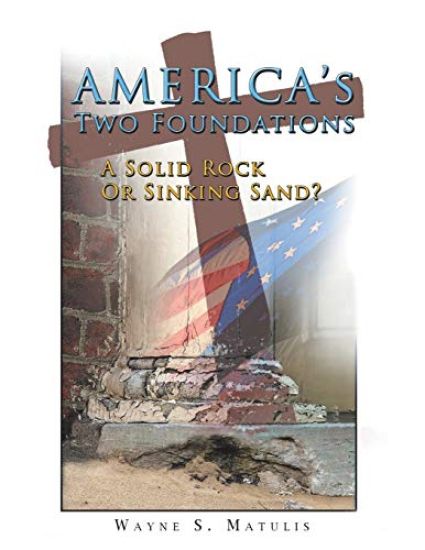
Words and ideas have consequences. Those who will change the meaning of words will change the rules and the laws to suit themselves so they can accomplish their personal agenda. Deadly ideas lay at the bottom of one of America's two foundations. Inscribed on the walls of some of the Capitol's buildings and monuments are these immortal truths: -"Where law ends, tyranny begins." -"To render every man his due." -"Conservation means development as much as it does protection." -"Eternal vigilance is the price of liberty." -"What is past is prologue." The following are quotes from the book America's Two Foundations, A Solid Rock Or Sinking Sand? "A parasite is an organism that lives off the life force of another organism without contributing to the life force of the other. These people of other faiths and no faith are living off the spiritual capital of the Judeo-Christian civilization, and at the same time, they deny the God who revealed the divine principles upon which the ethics of the country grow." Locked inside the Independence Hall, I found myself alone with the spirits of the Founders. "What can you say about a country that even protects the rights of those who are trying to destroy it?" Upon laying the chief cornerstone of the US capital on September 18, 1793, George Washington and others laid the first foundations to the new republic. And they assumed the mantles as "high priests" of this new temple in Washington, DC, thus establishing the New Order of the Ages. Who are these "high priests"? You must read America's Two Foundations, A Solid Rock Or Sinking Sand? to find out.
Translational control in the nervous system is important. Many physiological processes in the nervous system depend on accurate control of the proteome that is mediated through protein synthetic mechanisms and thus, the nervous system is very sensitive to dysregulation of translational control. The Oxford Handbook of Neuronal Protein Synthesis reviews the mechanisms of translational control used by the nervous system, as well as how important nervous system functions, such as plasticity and homeostasis, depend on accurate translational control. The handbook extensively covers how dysregulation of protein synthesis can manifest itself in many distinct pathological processes including neurodevelopmental, neuropsychiatric, and neurodegenerative diseases. The handbook is comprehensive in its coverage of translational control mechanisms with particular focus on how these general control mechanisms are specifically utilized in the context of the cell biological constraints of the nervous system from both a mechanistic and systems perspective.
This work celebrates a great national pastime and tradition. Taking the reader ""behind the chutes"", Wayne Wooden and Gavin Ehringer reveal the essential character of rodeo culture today and show why it retains such a strong hold on the American imagination. As the authors detail, contemporary rodeo has evolved into a much publicised big-time phenomenon even as it strives to stay close to its fundamental cowboy roots. The Professional Rodeo Cowboy Association (PRCA) now sanctions 750 to 800 annual rodeos, worth more than 22 million dollars in prize money, attended by nearly 20 million spectators, and watched by millions more on ESPN and TNN. The National Finals Rodeo (NFR) alone offers more than two million dollars in prize money and is attended by 170,000 spectators in Las Vegas every December. Filled with telling anecdotes and insightful observations, the book highlights rodeo's glamour and glory, hazards and hardships, while clarifying its many dimensions as sport, profession, business, community event, family tradition, and pop cultural icon. Bareback and bull riders, calf ropers and steer wrestlers, barrel racers and saddle bronc busters, bullfighters and arena clowns, stock breeders and local organisers, judges and journalists, the famous and aspiring, winners and losers - all are given their due in a work that reflects the enormous allure and demands of rodeo life. Based on research and interviews conducted at the National Finals, as well as at rodeos large and small in San Francisco, Denver, Houston, Cheyenne, Calgary, Dodge City, Pendleton, and Prescott, among many others, ""Rodeo in America"" provides a guide for aficionados and novices alike.
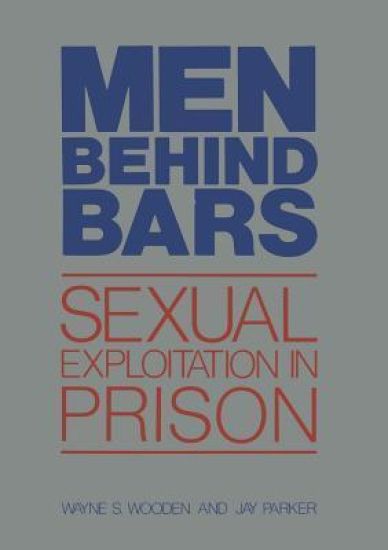
"Barry" is a seventeen-year-old single white male. He has blond hair and blue eyes, weighs 150 pounds, and is five feet eleven inches tall. He was arrested in California at age sixteen for assault and robbery. Because he was underage he was initially segregated in a one-man cell while in county jail. Then, upon admission to a state prison recep tion and classification facility, he was housed in a special dormitory for young, inexperienced inmates who would be at risk within the general population. Upon completion of his screening Barry's counselor recommended that he be sent to a penal institution reserved for the younger, more violence-prone, and hard core inmates. Barry said that he felt he would have "prob lems" at the recommended facility, but his counselor replied, "You won't have any problems." Once he arrived, Barry was double-celled with a nineteen-year-old inmate who beat and anally raped him during his first night in the admission unit. Barry's cellmate continued to assault him sexually during the two weeks they were housed together.
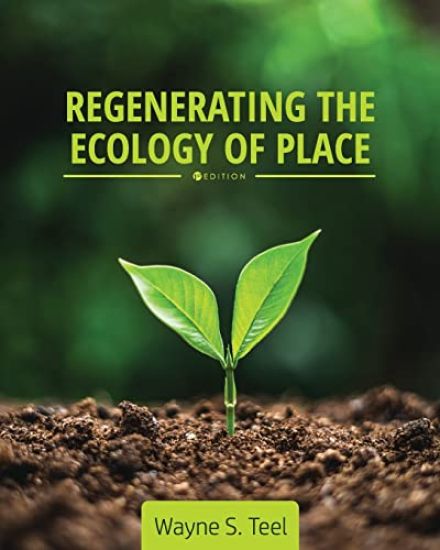
Regenerating the Ecology of Place helps students better understand that industrial agriculture and natural resource extraction are degrading our environment. The text posits that we must go beyond sustainability and focus on regeneration of our local ecosystems to rehabilitate our environment and reverse climate change. Students are encouraged to develop an understanding of the local ecology of the place they live and act on that knowledge, developing new ways to interact with living systems on the planet.The opening chapter introduces students to key concepts of ecology, helping them develop the language needed to better understand our impact on ecosystems and the various cycles of energy, water, and nutrients that are basic building blocks of living systems. Additional chapters address what not to do in support of regeneration efforts, speak to how agriculture must change to reduce its impact on our environment, define permaculture, and introduce strategies to reduce personal and global footprints and shrink the misuse of water. Students will learn about reintegrating manure in nutrient cycles, get an introduction to agroecology including the System of Rice Intensification, and develop their understanding of the problem with GMOs. The last chapters focus on returning carbon dioxide to the soil and adding biochar, why handling brittle landscapes is important, and more about tree crops and the benefits of agroforestry.
African American history is not just American history, it is world history. It's important to our understanding of diverse cultures, traditions and events that help shape the world as we know it. People of African descent exist around the world and have been instrumental in changing the course of history for thousands of years. Historically, mainstream academics have overlooked the role of Blacks in the world, but that changed over time. Understanding the role of people of color on the global stage is essential in appreciating and respecting our differences and shared humanity. Celebration of a People highlights some of the outstanding figures of the Black past. Men and women whose lives have had a global impact and have changed the world, beginning for instance with ancient African rulers to the first black American congressmen through the golden age of Black comedians such as Eddie Rochester Anderson, to little known African American inventors, and so much more, for there is not one profession or country that has not been influenced by people of African descent.