The book is divided into three parts: an overview of Raabc's career, his problems with the public, and the early reception history that did so much to damage his reputation; thematic analyses that seek to release him from received opinions concerning the nature and quality of his oeuvre by exhibiting his versatility and polyperspectivism; and interpretations of individual works. Originally published in 1987. The Princeton Legacy Library uses the latest print-on-demand technology to again make available previously out-of-print books from the distinguished backlist of Princeton University Press. These editions preserve the original texts of these important books while presenting them in durable paperback and hardcover editions. The goal of the Princeton Legacy Library is to vastly increase access to the rich scholarly heritage found in the thousands of books published by Princeton University Press since its founding in 1905.
The book is divided into three parts: an overview of Raabc's career, his problems with the public, and the early reception history that did so much to damage his reputation; thematic analyses that seek to release him from received opinions concerning the nature and quality of his oeuvre by exhibiting his versatility and polyperspectivism; and interpretations of individual works. Originally published in 1987. The Princeton Legacy Library uses the latest print-on-demand technology to again make available previously out-of-print books from the distinguished backlist of Princeton University Press. These editions preserve the original texts of these important books while presenting them in durable paperback and hardcover editions. The goal of the Princeton Legacy Library is to vastly increase access to the rich scholarly heritage found in the thousands of books published by Princeton University Press since its founding in 1905.
Wilhelm II (1859-1941), King of Prussia and German Emperor from 1888 to 1918, reigned during a period of unprecedented economic, cultural, and intellectual achievement in Germany. This volume completes Lamar Cecil's prize-winning scholarly biography of the Kaiser, one of modern history's most powerful--and most misunderstood--rulers. As Cecil shows, Wilhelm's private life reflects a deeply troubled and very superficial man. But the book's larger focus is on Wilhelm as a head of state. Cecil traces the events of the years leading up to World War I, a period that offers ample evidence of the Kaiser's inept conduct of foreign affairs, especially relations with England. Once war broke out, his generals and statesmen kept him on the sidelines. He was dethroned on November 9, 1918, when a socialist republic was established in Berlin, and he fled in exile to Holland, where he resided for the remaining twenty-three years of his life, working energetically, but to no avail, for his restoration to the throne. A UNC Press Enduring Edition -- UNC Press Enduring Editions use the latest in digital technology to make available again books from our distinguished backlist that were previously out of print. These editions are published unaltered from the original, and are presented in affordable paperback formats, bringing readers both historical and cultural value.Coming Soon: Wilhelm II Volume 1: Prince and Emperor, 1859-1900 by Lamar Cecil (A UNC Press Enduring Edition)
Wilhelm II (1859-1941), King of Prussia and German Emperor from 1888 to 1918, reigned during a period of unprecedented economic, cultural, and intellectual achievement in Germany. Unlike most European sovereigns of his generation, Wilhelm was no mere figurehead, and his imprint on imperial Germany was profound. In this book and a second volume, historian Lamar Cecil provides the first comprehensive biography of one of modern history's most powerful--and most misunderstood--rulers. Wilhelm II: Prince and Emperor, 1859-1900 concentrates on Wilhelm's youth. As Cecil shows, the future ruler's Anglo-German genealogy, his education, and his subsequent service as an officer in the Prussian army proved to be unfortunate legacies in shaping Wilhelm's behavior and ideas. Throughout his thirty-year reign, Wilhelm's connection with his subjects was tenuous. He surrounded himself with a small coterie of persons drawn from the government, the military, and elite society, most of whom were valued not for their ability but for their loyalty to the crown. They, in turn, contrived to keep Wilhelm isolated from outside influences, learned to be accomplished in catering to his prejudices, and strengthened his conviction that the government should be composed only of those who agreed with him. The day-to-day conduct of Germany's affairs was left in the hands of these loyal followers, for the Kaiser himself did not at all enjoy work. Rejoicing instead in pageantry and the superficial trappings of authority, he was particular about what he did and what he read, eliminating anything that was unpleasant, difficult, or tedious. He never learned to listen, to reason, or to make decisions in a sound, informed manner; he was customarily inclined to act solely on the basis of his personal feelings.Many people believed him to be mad. Even courtiers who admired Wilhelm recognized that he was responsible for the diplomatic embarrassment in which Germany found itself by 1914 and that the Kaiser's maladroit behavior endangered the prestige of the Hohenzollern crown. His is the story of a bizarre and incapable sovereign who never doubted that he possessed both genius and divine inspiration.A UNC Press Enduring Edition -- UNC Press Enduring Editions use the latest in digital technology to make available again books from our distinguished backlist that were previously out of print. These editions are published unaltered from the original, and are presented in affordable paperback formats, bringing readers both historical and cultural value.
Liebknecht (1826-1900) significantly influenced the shape and destiny of the German Socialist movement and dominated its Marxist wing. He was involved in several abortive insurrections in Germany, was imprisoned there, and after his release, was exiled to England where he worked closely with Engels and Marx. After his return to Germany, his influence led ultimately to the founding of the Social Democratic party.A UNC Press Enduring Edition -- UNC Press Enduring Editions use the latest in digital technology to make available again books from our distinguished backlist that were previously out of print. These editions are published unaltered from the original, and are presented in affordable paperback formats, bringing readers both historical and cultural value.
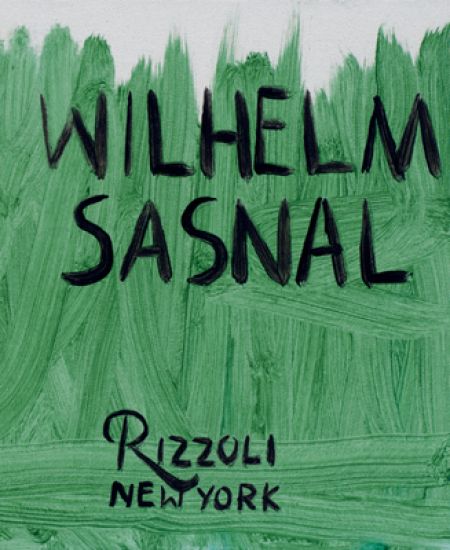
Renowned for his powerful portrayals of our collective culture and history, Wilhelm Sasnal draws on found images from his surroundings, newspapers and magazines, billboards, and the Internet, creating works of art that act as an archive to the mass of sprawling images that flood contemporary life. His work addresses weighty historical themes such as the Holocaust, or familiar pop-cultural icons, as well as the people, places, and quotidian objects he encounters, constituting an artistic document of postcommunist Poland at a time of sociopolitical transformation. With a concise approach to his subject matter, Sasnal captures stolen moments in time. His graphic treatment of light and color suggests a camera s gaze, imbuing the canvases with a filmic quality. This major volume is completed by a series of essays addressing significant themes in the artist s work: alienation, portraiture, the personal versus the public, and history as a prism of reflection.
Experience the legendary tale of "Wilhelm Tell," Johann Christoph Friedrich von Schiller's dramatic masterpiece rooted in Swiss history and folklore. This powerful drama explores themes of heroism and resistance against tyranny. Dive into a pivotal moment in European history through Schiller's compelling narrative, adapted from traditional stories of the legendary Swiss hero. "Wilhelm Tell" captures the spirit of a people striving for freedom. Explore the complexities of justice, rebellion, and the enduring strength of the human spirit. This meticulously prepared print edition offers a timeless journey into a world of courage and sacrifice, making it an essential addition to any collection of classic dramatic literature and historical narratives.This work has been selected by scholars as being culturally important, and is part of the knowledge base of civilization as we know it.This work is in the public domain in the United States of America, and possibly other nations. Within the United States, you may freely copy and distribute this work, as no entity (individual or corporate) has a copyright on the body of the work.Scholars believe, and we concur, that this work is important enough to be preserved, reproduced, and made generally available to the public. We appreciate your support of the preservation process, and thank you for being an important part of keeping this knowledge alive and relevant.
Experience the legendary tale of "Wilhelm Tell," Johann Christoph Friedrich von Schiller's dramatic masterpiece rooted in Swiss history and folklore. This powerful drama explores themes of heroism and resistance against tyranny. Dive into a pivotal moment in European history through Schiller's compelling narrative, adapted from traditional stories of the legendary Swiss hero. "Wilhelm Tell" captures the spirit of a people striving for freedom. Explore the complexities of justice, rebellion, and the enduring strength of the human spirit. This meticulously prepared print edition offers a timeless journey into a world of courage and sacrifice, making it an essential addition to any collection of classic dramatic literature and historical narratives.This work has been selected by scholars as being culturally important, and is part of the knowledge base of civilization as we know it.This work is in the public domain in the United States of America, and possibly other nations. Within the United States, you may freely copy and distribute this work, as no entity (individual or corporate) has a copyright on the body of the work.Scholars believe, and we concur, that this work is important enough to be preserved, reproduced, and made generally available to the public. We appreciate your support of the preservation process, and thank you for being an important part of keeping this knowledge alive and relevant.