Exploring the consciousness and creative impulse of William Dean Howells, Professor Vanderbilt finds that Howells' personality reflected the mixed feelings of the American mind in an ambivalent and transitional society. By this interpretation he introduces a new and imaginative approach to the writer and his work, and Howells emerges as one of the major American literary figures of the late nineteenth century. The author's impressive research into all of Howells' works is evident in his discussion of four novels which appeared in the 1880's, The Undiscovered Country, A Modern lnstance, The Rise of Silas Lapham, and A Hazard of New Fortunes. Originally published in 1968. The Princeton Legacy Library uses the latest print-on-demand technology to again make available previously out-of-print books from the distinguished backlist of Princeton University Press. These editions preserve the original texts of these important books while presenting them in durable paperback and hardcover editions. The goal of the Princeton Legacy Library is to vastly increase access to the rich scholarly heritage found in the thousands of books published by Princeton University Press since its founding in 1905.
Exploring the consciousness and creative impulse of William Dean Howells, Professor Vanderbilt finds that Howells' personality reflected the mixed feelings of the American mind in an ambivalent and transitional society. By this interpretation he introduces a new and imaginative approach to the writer and his work, and Howells emerges as one of the major American literary figures of the late nineteenth century. The author's impressive research into all of Howells' works is evident in his discussion of four novels which appeared in the 1880's, The Undiscovered Country, A Modern lnstance, The Rise of Silas Lapham, and A Hazard of New Fortunes. Originally published in 1968. The Princeton Legacy Library uses the latest print-on-demand technology to again make available previously out-of-print books from the distinguished backlist of Princeton University Press. These editions preserve the original texts of these important books while presenting them in durable paperback and hardcover editions. The goal of the Princeton Legacy Library is to vastly increase access to the rich scholarly heritage found in the thousands of books published by Princeton University Press since its founding in 1905.
While William Dean Howells is today best remembered as Mark Twain's staunchest defender, Howells was, at his peak, the unrivaled man of letters in America: he had no contemporary equal. The achievements of both Twain and Henry James have since surpassed those of Howells in the literary hierarchy, but the work of Howells still remains an important part of American letters. In The Early Prose Writings of William Dean Howells, 1852–1861, Thomas Wortham provides a chronological assortment of Howells' first prose compositions, beginning with apprentice pieces published before the writer's eighteenth birthday. Born in Martin's Ferry, Ohio, Howells also lived in Hamilton, Dayton, Cincinnati, and Columbus, where Howells' father, a printer and newspaper publisher, would move the family and set up shop. Howells started writing as a newspaperman, and this volume assembles pieces by Howells which appeared in the Ashtabula Sentinel, the Kingsville Academy Casket, and the Ohio Farmer, as well as the complete text of "The Independent Candidate"—his first attempt in print of an extended work of fiction—serialized in the Ashtabula Sentinel in 1854–55. Also included here is Howels' novela, Geoffrey: A Study of American Life, a thoughtful psychological study, which was never published, as well as Howells' letters to the New York World, in which he recorded his impressions and experiences relating to Ohio's early response to the declaration of the War Between the States. Dr. Wortham furnishes extensive source annotations to document quotations and references as well as framing each selection by Howells with background and explanatory glosses. As he points out, "Howells' literary life is not wanting in sufficient documentation," but his apprentice work—"that long foreground which has in his instance been too largely represented by a handful of mediocre poems, has been lost in old files of newspapers, journals, and manuscripts." Thanks to Dr. Wortham's careful scholarship, American literature now has a much more detailed and accurate picture of the young Howells and his early works.
The short stories of Ohio-born William Dean Howells (1837-1920), the leading figure in American realism, have been largely unknown to the reading public, at least partly because of their general unavailability and because of the difficulties of identifying, among Howells's voluminous short writings, those that are clearly short stories. Selected Short Stories of William Dean Howells includes the full texts of thirteen of Howells's short stories, each preceded by a thorough critical analysis, and an annotated short story list, identifying and discussing all of Howells's short stories. His stories, often in surprisingly comic and fresh ways, explore the slippery nature of perception, the variance between the ethical and the aesthetic points of view, the benefits and hazards of the creative imagination, and the requirements and responsibilities of personal morality. More than his novels or other writings, Howells's late stories reveal his fascination with psychology and his interest in psychic phenomena. These forgotten stories expose a side of Howells unknown even to many Americanists. Conversely, the early stories are invaluable in revealing his development as a writer and his concern, even at an early age, with themes that permeate the entire Howells canon. Taken as a group, this carefully edited selection of short stories provides a complete and manageable overview of the artistic and moral concerns of William Dean Howells and the span and evolution of his contribution to this genre.
The short stories of Ohio-born William Dean Howells (1837-1920), the leading figure in American realism, have been largely unknown to the reading public, at least partly because of their general unavailability and because of the difficulties of identifying, among Howells's voluminous short writings, those that are clearly short stories. Selected Short Stories of William Dean Howells includes the full texts of thirteen of Howells's short stories, each preceded by a thorough critical analysis, and an annotated short story list, identifying and discussing all of Howells's short stories. His stories, often in surprisingly comic and fresh ways, explore the slippery nature of perception, the variance between the ethical and the aesthetic points of view, the benefits and hazards of the creative imagination, and the requirements and responsibilities of personal morality. More than his novels or other writings, Howells's late stories reveal his fascination with psychology and his interest in psychic phenomena. These forgotten stories expose a side of Howells unknown even to many Americanists. Conversely, the early stories are invaluable in revealing his development as a writer and his concern, even at an early age, with themes that permeate the entire Howells canon. Taken as a group, this carefully edited selection of short stories provides a complete and manageable overview of the artistic and moral concerns of William Dean Howells and the span and evolution of his contribution to this genre.
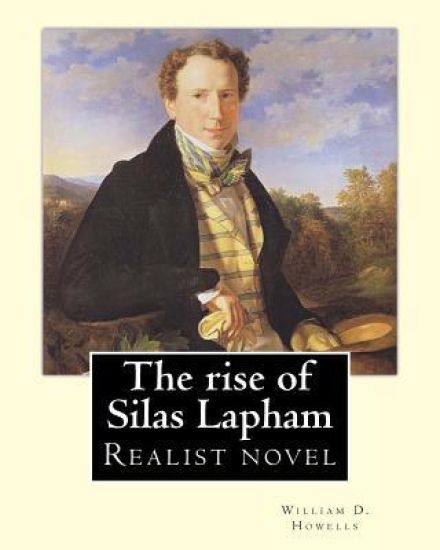
William Dean Howells ( March 1, 1837 - May 11, 1920) was an American realist novelist, literary critic, and playwright, nicknamed "The Dean of American Letters". He was particularly known for his tenure as editor of The Atlantic Monthly, as well as for his own prolific writings, including the Christmas story "Christmas Every Day" and the novels The Rise of Silas Lapham and A Traveler from Altruria. Early life and family: William Dean Howells was born on March 1, 1837 in Martinsville, Ohio (now known as Martins Ferry, Ohio) to William Cooper Howells and Mary Dean Howells, the second of eight children. His father was a newspaper editor and printer who moved frequently around Ohio. In 1840, the family settled in Hamilton, Ohio, where his father oversaw a Whig newspaper and followed Swedenborgianism.Their nine years there were the longest period that they stayed in one place. The family had to live frugally, although the young Howells was encouraged by his parents in his literary interests. He began at an early age to help his father with typesetting and printing work, a job known at the time as a printer's devil. In 1852, his father arranged to have one of his poems published in the Ohio State Journal without telling him. Early career: In 1856, Howells was elected as a clerk in the State House of Representatives. In 1858, he began to work at the Ohio State Journal where he wrote poetry and short stories, and also translated pieces from French, Spanish, and German. He avidly studied German and other languages and was greatly interested in Heinrich Heine. In 1860, he visited Boston and met with writers James Thomas Fields, James Russell Lowell, Oliver Wendell Holmes, Sr., Nathaniel Hawthorne, Henry David Thoreau, and Ralph Waldo Emerson. He became a personal friend to many of them, including Henry Adams, William James, Henry James, and Oliver Wendell Holmes, Jr. In 1860 Howells wrote Abraham Lincoln's campaign biography Life Of Abraham Lincoln and subsequently gained a consulship in Venice. He married Elinor Mead on Christmas Eve 1862 at the American embassy in Paris. She was a sister of sculptor Larkin Goldsmith Mead and architect William Rutherford Mead of the firm McKim, Mead, and White. Among their children was architect John Mead Howells. Editorship and other literary pursuits: The Howells returned to America in 1865 and settled in Cambridge, Massachusetts. He wrote for various magazines, including the Atlantic Monthly and Harper's Magazine. In January 1866, James Fields offered him a position as assistant editor at the Atlantic Monthly; he accepted after successfully negotiating for a higher salary, though he was frustrated by Fields' close supervision. Howells was made editor in 1871, after five years as assistant editor, and he remained in this position until 1881. In 1869, he met Mark Twain with whom he formed a longtime friendship. But his relationship with journalist Jonathan Baxter Harrison was more important for the development of his literary style and his advocacy of Realism. Harrison wrote a series of articles for the Atlantic Monthly during the 1870s on the lives of ordinary Americans.Howells gave a series of twelve lectures on "Italian Poets of Our Century" for the Lowell Institute during its 1870-71 season. He published his first novel Their Wedding Journey in 1872, but his literary reputation soared with the realist novel A Modern Instance (1882), which described the decay of a marriage. His 1885 novel The Rise of Silas Lapham became his best known work, describing the rise and fall of an American entrepreneur of the paint business. His social views were also strongly represented in the novels Annie Kilburn (1888), A Hazard of New Fortunes (1890), and An Imperative Duty (1891).....
Indian Summer is an 1886 novel by William Dean Howells. Though it was published after The Rise of Silas Lapham, it was written before The Rise of Silas Lapham. The setting for this novel was inspired by a trip Howells had recently taken with his family to Europe. Howells was a realist writer who wanted "his characters to be honest, ordinary people, as he might find in his strata of society, flawed and well-meaning, good-hearted and self-effacing, bound by the conventions and the restrictions of their day but quietly dreaming of a little local heroism in their souls." All of this is encompassed in the character Theodore Colville. PLOT: Theodore Colville is a respected newspaperman in Des Vaches, Indiana. He is the editor of the Democratic-Republican, which he bought from his brother. But after a bad political move his fans criticize him and his pride cannot withstand that. A new opposing newspaper is made and Colville decides to just give up the newspaper business so he sells his newspaper to the new paper. They merge to become the Post Democratic-Republican. Colville decides that he needs to take a long vacation so he travels to Florence. Colville hasn't been in Florence in almost 20 years. At that time he was a young architect "with an inclination toward the literary side of his profession". 3] He travelled all over Italy and in Venice he met a young American girl whom he followed to Florence. In Florence Jenny Wheelwright broke Theodore Colville's heart. He was distraught so when his brother wrote to him to come to Des Vaches, Colville happily accepted the offer for a change in scenery. In Des Vaches he got drawn into the newspaper business, which he happily stayed in for 15 years. In Florence he runs into a person he wasn't eager to ever see again: Mrs. Bowen. Mrs. Bowen, whom he once knew as Lina Ridgely, was best friends with Jenny, the girl who broke Colville's heart 20 years prior. She is a widow and has a young daughter Effie Bowen. They have a surprisingly pleasant chat and she invites him to a gathering at her home, Palazzo Pinti, that evening. He accepts the invitation. Colville hasn't done much socializing but at the gathering he falls right into it nicely. When he comes in he notices a beautiful, young, blonde girl that's about twenty and asks Mrs. Bowen to introduce him to her. Her name is Imogene Graham and she is staying with Mrs. Bowen that winter. At last Mrs. Bowen takes Colville to meet Miss Graham. She is with a young clergyman, Mr. Morton, whom Mrs. Bowen drags away. Miss Graham and Colville have a pleasant chat. After all the guest leave Colville stays behind to sit with Mrs. Bowen, Miss Graham, and young Effie by the fire. Effie, Mrs. Bowen's young daughter, is enchanted with Colville. Before Colville bids the women good night, Mrs. Bowen tells him he is welcome to drop by anytime.On Thursday, the day Mrs. Bowen receives guests, Colville comes by the Palazzo Pinti. Unfortunately, Mrs. Bowen has a headache and won't come down to greet the guests. But after all the guests leave and she hears Colville's voice, she does come down to greet him. They invite Colville to a dance party the next night, and he accepts the invitation. The next night, Colville picks up the women to go to Madame Uccelli's dance party. Miss Graham is a wonderful dancer and makes Colville dance the Lancers. Unfortunately Colville is awful at Lancers and makes a fool of himself. He doesn't dance for the rest of the night..... William Dean Howells ( March 1, 1837 - May 11, 1920) was an American realist novelist, literary critic, and playwright, nicknamed "The Dean of American Letters". He was particularly known for his tenure as editor of The Atlantic Monthly, as well as for his own prolific writings, including the Christmas story "Christmas Every Day" and the novels The Rise of Silas Lapham and A Traveler from Altruria....
The Sleeping Car is a farce play in three parts by William Dean Howells, first published in the United States in 1883. This play takes place entirely within a 24-hour period on a railway sleeping car, and revolves around a woman's late night confusion regarding the premature appearance of her husband and brother. This work is one of Howells' minor works, but reflects the same tendencies towards literary realism as many of Howells' more famous works, including The Rise of Silas Lapham and A Modern Instance. This play is not well-read amongst modern readers, and is often overlooked in literary discussion due to its relative contemporary obscurity Currently, this work is not being published by any publishing houses, but is available free through Project Gutenberg or other websites. *Plot* This story begins with Mrs. Roberts, her baby son, and her Aunt Mary headed Westbound on the Boston and Albany Railroad. They are on their way to meet Mrs. Roberts' husband and brother in Boston. Mrs. Roberts has not seen her brother in twelve years, and is nervous about how he will react to seeing her. In the time since they last saw each other, she has married and birthed a child, and has heard little from her brother except for infrequent telegraphs. The porter informs Mrs. Roberts and her aunt that the berths are now ready for them to sleep in, but the conversation continues. Mrs. Roberts worries that her husband Edward will not receive Willis well, or vice versa, because Willis is a Californian and Edward has never encountered one before. Mrs. Roberts laments that her life would be a wreck if her husband and brother do not get along nicely, and states "I do hope they're sitting down to a hot supper." A voice from an adjacent berth interjects and sarcastically tells Mrs. Roberts to be quiet. She acquiesces for a moment, but then reverts to conversation, stating how they must go to bed. Aunt Mary insists that Mrs. Roberts and the child take the bottom bunk, because she is afraid that the child will roll off of the top bunk and injure himself. She calls the porter over to help her into the upper berth, and after successfully entering the berth, exchanges "good-night" with Mrs. Roberts. After a few minutes, Mrs. Roberts rekindles the conversation, and expresses her concern regarding the safety of the train on which they're riding. Her aunt reassures her that the road is safe, and that the train has implemented safety measures to prevent accidents. Mrs. Roberts then goes on to discuss where her Aunt left the drinking glass in their luggage, until she is interrupted by a man from the next berth. This man politely requests silence from Mrs. Roberts, citing that he has come straight through from San Francisco and would very much like some rest. Mrs. Roberts responds apologetically, but starts conversing with this man, inquiring about California, her brother Willis, and if he has ever met his acquaintance. Midway through their conversation, a man in the upper berth sarcastically interjects and asks for quiet. The Californian takes offense to the man's tone towards Mrs. Roberts, and the two get into a verbal argument over it. Eventually, the Californian gets the man in the upper berth to back down ("You beg that lady's pardon, or I'll have you out of there before you know yourself "). Part I ends with the Californian and Mrs. Roberts finally going to bed, with only the sounds of Aunt Mary's snoring audible.... William Dean Howells (March 1, 1837 - May 11, 1920) was an American realist novelist, literary critic, and playwright. Nicknamed "The Dean of American Letters", he was particularly known for his tenure as editor of The Atlantic Monthly as well as his own prolific writings, including the Christmas story "Christmas Every Day", and the novels The Rise of Silas Lapham and A Traveler from Altruria.
The Sleeping Car is a farce play in three parts by William Dean Howells, first published in the United States in 1883. This play takes place entirely within a 24-hour period on a railway sleeping car, and revolves around a woman's late night confusion regarding the premature appearance of her husband and brother. This work is one of Howells' minor works, but reflects the same tendencies towards literary realism as many of Howells' more famous works, including The Rise of Silas Lapham and A Modern Instance. This play is not well-read amongst modern readers, and is often overlooked in literary discussion due to its relative contemporary obscurity. Currently, this work is not being published by any publishing houses, but is available free through Project Gutenberg or other websites. PLOT: This story begins with Mrs. Roberts, her baby son, and her Aunt Mary headed Westbound on the Boston and Albany Railroad. They are on their way to meet Mrs. Roberts' husband and brother in Boston. Mrs. Roberts has not seen her brother in twelve years, and is nervous about how he will react to seeing her. In the time since they last saw each other, she has married and birthed a child, and has heard little from her brother except for infrequent telegraphs. The porter informs Mrs. Roberts and her aunt that the berths are now ready for them to sleep in, but the conversation continues. Mrs. Roberts worries that her husband Edward will not receive Willis well, or vice versa, because Willis is a Californian and Edward has never encountered one before. Mrs. Roberts laments that her life would be a wreck if her husband and brother do not get along nicely, and states "I do hope they're sitting down to a hot supper." A voice from an adjacent berth interjects and sarcastically tells Mrs. Roberts to be quiet. She acquiesces for a moment, but then reverts to conversation, stating how they must go to bed. Aunt Mary insists that Mrs. Roberts and the child take the bottom bunk, because she is afraid that the child will roll off of the top bunk and injure himself. She calls the porter over to help her into the upper berth, and after successfully entering the berth, exchanges "good-night" with Mrs. Roberts. After a few minutes, Mrs. Roberts rekindles the conversation, and expresses her concern regarding the safety of the train on which they're riding. Her aunt reassures her that the road is safe, and that the train has implemented safety measures to prevent accidents. Mrs. Roberts then goes on to discuss where her Aunt left the drinking glass in their luggage, until she is interrupted by a man from the next berth. This man politely requests silence from Mrs. Roberts, citing that he has come straight through from San Francisco and would very much like some rest. Mrs. Roberts responds apologetically, but starts conversing with this man, inquiring about California, her brother Willis, and if he has ever met his acquaintance. Midway through their conversation, a man in the upper berth sarcastically interjects and asks for quiet. The Californian takes offense to the man's tone towards Mrs. Roberts, and the two get into a verbal argument over it. Eventually, the Californian gets the man in the upper berth to back down ("You beg that lady's pardon, or I'll have you out of there before you know yourself "). Part I ends with the Californian and Mrs. Roberts finally going to bed, with only the sounds of Aunt Mary's snoring audible...... William Dean Howells ( March 1, 1837 - May 11, 1920) was an American realist novelist, literary critic, and playwright, nicknamed "The Dean of American Letters". He was particularly known for his tenure as editor of The Atlantic Monthly, as well as for his own prolific writings, including the Christmas story "Christmas Every Day" and the novels The Rise of Silas Lapham and A Traveler from Altruria.
William Dean Howells ( March 1, 1837 - May 11, 1920) was an American realist novelist, literary critic, and playwright, nicknamed "The Dean of American Letters". He was particularly known for his tenure as editor of The Atlantic Monthly, as well as for his own prolific writings, including the Christmas story "Christmas Every Day" and the novels The Rise of Silas Lapham and A Traveler from Altruria. Early life and family: William Dean Howells was born on March 1, 1837 in Martinsville, Ohio (now known as Martins Ferry, Ohio) to William Cooper Howells and Mary Dean Howells, the second of eight children. His father was a newspaper editor and printer who moved frequently around Ohio. In 1840, the family settled in Hamilton, Ohio, where his father oversaw a Whig newspaper and followed Swedenborgianism.Their nine years there were the longest period that they stayed in one place. The family had to live frugally, although the young Howells was encouraged by his parents in his literary interests. He began at an early age to help his father with typesetting and printing work, a job known at the time as a printer's devil. In 1852, his father arranged to have one of his poems published in the Ohio State Journal without telling him. Early career: In 1856, Howells was elected as a clerk in the State House of Representatives. In 1858, he began to work at the Ohio State Journal where he wrote poetry and short stories, and also translated pieces from French, Spanish, and German. He avidly studied German and other languages and was greatly interested in Heinrich Heine. In 1860, he visited Boston and met with writers James Thomas Fields, James Russell Lowell, Oliver Wendell Holmes, Sr., Nathaniel Hawthorne, Henry David Thoreau, and Ralph Waldo Emerson. He became a personal friend to many of them, including Henry Adams, William James, Henry James, and Oliver Wendell Holmes, Jr. In 1860 Howells wrote Abraham Lincoln's campaign biography Life Of Abraham Lincoln and subsequently gained a consulship in Venice. He married Elinor Mead on Christmas Eve 1862 at the American embassy in Paris. She was a sister of sculptor Larkin Goldsmith Mead and architect William Rutherford Mead of the firm McKim, Mead, and White. Among their children was architect John Mead Howells. Editorship and other literary pursuits: The Howells returned to America in 1865 and settled in Cambridge, Massachusetts. He wrote for various magazines, including the Atlantic Monthly and Harper's Magazine. In January 1866, James Fields offered him a position as assistant editor at the Atlantic Monthly; he accepted after successfully negotiating for a higher salary, though he was frustrated by Fields' close supervision. Howells was made editor in 1871, after five years as assistant editor, and he remained in this position until 1881. In 1869, he met Mark Twain with whom he formed a longtime friendship. But his relationship with journalist Jonathan Baxter Harrison was more important for the development of his literary style and his advocacy of Realism. Harrison wrote a series of articles for the Atlantic Monthly during the 1870s on the lives of ordinary Americans.Howells gave a series of twelve lectures on "Italian Poets of Our Century" for the Lowell Institute during its 1870-71 season. He published his first novel Their Wedding Journey in 1872, but his literary reputation soared with the realist novel A Modern Instance (1882), which described the decay of a marriage. His 1885 novel The Rise of Silas Lapham became his best known work, describing the rise and fall of an American entrepreneur of the paint business. His social views were also strongly represented in the novels Annie Kilburn (1888), A Hazard of New Fortunes (1890), and An Imperative Duty (1891).............
This first volume in a two-volume biography of William Dean Howells is the story of a series of intermingling lines of growth: the growth of admirable personality, the growth of a great career in letters, the growth of a penetrating mind, of a major command of literary art, of an influence of predominant importance to an age and to its legacy to the present. Because the importance of Howells' life lies in his novels, close attention is paid to his principal writings.
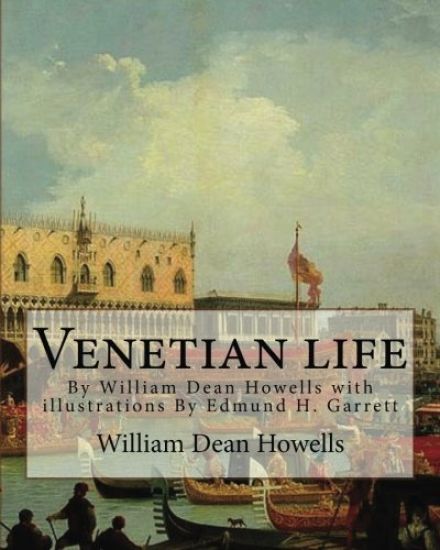
William Dean Howells ( March 1, 1837 - May 11, 1920) was an American realist novelist, literary critic, and playwright. Nicknamed "The Dean of American Letters", he was particularly known for his tenure as editor of The Atlantic Monthly as well as his own prolific writings, including the Christmas story "Christmas Every Day", and the novels The Rise of Silas Lapham and A Traveler from Altruria. Early life and family William Dean Howells was born on March 1, 1837, in Martinsville, Ohio (now known as Martins Ferry, Ohio), to William Cooper, and Mary Dean, Howells.He was the second of eight children. His father was a newspaper editor and printer, who moved frequently around Ohio. In 1840, the family settled in Hamilton, Ohio, where William Cooper Howells oversaw a Whig newspaper and followed Swedenborgianism;their nine years there marked the longest they would stay in one place.Though the family had to live frugally, the young Howells was encouraged by his parents in his literary interests.Howells began to help his father with typesetting and printing work at an early age, a job known at the time as a printer's devil. In 1852, his father arranged to have one of Howells' poems published in the Ohio State Journal without telling him. Early career In 1856, Howells was elected as a clerk in the State House of Representatives. In 1858 he began to work at the Ohio State Journal where he wrote poetry, short stories, and also translated pieces from French, Spanish, and German. He avidly studied German and other languages and was greatly interested in Heinrich Heine. In 1860 he visited Boston and met with other American writers James Thomas Fields, James Russell Lowell, Oliver Wendell Holmes, Sr., Nathaniel Hawthorne, Henry David Thoreau, and Ralph Waldo Emerson, and became a personal friend to many, including Henry Adams, William James, Henry James and Oliver Wendell Holmes, Jr.Said to have been rewarded for an official biographyof Abraham Lincoln used during the election of 1860, he gained a consulship in Venice. On Christmas Eve 1862, at the American embassy in Paris, he married Elinor Mead, a sister of the sculptor Larkin Goldsmith Mead and the architect William Rutherford Mead, the Mead of McKim, Mead, and White. Among their children was the future architect John Mead Howells.. Edmund Henry Garrett (1853-1929) was an American illustrator, bookplate-maker, and author-as well as a highly respected painter-renowned for his illustrations of the legends of King Arthur.Garrett was born in Albany, New York on October 19, 1853. While little is known of his initial art education, Garrett rose through the ranks to become a distinguished member of the Boston Art Club and the Copley Society of Art, and was an acquaintance and colleague of renowned impressionist artist Childe Hassam. He studied at the Acad mie Julian in Paris under Gustave Boulanger, Jules Lefebvre, John Paul Laurens, and Hector Leroux. After residing in Paris for approximately five years, he returned to America to establish a successful studio in Boston.His first original wood engraving was created in 1879 under the tutelage of Robert Swain Gifford. His first original prints specialized in both architectural views and landscapes, with his later etchings mostly featuring areas around Boston.......
William Dean Howells ( March 1, 1837 - May 11, 1920) was an American realist novelist, literary critic, and playwright, nicknamed "The Dean of American Letters". He was particularly known for his tenure as editor of The Atlantic Monthly, as well as for his own prolific writings, including the Christmas story "Christmas Every Day" and the novels The Rise of Silas Lapham and A Traveler from Altruria. Early life and family: William Dean Howells was born on March 1, 1837 in Martinsville, Ohio (now known as Martins Ferry, Ohio) to William Cooper Howells and Mary Dean Howells, the second of eight children. His father was a newspaper editor and printer who moved frequently around Ohio. In 1840, the family settled in Hamilton, Ohio, where his father oversaw a Whig newspaper and followed Swedenborgianism.Their nine years there were the longest period that they stayed in one place. The family had to live frugally, although the young Howells was encouraged by his parents in his literary interests. He began at an early age to help his father with typesetting and printing work, a job known at the time as a printer's devil. In 1852, his father arranged to have one of his poems published in the Ohio State Journal without telling him. Early career: In 1856, Howells was elected as a clerk in the State House of Representatives. In 1858, he began to work at the Ohio State Journal where he wrote poetry and short stories, and also translated pieces from French, Spanish, and German. He avidly studied German and other languages and was greatly interested in Heinrich Heine. In 1860, he visited Boston and met with writers James Thomas Fields, James Russell Lowell, Oliver Wendell Holmes, Sr., Nathaniel Hawthorne, Henry David Thoreau, and Ralph Waldo Emerson. He became a personal friend to many of them, including Henry Adams, William James, Henry James, and Oliver Wendell Holmes, Jr. In 1860 Howells wrote Abraham Lincoln's campaign biography Life Of Abraham Lincoln and subsequently gained a consulship in Venice. He married Elinor Mead on Christmas Eve 1862 at the American embassy in Paris. She was a sister of sculptor Larkin Goldsmith Mead and architect William Rutherford Mead of the firm McKim, Mead, and White. Among their children was architect John Mead Howells. Editorship and other literary pursuits: The Howells returned to America in 1865 and settled in Cambridge, Massachusetts. He wrote for various magazines, including the Atlantic Monthly and Harper's Magazine. In January 1866, James Fields offered him a position as assistant editor at the Atlantic Monthly; he accepted after successfully negotiating for a higher salary, though he was frustrated by Fields' close supervision. Howells was made editor in 1871, after five years as assistant editor, and he remained in this position until 1881. In 1869, he met Mark Twain with whom he formed a longtime friendship. But his relationship with journalist Jonathan Baxter Harrison was more important for the development of his literary style and his advocacy of Realism. Harrison wrote a series of articles for the Atlantic Monthly during the 1870s on the lives of ordinary Americans.Howells gave a series of twelve lectures on "Italian Poets of Our Century" for the Lowell Institute during its 1870-71 season. He published his first novel Their Wedding Journey in 1872, but his literary reputation soared with the realist novel A Modern Instance (1882), which described the decay of a marriage. His 1885 novel The Rise of Silas Lapham became his best known work, describing the rise and fall of an American entrepreneur of the paint business. His social views were also strongly represented in the novels Annie Kilburn (1888), A Hazard of New Fortunes (1890), and An Imperative Duty (1891)....
A comprehensive study guide offering in-depth explanation, essay, and test prep for William Dean Howells's The Rise of Silas Lapham, one of the many in Howells' movement into strong anti-romantic realism and social criticism. As a novel of the realism movement, The Rise of Silas Lapham began Howells' trend of incorporating Christian Socialism in his writing-a theory that the common welfare could be improved along guidelines of Christian ethical principles. Moreover, Howells is considered to be the father of American realism. This Bright Notes Study Guide explores the context and history of Howells' classic work, helping students to thoroughly explore the reasons it has stood the literary test of time. Each Bright Notes Study Guide contains: - Introductions to the Author and the Work - Character Summaries - Plot Guides - Section and Chapter Overviews - Test Essay and Study Q&As The Bright Notes Study Guide series offers an in-depth tour of more than 275 classic works of literature, exploring characters, critical commentary, historical background, plots, and themes. This set of study guides encourages readers to dig deeper in their understanding by including essay questions and answers as well as topics for further research.