William James - American Writers 88 was first published in 1970. Minnesota Archive Editions uses digital technology to make long-unavailable books once again accessible, and are published unaltered from the original University of Minnesota Press editions.
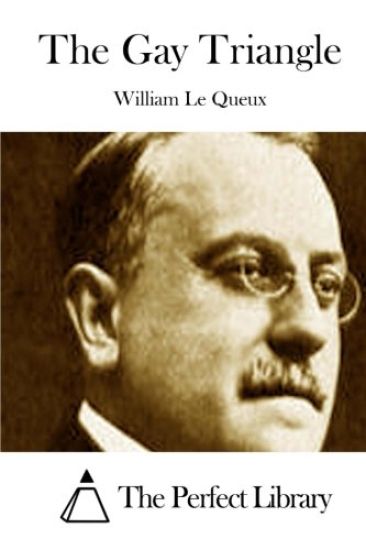
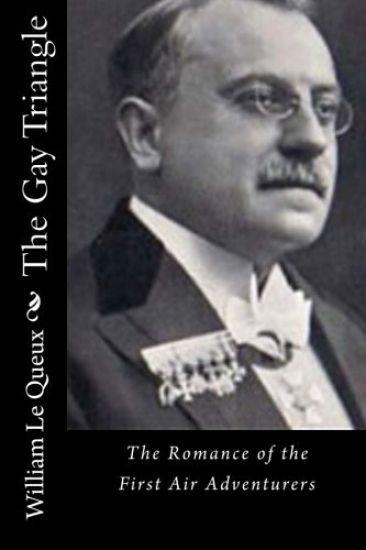
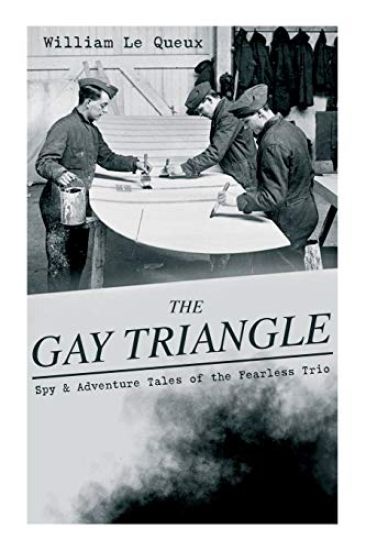
The book "" The Gay Triangle: The Romance of the First Air Adventurers, has been considered important throughout the human history, and so that this work is never forgotten we have made efforts in its preservation by republishing this book in a modern format for present and future generations. This whole book has been reformatted, retyped and designed. These books are not made of scanned copies and hence the text is clear and readable.
Opponents of same-sex marriage in the United States claim that allowing gays and lesbians to marry would undermine the institution of marriage, weaken family structures, and cause harm to children. Drawing from 17 years of data and experience with same-sex marriage in Scandinavia (in the form of registered partnerships), Gay Marriage: For Better or for Worse? is the first book to present empirical evidence about the effects of same-sex marriage on society. Spedale and Eskridge find that the evidence refutes conservative defense-of-marriage arguments and, in fact, demonstrates that the institution of marriage may indeed benefit from the legalization of gay marriage. If we look at the proof from abroad, the authors show, we must conclude that the sanctioning of gay marriage in the United States would neither undermine marriage as an institution, nor harm the wellbeing of our nation's children. "A very interesting book that people should read."--Bill O'Reilly, Host, The O'Reilly Factor "Whatever your views are now on same-sex marriage, this is the book to read to be informed about why same sex couples want legal recognition and what legal union means to them and to the larger community. Spedale and Eskridge give detailed accounts of the effects of registered partnerships in Scandinavia--and along the way, offer fascinating and engaging pictures of many people's lives."--Martha Minow, Jeremiah Smith Jr. Professor, Harvard Law School "Spedale and Eskridge illuminate with remarkable even-handedness a debate that tends to generate more heat than light. They provide a cogent analysis of conservative arguments that same-sex matrimony threatens conventional marriage, and argue persuasively that enabling same-sex partners to marry may actually strengthen that beleaguered institution."--John Podesta, President and CEO, Center for American Progress "An important and timely contribution. It should be required reading for anyone interested in the future of families in America."--Martha Albertson Fineman, Robert W. Woodruff Professor, Emory Law School
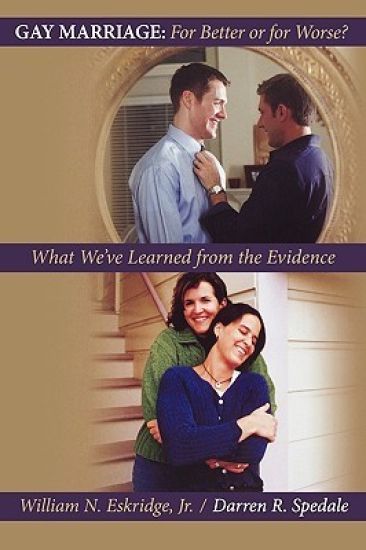
Opponents of same-sex marriage in the United States claim that allowing gays and lesbians to marry would undermine the institution of marriage, weaken family structures, and cause harm to children. Drawing from 17 years of data and experience with same-sex marriage in Scandinavia (in the form of registered partnerships), Gay Marriage: For Better or for Worse? is the first book to present empirical evidence about the effects of same-sex marriage on society. Spedale and Eskridge find that the evidence refutes conservative defense-of-marriage arguments and, in fact, demonstrates that the institution of marriage may indeed benefit from the legalization of gay marriage. If we look at the proof from abroad, the authors show, we must conclude that the sanctioning of gay marriage in the United States would neither undermine marriage as an institution, nor harm the wellbeing of our nation's children. "A very interesting book that people should read." --Bill O'Reilly, Host, The O'Reilly Factor "Whatever your views are now on same-sex marriage, this is the book to read to be informed about why same sex couples want legal recognition and what legal union means to them and to the larger community. Spedale and Eskridge give detailed accounts of the effects of registered partnerships in Scandinavia--and along the way, offer fascinating and engaging pictures of many people's lives." --Martha Minow, Jeremiah Smith Jr. Professor, Harvard Law School "Spedale and Eskridge illuminate with remarkable even-handedness a debate that tends to generate more heat than light. They provide a cogent analysis of conservative arguments that same-sex matrimony threatens conventional marriage, and argue persuasively that enabling same-sex partners to marry may actually strengthen that beleaguered institution." --John Podesta, President and CEO, Center for American Progress "An important and timely contribution. It should be required reading for anyone interested in the future of families in America." --Martha Albertson Fineman, Robert W. Woodruff Professor, Emory Law School
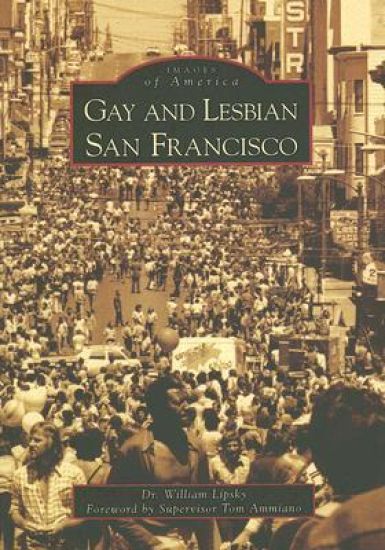
In recent years, San Francisco has been synonymous with gay and lesbian pride, and the various achievements of the gay and lesbian community are personified in the city by the bay. The tumultuous and ongoing struggles for this community's civil rights from the 1950s to the present are well documented, but queer culture itself goes back much further than that, in fact all the way back to the California gold rush.
The concept of masculinity has had a profound influence on modern gay-written and gay-themed American Southern literature. Much of the fiction and drama of three important contemporary writers - Tennessee Williams, Charles Nelson, and Reynolds Price - has been shaped by the cultural dynamics of the Southern tradition of codified definitions and parameters of masculinity. This regional approach to literature also serves as critically protective, maintaining its focus in an effort to avoid essentializing experience and identity. "Gay Men in Modern Southern Literature" will be a valuable asset in the study of gender construction, literary theory, and modern American Southern writing.
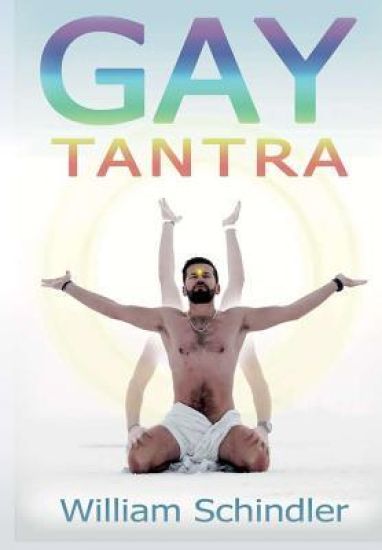
In this volume that follows Gay Tantra (Xlibris 2000) and Essays on Gay Tantra (Xlibris 2000), William Schindler, a.k.a. Brother William, invites the reader into deeper and previously mostly secret aspects of Tantric philosophy and practice. Traditional Tantra teaches methods of spiritual enlightenment-not sexual practices. In traditional Tantra sexuality and other types of sensuality are integrated into a whole-life approach to spirituality. But merely calling a practice or technique "Tantra" does not make it so. Traditional Tantra can only be learned from one who has studied and practiced in a line of enlightened Gurus. Brother William has been studying and practicing traditional Hindu Tantra since 1969 both in India and America, and since 1997, when he founded Ashram West, he has been teaching his adaptation of traditional Tantra for gay-identified persons, making intelligible the esoteric teachings of the ancient tradition.
We gay folk, who inhabit bodies of the type we naturally desire, require a sex-positive spiritual practice that celebrates and utilizes our gay being instead of opposing it. We need a spiritual practice that teaches us how to use our senses instead of merely shutting them off or repressing them. We need a practice that empowers us to integrate all the rejected aspects of self to form a strong, healthy gay identity, which confers a spiritual advantage in deep spiritual practice. We need a spiritual practice that recognizes that gender and gender identity are fluid, that we all contain elements of the masculine and feminine. We need a spiritual practice that recognizes not only that same-sex love is possible, but that our love can powerfully energize a deep quest for Self-awareness and enlightenment. We need to realize that any feeling of shame or unworthiness connected to our gay being shackles our spirit and blocks us from the full realization of God/dess within, for the Divine Being is gay, too.
We gay folk, who inhabit bodies of the type we naturally desire, require a sex-positive spiritual practice that celebrates and utilizes our gay being instead of opposing it. We need a spiritual practice that teaches us how to use our senses instead of merely shutting them off or repressing them. We need a practice that empowers us to integrate all the rejected aspects of self to form a strong, healthy gay identity, which confers a spiritual advantage in deep spiritual practice. We need a spiritual practice that recognizes that gender and gender identity are fluid, that we all contain elements of the masculine and feminine. We need a spiritual practice that recognizes not only that same-sex love is possible, but that our love can powerfully energize a deep quest for Self-awareness and enlightenment. We need to realize that any feeling of shame or unworthiness connected to our gay being shackles our spirit and blocks us from the full realization of God/dess within, for the Divine Being is gay, too.