Kirjojen hintavertailu. Mukana 12 390 323 kirjaa ja 12 kauppaa.

Kirjahaku

Etsi kirjoja tekijän nimen, kirjan nimen tai ISBN:n perusteella.

1000 tulosta hakusanalla William Knowles

The Complete Dictionary of Music. Consisting of a Copious Explanation of all Words Necessary to a True Knowledge and Understanding of Music. Translated From the Original French of Mons. J. J. Rousseau. By William Waring. Second Edition
The 18th century was a wealth of knowledge, exploration and rapidly growing technology and expanding record-keeping made possible by advances in the printing press. In its determination to preserve the century of revolution, Gale initiated a revolution of its own: digitization of epic proportions to preserve these invaluable works in the largest archive of its kind. Now for the first time these high-quality digital copies of original 18th century manuscripts are available in print, making them highly accessible to libraries, undergraduate students, and independent scholars.The eighteenth-century fascination with Greek and Roman antiquity followed the systematic excavation of the ruins at Pompeii and Herculaneum in southern Italy; and after 1750 a neoclassical style dominated all artistic fields. The titles here trace developments in mostly English-language works on painting, sculpture, architecture, music, theater, and other disciplines. Instructional works on musical instruments, catalogs of art objects, comic operas, and more are also included. ++++The below data was compiled from various identification fields in the bibliographic record of this title. This data is provided as an additional tool in helping to insure edition identification: ++++Cambridge University LibraryT163022With a half-title. First published in same year as 'A dictionary of music'. The plates are numbered 469-470 to follow pagination.London: printed for J. French; and Fielding and Walker, 1779]. 4],468p., plates: music; 8

Geiriadur cynmraeg a saesoneg. A Welsh and English dictionary; compiled from the laws, history, and other monuments of the knowledge and learning of the ancient Britons; To which is prefixed, a Welsh grammar. By William Owen, F.S.A. of 3; Volume 1
The 18th century was a wealth of knowledge, exploration and rapidly growing technology and expanding record-keeping made possible by advances in the printing press. In its determination to preserve the century of revolution, Gale initiated a revolution of its own: digitization of epic proportions to preserve these invaluable works in the largest archive of its kind. Now for the first time these high-quality digital copies of original 18th century manuscripts are available in print, making them highly accessible to libraries, undergraduate students, and independent scholars.Western literary study flows out of eighteenth-century works by Alexander Pope, Daniel Defoe, Henry Fielding, Frances Burney, Denis Diderot, Johann Gottfried Herder, Johann Wolfgang von Goethe, and others. Experience the birth of the modern novel, or compare the development of language using dictionaries and grammar discourses. ++++The below data was compiled from various identification fields in the bibliographic record of this title. This data is provided as an additional tool in helping to insure edition identification: ++++British LibraryT151862Published in parts, 1793-1803. The dictionary is in two volumes; the final leaf of 'Addenda' in volume two bears the statement: Read the last proof, June 21, 1803, Alban Hevin. 'A grammar of the Welsh language' has separate titlepage, dated 1803, paginaLondon: printed for E. and T. Williams, 1793 -1803]. 3v.; 4
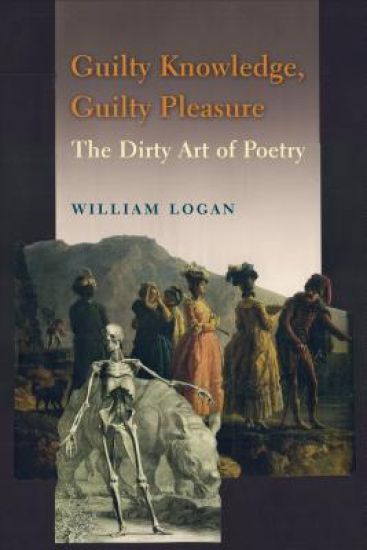
Guilty Knowledge, Guilty Pleasure

Guilty Knowledge, Guilty Pleasure

William Logan

Columbia University Press
2014
sidottu
William Logan has been a thorn in the side of American poetry for more than three decades. Though he has been called the "most hated man in American poetry," his witty and articulate reviews have reminded us how muscular good reviewing can be. These new essays and reviews take poetry at its word, often finding in its hardest cases the greatest reasons for hope. Logan begins with a devastating polemic against the wish to have critics announce their aesthetics every time they begin a review. "The Unbearable Rightness of Criticism" is a plea to read those critics who got it wrong when they reviewed Lyrical Ballads or Leaves of Grass or The Waste Land. Sometimes, he argues, such critics saw exactly what these books were-they saw the poems plain yet often did not see that they were poems. In such wrongheaded criticism, readers can recover the ground broken by such groundbreaking books. Logan looks again at the poetry of Wallace Stevens, Frank O'Hara, and Philip Larkin; at the letters of T. S. Eliot, Elizabeth Bishop, and Robert Lowell; and at new books by Louise Gluck and Seamus Heaney. Always eager to overturn settled judgments, Logan argues that World War II poets were in the end better than the much-lauded poets of World War I. He revisits the secretly revised edition of Robert Frost's notebooks, showing that the terrible errors ruining the first edition still exist. The most remarkable essay is "Elizabeth Bishop at Summer Camp," which prints for the first time her early adolescent verse along with the intimate letters written to the first girl she loved.
Sacred Knowledge

Sacred Knowledge

William Richards

Columbia University Press
2015
sidottu
Sacred Knowledge is the first well-documented, sophisticated account of the effect of psychedelics on biological processes, human consciousness, and revelatory religious experiences. Based on nearly three decades of legal research with volunteers, William A. Richards argues that, if used responsibly and legally, psychedelics have the potential to assuage suffering and constructively affect the quality of human life. Richards's analysis contributes to social and political debates over the responsible integration of psychedelic substances into modern society. His book serves as an invaluable resource for readers who, whether spontaneously or with the facilitation of psychedelics, have encountered meaningful, inspiring, or even disturbing states of consciousness and seek clarity about their experiences. Testing the limits of language and conceptual frameworks, Richards makes the most of experiential phenomena that stretch our conception of reality, advancing new frontiers in the study of belief, spiritual awakening, psychiatric treatment, and social well-being. His findings enrich humanities and scientific scholarship, expanding work in philosophy, anthropology, theology, and religious studies and bringing depth to research in mental health, psychotherapy, and psychopharmacology.
Sacred Knowledge

Sacred Knowledge

William Richards

Columbia University Press
2018
pokkari
Sacred Knowledge is the first well-documented, sophisticated account of the effect of psychedelics on biological processes, human consciousness, and revelatory religious experiences. Based on nearly three decades of legal research with volunteers, William A. Richards argues that, if used responsibly and legally, psychedelics have the potential to assuage suffering and constructively affect the quality of human life.Richards's analysis contributes to social and political debates over the responsible integration of psychedelic substances into modern society. His book serves as an invaluable resource for readers who, whether spontaneously or with the facilitation of psychedelics, have encountered meaningful, inspiring, or even disturbing states of consciousness and seek clarity about their experiences. Testing the limits of language and conceptual frameworks, Richards makes the most of experiential phenomena that stretch our understanding of reality, advancing new frontiers in the study of belief, spiritual awakening, psychiatric treatment, and social well-being. His findings enrich humanities and scientific scholarship, expanding work in philosophy, anthropology, theology, and religious studies and bringing depth to research in mental health, psychotherapy, and psychopharmacology.
The Knowledge Work Factory: Turning the Productivity Paradox into Value for Your Business
Unlock your company’s true potential by eliminating knowledge work waste that’s hiding in plain sight.Back in 1987, Nobel laureate Robert Solow quipped, “You can see the computer age everywhere but in the productivity statistics.” This costly condition soon became known as the “productivity paradox.” Why does it persist today? Why do knowledge workers spend a third of their days on needless correction, avoidable work and overservice, despite existing office technology that could help, even automate, their actions? And why does nobody notice? The answers—and solutions—are in this book. The Knowledge Work Factory uncovers the well-intentioned waste that hides in plain sight within virtually every organization. It reveals the ingrained perceptual biases that trick our brains into accepting the status quo and missing breakthrough opportunities. It draws stunning parallels to industrial production, which cracked this very code over 100 years ago. Most importantly, it gives you an easy-to-follow, one-stop guide to boost efficiency, productivity, and morale among the very knowledge workers who struggle under the burden of the productivity paradox. Discover your organization’s true, untapped capacity. Maximize the productivity of every single knowledge worker. Uncover “better-than-best practices.” Reap benefits that drop straight to the bottom line. The power is in your hands—with The Knowledge Work Factory.
The Knowledge of Jesus

The Knowledge of Jesus

William Adam Walker

Createspace Independent Publishing Platform
2015
nidottu
Did Jesus know all things like God the Father knows all things? Why do some passages of the New Testament suggest that Jesus had limited knowledge of divine things? If Jesus was in fact omniscient, how was this all-knowingness compatible with the limited knowledge of human nature? This book attempts to answer some of these difficult Christological questions.