
Kirjahaku
Etsi kirjoja tekijän nimen, kirjan nimen tai ISBN:n perusteella.
1000 tulosta hakusanalla William Light


An Account Of The Battle Of Chateauguay; Being A Lecture Delivered At Ormstown, March 8Th, 1889
William D Lighthall
Alpha Edition
2021
pokkari
An Account Of The Battle Of Chateauguay; Being A Lecture Delivered At Ormstown, March 8Th, 1889, has been considered by academicians and scholars of great significance and value to literature. This forms a part of the knowledge base for future generations. So that the book is never forgotten we have represented this book in a print format as the same form as it was originally first published. Hence any marks or annotations seen are left intentionally to preserve its true nature.

The False Chevalier or, The Lifeguard of Marie Antoinette
William Douw Lighthall
ALPHA EDITION
2021
pokkari
The book, "" The False Chevalier or, The Lifeguard of Marie Antoinette "", has been considered important throughout the human history, and so that this work is never forgotten we have made efforts in its preservation by republishing this book in a modern format for present and future generations. This whole book has been reformatted, retyped and designed. These books are not made of scanned copies and hence the text is clear and readable.


The Excellent Dog Training System: A dog training book with the most important and basic dog commands. including, how to train a dog not to jump
Light William
Independently Published
2019
nidottu
The excellent dog training system is a well-researched book published in episodes. This is the first episode of the series. It contains very vital Do-It-Yourself (DIY) tips on how every dog owner can train their dogs themselves. This episode contains the very basic tips and getting raising a perfect dog. The excellent dog training system is a dog training book that will teach you how to do it yourself.In this book, you will find tips on how to find the perfect dog for yourself. You will also learn how to train a dog to come on command, how to train a dog to sit on command, how to train a dog lay/down on command, how to train a dog to stand on command, how to train a dog to drop/leave it on command, how to train a dog to heel on command, how to train a dog to catch on command, how to train a dog to play fetch, and how to train a dog not to jump or how to train a dog not to jump up. These and many more are contained in this book.Light William, who is popularly known as (The 360-dog prof) in this book "The excellent dog training system". Will be giving out practical steps on how anyone can raise a perfect puppy. That is, mean anyone can grow a perfect puppy. Some of the topics to be discussed here include;HOW ONE CAN INTRODUCE A DOG TO HIS FAMILYHOW ONE CAN SHOW HIS PUPPY LOVE HOW ONE CAN GET RID OF ANY/ALL FORM(S) OF AGGRESSION IN A PUPPYHOW ONE CAN GET A PUPPY TRAINED BY TEACHING THE FOLLOWING COMMAND.HOW TO FEED PUPPIES WELL- ESSENTIAL NUTRIENTSDANGEROUS HUMAN FOODS THAT SHOULDNT BE GIVEN TO PUPPIESHOW TO TRAIN A DOG NOT TO JUMPETC...

The Perfect Dog Handbook: The Beginner's Handbook on Dog Handling with Dog Training Basics. Includes training a dog not to jump and The Art of R
Light William
Independently Published
2019
nidottu
Do you want to grow up a happy and healthy puppy? Do you want to create a trust, long-lasting, firm and friendly relationship with your dog? Do you want to do it through the easiest and fun-filled methods without going through lots of reading or stress? Do you want a dog training method that your dog will enjoy? Do you want to teach your dog how not to jump?If you want to create an incredible bond with your dog, then this is the book for you.Training a dog marks the beginning of your journey to turn your restless, and disobedient dog into a faithful dog, who will be by your side for life.

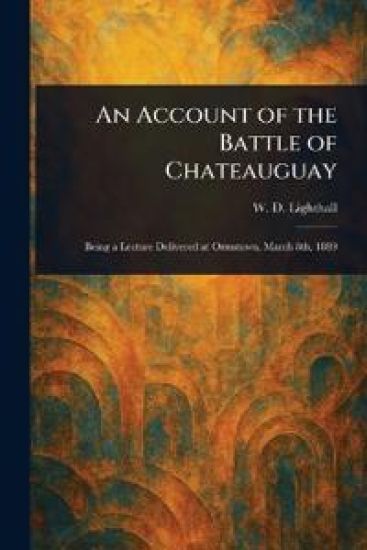
An Account of the Battle of Chateauguay
W D (William Douw) Lighthall
Anson Street Press
2025
pokkari


"Lewis and Clark: Meriwether Lewis and William Clark" recounts one of the most pivotal expeditions in American history. This meticulously prepared edition details the Lewis and Clark Expedition (1804-1806), a journey of exploration that charted the vast and largely unknown American West. William R. Lighton chronicles the experiences of Meriwether Lewis and William Clark as they navigated treacherous landscapes, encountered diverse Native American tribes, and documented the rich natural resources of the territory acquired in the Louisiana Purchase. This historical narrative captures the spirit of adventure and the unwavering determination of Lewis and Clark as they pushed the boundaries of knowledge and expanded the horizons of the young United States. Explore the challenges and triumphs of this legendary expedition, a cornerstone of American history and westward expansion. A compelling read for anyone interested in the history of exploration, the American West, and the enduring legacy of "Lewis and Clark."This work has been selected by scholars as being culturally important, and is part of the knowledge base of civilization as we know it.This work is in the public domain in the United States of America, and possibly other nations. Within the United States, you may freely copy and distribute this work, as no entity (individual or corporate) has a copyright on the body of the work.Scholars believe, and we concur, that this work is important enough to be preserved, reproduced, and made generally available to the public. We appreciate your support of the preservation process, and thank you for being an important part of keeping this knowledge alive and relevant.

The Young Seigneur or Nation-Making
Wilfrid Chatea [William Douw Lighthall]
Createspace Independent Publishing Platform
2014
nidottu
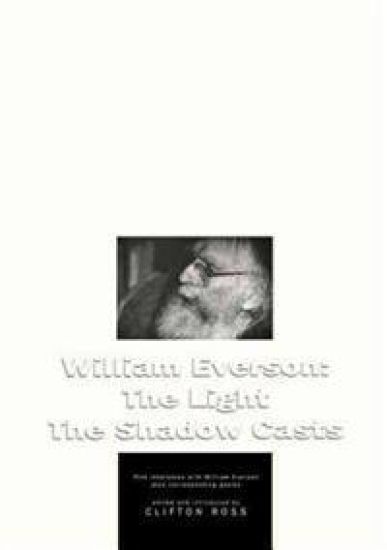
William Everson: The Light the Shadow Casts
Clifton Ross; William Everson
Freedom Voices Publications
2012
nidottu
In this collection of interviews with one of the central poets of the San Francisco Literary Renaissance (which preceded the Beat movement) William Everson/Brother Antoninus ponders the mystical dimensions of poetry. The interviews span the final fifteen years of his life and contain his final thoughts on the prophetic, the shamanistic and the aesthetic dimensions of his craft, as well as his own life, characterized by the Portuguese proverb that "God writes straight with crooked lines." The interviews, accompanied by selected poems, were conducted, edited and introduced by Clifton Ross and were first published two years after the poets death by Stride Publications, UK, republished by Freedom Voices to honor the centennial of the poet's birth.

"Wee William Finds the Light" is a sweet and empowering story about fun, friendship, and bright ideas. When Wee William and Sam get into a bit of a pickle, Wee William's clever solution saves the day. Through delightful illustrations and witty prose, this book puts the focus on how children have the innate ability to creatively solve their own problems-especially when parents provide gentle support and positive affirmations to encourage just that.

Mary and William Dyer: Quaker Light and Puritan Ambition in Early New England
Johan Winsser
Createspace Independent Publishing Platform
2017
nidottu
Mary Dyer is widely esteemed as one of the "Boston martyrs"- four Quakers hanged by the Massachusetts Bay Colony between 1659 and 1661. When she returned to Boston in 1660, after having been banished twice from Massachusetts, she committed an act of deliberate civil disobedience that cost her her life, led to the downfall of the puritan government, and advanced the fundamental principles of freedom of conscience and expression. More than three-and-a-half centuries later, the state continues to exercise its mandate to preserve the peace and social order, while also protecting the constitutional exercise of free speech and self-expression. The challenge, always, has been to identify and then enforce the balance between the rights of individuals or groups to practice their beliefs, and the rights of others to likewise enjoy their liberties. The story of the Dyers-especially Mary's story-is how that challenge played out between the New England puritans and the Quakers, and how her life and death shaped the outcome of that conflict. "An authoritative and careful biography of Mary Dyer and her husband, William, which breaks new ground, dispels common beliefs, and balances both the Quaker and puritan sides of the story." -H. Larry Ingle, author of First Among Friends: George Fox and the Creation of Quakerism "A well-researched and balanced work that makes a valuable contribution to our understanding of the people and issues of the seventeenth-century Atlantic world." -Francis Bremer, author of John Winthrop: American's Forgotten Founding Father
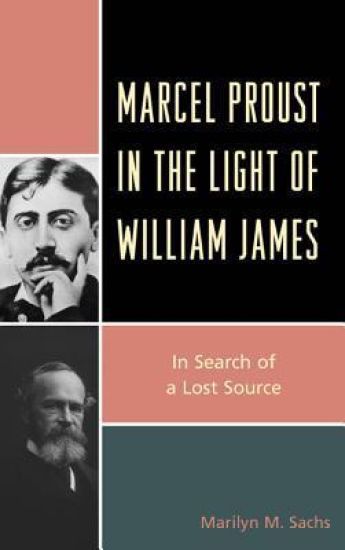
For a century now, scholars have searched for the “source” of Marcel Proust’s startlingly innovative novel À la recherche du temps perdu. Some have pointed to Henri Bergson, Sigmund Freud, or Paul Sollier. Others have referenced the novels of Henry James. But no one has focused on the more significant influence of the writings of Henry’s older brother, the psychologist and Harvard professor William James. A close comparison reveals the degree to which Proust’s novel stems from James’s psychological and philosophical theories. William James was a prominent member of the scientific, medical and philosophical communities in Proust’s Paris and was close friends with two men well known to Proust. His works were translated into French and reviewed in French journals and newspapers. This book discloses how Proust likely became familiar with William James and illustrates how James’s writings were key to Proust’s ability to craft the book he had been trying to write, extending even to his use of similar language and imagery and a narrative schema that arguably mimics James’s descriptions of consciousness, perception, and memory. Proust’s hero assiduously explores the vague, uncertain, relational aspects of experience, the trials and comforts of habit, the salvational potential of memory, the “moral” aspects of personal history teeming with impression and desire—these are the truths of human psychology and behavior theorized by William James and made fictional flesh in Proust’s rendition of lived experience.
A Study Guide for William Faulkner's "Light in August"
Cengage Learning Gale
Gale, Study Guides
2017
pokkari
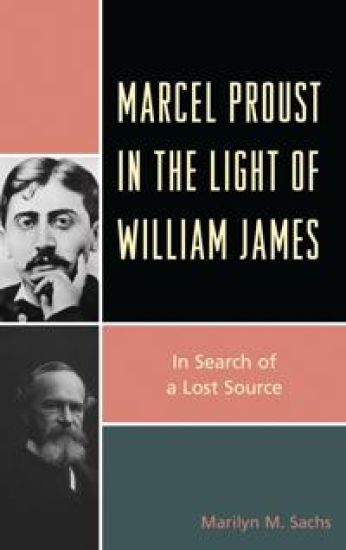
For a century now, scholars have searched for the “source” of Marcel Proust’s startlingly innovative novel À la recherche du temps perdu. Some have pointed to Henri Bergson, Sigmund Freud, or Paul Sollier. Others have referenced the novels of Henry James. But no one has focused on the more significant influence of the writings of Henry’s older brother, the psychologist and Harvard professor William James. A close comparison reveals the degree to which Proust’s novel stems from James’s psychological and philosophical theories. William James was a prominent member of the scientific, medical and philosophical communities in Proust’s Paris and was close friends with two men well known to Proust. His works were translated into French and reviewed in French journals and newspapers. This book discloses how Proust likely became familiar with William James and illustrates how James’s writings were key to Proust’s ability to craft the book he had been trying to write, extending even to his use of similar language and imagery and a narrative schema that arguably mimics James’s descriptions of consciousness, perception, and memory. Proust’s hero assiduously explores the vague, uncertain, relational aspects of experience, the trials and comforts of habit, the salvational potential of memory, the “moral” aspects of personal history teeming with impression and desire—these are the truths of human psychology and behavior theorized by William James and made fictional flesh in Proust’s rendition of lived experience.