

Kirjahaku
Etsi kirjoja tekijän nimen, kirjan nimen tai ISBN:n perusteella.
1000 tulosta hakusanalla William Malmborg

"An excellent book about a boy named William who wants the forbidden--a doll. The long-awaited realistic handling of this theme makes it a landmark book."--School Library JournalMore than anything, William wants a doll. "Don't be a creep," says his brother. "Sissy, sissy," chants the boy next door. Then one day someone really understands William's wish, and make it easy for others to understand, too. William gets a doll, so he can learn to be a loving parent someday.Written by beloved author Charlotte Zolotow and illustrated by Newbery Medal-winning author and Caldecott Honor Book illustrator William P ne du Bois, William's Doll was published in 1972 and was one of the first picture books to deal with gender stereotypes. William's Doll has been welcomed by teachers, librarians, and other caregivers as a springboard for discussion about gender roles and intolerance, whether shared one on one or with groups in a classroom or library setting.

William Faulkner never stood taller than five feet, six inches, but in the realm of American literature, he is a giant. More than simply a renowned Mississippi writer, the Nobel-Prize winning novelist and short story writer is acclaimed throughout the world as one of the twentieth century's greatest writers, one who transformed his "postage stamp" of native soil into an apocryphal setting in which he explored, articulated, and challenged the "old verities and truths of the heart."In this collection, we are proud to present a historic recording of Mr. Faulkner reading his 1949 Nobel acceptance speech and excerpts from As I Lay Dying and The Old Man.

William Law (1686-1761) was an Anglican priest who specialized in providing spiritual direction. This occupation led his writings to be concrete and specific, yet profound and filled with rich insights. His best known piece, A Serious Call to a Devout and Holy Life, has inspired countless generations and deeply influenced the English religious revivals. The selections here offer practical spiritual direction for those seeking a meaningful life of prayer and devotion.

The Darkness Around Us Is Deep: Selected Poems of William Stafford
William Stafford
HARPER PERENNIAL
1994
nidottu
Chapter One Family and Children with Kit, Age Seven, at the Beach We would climb the highest dune, from there to gaze and come down: the ocean was performing; we contributed our climb. Waves leapfrogged and came straight out of the storm. What should our gaze mean? K it waited for me to decide. Standing on such a hill, what would you tell your child? That was an absolute vista. Those waves raced far, and cold. "How far could you swim, Daddy, in such a storm?" "As far as was needed," I said, and as I talked, I swam. Passing Remark in scenery I like flat country. In life I don't like much to happen. In personalities I like mild colorless people. And in colors I prefer gray and brown. My wife, a vivid girl from the mountains, says, "Then why did you choose me?" Mildly I lower my brown eyes-- there are so many things admirable people do not understand. At Our House Home late, one lamp turned low, crumpled pillow on the couch, wet dishes in the sink (late snack), in every child's room the checked, slow, sure breath-- Suddenly in this doorway where I stand in this house I see this place again, this time the night as quiet, the house as well secured, all breath but mine borne gently on the air-- And where I stand, no one. Consolations "The broken part heals even stronger than the rest," they say. But that takes awhile. And, "Hurry up," the whole world says. They tap their feet. And it still hurts on rainy afternoons when the same absent sun gives no sign it will ever come back. "What difference in a hundred years?" The barn where Agnes hanged her child will fall by then, and the scrawled words erase themselves on the floor where rats' feet run. Boards curl up. Whole new trees drink what the rivers bring. Things die. "No good thing is easy." They told us that, while we dug our fingers into the stones and looked beseechingly into their eyes. They say the hurt is good for you. It makes what comes later a gift all the more >precious in your bleeding hands. For a Lost Child What happens is, the kind of snow that sweeps Wyoming comes down while I'm asleep. Dawn finds our sleeping bag but you are gone. Nowhere now, you call through every storm, a voice that wanders without a home. Across bridges that used to find a shore you pass, and along shadows of trees that fell before you were born. You are a memory too strong to leave this world that slips away even as its precious time goes on. " glimpse you often, faithful to every country we ever fo und, a bright shadow the sun forgot one day. On a map of Spain" find your note left from a trip that year our family traveled: "Daddy, we could meet here." S Memorial: Son Bret In the way you went you were important do not know what you found. In the pattern of my life you stand where you stood always, in the center, a hero, a puzzle, a man. What you might have told me " will never know--the lips went still, the body cold. I am afraid, in the circling stars, in the dark, and even at noon in the light. When I run what am I running from? You turned once to tell me something, but then you glimpsed a shadow on my face and maybe thought, Why tell what hurts? You carried it, my boy,so brave, so far. Now we have all the days, and the sun goes by the same; there is a faint, wandering trail I find sometimes, off through grass and sage. I stop and listen: only summer again--remember?-- The bees, the wind The Light by the Barn The light by the barn that shines all night pales at dawn when a little breeze comes. A little breeze comes breathing the fields from their sleep and waking the slow windmill. The slow windmill sings the long day about anguish and loss to the chickens at work. The little breeze follows the slow windmill and the chickens at work till the sun goes down-- Then the light by the barn again. Any Time Vacation? Well, our children took our love apart: "Why do you hold Daddy's hand?" "Susy's mother doesn't have gray in her hair." And scenes crushed our wonder--Sun Valley, Sawtooths, those reaches of the Inland Passage--while the children took our simple love apart. (Children, how many colors does the light have? Remember the wide shafts of sunlight, roads through the trees, how light examines the road hour by hour? It is all various, no simple on-off colors. And love does not come riding west through the trees to find you. ) "Daddy, tell me your best secret." (I have woven a parachute out o f everything broken; my scars are my shield; and I jump, daylight or dark, into any country, where as I descend I turn native and stumble into terribly human speech and wince recognition.) "When you get old, how do you know what to do?" (Waves will quiet, wind lull; and in that instant I will have all the time in the world; something deeper thanbirthdays will tell me all I need.) "But will you do right?" (Children, children, oh, see that waterfall.) Long Distance We didn't know at the time. It was for us, a telephone call through the world and nobody answered. We thought it was a train far off giving its horn, roving its headlight side to side in its tunnel of darkness and shaking the bridge and our house till dishes rattled, and going away. We thought it a breath climbing the well where Kim almost fell in; it was a breath saying his name, and "Almost got you," but we piled boards and bricks on top and held off that voice. Or maybe it was the song in the stove-- walnut and elm giving forth stored sunlight through that narrow glass eye on the front in the black door that held in the fire. Or a sigh from under the mound of snow where Bret's little car with its toy wheels nestled all winter ready to roll, come spring, and varoom when his feet toddled it along. Or--listen--in the cardboard house we built by the kitchen wall, a doorknob drawn with crayon, Kit's little window peeking out by the table--is it a message from there? And from Aunt Helen's room where she sews all day on a comforter made out of pieces of Grandma's dresses, and the suits for church--maybe those patches rustle their message in her fingers: "Dorothy, for you, and for all the family I sew that we may be warm in the house by the tracks." don't know, but there was a voice, those times, a call through the world that almost rang everywhere, and we looked up--Dorothy, Helen, Bret, Kim, Kit--and only the snow shifted its foot outside in the wind, and nobody heard.

"An excellent book about a boy named William who wants the forbidden—a doll. The long-awaited realistic handling of this theme makes it a landmark book."—School Library JournalMore than anything, William wants a doll. “Don’t be a creep,” says his brother. “Sissy, sissy,” chants the boy next door. Then one day someone really understands William’s wish, and make it easy for others to understand, too. William gets a doll, so he can learn to be a loving parent someday.Written by beloved author Charlotte Zolotow and illustrated by Newbery Medal-winning author and Caldecott Honor Book illustrator William Pène du Bois, William’s Doll was published in 1972 and was one of the first picture books to deal with gender stereotypes. William's Doll has been welcomed by teachers, librarians, and other caregivers as a springboard for discussion about gender roles and intolerance, whether shared one on one or with groups in a classroom or library setting.

With her characteristically sprightly words and pictures, Aliki brings Shakespeare's life, times, and legacy to life in this highly acclaimed information-packed treasury that is truly for readers of all ages. This nonfiction picture book is an excellent choice to share during homeschooling, in particular for children ages 6 to 8. It's a fun way to learn to read and as a supplement for activity books for children From Hamlet to Romeo and Juliet to A Midsummer Night's Dream, Shakespeare's celebrated works have touched people around the world. Aliki combines literature, history, biography, archaeology, and architecture in this richly detailed and meticulously researched introduction to Shakespeare's world-his life in Elizabethan times, the theater world, and the Globe, for which he wrote his plays. Then she brings history full circle to the present-day reconstruction of the Globe theater. .
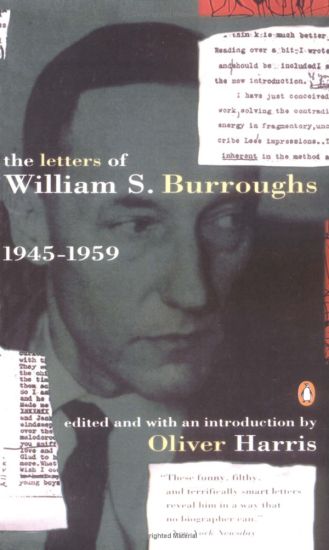
The Letters of William S. Burroughs: Volume I: 1945-1959
William S. Burroughs
PENGUIN BOOKS
1994
nidottu
"These funny, filthy, and terrifically smart letters reveal him in a way that no biographer can." -- New York Newsday Guru of the Beat generation, minence grise of the international avant-garde, dark prophet, and blackest of satirists, William S. Burroughs has had a range of influence rivaled by few living writers. This volume of his correspondence from 1945 to 1959 vividly documents the personal and cultural history through which Burroughs developed, revealing clues to illuminate his life and keys to open up his texts. More than that, it shows how letter-writing was itself integral to his life and to his fiction. Beginning as surprisingly formal notes from the road to his friends Allen Ginsberg and Jack Kerouac, the letters deepen in substance and style. Then, in Tangier, comes a dramatic shift in voice and vision and the explosive, distinctive letters that will become Naked Lunch. Letters were lifelines for Burroughs, the outcast; and works-in-progress for Burroughs, the writer; and, they track his turbulent journey across two decades and three continents. To read them as they were written is to experience a unique merging of life and letters, the extraordinary story of Williams S. Burroughs homme de lettres. "Unrelenting impact." -- Los Angeles Reader
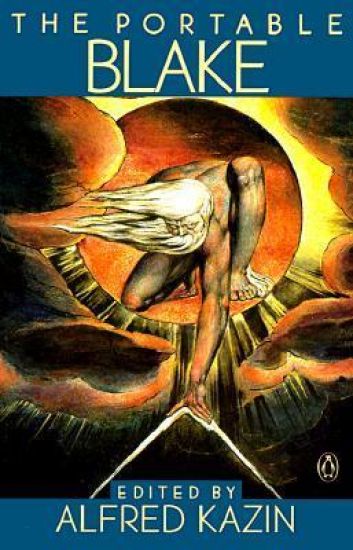
'SONGS OF INNOCENCE' AND 'SONGS OF EXPERIENCE', COMPLETE SELECTION FROM THE 'PROPHETIC BOOKS' AND FROM OTHER WORKS OF POETRY AND PROSE. THE COMPLETE DRAWINGS OF "THE BOOK OF JOB" 'AN INSPIRED SELECTION' - THE NEW YORK TIMES. "BLAKE IS NOWHERE BETTER PRESENTED FOR THE GENERAL READER. THE INTRODUCTION IS .. PROBABLY THE BEST ESSAY YET COMPOSED ON THE SUBJECT " - SATURDAY REVIEW.

An accessible and exciting approach to William Morris, a true art and design hero. The beautifully designed book will look at William Morris as an artist and culture shaper and include his most famous work.
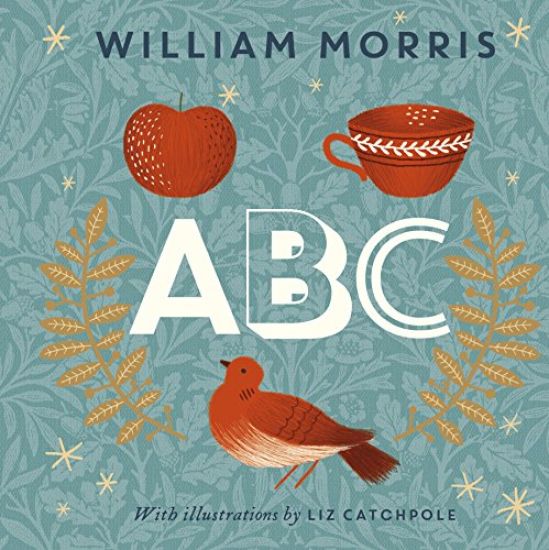
Learn first words with William Morris' iconic designs in this beautifully illustrated board book. Starting with a for apple and ending with z for zebra, this is a stylish introduction to first words for very young children - the perfect gift for art and design-loving parents. Published in association with the V&A Museum, your purchase helps the V&A to enrich people's lives as the world's leading museum of art and design.

Learn first numbers with William Morris' iconic designs in this beautifully illustrated board book. Starting with one tree and ending with ten butterflies, this is a stylish introduction to counting for very young children - the perfect gift for art and design-loving parents. Published in association with the V&A Museum, your purchase helps the V&A to enrich people's lives as the world's leading museum of art and design.

Part of the Penguin Monarchs series: short, fresh, expert accounts of England's rulers - now in paperbackOn Christmas Day 1066, William, duke of Normandy was crowned in Westminster, the first Norman king of England. It was a disaster: soldiers outside, thinking shouts of acclamation were treachery, torched the surrounding buildings. To later chroniclers, it was an omen of the catastrophes to come.During the reign of William the Conqueror, England experienced greater and more seismic change than at any point before or since. Marc Morris's concise and gripping biography sifts through the sources of the time to give a fresh view of the man who changed England more than any other, as old ruling elites were swept away, enemies at home and abroad (including those in his closest family) were crushed, swathes of the country were devastated and the map of the nation itself was redrawn, giving greater power than ever to the king. When, towards the end of his reign, William undertook a great survey of his new lands, his subjects compared it to the last judgement of God, the Domesday Book. England had been transformed forever.

'He had brought nothing but trouble to the navy: how would he fare as King?'Known as the 'Sailor King', William IV was sent to join the navy by his father to discipline him, but instead became notorious for his calamitous years of service, his debts and his relationship with the actress Mrs Jordan. Yet, as Roger Knight's biography shows, William also helped see the country through the great constitutional crisis of its age, enabling the smooth succession of his niece Victoria.
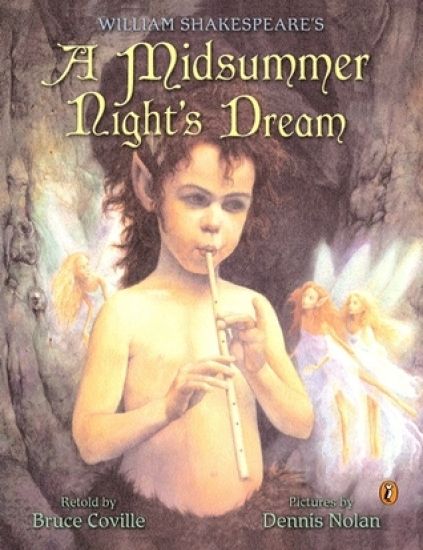
One night two young couples run into an enchanted forest in an attempt to escape their problems. But these four humans do not realize that the forest is filled with fairies and hobgoblins who love making mischief. When Oberon, the Fairy King, and his loyal hobgoblin servant, Puck, intervene in human affairs, the fate of these young couples is magically and hilariously transformed. Like a classic fairy tale, this retelling of William Shakespeare's most beloved comedy is perfect for older readers who will find much to treasure and for younger readers who will love hearing the story read aloud.
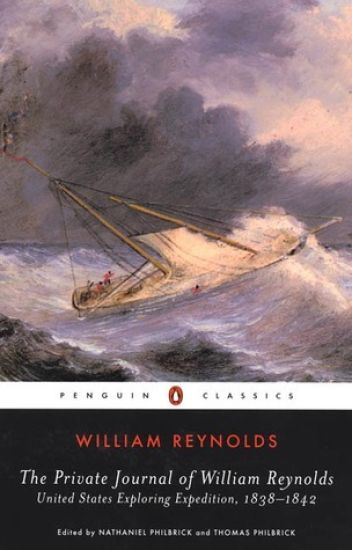
One of the finest nineteenth-century first-person narratives of a sea voyage in existence, and a principle source for Sea of Glory, The Private Journal of William Reynolds brings to life the boisterous world traversed by the six vessels that comprised America's first ocean-going voyage of discovery, the U.S. Exploring Expedition of 1838–1842. With great eloquence and verve Midshipman William Reynolds describes the harrowing 87,000-mile, four-year circuit of the globe, and relates the story of how the abusive commander of the Ex. Ex., Lieutenant Charles Wilkes, gradually lost the support of his crew. With a seaman's understanding and an artist's appreciation for the wild beauty that surrounds him, the Journal is a tour de force combining meticulous observations with a young man's sense of wonder and, on occasion, terror as he is tossed about by the tremendous seas.
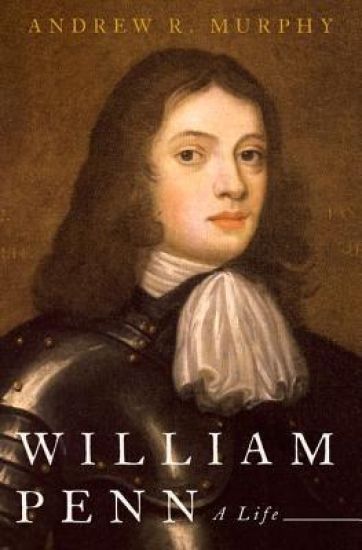
On March 4, 1681, King Charles II granted William Penn a charter for a new American colony. Pennsylvania was to be, in its founder's words, a bold "Holy Experiment" in religious freedom and toleration, a haven for those fleeing persecution in an increasingly intolerant England and across Europe. An activist, political theorist, and the proprietor of his own colony, Penn would become a household name in the New World, despite spending just four years on American soil. Though Penn is an iconic figure in both American and British history, controversy swirled around him during his lifetime. In his early twenties, Penn became a Quaker-an act of religious as well as political rebellion that put an end to his father's dream that young William would one day join the English elite. Yet Penn went on to a prominent public career as a Quaker spokesman, political agitator, and royal courtier. At the height of his influence, Penn was one of the best-known Dissenters in England and walked the halls of power as a close ally of King James II. At his lowest point, he found himself jailed on suspicion of treason, and later served time in debtor's prison. Despite his importance, William Penn has remained an elusive character-many people know his name, but few know much more than that. Andrew R. Murphy offers the first major biography of Penn in more than forty years, and the first to make full use of Penn's private papers. The result is a complex portrait of a man whose legacy we are still grappling with today. At a time when religious freedom is hotly debated in the United States and around the world, William Penn's Holy Experiment serves as both a beacon and a challenge.
William Faulkner at Twentieth Century-Fox
Sarah Gleeson-White
Oxford University Press Inc
2017
sidottu
William Faulkner at Twentieth Century-Fox: The Annotated Screenplays presents for the first time and in one volume the five screenplays Faulkner wrote while under contract to Twentieth Century-Fox in the mid 1930s and a sixth he wrote in 1952. An informative introduction describes Faulkners screenwriting practices, such as adaptation and collaboration, and contextualizes these within a broader genealogy of Hollywood screenwriting and within one of the most important moments in the history of American cinema. Each of the six screenplays appears in full with scholarly annotations, and brief prefatory essays elucidate their evolution over various drafts and with various co-writers.
Discusses the life and work of William James, a founder of the study of psychology. William James (1842-1910) was elder brother to the novelist Henry James and a founder of the study of psychology. But he was also a thinker who sought to work across conventional boundaries, and did not believe in separate disciplines or over-professionalized ways of thinking. James was above all interested in those moments when thoughts suddenly come into being, 'hot' and 'alive'. William James is for anyone who has experienced the personal need for such thinking and feels the excitement of ideas. It concerns the personal experience of reading James, involving extensive quotation from his work in relation to Philip Davis' own inner life and the lives of other readers of James--a thinker who is defiantly convinced of the fundamental validity of the inner life in the making of the Real. This book is about William James's life-writing, writing for the sake of existence, that puts together a mix of literature, psychology, philosophy, and biography in the search for purpose and human flourishing, in place of formal religion. It includes James' interest in his brother's novels and in Shakespearean drama, as well as Thomas Hardy's pessimistic challenge to James. Davis is a reader of literature who feels that readers of novels and poems also need the help of psychology and philosophy, to get the thinking out, to make it into a working part of a life. His book is for readers, especially readers of literature, seeking to create, like William James, a literary way of thinking outside the realm of literature.
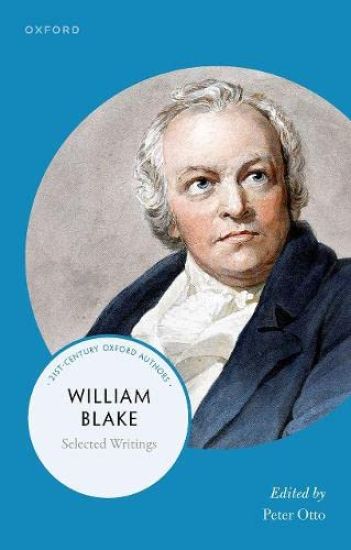
William Blake
Oxford University Press
2022
nidottu
This volume in the 21st Century Oxford Authors series offers students and readers a comprehensive selection of the work of William Blake (1757-1827). Accompanied by full scholarly apparatus, this authoritative edition enables students to explore Blake's poetry, illuminated poetry, and prose alongside selections from his letters, manuscripts, notebook, advertising pamphlets, marginalia, and works he printed in conventional letterpress. The edition arranges Blake's works in chronological order, according to the date when they were first printed or, in the case of unpublished works, the years in which they were composed. With the help of editorial headnotes and annotations, this arrangement brings to the foreground Blake's material and intellectual labours as a poet, painter, prophet, and non-academic philosopher; the networks of acquaintances, friends, patrons, and enemies who helped support or provoke this work; and the tumultuous historical events he responded to, which included the beginning of modern feminism, the agricultural and industrial revolutions, the American and French Revolutions, William Pitt's so-called 'Reign of Terror' in Britain, an attempted revolution in Ireland (1798), a successful slave rebellion in Haiti (1791-1804), and the French revolutionary and Napoleonic wars. Some editions attempt to sanitize Blake, by hiding from view the most startling elements of his thought; but in this edition Blake's sexual, political, religious, and poetic heterodoxy comes into full view. At the same time, this edition foregrounds the dynamics of Blake's composite art, with equal weight given to its verbal and visual dimensions; makes visible the chief lines of force that structure his oeuvre; and highlights his developing thought on sapphism, sodomy, the body, relations between the sexes, the roots of violence, and the politics of imagination. This is a Blake whose dialogue with his own time anticipates much later developments, including modern depth psychologies; analyses of the social and psychological dynamics of war and peace; interest in the body, sexuality, and gender; and experiments in the relation between actual and virtual realities—a Blake who is provocative, unsettling, exhilarating, and somehow our contemporary. Explanatory notes and commentary are included, to enhance the study, understanding, and enjoyment of these works, and the edition includes an Introduction to the life and works of Blake, and a Chronology.