Kirjojen hintavertailu. Mukana 12 434 669 kirjaa ja 12 kauppaa.

Kirjahaku

Etsi kirjoja tekijän nimen, kirjan nimen tai ISBN:n perusteella.

1000 tulosta hakusanalla William Rowan

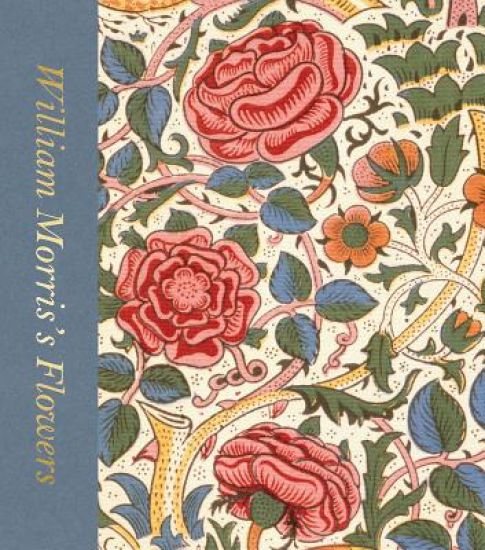
William Morris’s Flowers (Victoria and Albert Museum)
A passionate advocate of craftsmanship over mass-production, William Morris (1834– 1896) designed a huge variety of objects, but it is his highly original carpet, fabric and wallpaper patterns that have continued to capture the imagination and exert their influence on the decorative arts. Around 600 such designs are attributed to Morris, of which the vast majority are based on natural forms, including trees, plants and flowers. This beautifully designed, accessibly priced gift book offers a wealth of designs by Morris in which flowers are the principal motif, bringing together not only completed patterns but also working drawings in pen and watercolour, and examples of his pearwood, floral-pattern printing blocks. It also explores examples of the sources that inspired Morris’s flower-based designs: his own gardens at the Red House in Kent, Kelmscott Manor in Oxfordshire and elsewhere; 16th- and 17th-century herbals; illuminated medieval manuscripts; late medieval and Renaissance tapestries; and a range of decorated objects, particularly from the Islamic world, that Morris studied at the South Kensington Museum (now the V&A). Authored by Rowan Bain, curator at the William Morris Gallery in Walthamstow, north London, and lavishly illustrated with almost 100 colour illustrations, this exquisite book will both inform and delight
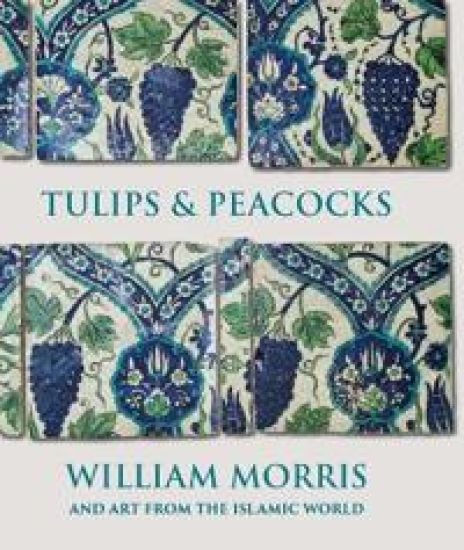
Tulips and Peacocks: William Morris and Art from the Islamic World
An introduction to William Morris’s personal collection of artworks from the Islamic world and how they came to influence his pattern-making One of the principal founders of the Arts and Crafts movement, William Morris was responsible for hundreds of patterns for wallpapers, fabrics, tapestries, and carpets that are iconic of the late nineteenth century and continue to resonate today. It is now widely acknowledged that his artistic production was stimulated by his deep familiarity with embroideries, woven velvets, silks, carpets, and metalwork from Iran, Syria, and Turkey, which he collected throughout his lifetime. Ranging from popular nineteenth-century tourist merchandise to rare artefacts of historical significance, Morris’s collection is a testament to the interconnectedness of global artistic traditions and the enduring importance of recognising the contributions of various cultures to the evolution of his design and craftsmanship. This highly illustrated publication offers diverse perspectives in contextualising Morris’s role within contemporary debates around colonial collecting, Islam’s representation in the museum context, and issues of cultural appropriation from contributors within the field of British Arts and Crafts and Art from the Islamic world.
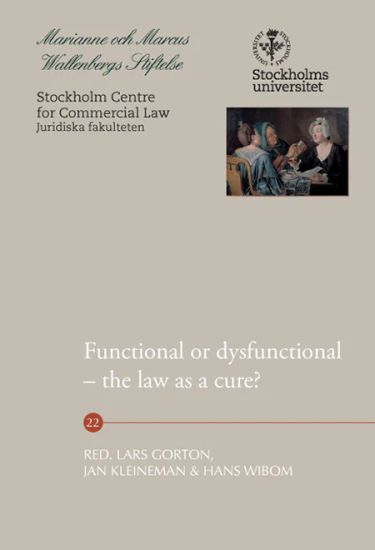
Functional or dysfunctional : the law as a cure?

Functional or dysfunctional : the law as a cure?

Jr. Coffee; Rowan Russell; Angela Itzikowitz; Philip R Wood; Kern Alexander; Jesper Lau Hansen; Erica Johansson; Klaus J. Hopt; William Blair; Michael D. Green; Brandon Jones; Ross Cranston; Brigitte Haar; Eiríkur Jónsson

Stockholm Centre for Commercial Law
2014
nidottu
On August 29–30 2014 the Marianne and Marcus Wallenberg Foundation in co-operation with the Stockholm Centre for Commercial Law arranged an International legal symposium under the heading “Functional or dysfunctional – the law as a cure? Risks and liability in the financial markets”. The symposium was held in honor of the 50th anniversary of the Marianne and Marcus Wallenberg Foundation. The topic of the symposium mirrors a particular interest of the activities of the SCCL covering regulatory as well as liability questions thus dealing with legal subjects which have also relevance to the Foundation. After World War II financial markets have gradually undergone huge differences depending on new financial devices, new financial markets and new financial actors evolving together with changes in regulation and supervision. These are circumstances which have together created new frames for the financial industry. Table of contents: - Extraterritorial Financial Regulation: Why E.T. Can’t Come Home by John C. Coffee, Jr. - Generally on Risks and Liability – Directors’ Liability Under the Law and Regulation in Australia by Rowan Russell - South African Company Law – Directors’ Duty of Care and Skill and the Introduction of the Business Judgment Rule: Answering the Critics by Angela Itzikowitz - International legal risk for banks and corporates by Philip R Wood - Macro-prudential regulation from an English and European Perspective – The Legal and Institutional Dimension by Kern Alexander - Comment on the session on the risks and liabilities of financial markets by Jesper Lau Hansen - Handling Risks in Financial Markets Regulation: EMIR and the problem with CCPs being Too Big to Fail by Erica Johansson - Responsibility of Banks and Their Directors, Including Liability and Enforcement by Klaus J. Hopt - Is there a role for culture and ethics in financial regulation? By William Blair - Tort Law to the Rescue? By Michael D. Green & Brandon Jones - The (non)-liability of banks under English law by Ross Cranston - Implementing liability on the basis of model case procedures – the example of the German Capital Markets Model Case Act (“KapMuG”) by Brigitte Haar - Tort cases in Iceland after the bank crash in 2008 by Eiríkur Jónsson
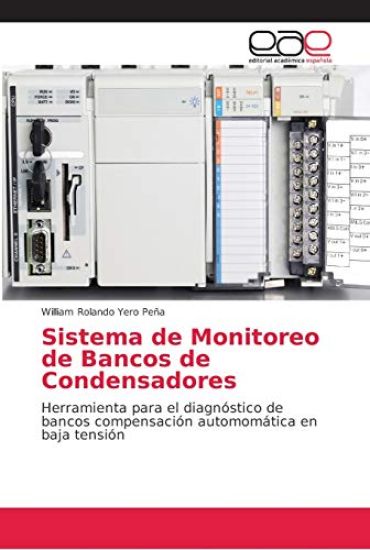
Sistema de Monitoreo de Bancos de Condensadores

Sistema de Monitoreo de Bancos de Condensadores

William Rolando Yero Peña

Editorial Academica Espanola
2018
pokkari
Cumplir con el prop sito de elevar el tiempo de vida de los escalones que conforman los bancos de condensadores y garantizar la estabilidad del Factor de Potencia, se asumi como la importancia y necesidad de esta investigaci n.En este trabajo, se desarroll un software que vincul las acciones de regulaci n y protecci n de los escalones logr ndose garantizar las condiciones de servicio ptimas para prolongar la vida til de los condensadores de potencia, dar vitalidad a los viejos reguladores varim tricos y la supervisi n local y remota del estado t cnico de estos dispositivos. El an lisis del m todo propuesto ser muy til a los profesionales del sector el ctrico y de las telecomuncicaciones para comprender los fundamentos t cnicos de los sistemas de monitorizaci n y supervisi n actuales. El libro es un compendio de informaci n de v rios autores que han tratado esta tem tica y aborda la experiencia pr ctica del autor en el diagn stico de los bancos de compensaci n autom tica del factor de potencia. Los resultados muestran la factibilidad de generalizaci n del sistema de monitoreo propuesto.
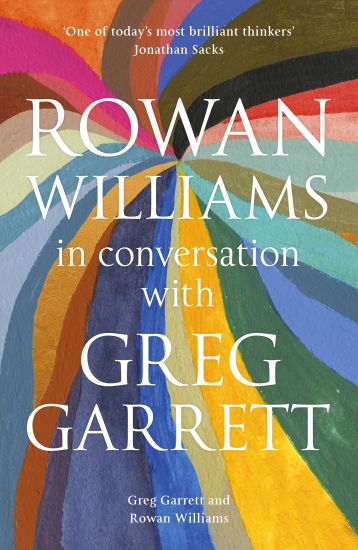
Rowan Williams in Conversation

Rowan Williams in Conversation

Rowan Williams

SPCK Publishing
2020
pokkari
Millions have read his words or heard him speak. Now in this book by Rowan Williams and Greg Garrett, there’s a chance to find out more about the man behind the books and speeches. ‘Rowan Williams in Conversation’ allows the reader to be a fly on the wall as two friends – one the former Archbishop of Canterbury, the other ‘one of America's leading voices on religion and culture’ (BBC Radio) – talk about their shared passions and interests. ‘Rowan Williams in Conversation’ is Williams at his most relaxed and personal, offering unique insights into his most heartfelt beliefs and enthusiasms. Listen in as he reflects with Greg Garrett on the vital pursuits that have characterized his life and ministry: among them, friendship, imagination, popular culture, faith and politics, prayer, and the blessings of sacred community. Greg Garrett and Rowan Williams’ book is a unique opportunity to sample the rich and wide-ranging thought of Williams, as he talks about the though-provoking spiritual issues and intellectual passions that are most dear to his heart.
Rowan Williams

Rowan Williams

Andrew Goddard

Lion Books
2013
nidottu
Rowan Williams has served as Archbishop of Canterbury through one of the most turbulent periods in the history of global Anglicanism. He has also faced numerous challenges within the Church of England. How has he coped with the huge issues of a divided church and a rapidly changing world? What has he done as archbishop when parts of the church are campaigning for an 'inclusive church' with gay-partnered clergy and women bishops, while others are determined to resist these developments? How has he related to other Christian traditions and those of other faiths? What has he said about the Iraq war, the financial crash, Sharia Law? In this fascinating assessment, Andrew Goddard surveys Archbishop Rowan's time in office. Goddard draws on Williams- speeches and writings, as well as interviews and comments from those who have worked with him. This book shows the pressures faced by an academic scholar who only took on this demanding role because he believed it to be God's call. What sort of leader has he been, and what sort of legacy does he leave for his successor, Justin Welby?
Rowan Williams

Rowan Williams

VDM Publishing House
2010
nidottu
Observera att förlaget som ger ut denna produkt baserar innehållet i sina produkter på fria källor som Wikipedia. Boken är med stor sannolikhet endast ett utdrag ur dessa informationskällor, alltså inte en vanlig bok i den bemärkelsen.
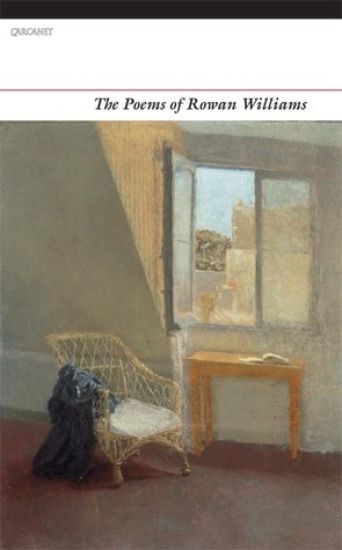
Poems of Rowan Williams

Poems of Rowan Williams

Dr. Rowan Williams

Carcanet Press Ltd
2014
nidottu
'I dislike the idea of being a religious poet. I would prefer to be a poet for whom religious things mattered intensely.' In the poems collected in this book, Rowan Williams writes of many things. He visits the Holy Land, commemorates the deaths of parents and close friends, explores elements of ancient Celtic culture; poems are inspired by works of art, landscapes rural and urban, and historical figures from Tolstoy to Simone Weil. What connects poem to poem is the poet's vividly sensual language, his formal mastery, and how he can address, specifically and particularly, what matters most intensely. 'Earth is a hard text to read', writes Welsh poet Waldo Williams in a poem translated here. For Rowan Williams, this very reading is the task of the poet.
Jesus in the Theology of Rowan Williams
Brett Gray traces the portrayal of Christ that emerges throughout Williams’ diverse writings, including in his engagements with literature and philosophy. What emerges is a vision of Jesus that grows from the roots of the Christian tradition, but is pronounced in a contemporary idiom and sensitive to modern concerns.Although attentive to the broad sweep of the Christian tradition, Williams’ christology is also seen in this book to be a particular British artefact, shaped in dialogue with thinkers such as Donald MacKinnon and Gillian Rose.What is ultimately brought to the surface in this work is the profoundly hopeful, if frequently under-pronounced, eschatology underlying Williams’ christology. Jesus is the “last word”, changing creation’s possibilities and summoning it into an endless and vivifying journey.
Jesus in the Theology of Rowan Williams
Brett Gray traces the portrayal of Christ that emerges throughout Williams’ diverse writings, including in his engagements with literature and philosophy. What emerges is a vision of Jesus that grows from the roots of the Christian tradition, but is pronounced in a contemporary idiom and sensitive to modern concerns.Although attentive to the broad sweep of the Christian tradition, Williams’ christology is also seen in this book to be a particular British artefact, shaped in dialogue with thinkers such as Donald MacKinnon and Gillian Rose.What is ultimately brought to the surface in this work is the profoundly hopeful, if frequently under-pronounced, eschatology underlying Williams’ christology. Jesus is the “last word”, changing creation’s possibilities and summoning it into an endless and vivifying journey.
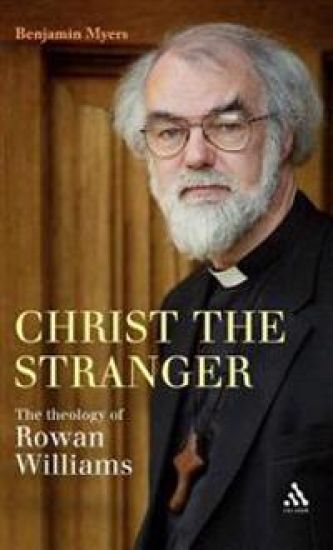
Christ the Stranger: The Theology of Rowan Williams
This is an introduction to the thought of one of the most fascinating theologians and at the same time most controversial church leaders of our time. In contemporary theology, the work of Rowan Williams is virtually without parallel for its extraordinary diversity and complexity. His writings span the genres of poetry, history, literary criticism, spirituality, theology, ethics, and philosophy - yet this diverse body of work is apparently not unified by any overarching system or agenda. Indeed, one of the hallmarks of Williams' thought is a vigorous refusal of completeness and systematic closure. Nevertheless, this book will argue that the complex body of Williams' work is held together by a specific theological construal both of Christian language and of the church's founding event.