Kirjojen hintavertailu. Mukana 12 453 362 kirjaa ja 12 kauppaa.

Kirjahaku

Etsi kirjoja tekijän nimen, kirjan nimen tai ISBN:n perusteella.

1000 tulosta hakusanalla William Thackeray

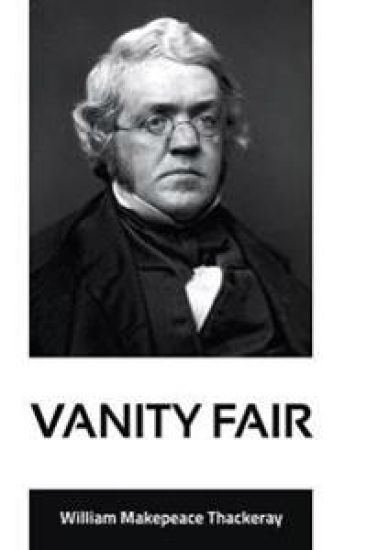
Vanity Fair

Vanity Fair

William Thackeray Makepeace

True Sign Publishing House
2021
pokkari
Vanity Fair is a monthly magazine of popular culture, fashion, and current affairs published by Cond Nast in the United States. The first version of Vanity Fair was published from 1913 to 1936. The imprint was revived in 1983 and currently includes five international editions of the magazine. "Vanity Fair" originally meant "a place or scene of ostentation or empty, idle amusement and frivolity"-a reference to the decadent fair in John Bunyan's 1678 book, The Pilgrim's Progress. the target audience for Vanity Fair is a female with an average age of 45.2. However, Essence is directed towards African American women, while Vanity Fair is directed towards predominately white women.
The History of Henry Esmond

The History of Henry Esmond

John Sutherland; William Thackeray

Penguin Classics
1980
pokkari
'What spectacle is more august than that of a great king in exile? Who is more worthy of respect than a brave man in misfortune?' When "Henry Esmond" appeared in 1852, noted writers and critics of the time acclaimed it as the best historical novel ever written. Set in the reign of Queen Anne, the story follows the troubled progress of a gentleman and an officer in Marlborough's army, as he painfully wrestles with an emotional allegiance to the old Tory-Catholic England until, disillusioned, he comes to terms of a kind with the Whiggish-Protestant future. This change also entails a very uncomfortable switch in his affections. The love story of Henry Esmond is charged with sombre, unconscious emotions, yet is skilfully embedded into historical events which are convincing but never too prominent.
The History of Pendennis

The History of Pendennis

J I M Stewart; William Thackeray

Penguin Classics
1986
pokkari
Written immediately after Vanity Fair, Pendennis has a similar atmosphere of brooding disillusion, tempered by the most jovial of wits. But here Thackeray plunders his own past to create the character of Pendennis and the world in which he lives: from miserable schoolboy to striving journalist, from carefree Oxbridge to the high (and low) life of London. The result is a superbly panoramic blend of people, action and background. The true ebb and flow of life is caught and the credibility of Pen, his worldly uncle, the Major, and many of the other characters, extends far beyond the pages of the novel. Held together by Thackeray's flowing, confident prose, with its conversational ease of tone, Pendennis is as rich a portrait of England in the 1830s and 40s as it is a thorough and thoroughly entertaining self-portrait.
William Makepeace Thackeray

William Makepeace Thackeray

P. Shillingsburg

Palgrave Macmillan
2001
sidottu
A Literary life of William Makepeace Thackeray offers a new perspective on the relation between Thackeray's life and his novels. It combines an analysis of his philosophy/religion with his life's experiences with women and acknowledgements of his dependence on writing for a livelihood to provide an explanation for his narrative strategies. Tracing Thackeray's composition and revision of sample passages demonstrates that these strategies were conscious developments. Thackeray's critique of the evils of society focused subtly on conventional domestic cruelties and on the inequities of the world of women, but he did so in a way that could be dismissed and would not necessarily alienate the public upon whose good will his livelihood depended.
William Makepeace Thackeray

William Makepeace Thackeray

P. Shillingsburg

Palgrave Macmillan
2001
nidottu
A Literary life of William Makepeace Thackeray offers a new perspective on the relation between Thackeray's life and his novels. It combines an analysis of his philosophy/religion with his life's experiences with women and acknowledgements of his dependence on writing for a livelihood to provide an explanation for his narrative strategies. Tracing Thackeray's composition and revision of sample passages demonstrates that these strategies were conscious developments. Thackeray's critique of the evils of society focused subtly on conventional domestic cruelties and on the inequities of the world of women, but he did so in a way that could be dismissed and would not necessarily alienate the public upon whose good will his livelihood depended.
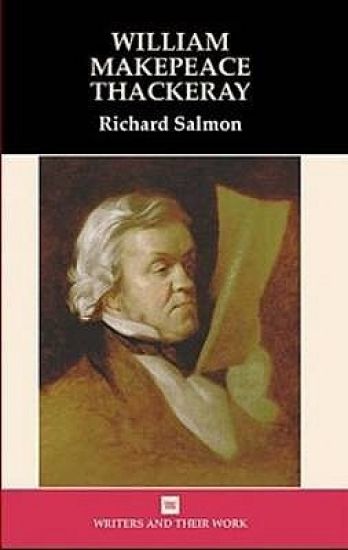
William Makepeace Thackeray

William Makepeace Thackeray

Richard Salmon

Liverpool University Press
2005
nidottu
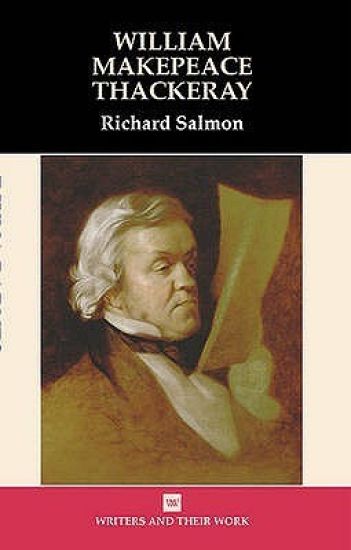
Written by a Victorian literature and culture specialist, this study examines Thackeray's writings, including novels, shorter fiction, journalism and criticism, locating their generic diversity and persistent critical concerns within the specific material contexts of early mid-19th century literary culture.
William Makepeace Thackeray

William Makepeace Thackeray

Richard Salmon

Liverpool University Press
2005
sidottu
Written by a Victorian literature and culture specialist, this study examines Thackeray's writings, including novels, shorter fiction, journalism and criticism, locating their generic diversity and persistent critical concerns within the specific material contexts of early mid-19th century literary culture.
William Makepeace Thackeray

William Makepeace Thackeray

Richard Salmon

Liverpool University Press
2005
sidottu
Written by a Victorian literature and culture specialist, this study examines Thackeray's writings, including novels, shorter fiction, journalism and criticism, locating their generic diversity and persistent critical concerns within the specific material contexts of early mid-19th century literary culture.
Selected Letters of William Makepeace Thackeray

Selected Letters of William Makepeace Thackeray

William Makepeace Thackeray; Edgar F. (EDT) Harden

New York University Press
1996
sidottu
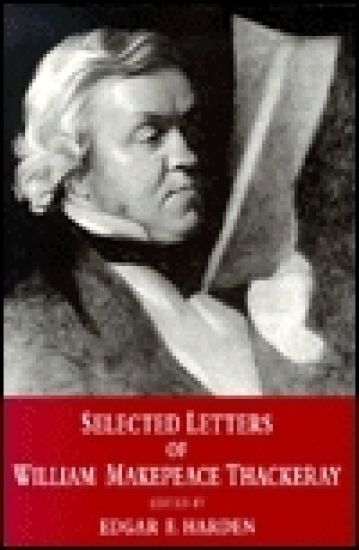
In Selected Letters of William Makepeace Thackeray, Edgar F. Harden provides a lively and accessible framework for selected letters, diaries, and comical illustrations of Thackeray. Harden has carefully selected documents which convey the essential biographical developments of a very interesting life and pictorial expressions of a great man of letters. He traces Thackeray's growth and development as a writer, from his school days in Southhampton to Cambridge University, which he left without a degree, to his ascendence as a writer. In spite of his personal struggles Thackeray articulates in his letters a great exuberance for life. Harden has included seventy five of Thackeray's comical illustrations, which support and enhance the letters they accompany.