
Kirjahaku
Etsi kirjoja tekijän nimen, kirjan nimen tai ISBN:n perusteella.
1000 tulosta hakusanalla Wilson-J
Stones River: The Turning-Point of the Civil War (1914)
Wilson J. Vance
Literary Licensing, LLC
2014
nidottu
Stone's River: The Turning Point of the Civil War
Wilson J. Vance
Createspace Independent Publishing Platform
2014
nidottu
Stone's River: The Turning-Point of the Civil War
Wilson J. Vance
Createspace Independent Publishing Platform
2015
nidottu
Stone's River: The Turning-Point of the Civil War
Wilson J. Vance
Createspace Independent Publishing Platform
2016
nidottu

A Closer Look at the Book of Acts
Wilson J. Tyree
Createspace Independent Publishing Platform
2016
nidottu
Spiritually Speaking 2: Year Two in Review
Wilson J. Tyree
Createspace Independent Publishing Platform
2016
nidottu


Mystery Rangers Series: The Spark Appliance
Wilson J. Baratta
Createspace Independent Publishing Platform
2017
nidottu
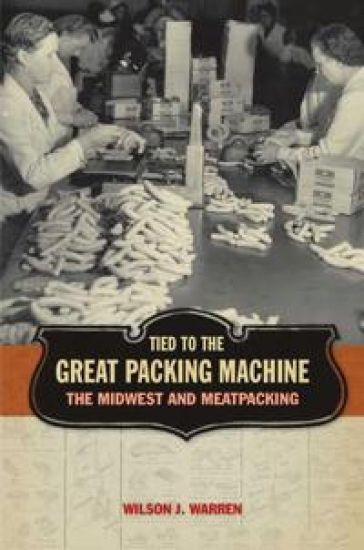
Ambitious in its historical scope and its broad range of topics, ""Tied to the Great Packing Machine"" tells the dramatic story of meatpacking's enormous effects on the economics, culture, and environment of the Midwest over the past century and a half. Wilson Warren situates the history of the industry in both its urban and its rural settings - moving from the huge stockyards of Chicago and Kansas City to today's smaller meatpacking communities - and thus presents a complete portrayal of meatpacking's place within the larger agroindustrial landscape. Writing from the vantage point of twenty-five years of extensive research, Warren analyzes the evolution of the packing industry from its early period, dominated by the big terminal markets, through the development of new marketing and technical innovations that transformed the ways animals were gathered, slaughtered, and processed and the final products were distributed. In addition, he concentrates on such cultural impacts as ethnic and racial variations, labor unions, gender issues, and changes in Americans' attitudes toward the ethics of animal slaughter and patterns of meat consumption and such environmental problems as site-point pollution and microbe contamination, ending with a stimulating discussion of the future of American meatpacking. Providing an excellent and well-referenced analysis within a regional and temporal framework that ensures a fresh perspective, ""Tied to the Great Packing Machine"" is a dynamic narrative that contributes to a fuller understanding of the historical context and contemporary concerns of an extremely important industry.
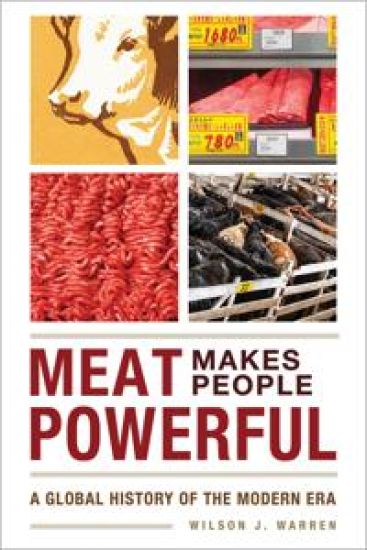
From large-scale cattle farming to water pollution, meat— more than any other food—has had an enormous impact on our environment. Historically, Americans have been among the most avid meat-eaters in the world, but long before that meat was not even considered a key ingredient in most civilizations’ diets. Labor historian Wilson Warren, who has studied the meat industry for more than a decade, provides this global history of meat to help us understand how it entered the daily diet, and at what costs and benefits to society.Spanning from the nineteenth century to current and future trends, Warren walks us through the economic theory of food, the discovery of protein, the Japanese eugenics debate around meat, and the environmental impact of livestock, among other topics. Through his comprehensive, multifaceted research, he provides readers with the political, economic, social, and cultural factors behind meat consumption over the last two centuries. With a special focus on East Asia, Meat Makes People Powerful reveals how national governments regulated and oversaw meat production, helping transform virtually vegetarian cultures into major meat consumers at record speed.As more and more Americans pay attention to the sources of the meat they consume, Warren’s compelling study will help them not only better understand the industry, but also make more informed personal choices. Providing an international perspective that will appeal to scholars and nutritionists alike, this timely examination will forever change the way you see the food on your plate.

Spiritually Speaking, Year Three: The Trifecta
Wilson J. Tyree
Createspace Independent Publishing Platform
2017
nidottu
Year three of the weekly column, "Spiritually Speaking", written by Dr. W. jay Tyree for the Alva Review Courier. Articles contain a sometimes serious, sometimes humorous, occasionally insightful look at life and Scripture.

¡Ciencia Boricua!: Ensayos y anécdotas del científico puertorro
Wilson J. Gonzalez Espada
Createspace Independent Publishing Platform
2018
nidottu
Ciencia Boricua es un libro que recoge ensayos emblem ticos sobre las ciencias y Puerto Rico. No es un libro de texto cient fico, pero entre sus p ginas encontrar s respuestas cient ficas a preguntas que siempre te has hecho. Aunque los ensayos tratan conceptos cient ficos, est n escritos con el p blico en general en mente. Como quien dice, presentamos las ciencias "en arroz y habichuelas". En particular, el libro est escrito con los j venes puertorrique os en mente, aunque estamos seguros de que cualquier persona que lea este libro aprender y disfrutar mucho de su contenido.
Stone's River: The Turning-Point of the Civil War
Wilson J. Vance
Createspace Independent Publishing Platform
2018
nidottu
On the banks of a shallow winding stream, traversing the region known as Middle Tennessee, on the last day of December, 1862, and on the first and second days of January, 1863, a great battle was fought, - a battle that marked the turning point of the Civil War. Stone's River, as the North designated it, or Murfreesboro, - to give it the Southern name, - has hitherto not been estimated at its true importance. To the people of the two sections it seemed at the time but another Shiloh, - horrifying, saddening, and bitterly disappointing. Its significance, likewise, has escaped almost all historians and military critics. But now the perspective of half a century gives it its proper place in the panorama of the great conflict. Gettysburg, indeed, may have been the wound mortal of the Confederacy. But Gettysburg was, in very truth, a counsel of desperation, undertaken when the South was bleeding from many a vein. When Lee turned the faces of his veterans toward the fruitful fields of Pennsylvania, a wall of steel and fire encompassed his whole country. War- worn Virginia cried out for relief from the marchings of armies, that her people might raise the crops that would save them from starvation. Grant had at last established his lines around the fortress that dominated the Mississippi, and only by such a diversion, was there hope that his death- grip would be shaken. The day after Pickett's shattered columns had drifted back to Seminary Ridge Vicksburg was surrendered, and the control of the mighty river passed to the forces of the North. But it was at Stone's River that the South was at the very pinnacle of confidence and warlike power; and it was here that she was halted and beaten back, - never again to exhibit such strength and menace. It was here that the tide of the Confederacy passed its flood, henceforth to recede; here that its sun crossed the meridian and began its journey to the twilight and the dark. Southern valor was manifested in splendid luster on many a field thereafter, but the capacity for sustained aggression was gone. After Stone's River, the Southern soldier fought to repel rather than to drive his foe. Yet Stone's River was almost a tale of triumph for the Confederacy. "God has granted us a happy New Year " was the message flashed to Richmond at the close of the first day's fighting by General Braxton Bragg, Commander of the Army of the Tennessee. Two-thirds of the Army of the Cumberland had been hurled out of line, and now lay clinging with desperation to the only road from which it could secure supplies, or by which it could retreat, and to lose which meant destruction. There was reason, therefore, in the Southern general's exultation, as he waited for the morrow to give him complete success. He could not know that the army upon which had been inflicted so terrific a blow was to gather new strength out of the very magnitude of its disaster and to return such a counterstroke as would give it the field and the victory. Neither could he see that his failure here meant failure for his cause; that because at Stone's River success had not crowned his efforts, his own magnificent army was to be pressed further and further from the territory it claimed as its own; that Fate had here entered the decree, - against which all appeals would fail, - for the preservation of the Federal Union and the death of the Confederate States of America.
Le petit-neveu de Grécourt, ou, Étrennes gaillardes; Recueil de Contes en vers, réimprimés sur l'édition de 1782 (Edition1)
Wilson J Vance
Alpha Editions
2024
nidottu
Stone's River: The Turning-Point of the Civil War, a classical book, has been considered important throughout the human history, and so that this work is never forgotten we at Alpha Editions have made efforts in its preservation by republishing this book in a modern format for present and future generations. This whole book has been reformatted, retyped and designed. These books are not made of scanned copies of their original work and hence the text is clear and readable.
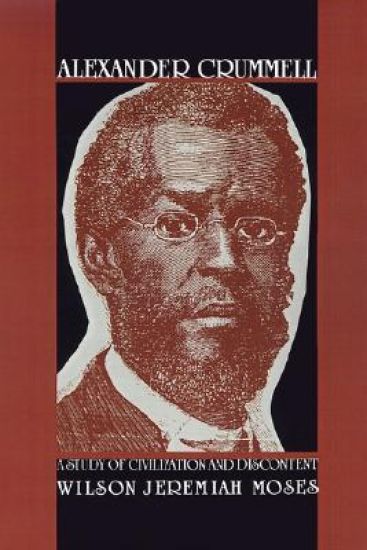
Alexander Crummell (1819-1898) was one the most prominent Afro-American intellectuals of the nineteenth-century. This biography places Crummell's ideas within the context of his life and times.
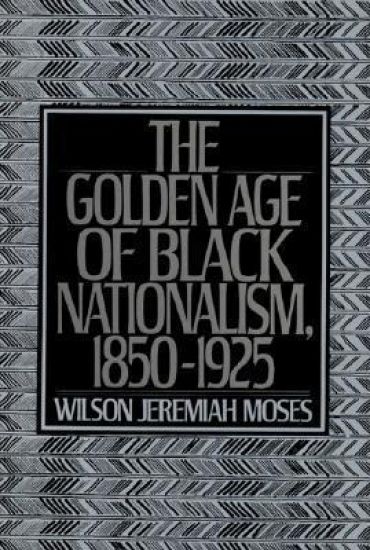
The Golden Age of Black Nationalism, 1850-1925
Wilson Jeremiah Moses
Oxford University Press Inc
1988
nidottu
In this controversial volume, Wilson Jeremiah Moses argues that by adopting European and American nationalist and separatist doctrines, black nationalism became, ironically, a vehicle for the assimilationist values among black American intellectuals. The book covers the period from the Compromise of 1850, with its Fugitive Slave Act, to the imprisonment of Marcus Garvey in 1925, and inc ludes a section on black nationalism in literature. 'This impressive study will stir controversy among black scholars and proponents of separatism. That Professor Moses, himself a black, regards the period a golden age is itself heretical in some eyes.' Publishers Weekly

Mayo Clinic Antimicrobial Therapy
Wilson John W.; Estes Lynn L.
Oxford University Press
2011
nidottu
The medical management of infectious diseases and antimicrobial therapy can be a daunting task for health care professionals. Although expansive textbooks and online resources are available, a simplified, quick reference guide is needed for the day-to-day office and hospital clinical practice. Mayo Clinic Antimicrobial Therapy: Quick Guide, Second Edition, provides information about infectious diseases and antimicrobial therapy in a format that is readily accessible and easily applicable to the clinical environment. Highlights of this book include drug dosing recommendations for renal function and renal replacement therapies, drugs of choice for specific organisms (including bacteria, fungi, and viruses), and simplified antimicrobial and management recommendations for specific infectious syndromes. Mayo Clinic Antimicrobial Therapy: Quick Guide, Second Edition, will assist health care providers in the management of infectious diseases and in the selection of appropriate antimicrobial therapy in a time-efficient manner.
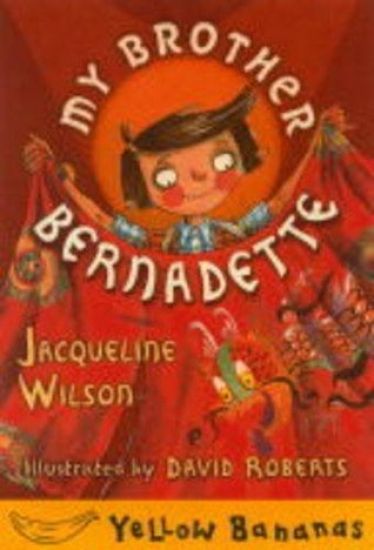
This story, written by a children's author, seeks to help children develop the confidence to read on their own. The book is hard-wearing and designed for long-lasting use in the classroom.