The Senses of Scripture reveals the essence of biblical epistemology - the ways in which ancient Israelites thought about and used their sensorium. The theoretical introduction demonstrates that scholars need to liberate themselves from the Western bias that holds a pentasensory paradigm and prioritises the sense of sight. The discussion of the biblical material demonstrates that biblical scholars should follow a similar path. Through examination of associative and contextual patters the author reaches a septasensory model, including sight, hearing, speech, kinaesthesia, touch, taste, and smell. It is further demonstrated that the senses, according to the HB, are a divinely created physical experience, which symbolised human ability to act in a sovereign manner in the world. Despite the lack of a biblical Hebrew term 'sense', it seems that at times the merism sight and hearing serves that matter. Finally, the book discusses the longstanding dispute regarding the primacy of sight vs. hearing, and claims that although there is no strict sensory hierarchy evident in the text, sight holds a central space in biblical epistemology.
The Senses of Scripture reveals the essence of biblical epistemology - the ways in which ancient Israelites thought about and used their sensorium. The theoretical introduction demonstrates that scholars need to liberate themselves from the Western bias that holds a pentasensory paradigm and prioritises the sense of sight. The discussion of the biblical material demonstrates that biblical scholars should follow a similar path. Through examination of associative and contextual patters the author reaches a septasensory model, including sight, hearing, speech, kinaesthesia, touch, taste, and smell. It is further demonstrated that the senses, according to the HB, are a divinely created physical experience, which symbolised human ability to act in a sovereign manner in the world. Despite the lack of a biblical Hebrew term 'sense, it seems that at times the merism sight and hearing serves that matter. Finally, the book discusses the longstanding dispute regarding the primacy of sight vs. hearing, and claims that although there is no strict sensory hierarchy evident in the text, sight holds a central space in biblical epistemology.
At Jewish summer camp, Lila struggles to make friends until she meets a mysterious horse in the nearby woods who helps her develop confidence in this fourth story in the American Horse Tales series. Lila is a young girl attending Jewish summer camp. She doesn't initially connect with the other campers and finds herself alone in the forest, where she encounters Lonny, a beautiful brown horse with white spots on his face. In Lonny, Lila finds a friend who will listen to her problems as she develops the confidence she needs to befriend the other campers. Camp Mah Tovu is part of a series of books written by several authors highlighting the unique relationships between young girls and their horses.
A love neither can deny. A law to keep them apart. A dangerous plan that could cost them everything.At thirteen, as is their custom, Benjen son of Catherine was taken away from everyone he's ever loved and everything he's ever known. Now he must survive on Dagon - the all-male island, where boys learn to be men until he comes of age.Under the wing of his assigned brother Luke, Ben is ushered into manhood, holding on to the memories of his teenage crush, Ariel.When he unexpectedly reunites with her during Mating Season, dangerous feelings blossom between them. Realising that if they truly love each other, they can never be together, Ben is forced to come up with a risky plan that can cost them everything.Under the all-seeing eyes of The Watchers, they will have to cross lines to survive, but more importantly to remain in each other's arms.When staying together means staying apart, can love truly conquer all? Mating Season is a provocative dystopian romance novel rich with forbidden love, vivid post-apocalyptic worlds, and underdogs facing impossible odds.For fans of The Hunger Games, Divergent and the Handmaid's comes a story like no other.Mating Season - Ben's story is a stand-alone book however it is recommended that you also read Mating Season.
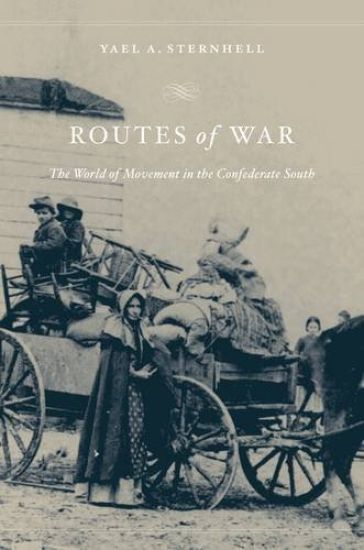
The Civil War thrust millions of men and women-rich and poor, soldiers and civilians, enslaved and free-onto the roads of the South. During four years of war, Southerners lived on the move. In the hands of Yael A. Sternhell, movement becomes a radically new means to perceive the full trajectory of the Confederacy's rise, struggle, and ultimate defeat. By focusing not only on the battlefield and the home front but also on the roads and woods that connected the two, this pioneering book investigates the many roles of bodies in motion. We watch battalions of young men as they march to the front, galvanizing small towns along the way, creating the Confederate nation in the process. We follow deserters straggling home and refugees fleeing enemy occupation, both hoping to escape the burdens of war. And in a landscape turned upside down, we see slaves running toward freedom, whether hundreds of miles away or just beyond the plantation's gate. Based on a vast array of documents, from slave testimonies to the papers of Confederate bureaucrats to the private letters of travelers from all walks of life, Sternhell unearths the hidden connections between physical movements and their symbolic meanings, individual bodies and entire armies, the reinvention of a social order and the remaking of private lives. Movement, as means of liberation and as vehicle of subjugation, lay at the heart of the human condition in the wartime South.
"This is a most timely, intelligent, well-written, and absorbing essay on a central and painful social and political problem of out time."--Sir Isaiah Berlin "The major achievement of this remarkable book is a critical theory of nationalism, worked through historical and contemporary examples, explaining the value of national commitments and defining their moral limits. Tamir explores a set of problems that philosophers have been notably reluctant to take on, and leaves us all in her debt."--Michael Walzer In this provocative work, Yael Tamir urges liberals not to surrender the concept of nationalism to conservative, chauvinist, or racist ideologies. In her view, liberalism, with its respect for personal autonomy, reflection, and choice, and nationalism, with its emphasis on belonging, loyalty, and solidarity are not irreconcilable. Here she offers a new theory, "liberal nationalism," which allows each set of values to accommodate the other. Tamir sees nationalism as an affirmation of communal and cultural memberships and as a quest for recognition and self-respect. Persuasively she argues that national groups can enjoy these benefits through political arrangements other than the nation-state. While acknowledging that nationalism places members of national minorities at a disadvantage, the author offers guidelines for alleviating the problems involved using examples from currents conflicts in the Middle East and in Eastern Europe. Liberal Nationalismis an impressive attempt to tie together a wide range of issues often kept apart: personal autonomy, cultural membership, political obligations, particularity versus impartiality in moral duties, and global justice. Drawing on material from disparate fields--including political philosophy, ethics, law, and sociology--Tamir brings out important and previously unnoticed interconnections between them, offering a new perspective on the influence of nationalism on modern political philosophy.
Faces of the State is a penetrating study of the production of a state-revering political culture in the public life of 1990s Turkey. In this new contribution to the anthropology of the state, Yael Navaro-Yashin brings recent poststructuralist and psychoanalytic theory to bear on the study of the political. Delving deeper than studies of nationalist discourse that would focus on consciously articulated narratives of political identity, the author explores sites of "fantasy" in the public-political domain of Istanbul. The book focuses on the conflict over secularism in the aftermath of an Islamist victory in the city's municipalities. In contrast with studies that would problematize and objectify religious movements, the author examines the agency of secularists under a state widely known for its "secularist" policies. The complexity and dynamism of the context studied moves well beyond scholarly distinctions between "secularity" and "religion," as well as "state" and "society." Here, secularism and Islamism emerge as different guises for a culture of statism where people from "society" compete to claim "Turkish culture" for themselves and their life practices. With this work that stretches the boundaries of regionalism, the author situates her anthropological study of Turkey not only in scholarship on the Middle East, but also in the broader problem of thinking "Europe" anew.
Why nationalism is a permanent political force—and how it can be harnessed once again for liberal endsAround the world today, nationalism is back—and it’s often deeply troubling. Populist politicians exploit nationalism for authoritarian, chauvinistic, racist, and xenophobic purposes, reinforcing the view that it is fundamentally reactionary and antidemocratic. But Yael (Yuli) Tamir makes a passionate argument for a very different kind of nationalism—one that revives its participatory, creative, and egalitarian virtues, answers many of the problems caused by neoliberalism and hyperglobalism, and is essential to democracy at its best. In Why Nationalism, she explains why it is more important than ever for the Left to recognize these qualities of nationalism, to reclaim it from right-wing extremists, and to redirect its power to progressive ends.Far from being an evil force, nationalism’s power lies in its ability to empower individuals and answer basic human needs. Using it to reproduce cross-class coalitions will ensure that all citizens share essential cultural, political, and economic goods. Shifting emphasis from the global to the national and putting one’s nation first is not a way of advocating national supremacy but of redistributing responsibilities and sharing benefits in a more democratic and just way. In making the case for a liberal and democratic nationalism, Tamir also provides a compelling original account of the ways in which neoliberalism and hyperglobalism have allowed today’s Right to co-opt nationalism for its own purposes.Provocative and hopeful, Why Nationalism is a timely and essential rethinking of a defining feature of our politics.
The surprising case for liberal nationalismAround the world today, nationalism is back—and it’s often deeply troubling. Populist politicians exploit nationalism for authoritarian, chauvinistic, racist, and xenophobic purposes, reinforcing the view that it is fundamentally reactionary and antidemocratic. But Yael (Yuli) Tamir makes a passionate argument for a very different kind of nationalism—one that revives its participatory, creative, and egalitarian virtues, answers many of the problems caused by neoliberalism and hyperglobalism, and is essential to democracy at its best. In Why Nationalism, she explains why it is more important than ever for the Left to recognize these positive qualities of nationalism, to reclaim it from right-wing extremists, and to redirect its power to progressive ends. Provocative and hopeful, Why Nationalism is a timely and essential rethinking of a defining feature of our politics.
This book focuses on the science fictional dimensions of Rushdie's later novels, Fury, The Ground Beneath Her Feet, Shalimar the Clown and Luka and the Fire of Life, and Rushdie's first unpublished novel, The Antagonist, to show how the author's oeuvre moves towards a more consistent engagement with science fiction as a generic form and an ideological investment. The author demonstrates how Rushdie recreates personal and national histories in a science fictional setting and mode, and contends that the failure of his first novel Grimus may have led Rushdie away from SF for some time, although he returns to it with a much firmer conviction and a much stronger voice in his later novels, showing his commitment to this imaginative form which he describes in Fury as providing "the best popular vehicle ever devised for the novel of ideas and metaphysics."The science fictional mode is the most appropriate vehicle for expressing these thematic and ideological concerns and the organizing feature of Rushdie's oeuvre. The author rereads the later novels in light of recent critical engagement with SF as a vehicle for reimagining national histories and as a potentially subversive tool for social and political engagement in a fictional realm.
Learn intervention strategies to counter the effects of terrorismIn the twenty-first century, terrorism has become an international scourge whose effect devastates individuals, weakens societies, and cripples nations. The Trauma of Terrorism: Sharing Knowledge and Shared Care, An International Handbook and Shared Care provides a comprehensive, penetrating look at the effects of terrorism, at the prevention and treatment of immediate and long-term sequelae, at preparedness for terrorism, and at the range of individual, community, and national responses. International authorities discuss the latest knowledge and research about terror, its root causes, and its psychological impact on individuals, families, societies, and nations, as well as the societal and political responses and services that may help lessen its impact.The Trauma of Terrorism: Sharing Knowledge and Shared Care, An International Handbook analyzes the full scope of terrorism. This compendium explores numerous issues in detail, such as the nature and psychology of terrorism, how to foster a community’s capacity for resilience, the psychosocial consequences of terrorism in children and adults, the centrality of traumatic grief, the need for multicultural understanding in services and treatment, interventions for children and adolescents, training programs for mental health professionals, and proactive community organization in the face of terrorism. Treatment options and services are thoroughly explored and their effectiveness evaluated. Chapters are international in scope, well-referenced, and geared to provide thoroughly reasoned recommendations to lessen the effects of terrorism. Original witness voices from survivors and professionals worldwide give depth to the scientific character of the book. Helpful tables and graphs clearly illustrate data and ideas.The Trauma of Terrorism: Sharing Knowledge and Shared Care, An International Handbook presents in-depth examinations of:The Origins of Terrorism in Modern Society the origin and nature of terrorism terrorism as a strategy of psychological warfare the content and form of terrorism propaganda tactical and strategic terrorism the motivations of suicide bombersThe Psychological Consequences of Terrorism the psychological impact of the September 11, 2001 terrorist attacks the PTSD effects of watching terrorist attacks on television the effects of acute stress symptoms on the general population after a national trauma somatization and bioterrorism the short- and long-term effects of terrorism on an individual the importance of measuring grief in the context of terrorism the psychological burden of bioterrorism the psychological impact of terrorism on children and families post-traumatic distress in adolescents with exposure to ongoing terrorismThe Impact of Terrorism on Individuals, Groups, and Society terrorism’s toll on civil liberties media-oriented terrorism media guidelines for helping reduce individual and national traumatic reactivity to terrorism culture-sensitive interventions in the treatment of terrorism the effects of terrorism on refugeesPsychological First Aid, Acute and Long-Term Treatment Following Terrorist Attacks mental health interventions in hospitals following terrorist attacks treating survivors in an ongoing terrorist situation the treatment of children impacted by the World Trade Center attack traumatic bereavement, and its link to terrorismSchool- and Community-Based Interventions in the Face of Terrorist Attacks the Building Resilience Project-school-based interventions for children community-based interventions like Project Liberty and
Learn intervention strategies to counter the effects of terrorismIn the twenty-first century, terrorism has become an international scourge whose effect devastates individuals, weakens societies, and cripples nations. The Trauma of Terrorism: Sharing Knowledge and Shared Care, An International Handbook and Shared Care provides a comprehensive, penetrating look at the effects of terrorism, at the prevention and treatment of immediate and long-term sequelae, at preparedness for terrorism, and at the range of individual, community, and national responses. International authorities discuss the latest knowledge and research about terror, its root causes, and its psychological impact on individuals, families, societies, and nations, as well as the societal and political responses and services that may help lessen its impact.The Trauma of Terrorism: Sharing Knowledge and Shared Care, An International Handbook analyzes the full scope of terrorism. This compendium explores numerous issues in detail, such as the nature and psychology of terrorism, how to foster a community’s capacity for resilience, the psychosocial consequences of terrorism in children and adults, the centrality of traumatic grief, the need for multicultural understanding in services and treatment, interventions for children and adolescents, training programs for mental health professionals, and proactive community organization in the face of terrorism. Treatment options and services are thoroughly explored and their effectiveness evaluated. Chapters are international in scope, well-referenced, and geared to provide thoroughly reasoned recommendations to lessen the effects of terrorism. Original witness voices from survivors and professionals worldwide give depth to the scientific character of the book. Helpful tables and graphs clearly illustrate data and ideas.The Trauma of Terrorism: Sharing Knowledge and Shared Care, An International Handbook presents in-depth examinations of:The Origins of Terrorism in Modern Society the origin and nature of terrorism terrorism as a strategy of psychological warfare the content and form of terrorism propaganda tactical and strategic terrorism the motivations of suicide bombersThe Psychological Consequences of Terrorism the psychological impact of the September 11, 2001 terrorist attacks the PTSD effects of watching terrorist attacks on television the effects of acute stress symptoms on the general population after a national trauma somatization and bioterrorism the short- and long-term effects of terrorism on an individual the importance of measuring grief in the context of terrorism the psychological burden of bioterrorism the psychological impact of terrorism on children and families post-traumatic distress in adolescents with exposure to ongoing terrorismThe Impact of Terrorism on Individuals, Groups, and Society terrorism’s toll on civil liberties media-oriented terrorism media guidelines for helping reduce individual and national traumatic reactivity to terrorism culture-sensitive interventions in the treatment of terrorism the effects of terrorism on refugeesPsychological First Aid, Acute and Long-Term Treatment Following Terrorist Attacks mental health interventions in hospitals following terrorist attacks treating survivors in an ongoing terrorist situation the treatment of children impacted by the World Trade Center attack traumatic bereavement, and its link to terrorismSchool- and Community-Based Interventions in the Face of Terrorist Attacks the Building Resilience Project-school-based interventions for children community-based interventions like Project Liberty and
A heartfelt collection of extraordinary first-person accounts that delve into every level of the experience of 9/11Out of the infamy of 9/11 and its aftermath people rose up with courage and determination to meet formidable challenges. On the Ground After September 11: Mental Health Responses and Practical Lessons Gained is a stirring compilation of over a hundred personal and professional first-hand accounts of the entire experience, from the moment the first plane slammed into the North Tower of the World Trade Center, to the months mental health professionals worked to ease the pain and trauma of others even while they themselves were traumatized. This remarkable chronicle reveals the breadth and depth of human need and courage along with the practical organizational considerations encountered in the responses to terrorist attacks. The goal of any terrorist act is to instill psychosocial damage to a society to effect change. On the Ground After September 11 provides deep insight into the damage the attack had on our own society, the failures and victories within our response systems, and the path of healing that mental health workers need to travel to be of service to their clients. Personal accounts written by the professionals and public figures involved reveal the broad range of responses to this traumatic event and illuminate how mental health services can most effectively be delivered. Through the benefit of hindsight, recommendations are described for ways to better finance assistance, adapt the training of mental health professionals, and modify organizations’ response to the needs of victims in this type of event. Reading these unique personal accounts of that day and the difficult days that followed provides a thoughtful, moving, rational view of what is truly needed in times of disaster.On the Ground After September 11 includes the first-person experiences and lessons learned from the people of: NYU Downtown Hospital NYC Department of Health and Mental Hygiene NY Metropolitan Transportation Council St. Paul’s Chapel St. Vincent Hospital - Manhattan Safe Horizon LifeNet WTC Incident Command Center at NYC Medical Examiner’s office New Jersey’s Project Phoenix Massachusetts Department of Mental Health the military psychiatric response to the Pentagon attack Connecticut’s Center for Trauma Response, Recovery, and Preparedness the Staten Island Relief Center Barrier Free Living Inc. for people with disabilities the Federal Emergency Management Agency Alianza Dominicana, Inc. Staten Island Mental Health Society the United Airlines Emergency Response Team for Flight 93 The Center for Trauma Response, Recovery, and Preparedness (CTRP) Disaster Mental Health Services (DMHS) at Dulles International Airport the American Red Cross the Respite Center at the Great White Tent HealthCare Chaplaincy The Salvation Army the Islamic Circle of North America The Coalition of Voluntary Mental Health Agencies, Inc. F*E*G*S the Jewish Board of Family and Children's Services (JBFCS) and many, many more On the Ground After September 11: Mental Health Responses and Practical Lessons Gained poignantly illustrates that regardless of profession, culture, religion, or age, every life touched by 9/11 will never be the same. This is essential reading for counselors, psychologists, psychiatrists, social workers, therapists, trauma specialists, educators, and students.
A heartfelt collection of extraordinary first-person accounts that delve into every level of the experience of 9/11Out of the infamy of 9/11 and its aftermath people rose up with courage and determination to meet formidable challenges. On the Ground After September 11: Mental Health Responses and Practical Lessons Gained is a stirring compilation of over a hundred personal and professional first-hand accounts of the entire experience, from the moment the first plane slammed into the North Tower of the World Trade Center, to the months mental health professionals worked to ease the pain and trauma of others even while they themselves were traumatized. This remarkable chronicle reveals the breadth and depth of human need and courage along with the practical organizational considerations encountered in the responses to terrorist attacks. The goal of any terrorist act is to instill psychosocial damage to a society to effect change. On the Ground After September 11 provides deep insight into the damage the attack had on our own society, the failures and victories within our response systems, and the path of healing that mental health workers need to travel to be of service to their clients. Personal accounts written by the professionals and public figures involved reveal the broad range of responses to this traumatic event and illuminate how mental health services can most effectively be delivered. Through the benefit of hindsight, recommendations are described for ways to better finance assistance, adapt the training of mental health professionals, and modify organizations’ response to the needs of victims in this type of event. Reading these unique personal accounts of that day and the difficult days that followed provides a thoughtful, moving, rational view of what is truly needed in times of disaster.On the Ground After September 11 includes the first-person experiences and lessons learned from the people of: NYU Downtown Hospital NYC Department of Health and Mental Hygiene NY Metropolitan Transportation Council St. Paul’s Chapel St. Vincent Hospital - Manhattan Safe Horizon LifeNet WTC Incident Command Center at NYC Medical Examiner’s office New Jersey’s Project Phoenix Massachusetts Department of Mental Health the military psychiatric response to the Pentagon attack Connecticut’s Center for Trauma Response, Recovery, and Preparedness the Staten Island Relief Center Barrier Free Living Inc. for people with disabilities the Federal Emergency Management Agency Alianza Dominicana, Inc. Staten Island Mental Health Society the United Airlines Emergency Response Team for Flight 93 The Center for Trauma Response, Recovery, and Preparedness (CTRP) Disaster Mental Health Services (DMHS) at Dulles International Airport the American Red Cross the Respite Center at the Great White Tent HealthCare Chaplaincy The Salvation Army the Islamic Circle of North America The Coalition of Voluntary Mental Health Agencies, Inc. F*E*G*S the Jewish Board of Family and Children's Services (JBFCS) and many, many more On the Ground After September 11: Mental Health Responses and Practical Lessons Gained poignantly illustrates that regardless of profession, culture, religion, or age, every life touched by 9/11 will never be the same. This is essential reading for counselors, psychologists, psychiatrists, social workers, therapists, trauma specialists, educators, and students.
When people discuss food in Israel, their debates ask politically charged questions: Who has the right to falafel? Whose hummus is better? But Yael Raviv's Falafel Nation moves beyond the simply territorial to divulge the role food plays in the Jewish nation. She ponders the power struggles, moral dilemmas, and religious and ideological affiliations of the different ethnic groups that make up the "Jewish State" and how they relate to the gastronomy of the region. How do we interpret the recent upsurge in the Israeli culinary scene—the transition from ideological asceticism to the current deluge of fine restaurants, gourmet stores, and related publications and media?Focusing on the period between the 1905 immigration wave and the Six-Day War in 1967, Raviv explores foodways from the field, factory, market, and kitchen to the table. She incorporates the role of women, ethnic groups, and different generations into the story of Zionism and offers new assertions from a secular-foodie perspective on the relationship between Jewish religion and Jewish nationalism. A study of the changes in food practices and in attitudes toward food and cooking, Falafel Nation explains how the change in the relationship between Israelis and their food mirrors the search for a definition of modern Jewish nationalism.