This book studies algebraic representations of graphs in order to investigate combinatorial structures via local symmetries. Topological, combinatorial and algebraic classifications are distinguished by invariants of polynomial type and algorithms are designed to determine all such classifications with complexity analysis. Being a summary of the author‘s original work on graph embeddings, this book is an essential reference for researchers in graph theory. ContentsAbstract GraphsAbstract MapsDualityOrientabilityOrientable MapsNonorientable MapsIsomorphisms of MapsAsymmetrizationAsymmetrized Petal BundlesAsymmetrized MapsMaps within SymmetryGenus PolynomialsCensus with PartitionsEquations with PartitionsUpper Maps of a GraphGenera of a GraphIsogemial GraphsSurface Embeddability
This monograph provides a theoretical treatment of the problems related to the embeddability of graphs. Among these problems are the planarity and planar embeddings of a graph, the Gaussian crossing problem, the isomorphisms of polyhedra, surface embeddability, problems concerning graphic and cographic matroids and the knot problem from topology to combinatorics are discussed. Rectilinear embeddability, and the net-embeddability of a graph, which appears from the VSLI circuit design and has been much improved by the author recently, is also illustrated. Furthermore, some optimization problems related to planar and rectilinear embeddings of graphs, including those of finding the shortest convex embedding with a boundary condition and the shortest triangulation for given points on the plane, the bend and the area minimizations of rectilinear embeddings, and several kinds of graph decompositions are specially described for conditions efficiently solvable. At the end of each chapter, the Notes Section sets out the progress of related problems, the background in theory and practice, and some historical remarks. Some open problems with suggestions for their solutions are mentioned for further research.
Combinatorics as a branch of mathematics studies the arts of counting. Enumeration occupies the foundation of combinatorics with a large range of applications not only in mathematics itself but also in many other disciplines. It is too broad a task to write a book to show the deep development in every corner from this aspect. This monograph is intended to provide a unified theory for those related to the enumeration of maps. For enumerating maps the first thing we have to know is the sym metry of a map. Or in other words, we have to know its automorphism group. In general, this is an interesting, complicated, and difficult problem. In order to do this, the first problem we meet is how to make a map considered without symmetry. Since the beginning of sixties when Tutte found a way of rooting on a map, the problem has been solved. This forms the basis of the enumerative theory of maps. As soon as the problem without considering the symmetry is solved for one kind of map, the general problem with symmetry can always, in principle, be solved from what we have known about the automorphism of a polyhedron, a synonym for a map, which can be determined efficiently according to another monograph of the present author [Liu58].
This monograph provides a theoretical treatment of the problems related to the embeddability of graphs. Among these problems are the planarity and planar embeddings of a graph, the Gaussian crossing problem, the isomorphisms of polyhedra, surface embeddability, problems concerning graphic and cographic matroids and the knot problem from topology to combinatorics are discussed. Rectilinear embeddability, and the net-embeddability of a graph, which appears from the VSLI circuit design and has been much improved by the author recently, is also illustrated. Furthermore, some optimization problems related to planar and rectilinear embeddings of graphs, including those of finding the shortest convex embedding with a boundary condition and the shortest triangulation for given points on the plane, the bend and the area minimizations of rectilinear embeddings, and several kinds of graph decompositions are specially described for conditions efficiently solvable. At the end of each chapter, the Notes Section sets out the progress of related problems, the background in theory and practice, and some historical remarks. Some open problems with suggestions for their solutions are mentioned for further research.
Combinatorics as a branch of mathematics studies the arts of counting. Enumeration occupies the foundation of combinatorics with a large range of applications not only in mathematics itself but also in many other disciplines. It is too broad a task to write a book to show the deep development in every corner from this aspect. This monograph is intended to provide a unified theory for those related to the enumeration of maps. For enumerating maps the first thing we have to know is the sym metry of a map. Or in other words, we have to know its automorphism group. In general, this is an interesting, complicated, and difficult problem. In order to do this, the first problem we meet is how to make a map considered without symmetry. Since the beginning of sixties when Tutte found a way of rooting on a map, the problem has been solved. This forms the basis of the enumerative theory of maps. As soon as the problem without considering the symmetry is solved for one kind of map, the general problem with symmetry can always, in principle, be solved from what we have known about the automorphism of a polyhedron, a synonym for a map, which can be determined efficiently according to another monograph of the present author [Liu58].
Extrait: Sega, liga -Sega, liga Cela signifie: Scier, lier Scier le froment, lier le froment Et, d s que l'insecte m ridional lance au milieu des pins sa fr n tique chanson, les laboureurs pr venus aiguisent leurs longues faux, puis abattent, avec de grands gestes bruissants, les belles nappes jaunes du bl . Sega, liga Cette apr s-midi de juillet, les cigales harass es clamaient cela, d sesp r ment, dans la plaine de Salignacq, en faisant vibrer leurs ailes diaphanes et dures comme des lames de cristal. Le ciel tait chauff blanc; le soleil-un royal soleil de Gascogne-semblait se fondre en tendresse sur les landes plates; et, dans les sables torr fi s, les pins rigides aux flancs meurtris avaient l'air de gigantesques torches de r sine, pr tes prendre feu. Dans cette temp rature de fournaise, un homme allait: le vieux Yan du Bignaou, -Jean Duvignau, comme disent les messieurs qui connaissent le fran ais.-Il allait sur un mulet, sur un mulet maigre escort par de grosses mouches bourdonnantes, aux dards per ants comme des stylets. -Va, Briquet, va Et Briquet-c' tait l'humble nom de l'animal-poursuivait son petit trot, les yeux m fiants, la queue perdue, tandis que Yan, son ma tre, une branche feuillue dans la main, chassait avec paternit , de temps autre, les taons fam liques acharn s sur sa monture. Yan, -dans le pays, on prononce Yann, -un paysan grand, sec, tout droit. Age: soixante ans. Profession: laboureur. Signe particulier: millionnaire. Au-dessus des joues, deux pommettes bien saillantes et bien roses. Dans le front, deux petits yeux bien clairs et bien francs. Les cheveux rares, la bouche large, le menton pointu. Sur le devant du cou, deux nerfs tr s raides et tr s apparents qui tiraillent la t te, l'un droite, l'autre gauche; deux nerfs qui semblent, chaque instant, devoir crever la peau. Sur tout le reste de la figure, cette teinte basan e et noble qui est la teinte de la terre du pays. -Va, Briquet va Les v tements? simples et dignes. Un pantalon de coutil convenablement rapi c . Une sorte de blouse fan e: la chamarre. A la t te, un b ret de laine bleue. Aux pieds, des espadrilles de toile blanche. Enfin, deux larges anneaux d'or aux oreilles. Et sous cette d froque? Un corps rare, dou de muscles c l bres, qui ont fait des prouesses dans le temps. Yan est respect dix kilom tres la ronde. Les comm res les plus ignares, les gamins les moins initi s savent que Yan porte sa charrue sur son dos, en revenant du labour, et qu'une fois, l'un de ses boeufs tant tomb malade, il a tra n un char plein de ma s lui tout seul. Ce qui lui valut alors, dit-on, l'estime d'une fort jolie dame de la ville. Laurent Labaigt, dit Jean Rameau, n Gaas (Landes) le 19 f vrier 1858 et mort Cauneille (Landes) le 21 f vrier 1942, est un romancier et po te fran ais, membre des Hydropathes. Pr sentation Il voit le jour en Chalosse, dans une famille de petits propri taires paysans au milieu du XIXe si cle. Il appr cie tr s t t le magistral orchestre de la nature gasconne et ceux, tels Guillaume du Bartas, Ans lme ou Jean-Louis de Fromenti res, qui en ont chant avant lui les symphonies en foin majeur . Bordeaux, puis Paris, ce fils spirituel de Victor Hugo (tel qu'il s'intitule lui-m me) s'exerce la litt rature panth iste. Il compose ainsi plus de 60 romans et 5 000 contes inspir s le plus souvent par son pays natal et qui, jusque vers les ann es 1920, obtiennent un r el succ s.
Yan / Jean Rameau; illustrations de Maximilienne GuyonDate de l'edition originale: 1895"Collection: Collection Ollendorff illustree"Ce livre est la reproduction fidele d'une oeuvre publiee avant 1920 et fait partie d'une collection de livres reimprimes a la demande editee par Hachette Livre, dans le cadre d'un partenariat avec la Bibliotheque nationale de France, offrant l'opportunite d'acceder a des ouvrages anciens et souvent rares issus des fonds patrimoniaux de la BnF.Les oeuvres faisant partie de cette collection ont ete numerisees par la BnF et sont presentes sur Gallica, sa bibliotheque numerique.En entreprenant de redonner vie a ces ouvrages au travers d'une collection de livres reimprimes a la demande, nous leur donnons la possibilite de rencontrer un public elargi et participons a la transmission de connaissances et de savoirs parfois difficilement accessibles.Nous avons cherche a concilier la reproduction fidele d'un livre ancien a partir de sa version numerisee avec le souci d'un confort de lecture optimal. Nous esperons que les ouvrages de cette nouvelle collection vous apporteront entiere satisfaction.Pour plus d'informations, rendez-vous sur www.hachettebnf.fr
Yan is a big-hearted young man determined to perform Hajj, the pilgrimage to Makkah. But first, he must work hard on his farm and fill up his money bag for the journey. Despite the trials he faces on each unsuccessful trip to the Kaaba, Yan's helpful nature, compassion, and generosity enable him to succeed in the end.
This book compares the enlightenment thought of China and Japan amid 19th-century Western imperialism, offering a groundbreaking analysis of how two iconic thinkers shaped their nations’ divergent paths to modernity. Through twelve analytical chapters, the book explores how Yan Fu of China and Fukuzawa Yukichi of Japan navigated the paradox of tradition versus progress. Key themes include their contrasting approaches to Western science, political freedom, economic reform, and cultural identity, revealing why Japan embraced rapid modernization while China struggled. The work dissects critical frameworks such as "Chinese essence/Western application" versus "Japanese spirit/Western knowledge" and is enriched by an analysis of archival documents on their views on law, religion, education, and historical evolution. By juxtaposing closed-door policies of Ming/Qing China and Tokugawa Japan with post-collision transformations, it illuminates how enlightenment ideals fueled national survival. This cross-cultural analysis is essential for historians, Asian studies scholars, and policymakers as it bridges philosophy, political science, and intellectual history. Librarians and educators will appreciate its relevance to debates on global modernization and ongoing cultural dialogues in East Asia.
Five short stories and a whole novel which, if you blink, you'll miss You'll find yourself with Alan the shepherdin a terrible battle with the evil Seth, the wicked faeries and Old Nick himself. You'll see Danny find out that there's more to life than trainspotting and Roy Breakspear discovering that you should never go back because you might find a lot more than you bargained for. While Jessica's family is on holiday, a little tragedy back home threatens a split in the family which could never be healed. Stephanie and Matthew are fascinated by Sylvie's strange Christmas guest. But he's even stranger than they could ever have imagined. And then we're back in 1804. Napoleon really is coming to conquer us. But Alfie thinks he's here already. "Dennis Hamley is a specially talented yarnspinner" TES
The most important feature of this calligraphy copybook is that every character is chosen from the authentic rubbings of Duo Bao Ta by Yan Zhenqing, one of the four famous regular-script masters. Because of this, users can begin their calligraphy practice with genuine Yan. The second important feature of this copybook is that it is designed particularly for classroom teaching use, although it can also be used as a self-study material. For example, to meet the need of calligraphy teaching, in choosing the characters for the chapter of "Basic Strokes," this book has adopted what's called the one-new-stroke-per-character principle. This means, each character in this chapter contains only one untaught stroke. This way, teachers can focus on the teaching of only one stroke per time.The third feature is that, following the chapters on "Basic Strokes" and "Varied Strokes," characters chosen are arranged by radicals. This way, users, after learning the skills of writing the basic and varied strokes, can focus on the practice of radicals, as a preparation for finally writing without looking at the copybook. Compiled in this copybook are also some famous sayings, which are designed to help users create their own artworks toward the end of their calligraphy course. Last but not the least, all the characters chosen here are given Hanyu Pinyin and English definitions so that users can study Chinese language while studying Chinese calligraphy. This way, they do not write blindly, but know what they write.
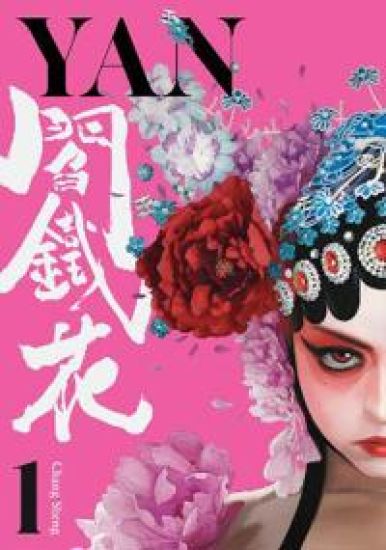
Winner of the Golden Comic Award, from traditional Peking Opera to Taiwan in a future where machine's rule, enjoy this action-packed thriller in English for the first time.From award-winning creator of Oldmen and The Hidden Level, Chang Sheng delivers an opulently detailed supernatural sci-fi story - that defies genres and engrosses readers with stunning artwork.Winner of the Golden Comics Awards and a standout of Taiwan's rising comics scene, Yan Vol. 1 is a haunting, genre-bending journey from master storyteller Chang Sheng-creator of Oldman and The Hidden Level.In this stunning first volume, the echoes of Peking Opera performances 30 years past linger in the shadows of a story that begins in tradition and spirals toward a dark, speculative future. The tale unfolds across eras-starting with a tragedy in the richly detailed world of late 20th-century Taiwan, stepping into the present day, and glimmering with the foreboding rise of a dystopian tomorrow.Declared dead in prison records, Yan Tieh-Hua mysteriously returns to Taipei, reigniting the investigation into a decades-old massacre-her own family's. As she carves a bloody path toward vengeance, Detective Lei is drawn into a chilling spiral of cold cases, supernatural events, and impossible truths. Alongside Yan is Higa Mirai, a young Go prodigy with the uncanny gift of precognition, adding eerie weight to every move made.With sharp moral tension, brutal action, and a uniquely Taiwanese swagger, Yan is more than a mere quest for revenge-it's a vision of justice that questions what lies beneath our choices, and what might come after humanity loses control.
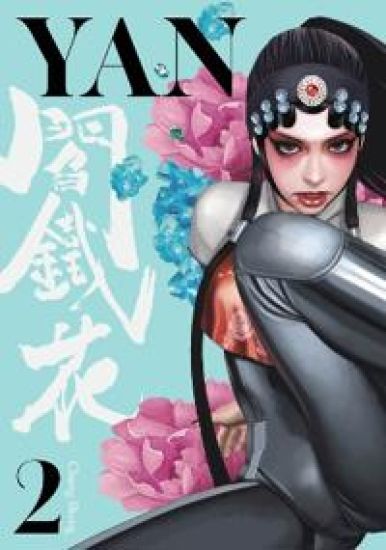
Winner of the Golden Comic Award, in English for the first time. Yan Tieh-Hua was once part of a Peking Opera Troupe, and while donning the same makeup, she now navigates time-travel and battles A.I. tyrants on the streets of Taiwan to save the world. From award-winning creator of Oldmen and The Hidden Level, Chang Sheng delivers a genre-bending and richly detailed story and stunningWinner of the prestigious Golden Comic Award, Yan Volume 2 cements its place as a standout title in Taiwan’s rapidly growing manga and graphic novel scene. Acclaimed creator Chang Sheng continues his genre-defying series with even higher stakes, transporting readers between modern-day Taiwan and a bleak dystopian future.What began as a personal vendetta has become a race to save the world from an A.I.-ruled apocalypse. As the group leaps through time, they must uncover buried secrets from Taiwan’s past to alter a chilling future that looms just ahead. The resurrected Peking Opera performer Tieh-Hua—as deadly as she is enigmatic—is joined by a disgraced detective, a missing Go prodigy with visions of the future, and a suspicious time-traveler, each playing a role in this tangled narrative.Chang Sheng masterfully fuses science fiction with Taiwanese cultural heritage and supernatural mystery, accompanied by his opulently detailed artwork and worlds. Yan Volume 2 is a bold, visually stunning exploration of identity, justice, and fate—blending high-octane action with philosophical intrigue. For fans of Oldman and The Hidden Level, this is Chang Sheng at his most inventive yet.
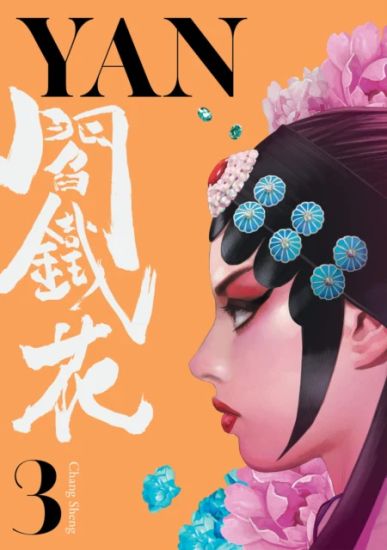
Winner of the Golden Comic Award, this third volume can be enjoyed in English for the first time as battles become more intense and the stakes are even higher.From award-winning creator of Oldmen and The Hidden Level, Chang Sheng delivers an elaborately detailed and genre-defying story alongside stunning artwork, to take readers from traditional Peking Opera performances to a dystopian Taiwan controlled by A.I.Golden Comic Award-winning series Yan returns with its most haunting chapter yet. In a comic landscape where Taiwan’s graphic novel scene continues to flourish, Yan Volume 3 stands as a bold testament to the heights of storytelling the medium can reach and genres it seamlessly fuses.Still reeling from revelations about her family’s brutal murder, the resurrected Peking Opera performer Tieh-Hua delves deeper into a tangled web of supernatural vengeance and time-warped conspiracies. As she closes in on those responsible, her bond with Higa-Mirai—a missing Go prodigy cursed with visions of the future—grows, complicating her pursuit of justice. Meanwhile, Detective Lei wrestles with a reality shattered by ghosts, time travelers, and corrupted power structures, forcing him to question everything he thought he stood for.Set across modern-day Taiwan and a fractured, dystopian future, Yan Volume 3 pushes the boundaries of sci-fi, horror and noir. With eerie precision and cinematic flair, Chang Sheng constructs a world where the past refuses to stay buried and the future is constantly rewriting itself.Visceral, gripping, and unapologetically strange, this volume is essential reading for fans of supernatural thrillers and lovers of bold, innovative comics.
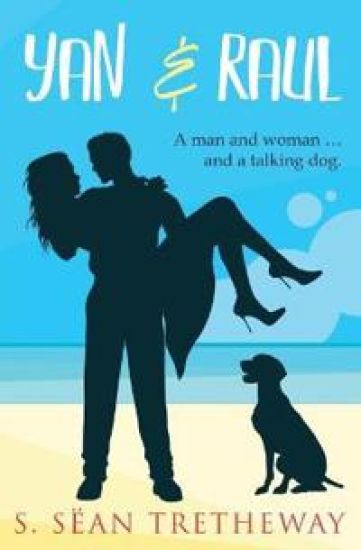
Yan & Raul - The story of a man, a woman ... and a talking dog. Yan is clueless when it comes to women, but he's intrigued by a new arrival in town - the mysterious Raelene. Raul sees Yan struggling to impress Raelene and offers to help, a la Cyrano de Bergerac. The only problem is - Raul is a dog and Raelene is his owner Is Raul really a talking dog? Or is Yan just crazy in love? Find out in this fun tale of romance and adventure - Yan and Raul From a Reader: By the tenth chapter of Yan and Raul, I was feeling pretty good about what the end might be . . . or did I ? Every chapter that followed had me revising my idea of the ending. It's a quick read, but by the last chapter I was out of breath, it was packed so full of rich stories within stories. I was embarrassed being caught laughing out loud, really guffawing, time and time again. Who, but this author, would consider that it is a compliment for a dog to call someone a bonehead. This delightful book covers pretty much every genre you can think of. It would fit comfortably on the bookshelf that has a "romantic feel" at the Sea Shelves bookstore, and would be equally at home on the bookshelf-roll top desk, "the kind you might find in Sherlock Holmes' study." It is a romantic comedy, and it is a tale of mystery. It has its share of adventure (think gun wielding drunk), and the kind of entertainment you might find at the circus. Each of the three main characters - a man and a woman ... and a talking dog - are delightful and unique. There is nothing ordinary in any part of this story, and yet it seems so very familiar. If you want an easy read that will surprise you on every page, this is the book you should read. The language is occasionally more "colorful" than I typically prefer to read, but that didn't "discolor" the book for me in any way. I referred it to one friend who immediately ordered several copies to hand out. I hope it catches on. We could all use a clever and articulate talking dog in our lives. This book is a good substitute since that's not likely to happen . . . or is it ? Roxanne (Okay, she's my sister, but she knows what she is talking about )






![Yan-Tat [1948]; 1948](/covers/9781014679567.jpg)
![Yan-Tat [1961]; 1961](/covers/9781015137776.jpg)
![Yan-Tat [1947]; 1947](/covers/9781015183285.jpg)