
Kirjahaku
Etsi kirjoja tekijän nimen, kirjan nimen tai ISBN:n perusteella.
1000 tulosta hakusanalla Zachary Leader
The Taylor Anecdote Book: Anecdotes And Letters Of Zachary Taylor (1848)
Zachary Taylor
KESSINGER PUBLISHING, LLC
2008
nidottu


Zachary's Potty Training Boats
Michael Malott; Zachary Malott
Createspace Independent Publishing Platform
2010
nidottu





Zachary and The Garbage Truck
Lisa M. Rubens-Wragg
Createspace Independent Publishing Platform
2013
nidottu

"Zachary Looks For God" is a little story for everyone, young and old. Its message is for anyone who struggles with their faith, especially during those most difficult moments when we long to feel God's presence near us. This is the second book in the Grandma Laura series. The books have themes about family, faith and the challenges all of us face today. Each story delivers a message that adults can share with their children, grandchildren and with one another. Grandma Laura is the central character who is a loving faith-filled grandmother who watches her three grandchildren, Timothy, Emma and little Michael, while their Mom and Dad are working. Through her stories, she teaches them life lessons about loss, faith, prejudice, forgiveness and commitment. In "Zachary Looks For God", when her grandson, Little Michael, asks about faith and finding God, Grandma Laura lovingly tells her grandson a story about another little boy named Zachary who woke up one morning determined to find God. Zachary's story will make you smile and remind you that God never leaves us. He is always reaching out to us no matter how much we try to hide. Just like Zachary, you just need to know where to look for him.
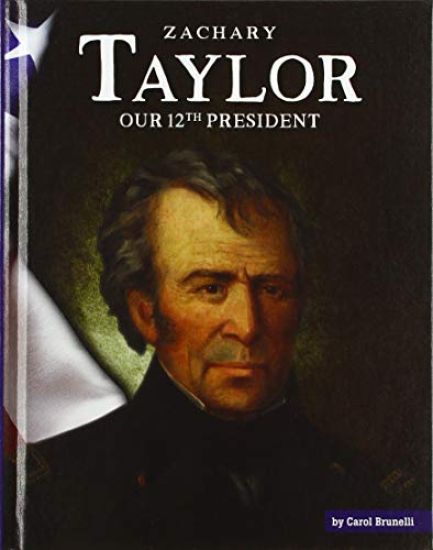
A thorough, illustrated biography discussing the childhood, career, family, and term of Zachary Taylor, twelfth president of the United States. Includes a table of contents, time line, phonetic glossary, sources for further research, an index, and detailed captions and sidebars to aid in comprehension.

Zachary Dixon: Officer Apprentice
Doug Turnbull
Createspace Independent Publishing Platform
2015
nidottu


The autobiography of Captain. Zachary G. Lamson, 1797 to 1814
Zachary G. Lamson
Createspace Independent Publishing Platform
2015
nidottu

Zachary and the Playful Moon
Linda Kane Paavola
Createspace Independent Publishing Platform
2017
nidottu

Friday is Zachary Zormer's favorite day of the week. At least it is until he realizes he forgot this week's assignment, "Bring in something fun to measure." Tyler, the class show-off, brings a picture of himself from the newspaper. How can Zack top that when all he has to work with is a piece of paper he finds in his pocket? Week after week Zack takes on a different math concept (length, width, area, perimeter) with surprising projects including a mobius strip, a paper frame large enough to step through, and a light show that demonstrates how the sun heats the earth.

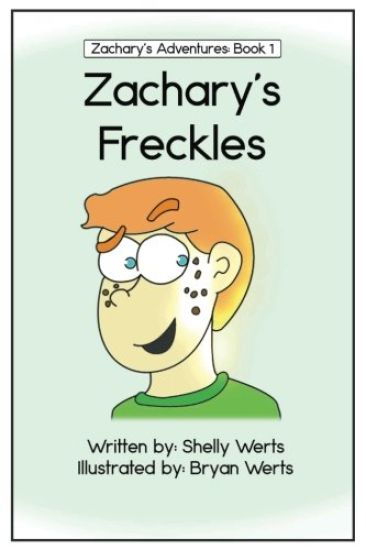
ZIP ZAP ZOOM Zachary is usually a zippity zooming zebra But today he snoozes through his alarm clock and has a blitz of bad luck at school. What's making Zachary's zippity zooming fizzle out?
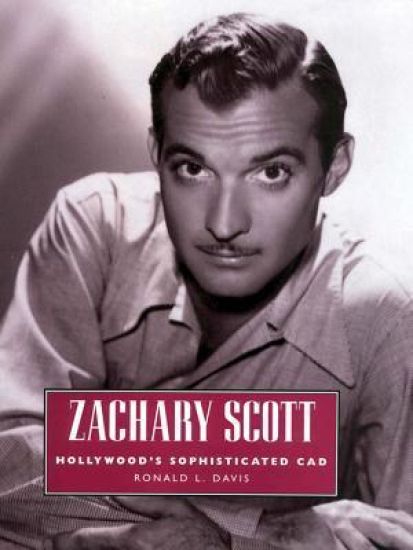
Throughout the 1940s, Zachary Scott (1914-1965) was the model for sophisticated, debonair villains in American film. His best-known roles include a mysterious criminal in The Mask of Dimitrios and the indolent husband in Mildred Pierce. He garnered further acclaim for his portrayal of villains in Her Kind of Man, Danger Signal, and South of St. Louis. Although he earned critical praise for his performance as a heroic tenant farmer in Jean Renoir's The Southerner, Scott never quite escaped typecasting.In Zachary Scott: Hollywood's Sophisticated Cad, Ronald L. Davis writes an appealing biography of the film star. Scott grew up in privileged circumstances--his father was a distinguished physician; his grandfather was a pioneer cattle baron--and was expected to follow his father into medical practice. Instead, Scott began to pursue a career in theater while studying at the University of Texas and subsequently worked his way on a ship to England to pursue acting. Upon his return to America, he began to look for work in New York.Excelling on stage and screen throughout the 1940s, Scott seemed destined for stardom. By the end of 1950, however, he had suffered through a turbulent divorce. A rafting accident left him badly shaken and clinically depressed. His frustration over his roles mounted, and he began to drink heavily. He remarried and spent the rest of his career concentrating on stage and television work. Although Scott continued to perform occasionally in films, he never reclaimed the level of stardom that he had in the mid-1940s.To reconstruct Scott's life, Davis uses interviews with Scott and colleagues and reviews, articles, and archival correspondence from the Scott papers at the University of Texas and from the Warner Bros. Archives. The result is a portrait of a talented actor who was rarely allowed to show his versatility on the screen.