Kirjojen hintavertailu. Mukana 12 016 292 kirjaa ja 12 kauppaa.

Kirjahaku

Etsi kirjoja tekijän nimen, kirjan nimen tai ISBN:n perusteella.

1000 tulosta hakusanalla ALEXANDER BAIN

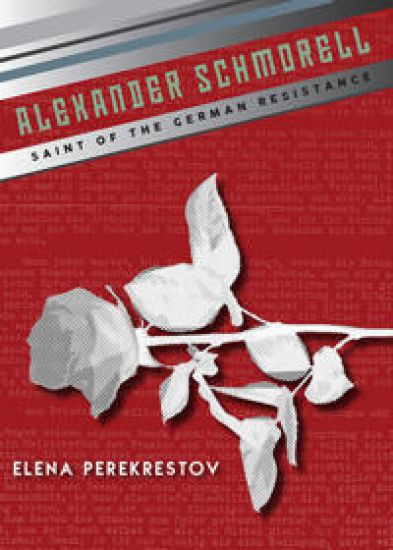
Alexander Schmorell

Alexander Schmorell

Elena Perekrestov

Holy Trinity Publications
2017
nidottu
At the height of World War II, a small band of students in Munich, Germany, formed a clandestine organization called the White Rose, which exposed the Nazi regime's murderous atrocities and called for its overthrow. In its first anti-Nazi tract, the group wrote, "...Nothing is so unworthy of a civilized nation as allowing itself to be 'governed' without opposition by an irresponsible clique that has yielded to base instinct..." The students risked everything to struggle against a world that had lost its moorings. Early in 1943 key members of the group were discovered and executed. Among those put to death was Alexander Schmorell, a young man of Russian birth whose family came to Germany when he was a small boy. This biography eloquently recounts the journey of an energetic and talented young man who loved life but who, deeply inspired by his Orthodox Christian faith, was willing to sacrifice it as a testimony to his faith in God that had taught him to love beauty and freedom, both of which the Nazis sought to destroy. In 2012, the Russian Orthodox Church officially recognized him as a martyr and saint. The story of Alexander's life and death is made available to English readers here for the first time, vividly illustrated with black and white photographs.
Alexander Kennedy Isbister

Alexander Kennedy Isbister

Barry Cooper

Carleton University Press,Canada
1988
nidottu
Born of mixed Scottish/Native Indian blood in what is now Saskatchewan, Isbister emigrated to Britain after he found his ambitions thwarted by Hudson's Bay Company policies regarding native-born employees. There he became a respected educator, but more important to this study, he also became the most persistent critic of the Company, and of British and Canadian policies dealing with the inhabitants of Rupert's Land and the Northwest Territories.
Alexander A. Potebnja’s Psycholinguistic Theory of Literature

Alexander A. Potebnja’s Psycholinguistic Theory of Literature

John Fizer

Harvard Ukrainian Research Institute,U.S.
1988
sidottu
The work of Alexander A. Potebnja, a leading Ukrainian linguist of the nineteenth century, has significantly influenced modern literary criticism, particularly Russian formalism and structuralism. Potebnja's theory, known as potebnjanstvo (Potebnjanism), flourished in the Russian Empire and in the Soviet Union during the 1920s. It attracted scores of adherents and gave rise to an influential literary journal and a formal critical school at Kharkiv. Yet despite his remarkable achievements in linguistics and literary theory, Potebnja's work was officially renounced in the Soviet Union in the 1930s, and in the West he remains virtually unknown.In his study, John Fizer carefully reconstructs Potebnja's theory of literature from the psycholinguistic formulations found in his works on language, mythology, and folklore. Elaborating Potebnja's concept of internal form, energeia, polysemy, and the semiosis of poetic discourse, Fizer develops the central tenets of Potebnja's theory with regard to their philosophical, psychological, and linguistic bases. Largely influenced by Kant and by Humboldt's philosophy of language, Potebnja conceived of language and the verbal arts as coterminous phenomena. He identified the internal form with the etymon of the word, which he considered the preeminent locus in the structure of poetic art. He insisted on the dynamic role of the Self in poetic creation and perception but, unlike many of his contemporaries, he believed that the diachronic depth of the signifiers was ethnic and had measureable limits. According to Potebnja, this depth (or internal form) reveals itself as a semantically multivalent image that induces self-knowledge and transforms the primary data of consciousness into syntagmatic wholes.A great deal of Potebnja's theory shares similarities with the work of Benedetto Croce, Leo Spitzer, and Charles S. Pierce. It anticipated modern literary criticism, and, as the author convincingly argues, retains existential and epistemological cogency even today. Fizer's volume offers the first thorough study of Potebnja's literary theory, and his insightful analysis restores Potebnja to his rightful place in the history of literary criticism.
Alexander the Great in India: A Reconstruction of Cleitarchus
The most influential account of the career of Alexander the Great was penned by Cleitarchus the son of Deinon, a Greek writing in Alexandria in the decades after Alexander's death. Most of the surviving ancient texts on Alexander were more or less based upon his work, but every single copy of the original was discarded or destroyed in antiquity. To what extent might it be possible to reconstruct it from the secondary writings? This book argues that a considerable degree of reconstruction is feasible and demonstrates the point by presenting a full reconstruction of Cleitarchus' version of Alexander's campaigns in India, the first time that this has been done. For more details see also www.alexanderstomb.com.
Alexander's Lovers (Second Edition)

Alexander's Lovers (Second Edition)

Andrew Chugg

AMC Publications
2012
pokkari
Alexander's Lovers reveals the personality of Alexander the Great through the mirror of the lives of those with whom he pursued romantic relationships, including his friend Hephaistion, his queen Roxane, his mistress Barsine & Bagoas the Eunuch. Did you know that Alexander got the idea of adopting Persian dress from a book he read in his youth? Had you realised that Alexander's pursuit of divine honours was part of his emulation of Achilles, that Bagoas undertook a diplomatic mission or that Hephaistion's diplomacy kept Athens from joining a Spartan rebellion? Are you aware that Aetion's painting of Alexander's marriage depicted Hephaistion & Bagoas as well as Roxane and really depicted the King's passions? Which girl was betrothed to Alexander's son? Would it surprise you that Alexander's mourning for Hephaistion was conducted according to models from Homer and Euripides? If you would like to get to know Alexander on a more personal level, then you need to read this book. Second edition, revised & updated.
Alexander's Colourful Quests

Alexander's Colourful Quests

Fransie Frandsen

Beamreach
2023
nidottu
Join Alexander in his colourful quest to find the answer to the question, Do Babies wear pyjamas? The series explores, in a fabulously fun and engaging way, the notion of parent-child communication. Drawing on the writer and illustrator, Fransie Frandsen's experience as mother and art therapist, the books emphasise the importance of communication between parents and children. This box set comprises 4 titles: Do Grannies Have Green Fingers? Do Daddies Have Ants In Their Pants? Are Mummies Scared Of Monsters? Do Babies Wear Pyjamas?
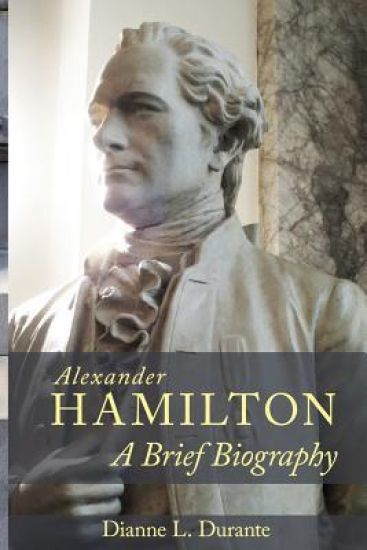
Alexander Hamilton: A Brief Biography

Alexander Hamilton: A Brief Biography

Dianne L. Durante

Dianne L. Durante
2018
nidottu
What were the important events of Hamilton's life? What were the ideas that drove him? This brief biography includes substantial quotes from Hamilton's writings, dozens of full-color images of Hamilton and his times, and a timeline setting Hamilton's life in the context of events in Europe and the United States. If you're a fan of *Hamilton: An American Musical, * this bio will give you more reasons to love the man and the musical. If you're a history geek or a fan of Hamilton, it will serve as a gateway to *Alexander Hamilton: A Friend to America, * a two-volume set with extensive excerpts from writings by Hamilton and his contemporaries.
Alexander Hamilton: A Friend to America: Volume 1

Alexander Hamilton: A Friend to America: Volume 1

Dianne L. Durante

Dianne L. Durante
2018
nidottu
The two volumes of *Alexander Hamilton: A Friend to America* are unique in their emphasis on primary sources. Using writings by Hamilton, Washington, Burr, Eliza, Angelica, and others, they stitch together an image of Hamilton's life, his times, and the ideas that drove him. If you love *Hamilton: An American Musical* and want to know more about Hamilton the man, this is a perfect place to start If you already love Hamilton the man and want to spend more time with him and the other Founding Fathers, you'll find new material here, too. These essays originally appeared as a series of weekly blog posts on intriguing topics such as: * Alexander's "death wish" what's the evidence for it? * Alexander and Angelica: yes, no, maybe? * What made Hamilton's first political essay so attention-grabbing? * Do we know the recipe for Alexander and Eliza's wedding cake? * Was Hamilton a laissez-faire capitalist, a proponent of Big Government, or ...? Where did he draw the line between economics and politics? * Maria Reynolds: What the hell was he thinking? * What's the difference between history and art, and why do we need both? The order of the essays was inspired by the Hamilton musical. If you prefer to read them in chronological order, *Alexander Hamilton: A Brief Biography* (a stand-alone work) serves as a cross-reference. With full-color images.
Alexander Hamilton: A Friend to America: Volume 2

Alexander Hamilton: A Friend to America: Volume 2

Dianne L. Durante

Dianne L. Durante
2018
nidottu
The two volumes of *Alexander Hamilton: A Friend to America* are unique in their emphasis on primary sources. Using writings by Hamilton, Washington, Burr, Eliza, Angelica, and others, they stitch together an image of Hamilton's life, his times, and the ideas that drove him. If you love *Hamilton: An American Musical* and want to know more about Hamilton the man, this is a perfect place to start If you already love Hamilton the man and want to spend more time with him and the other Founding Fathers, you'll find new material here, too. These essays originally appeared as a series of weekly blog posts on intriguing topics such as: * Alexander's "death wish" what's the evidence for it? * Alexander and Angelica: yes, no, maybe? * What made Hamilton's first political essay so attention-grabbing? * Do we know the recipe for Alexander and Eliza's wedding cake? * Was Hamilton a laissez-faire capitalist, a proponent of Big Government, or ...? Where did he draw the line between economics and politics? * Maria Reynolds: What the hell was he thinking? * What's the difference between history and art, and why do we need both? The order of the essays was inspired by the Hamilton musical. If you prefer to read them in chronological order, *Alexander Hamilton: A Brief Biography* (a stand-alone work) serves as a cross-reference. With full-color images.
Alexander Sperber

Alexander Sperber

Alexander Sperber

Borromean Books
2018
sidottu
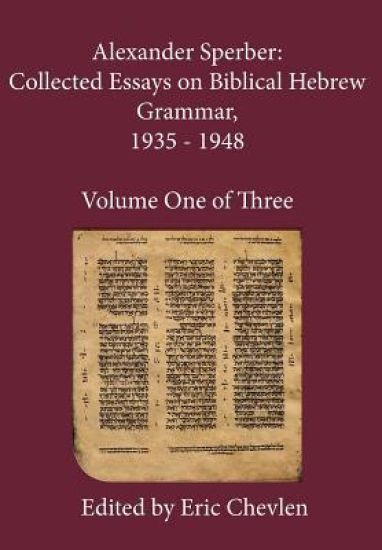
Alexander Sperber was born in what was then the Austrian city of Czernowitz in 1897. As a child, he learned to write German in Hebrew characters, expressing the umlauts precisely by means of diacritical modifications. He received a Gymnasium education in Vienna. In Vienna, too, he pursued learning from 1916 to 1918 at the University and at the Theological Seminary; this was continued from 1919 to 1922 at the University and at the Rabbinical Seminary in Berlin. He earned a Ph.D. at the University of Bonn in 1924. From 1925 to 1928 he resided in England for the purpose of copying manuscripts at English libraries. He left Germany in the same year in which Hitler attained power, 1933. After a brief sojourn in British Mandate Palestine, he emigrated to the United States in 1934. His scholarly activities in the United States were centered at the Jewish Theological Seminary in New York and the Dropsie College of Hebrew and Cognate Learning in Philadelphia. In 1965 he made aliyah, and he died in Israel in 1970.His scholarly output includes editing of the Aramaic Targums and several works on the history of Biblical Hebrew grammar. On the latter subject, he wrote two books: A Grammar of Masoretic Hebrew, a General Introduction to the Pre Masoretic Bible (1959), and A Historical Grammar of Biblical Hebrew--A Presentation of Problems with Suggestions to Their Solution (1966). Both of those books are long out of print.These three volumes contain the essays in the academic literature which Sperber later summarized in those books. In this first volume appear the following: Editor's Introduction (2018) Biographical Sketch of Alexander Sperber by H.L. Ginsberg (1970) The Problems of the Septuagint Recensions (1935) The Targum Onkelos in Its Relation to the Masoretic Hebrew Text (1935) Hebrew Based Upon Greek and Latin Transliterations (1937) Hebrew Based Upon Biblical Passages in Parallel Transmission (1939)
Alexander Sperber

Alexander Sperber

Alexander Sperber

Borromean Books
2018
sidottu
Alexander Sperber was born in what was then the Austrian city of Czernowitz in 1897. As a child, he learned to write German in Hebrew characters, expressing the umlauts precisely by means of diacritical modifications. He received a Gymnasium education in Vienna. In Vienna, too, he pursued learning from 1916 to 1918 at the University and at the Theological Seminary; this was continued from 1919 to 1922 at the University and at the Rabbinical Seminary in Berlin. He earned a Ph.D. at the University of Bonn in 1924. From 1925 to 1928 he resided in England for the purpose of copying manuscripts at English libraries. He left Germany in the same year in which Hitler attained power, 1933. After a brief sojourn in British Mandate Palestine, he emigrated to the United States in 1934. His scholarly activities in the United States were centered at the Jewish Theological Seminary in New York and the Dropsie College of Hebrew and Cognate Learning in Philadelphia. In 1965 he made aliyah, and he died in Israel in 1970. His scholarly output includes editing of the Aramaic Targums and several works on the history of Biblical Hebrew grammar. On the latter subject, he wrote two books: A Grammar of Masoretic Hebrew, a General Introduction to the Pre Masoretic Bible (1959), and A Historical Grammar of Biblical Hebrew--A Presentation of Problems with Suggestions to Their Solution (1966). Both of those books are long out of print.These three volumes contain the essays in the academic literature which Sperber later summarized in those books. In this second volume appear the following: - New Testament and Septuagint (1940) - Hebrew Phonology (1941) - Hebrew Grammar: A New Approach (1943)
Alexander Sperber

Alexander Sperber

Alexander Sperber

Borromean Books
2018
sidottu
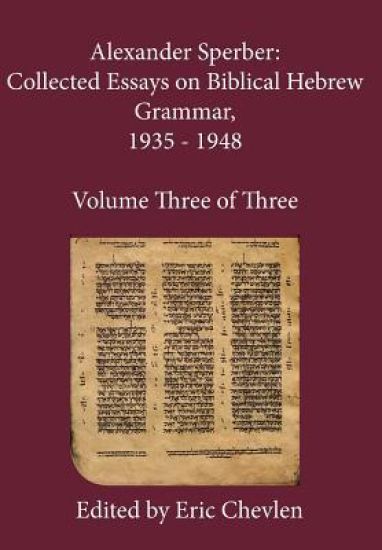
Alexander Sperber was born in what was then the Austrian city of Czernowitz in 1897. As a child, he learned to write German in Hebrew characters, expressing the umlauts precisely by means of diacritical modifications. He received a Gymnasium education in Vienna. In Vienna, too, he pursued learning from 1916 to 1918 at the University and at the Theological Seminary; this was continued from 1919 to 1922 at the University and at the Rabbinical Seminary in Berlin. He earned a Ph.D. at the University of Bonn in 1924. From 1925 to 1928 he resided in England for the purpose of copying manuscripts at English libraries. He left Germany in the same year in which Hitler attained power, 1933. After a brief sojourn in British Mandate Palestine, he emigrated to the United States in 1934. His scholarly activities in the United States were centered at the Jewish Theological Seminary in New York and the Dropsie College of Hebrew and Cognate Learning in Philadelphia. In 1965 he made aliyah, and he died in Israel in 1970. His scholarly output includes editing of the Aramaic Targums and several works on the history of Biblical Hebrew grammar. On the latter subject, he wrote two books: A Grammar of Masoretic Hebrew, a General Introduction to the Pre Masoretic Bible (1959), and A Historical Grammar of Biblical Hebrew--A Presentation of Problems with Suggestions to Their Solution (1966). Both of those books are long out of print.These three volumes contain the essays in the academic literature which Sperber later summarized in those books. In this third volume appear the following: - Problems of the Masora (1943) - Biblical Exegesis: Prolegomena to a Commentary and Dictionary to the Bible (1945) - Biblical Hebrew (1948)
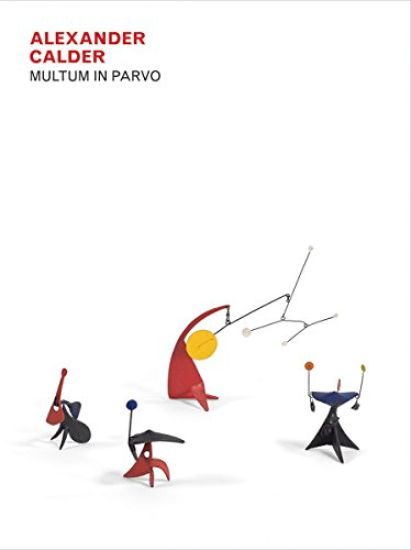
Alexander Calder: Multum in Parvo
Multum in Parvo highlights the complex relationship between scale and size in the oeuvre of Alexander Calder (1898–1976) over a period of more than 30 years. As its title--translating to “much in little”--implies, the volume features over 40 rare small-scale sculptures, ranging from the size of a thumb to 30 inches tall, all of which feature the same physical qualities as Calder’s largest mobiles in the most miniature of detail. In addition to archival material, installation photography of the sculptures in the environment designed for them by architects Santiago and Gabriel Calatrava, and original architectural sketches, the book also includes commissioned essays by Jed Perl, art historian and author currently at work on the first full-length biography of Alexander Calder, and Paul Goldberger, Pulitzer Prize-winning architecture critic, as well as poems by Karl Shapiro and John Updike.