Kirjojen hintavertailu. Mukana 12 016 292 kirjaa ja 12 kauppaa.

Kirjahaku

Etsi kirjoja tekijän nimen, kirjan nimen tai ISBN:n perusteella.

1000 tulosta hakusanalla ART WIEDERHOLD

Art and Phenomenology
Philosophy of art is traditionally concerned with the definition, appreciation and value of art. Through a close examination of art from recent centuries, Art and Phenomenology is one of the first books to explore visual art as a mode of experiencing the world itself, showing how in the words of Merleau-Ponty ‘Painting does not imitate the world, but is a world of its own’. An outstanding series of chapters by an international group of contributors examine the following questions: Paul Klee and the body in art colour and background in Merleau-Ponty’s phenomenology of art self-consciousness and seventeenth-century painting Vermeer and Heidegger philosophy and the painting of Rothko embodiment in Renaissance art sculpture, dance and phenomenology. Art and Phenomenology is essential reading for anyone interested in phenomenology, aesthetics, and visual culture.
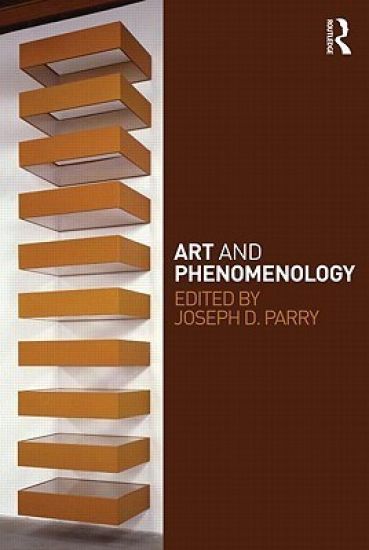
Art and Phenomenology
Philosophy of art is traditionally concerned with the definition, appreciation and value of art. Through a close examination of art from recent centuries, Art and Phenomenology is one of the first books to explore visual art as a mode of experiencing the world itself, showing how in the words of Merleau-Ponty ‘Painting does not imitate the world, but is a world of its own’. An outstanding series of chapters by an international group of contributors examine the following questions: Paul Klee and the body in art colour and background in Merleau-Ponty’s phenomenology of art self-consciousness and seventeenth-century painting Vermeer and Heidegger philosophy and the painting of Rothko embodiment in Renaissance art sculpture, dance and phenomenology. Art and Phenomenology is essential reading for anyone interested in phenomenology, aesthetics, and visual culture.
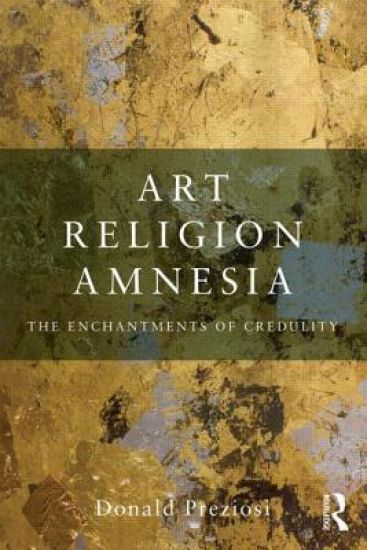
Art, Religion, Amnesia

Art, Religion, Amnesia

Donald Preziosi

Routledge
2013
sidottu
Art, Religion, Amnesia addresses the relationship between art and religion in contemporary culture, directly challenging contemporary notions of art and religion as distinct social phenomena and explaining how such Western terms represent alternative and even antithetical modes of world-making.In this new book, Professor Preziosi offers a critique of the main thrust of writing in recent years on the subjects of art, religion, and their interconnections, outlining in detail a perspective which redefines the basic terms in which recent debates and discussions have been articulated both in the scholarly and popular literature, and in artistic, political and religious practice. Art, Religion and Amnesia proposes an alternative to the two conventional traditions of writing on the subject which have been devoted on the one hand to the ‘spiritual’ dimensions of artistry, and on the other hand to the (equally spurious) ‘aesthetic’ aspects of religion. The book interrogates the fundamental assumptions fuelling many current controversies over representation, idolatry, blasphemy, and political culture. Drawing on debates from Plato’s proposal to banish representational art from his ideal city-state to the Danish cartoons of Mohamed, Preziosi argues that recent debates have echoed a number of very ancient controversies in political philosophy, theology, and art history over the problem of representation and its functions in individual and social life.This book is a unique re-evaluation of the essential indeterminacy of meaning-making, marking a radically new approach to understanding the inextricability of aesthetics and theology and will be of interest to students and researchers in art history, philosophy and religion and cultural theory.
Art, Religion, Amnesia

Art, Religion, Amnesia

Donald Preziosi

Routledge
2013
nidottu
Art, Religion, Amnesia addresses the relationship between art and religion in contemporary culture, directly challenging contemporary notions of art and religion as distinct social phenomena and explaining how such Western terms represent alternative and even antithetical modes of world-making.In this new book, Professor Preziosi offers a critique of the main thrust of writing in recent years on the subjects of art, religion, and their interconnections, outlining in detail a perspective which redefines the basic terms in which recent debates and discussions have been articulated both in the scholarly and popular literature, and in artistic, political and religious practice. Art, Religion and Amnesia proposes an alternative to the two conventional traditions of writing on the subject which have been devoted on the one hand to the ‘spiritual’ dimensions of artistry, and on the other hand to the (equally spurious) ‘aesthetic’ aspects of religion. The book interrogates the fundamental assumptions fuelling many current controversies over representation, idolatry, blasphemy, and political culture. Drawing on debates from Plato’s proposal to banish representational art from his ideal city-state to the Danish cartoons of Mohamed, Preziosi argues that recent debates have echoed a number of very ancient controversies in political philosophy, theology, and art history over the problem of representation and its functions in individual and social life.This book is a unique re-evaluation of the essential indeterminacy of meaning-making, marking a radically new approach to understanding the inextricability of aesthetics and theology and will be of interest to students and researchers in art history, philosophy and religion and cultural theory.
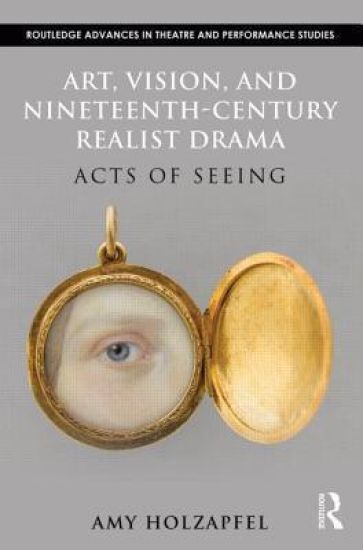
Art, Vision, and Nineteenth-Century Realist Drama
Realism in theatre is traditionally defined as a mere seed of modernism, a crude attempt to reproduce an exact copy of reality on stage. Art, Vision & Nineteenth-Century Realist Drama redefines realism as a complex and under-examined form of visual modernism, one that positioned theatre at the crux of the encounter between consciousness and the visible world. Tracing a historical continuum of "acts of seeing" on the realist stage, Holzapfel demonstrates how theatre participated in modernity’s aggressive interrogation of vision’s residence in the human body. New findings by scientists and philosophers—such as Diderot, Goethe, Müller, Helmholtz, and Galton—exposed how the visible world is experienced and framed by the unstable relativism of the physiological body rather than the fixed idealism of the mind. Realist artists across media paradoxically embraced this paradigm shift by focusing on the embodied observer. Drawing from extensive archival research, Holzapfel conducts close readings of iconic dramas and their productions—including Scribe’s The Glass of Water, Zola’s Thérèse Raquin, Ibsen’s A Doll House, Strindberg’s The Father, and Hauptmann’s Before Sunrise—alongside analyses of artwork by major painters and photographers—such as Chardin, Nadar, Millais, Rejlander, and Liebermann. In a radical challenge to existing criticism, Holzapfel argues that realism in theatre was never the attempt to reproduce an exact copy of the seen world but rather the struggle to make visible the act of seeing.
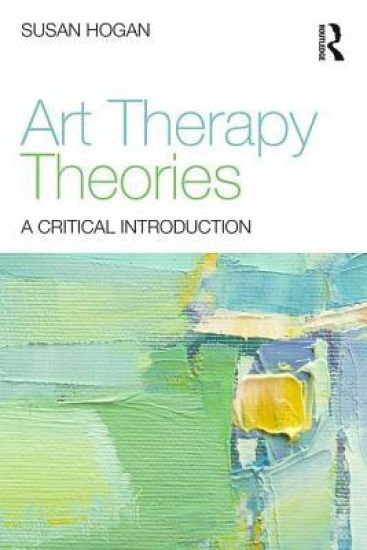
Art Therapy Theories

Art Therapy Theories

Susan Hogan

Routledge
2015
sidottu
Art therapists work with a range of distinct philosophical and theoretical underpinnings, but as yet there has been no single book to offer an overview of these theories. Art Therapy Theories provides an introductory, non-partisan overview of art therapy theories outlining the following therapy approaches: Cognitive Behavioural Art TherapySolution-Focused Brief TherapyPsychoanalytical (Freudian) Art TherapyAnalytical (Jungian) Art TherapyGestalt Art TherapyPerson-Centred or ‘Rogerian’ Art TherapyMindfulness Art Therapy Integrative Art Therapy (the Group-Interactive Model)Feminist Art Therapy Art Therapy as Social ActionArt Therapy as a Research ToolEach chapter provides a non-judgemental, yet analytical, synopsis of each approach. No detailed knowledge is necessary to understand the different approaches, as the book explains them in clear and concise English. Difficult terms and concepts are explained as they arise, and a glossary of terms is also provided. Art Therapy Theories is aimed at trainee art therapists who need to demonstrate that they have a grasp of theory, as well as a sense of how the theory can translate into practice. It will also appeal to seasoned therapists, counsellors and to a wide range of professionals in the mental health field.
Art Therapy Theories

Art Therapy Theories

Susan Hogan

Routledge
2015
nidottu
Art therapists work with a range of distinct philosophical and theoretical underpinnings, but as yet there has been no single book to offer an overview of these theories. Art Therapy Theories provides an introductory, non-partisan overview of art therapy theories outlining the following therapy approaches: Cognitive Behavioural Art TherapySolution-Focused Brief TherapyPsychoanalytical (Freudian) Art TherapyAnalytical (Jungian) Art TherapyGestalt Art TherapyPerson-Centred or ‘Rogerian’ Art TherapyMindfulness Art Therapy Integrative Art Therapy (the Group-Interactive Model)Feminist Art Therapy Art Therapy as Social ActionArt Therapy as a Research ToolEach chapter provides a non-judgemental, yet analytical, synopsis of each approach. No detailed knowledge is necessary to understand the different approaches, as the book explains them in clear and concise English. Difficult terms and concepts are explained as they arise, and a glossary of terms is also provided. Art Therapy Theories is aimed at trainee art therapists who need to demonstrate that they have a grasp of theory, as well as a sense of how the theory can translate into practice. It will also appeal to seasoned therapists, counsellors and to a wide range of professionals in the mental health field.
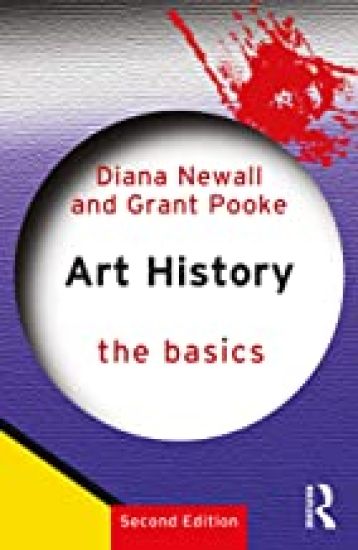
Art History: The Basics

Art History: The Basics

Diana Newall; Grant Pooke

Routledge
2021
sidottu
Now in its second edition, this volume is an accessible introduction to the history of art. Using an international range of examples, it provides the reader with a toolkit of concepts, ideas and methods relevant to understanding art history. This new edition is fully updated with colour illustrations, increased coverage of non-western art and extended discussions of contemporary art theory. It introduces key ideas, issues and debates, exploring questions such as: What is art and what is meant by art history? What approaches and methodologies are used to interpret and evaluate art? How have ideas regarding medium, gender, identity and difference informed representation? What perspectives can psychoanalysis, semiotics and social art histories bring to the study of the discipline? How are the processes of postcolonialism, decolonisation and globalisation changing approaches to art history?Complete with helpful subject summaries, a glossary, suggestions for future reading and guidance on relevant image archives, this book is an ideal starting point for anyone studying art history as well as general readers with an interest in the subject.
Art History: The Basics

Art History: The Basics

Diana Newall; Grant Pooke

Routledge
2021
nidottu
Now in its second edition, this volume is an accessible introduction to the history of art. Using an international range of examples, it provides the reader with a toolkit of concepts, ideas and methods relevant to understanding art history. This new edition is fully updated with colour illustrations, increased coverage of non-western art and extended discussions of contemporary art theory. It introduces key ideas, issues and debates, exploring questions such as: What is art and what is meant by art history? What approaches and methodologies are used to interpret and evaluate art? How have ideas regarding medium, gender, identity and difference informed representation? What perspectives can psychoanalysis, semiotics and social art histories bring to the study of the discipline? How are the processes of postcolonialism, decolonisation and globalisation changing approaches to art history?Complete with helpful subject summaries, a glossary, suggestions for future reading and guidance on relevant image archives, this book is an ideal starting point for anyone studying art history as well as general readers with an interest in the subject.
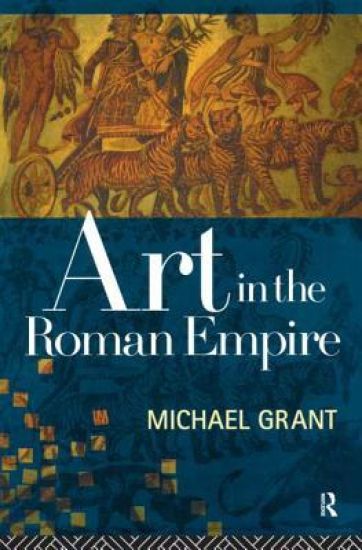
Art in the Roman Empire

Art in the Roman Empire

Michael Grant

Routledge
2013
nidottu
Michael Grant has specially selected some of the most significant examples of painting, portraits, architecture, mosaic, jewellery and silverware, to give a unique insight into the functions and manifestations of art in the Roman Empire. Art in the Roman Empire shows how many of the most impressive masterpieces were produced outside Rome, on the frontiers of its enormous empire.
Art in Greece

Art in Greece

W. Deonna; A. de Ridder

Routledge
2013
nidottu
Originally published between 1920-70,The History of Civilization was a landmark in early twentieth century publishing. It was published at a formative time within the social sciences, and during a period of decisive historical discovery. The aim of the general editor, C.K. Ogden, was to summarize the most up to date findings and theories of historians, anthropologists, archaeologists and sociologists. This reprinted material is available as a set or in the following groupings: * Prehistory and Historical Ethnography Set of 12: 0-415-15611-4: £800.00 * Greek Civilization Set of 7: 0-415-15612-2: £450.00 * Roman Civilization Set of 6: 0-415-15613-0: £400.00 * Eastern Civilizations Set of 10: 0-415-15614-9: £650.00 * Judaeo-Christian Civilization Set of 4: 0-415-15615-7: £250.00 * European Civilization Set of 11: 0-415-15616-5: £700.00
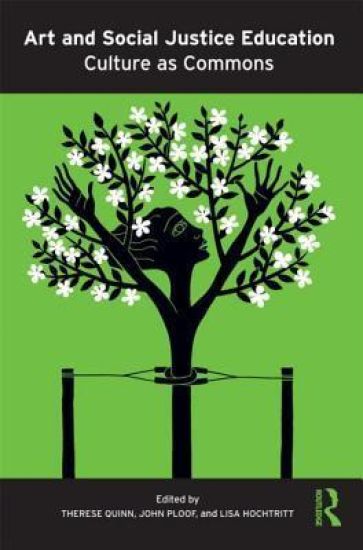
Art and Social Justice Education
Art and Social Justice Education offers inspiration and tools for educators to craft critical, meaningful, and transformative arts education curriculum and arts integration projects. The images, descriptive texts, essays, and resources are grounded within a clear social justice framework and linked to ideas about culture as commons. Essays and a section written by and for teachers who have already incorporated contemporary artists and ideas into their curriculums help readers to imagine ways to use the content in their own settings. This book is enhanced by a Companion Website (www.routledge.com/cw/quinn) featuring artists and artworks, project examples, and dialogue threads for educators. Proposing that art can contribute in a wide range of ways to the work of envisioning and making a more just world, this imaginative, practical, and engaging sourcebook of contemporary artists’ works and education resources advances the field of arts education, locally, nationally, and internationally, by moving beyond models of discipline-based or expressive art education. It will be welcomed by all educators seeking to include the arts and social justice in their curricula.
Art and Social Justice Education
Art and Social Justice Education offers inspiration and tools for educators to craft critical, meaningful, and transformative arts education curriculum and arts integration projects. The images, descriptive texts, essays, and resources are grounded within a clear social justice framework and linked to ideas about culture as commons. Essays and a section written by and for teachers who have already incorporated contemporary artists and ideas into their curriculums help readers to imagine ways to use the content in their own settings. This book is enhanced by a Companion Website (www.routledge.com/cw/quinn) featuring artists and artworks, project examples, and dialogue threads for educators. Proposing that art can contribute in a wide range of ways to the work of envisioning and making a more just world, this imaginative, practical, and engaging sourcebook of contemporary artists’ works and education resources advances the field of arts education, locally, nationally, and internationally, by moving beyond models of discipline-based or expressive art education. It will be welcomed by all educators seeking to include the arts and social justice in their curricula.
Art Platforms and Cultural Production on the Internet
In this book, Goriunova offers a critical analysis of the processes that produce digital culture. Digital cultures thrive on creativity, developing new forces of organization to overcome repetition and reach brilliance. In order to understand the processes that produce culture, the author introduces the concept of the art platform, a specific configuration of creative passions, codes, events, individuals and works that are propelled by cultural currents and maintained through digitally native means. Art platforms can occur in numerous contexts bringing about genuinely new cultural production, that, given enough force, come together to sustain an open mechanism while negotiating social, technical and political modes of power.Software art, digital forms of literature, 8-bit music, 3D art forms, pro-surfers, and networks of geeks are test beds for enquiry into what brings and holds art platforms together. Goriunova provides a new means of understanding the development of cultural forms on the Internet, placing the phenomenon of participatory and social networks in a conceptual and historical perspective, and offering powerful tools for researching cultural phenomena overlooked by other approaches.
Art, Poetry, and Technology
Heidegger and the study of his thought have earned wide acceptance, extending beyond philosophy to influence an array of other disciplines. Critically selected by leading scholars in the field, the articles in this new collection bring together the most essential and representative scholarship on Heidegger. Focusing on the major phases of his work which attracted most attention from contemporary thinkers, as well as exploring new and important areas of Heidegger scholarship, this four-volume set is an invaluable resource for any curriculum supporting philosophy, as well as political theory, literature, classics, anthropology, and cultural studies. This volume is available on its own or as part of the four-volume set, Heidegger Reexamined . For a complete list of the volume titles in this set, see the listing for Heidegger Reexamined [ISBN: 0-415-94041-9].
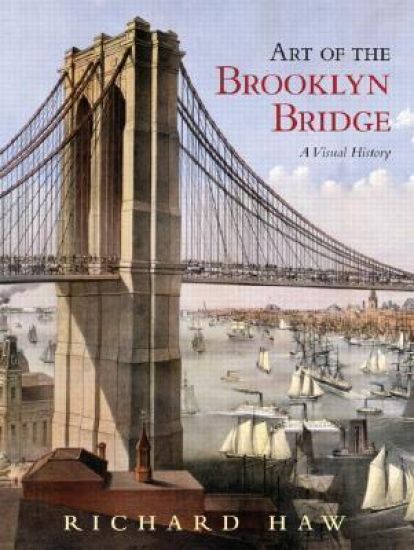
Art of the Brooklyn Bridge

Art of the Brooklyn Bridge

Richard Haw

Routledge
2008
sidottu
The Brooklyn Bridge is a pre-eminent global icon. It is the world’s most famous and beloved bridge, a "must-see" tourist hotspot, and a vital fact of New York life. For almost a hundred and forty years it has inspired artists of all descriptions, fueling a constant stream of paintings, photographs, lithographs, etchings, advertising copy, movies, and book, magazine, and LP covers. In consequence, the bridge may have the richest visual history of any man-made object, so much so, in fact, that almost no major American artist has failed to pay homage to the span in some form or other. Oddly, however, there are no books currently available that chart and discuss the bridge’s visual history or its role in the development of American (or Western) art. This monograph aims to correct that, providing a full visual record of the bridge from the origins of its conception to the present day. It is a celebration of the bridge’s glorious visual heritage timed to appear when the city will celebrate the span’s 125th birthday.
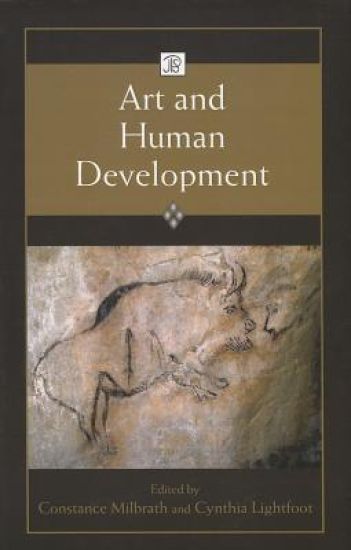
Art and Human Development

Art and Human Development

Psychology Press Ltd
2009
sidottu
This interdisciplinary volume explores art, its development, and its role in the construction of knowledge. Presenting theory and research on artistic development as a cultural and creative endeavor, contributors examine the origins of human art during the Paleolithic cultural revolution, as part of a modern cultural transformation, in the growth of a creative artist, and in developing children. Target chapters expressing the disciplinary perspectives of psychology, archaeology, communications, education, and the performing arts are followed by commentaries from internationally acclaimed scholars of human development. Part 1 explores how cultures harness and exploit the arts to give expression to values, social practices, and traditions. This section traces the emergence of new art forms that arose during social unrest, including the symbolization of spiritual beliefs expressed on the walls of Paleolithic caves, and the racial identity and cultural values expressed in the media of the hip-hop generation. Part 2 examines the journeys of a composer and a group of students to highlight the process of becoming an artist and the role education plays in its development. The book concludes with a focus on the development of aesthetic appreciation and artistic activity in childhood and adolescence, including, for example, how a child’s developing theory of mind affects appreciation for the arts, and how developing empathy and emotional regulation contribute to the cognitive and affective underpinnings of acting in adolescence. As a whole contributors explore the developmental, sociocultural, and evolutionary processes that make the creation and experience of art possible. Intended for researchers and advanced students in both human development and the arts, this book will also serve as a textbook for advanced courses on psychology and the arts and/or special topics courses in cognitive and/or human development.
Art as Abstract Machine

Art as Abstract Machine

Stephen Zepke

Routledge
2005
sidottu
The aim of this book is to understand what Deleuze and Guattari mean by art. Stephen Zepke argues that art, in their account, is an ontological term and an ontological practice that results in a new understanding of aesthetics. For Deleuze and Guattari understanding what art is means understanding how it works, what it does, how it becomes, and finally, how it lives. This book illuminates these philosophers' discussion of ontology from the viewpoint of art-and vice versa-in a thorough questioning of aesthetic criteria as they are normally understood.
Art History Versus Aesthetics
In this unprecedented collection, over twenty of the world's most prominent thinkers on the subject including Arthur Danto, Stephen Melville, Wendy Steiner, Alexander Nehamas, and Jay Bernstein ponder the disconnect between these two disciplines. The volume has a radically innovative structure: it begins with introductions, and centres on an animated conversation among ten historians and aestheticians. That conversation was then sent to twenty scholars for commentary and their responses are very diverse: some are informal letters and others full essays with footnotes. Some think they have the answer in hand, and others raise yet more questions. The volume ends with two synoptic essays, one by a prominent aesthetician and the other by a literary critic.This stimulating inaugural volume in the Routledge The Art Seminar series presents not one but many answers to the question; Does philosophy have anything to say to art history?