Kirjojen hintavertailu. Mukana 12 083 983 kirjaa ja 12 kauppaa.

Kirjahaku

Etsi kirjoja tekijän nimen, kirjan nimen tai ISBN:n perusteella.

1000 tulosta hakusanalla Alain Goetzmann

The Future of a Negation

The Future of a Negation

Alain Finkielkraut

University of Nebraska Press
1998
sidottu
The Future of a Negation is a crucial statement on the Holocaust-and on Holocaust denial-from Alain Finkielkraut, one of the most acclaimed and influential intellectuals in contemporary Europe. The book examines the Holocaust, its origins in modern European thought and politics, and recent “revisionist” attempts to deny its full dimensions and, in some cases, its very existence as historical fact. Finkielkraut’s central topic is the impulse toward “negation” of the Nazi horrors: the arguments made by many people, of varying political orientations, that “the gas chambers are a hoax or, in any case, an unverifiable rumor.” In addition, Finkielkraut looks at other instances of twentieth-century mass murder and at arguments made by contemporary politicians and intellectuals that similarly deny the full extent of these other atrocities. An original, fearless book, The Future of a Negation is an essential contribution to our understanding of the Holocaust and of genocidal politics and thought in our century.

Dispatches from the Balkan War and Other Writings

Dispatches from the Balkan War and Other Writings

Alain Finkielkraut

University of Nebraska Press
1999
sidottu
Dispatches from the Balkan War and Other Writings is a collection of essays on the Balkan crisis and on European reaction to it. In opposition to many powerful figures in France, Alain Finkielkraut has largely supported the Croatian struggles for sovereignty. He argues against an array of outmoded views of the Balkan region and its political and cultural conditions—conceptions that date back to earlier in the century and that have long bedeviled the region and the European powers' relation to it. The book takes up larger issues about European political and intellectual history—issues that are in urgent need of reexamination and revision in the post-Cold War world. A timely and passionate book, this volume will be of great interest to Finkielkraut's many admirers as well as to anyone interested in the ongoing Balkan crisis and modern European history.
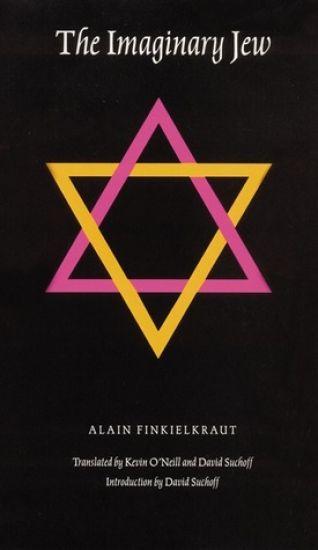
The Imaginary Jew

The Imaginary Jew

Alain Finkielkraut

University of Nebraska Press
1997
pokkari
The Holocaust changed what it means to be a Jew, for Jew and non-Jew alike. Much of the discussion about this new meaning is a storm of contradictions. In The Imaginary Jew, Alain Finkielkraut describes with passion and acuity his own passage through that storm. Finkielkraut decodes the shifts in anti-Semitism at the end of the Cold War, chronicles the impact of Israel's policies on European Jews, opposes arguments both for and against cultural assimilation, reopens questions about Marx and Judaism, and marks the loss of European Jewish culture through catastrophe, ignorance, and cliché. He notes that those who identified with Israel continued the erasure of European Judaism, forgetting the pangs and glories of Yiddish culture and the legacy of the Diaspora.
Ethnomethodology

Ethnomethodology

Alain Coulon

SAGE Publications Inc
1995
sidottu
Ethnomethodology is a research strategy that systematically examines the everyday interactions between people. In the past three decades, an impressive body of work has been created under this label by such noted scholars as Garfinkel, Sacks, Cicourel, Schlegloff, Mehan, and Emerson. In this volume, Alain Coulon demystifies the ethnomethodological tradition and its often arcane nomenclature. Coulon explains its history, its major features, and the major criticisms leveled at it in terms that are accessible to students and novices. Covering both the theoretical notions and main ethnomethodological practices and replete with examples of key work in the area, Ethnomethodology is the first accessible, brief introduction to this important qualitative research tradition.
Ethnomethodology

Ethnomethodology

Alain Coulon

SAGE Publications Inc
1995
nidottu
Ethnomethodology is a research strategy that systematically examines the everyday interactions between people. In the past three decades, an impressive body of work has been created under this label by such noted scholars as Garfinkel, Sacks, Cicourel, Schlegloff, Mehan, and Emerson. In this volume, Alain Coulon demystifies the ethnomethodological tradition and its often arcane nomenclature. Coulon explains its history, its major features, and the major criticisms leveled at it in terms that are accessible to students and novices. Covering both the theoretical notions and main ethnomethodological practices and replete with examples of key work in the area, Ethnomethodology is the first accessible, brief introduction to this important qualitative research tradition.
Can We Live Together?

Can We Live Together?

Alain Touraine

STANFORD UNIVERSITY PRESS
2000
sidottu
In this book, a leading French social thinker grapples with the gap between the tendency toward globalization of economic relations and mass culture and the increasingly sectarian nature of our social identities as members of ethnic, religious, or national groups. Though at first glance, it might seem as if the answer to the question "Can we live together?" is that we already do live together-watching the same television programs, buying the same clothes, and even using the same language to communicate from one country to another-the author argues that in important ways, we are farther than ever from belonging to the same society or the same culture. Our small societies are not gradually merging into one vast global society; instead, the simultaneously political, territorial, and cultural entities that we once called societies or countries are breaking up before our eyes in the wake of ethnic, political, and religious conflict. The result is that we live together only to the extent that we make the same gestures and use the same objects-we do not communicate with one another in a meaningful way or govern ourselves together. What power can now reconcile a transnational economy with the disturbing reality of introverted communities? The author argues against the idea that all we can do is agree on some social rules of mutual tolerance and respect for personal freedom, and forgo the attempt to forge deeper bonds. He argues instead that we can use a focus on the personal life-project-the construction of an active self or "subject"-ultimately to form meaningful social and political institutions. The book concludes by exploring how social institutions might be retooled to safeguard the development of the personal subject and communication between subjects, and by sketching out what these new social institutions might look like in terms of social relations, politics, and education.
Can We Live Together?

Can We Live Together?

Alain Touraine

Stanford University Press
2000
pokkari
In this book, a leading French social thinker grapples with the gap between the tendency toward globalization of economic relations and mass culture and the increasingly sectarian nature of our social identities as members of ethnic, religious, or national groups. Though at first glance, it might seem as if the answer to the question "Can we live together?" is that we already do live together-watching the same television programs, buying the same clothes, and even using the same language to communicate from one country to another-the author argues that in important ways, we are farther than ever from belonging to the same society or the same culture. Our small societies are not gradually merging into one vast global society; instead, the simultaneously political, territorial, and cultural entities that we once called societies or countries are breaking up before our eyes in the wake of ethnic, political, and religious conflict. The result is that we live together only to the extent that we make the same gestures and use the same objects-we do not communicate with one another in a meaningful way or govern ourselves together. What power can now reconcile a transnational economy with the disturbing reality of introverted communities? The author argues against the idea that all we can do is agree on some social rules of mutual tolerance and respect for personal freedom, and forgo the attempt to forge deeper bonds. He argues instead that we can use a focus on the personal life-project-the construction of an active self or "subject"-ultimately to form meaningful social and political institutions. The book concludes by exploring how social institutions might be retooled to safeguard the development of the personal subject and communication between subjects, and by sketching out what these new social institutions might look like in terms of social relations, politics, and education.
Handbook of Inaesthetics

Handbook of Inaesthetics

Alain Badiou

Stanford University Press
2004
sidottu
Didacticism, romanticism, and classicism are the possible schemata for the knotting of art and philosophy, the third term in this knot being the education of subjects, youth in particular. What characterizes the century that has just come to a close is that, while it underwent the saturation of these three schemata, it failed to introduce a new one. Today, this predicament tends to produce a kind of unknotting of terms, a desperate dis-relation between art and philosophy, together with the pure and simple collapse of what circulated between them: the theme of education. Whence the thesis of which this book is nothing but a series of variations: faced with such a situation of saturation and closure, we must attempt to propose a new schema, a fourth type of knot between philosophy and art. Among these "inaesthetic" variations, the reader will encounter a sustained debate with contemporary philosophical uses of the poem, bold articulations of the specificity and prospects of theater, cinema, and dance, along with subtle and provocative readings of Fernando Pessoa, Stéphane Mallarmé, and Samuel Beckett.
Handbook of Inaesthetics

Handbook of Inaesthetics

Alain Badiou

Stanford University Press
2004
pokkari
Didacticism, romanticism, and classicism are the possible schemata for the knotting of art and philosophy, the third term in this knot being the education of subjects, youth in particular. What characterizes the century that has just come to a close is that, while it underwent the saturation of these three schemata, it failed to introduce a new one. Today, this predicament tends to produce a kind of unknotting of terms, a desperate dis-relation between art and philosophy, together with the pure and simple collapse of what circulated between them: the theme of education. Whence the thesis of which this book is nothing but a series of variations: faced with such a situation of saturation and closure, we must attempt to propose a new schema, a fourth type of knot between philosophy and art. Among these "inaesthetic" variations, the reader will encounter a sustained debate with contemporary philosophical uses of the poem, bold articulations of the specificity and prospects of theater, cinema, and dance, along with subtle and provocative readings of Fernando Pessoa, Stéphane Mallarmé, and Samuel Beckett.
Saint Paul

Saint Paul

Alain Badiou

Stanford University Press
2003
pokkari
In this bold and provocative work, French philosopher Alain Badiou proposes a startling reinterpretation of St. Paul. For Badiou, Paul is neither the venerable saint embalmed by Christian tradition, nor the venomous priest execrated by philosophers like Nietzsche: he is instead a profoundly original and still revolutionary thinker whose invention of Christianity weaves truth and subjectivity together in a way that continues to be relevant for us today. In this work, Badiou argues that Paul delineates a new figure of the subject: the bearer of a universal truth that simultaneously shatters the strictures of Judaic Law and the conventions of the Greek Logos. Badiou shows that the Pauline figure of the subject still harbors a genuinely revolutionary potential today: the subject is that which refuses to submit to the order of the world as we know it and struggles for a new one instead.
For a New Novel

For a New Novel

Alain Robbe-Grillet

Northwestern University Press
1992
nidottu
Alain Robbe-Grillet, one of the leaders of the new French literary movement of the sixties, has long been regarded as the outstanding writer of the nouveau roman, as well as its major spokesman. For a New Novel reevaluates the techniques, ethos, and limits of contemporary fiction. This is a work of immense importance for any discussions of the history of the novel and for contemporary thinking about the future of fiction.
Snapshots

Snapshots

Alain Robbe-Grillet

Northwestern University Press
1995
nidottu
Alain Robbe-Grillet has long been regarded as the chief spokesman for the controversial nouveau roman. This collection of brilliant short pieces introduces the reader to those techniques employed by Robbe-Grillet in his longer works. These intriguing, gemlike stories represent his most accessible fiction.
Exceptional Treehouses

Exceptional Treehouses

Alain Laurens

Abrams
2009
sidottu
In Exceptional Treehouses, author and treehouse builder Alain Laurens reveals 30 gorgeous treehouse structures, 25 of which are entirely new creations, all illustrated with Daniel Dufour’s beautiful watercolours as well as photographs by Jacques Delacroix, commissioned specially for this book. As in his first book, Treehouse Living, Laurens demonstrates his commitment to sustainable building and environmentalism with his designs, all executed with ecological ideals in mind. In 2000 Laurens started his company, La Cabane Perchée, to design and build treehouses around Europe. Each house takes into account the local environment, as well as the tree in which the structure stands and the photographs show details of how the treehouses are constructed without driving nails into any part of the host tree. Exceptional Treehouses is the perfect inspiration for treehouse lovers, eco-friendly architects and enthusiastic amateurs.
The Way to the Labyrinth: Autobiography

The Way to the Labyrinth: Autobiography

Alain Daniélou

New Directions Publishing Corporation
1987
sidottu
An authority on Hinduism and renowned for his directorship of the Institute of Comparative Music Studies in Berlin and Venice, Alain Daniélou is also an accomplished pianist, dancer, player of the Indian vînâ, painter, linguist and translator, photographer, and world traveler. To these attainments he has added The Way to the Labyrinth––as vivid, uninhibited, and wide-ranging a memoir as one is ever likely to encounter, now translated and published in English for the first time. Born of a haute-bourgeoise French family––his mother an ardent Catholic, his father an anticlerical leftwing politician, his older brother a cardinal––Daniélou spent a solitary childhood. Escaping from his family milieu, he went to Paris, where he fell in with avant-garde, bohemian, sexually liberated circles, among whose luminaries were Cocteau, Diaghilev, Max Jacob, and Maurice Sachs. But however fervently he plunged into various activities, he felt some other destiny awaited him. After a number of journeys, some of them highly adventurous, he found his real home in India. He spent twenty years there, fifteen of them in Benares on the banks of the Ganges. There he immersed himself in the study of Sanskrit, Hindu philosophy, music, and the art of the ancient temples of Northern India, and converted to the Hindu religion. But times changed, and soon after India gained its independence, he returned to live again in Europe and devoted much of his great energy to the encouragement of traditional musics from around the world.
No Matter No Fact: Poetry

No Matter No Fact: Poetry

Alain Bosquet

NEW DIRECTIONS PUBLISHING CORPORATION
1988
nidottu
"A poem," according to Alain Bosquet, "is an exacting friend." Poet, literary editor of Le Monde, and a central fact of French intellectual life, Bosquet (1919-1998) is himself exacting. He demands a "simple, direct, ambitious poetry" and seeks to invent "new rapports between man and the universe, man and the void, man and himself." Selected by Bosquet, the poems in No Matter No Fact are translated by Samuel Beckett, Edouard Roditi, and the author himself. Denise Levertov as well as Edouard Roditi contribute revised versions of some of the author's translations. The poems share a poignancy brewed of wit and culture, beauty and sorrow. "Soon," Bosquet muses in one poem, "there will be a single word/for poem and reality." Bosquet's poems "are perfectly beautiful," Andr Breton believed, admiring "their contours and their sensitive approach."
What Is Democracy?

What Is Democracy?

Alain Touraine; David Macey

Westview Press Inc
1997
pokkari
In this sequel to A Critique of Modernity, Alain Touraine questions the social and cultural content of democracy today. At a time when state power is being increasingly eroded by the economic might of transnational capital, what possible value can we ascribe to a democratic idea that is defined merely as a set of guarantees against the totalitarian state?If democracy is to survive in the postcommunist world, Touraine argues, it must accomplish two urgent goals: It must somehow protect the power of the nation-state at the same time as it limits that power (for only the state has sufficient means to counterbalance the global corporate wielders of money and information) and it must reconcile social diversity with social unity and individual liberty with integration.This is not merely a philosophical problem but a dilemma whose resolution will dramatically affect the immediate future of people everywhere. If we want a resolution in democracy's favour, then it is time, in Touraine's view, for us to redefine democracy in terms of active intervention rather than mere passive institution. To preserve the power and effectiveness of our states and societies, we must make visible strides,and soon,away from a politics of particularity and toward the integration and balancing of women and minorities, of immigrants, of rich and poor. If our states become too weakened, too debased by the politics of competing identities and interest groups, we will one day find ourselves without the means to protect the very values we believe we are fighting to uphold.
Rwanda and Genocide in the Twentieth Century

Rwanda and Genocide in the Twentieth Century

Alain Destexhe; Alison (TRN) Marschner

New York University Press
1995
sidottu
The horrific slaughter in Rwanda has once again driven home the deeply rooted existence and continuing presence of genocidal impulses. In this passionately argued volume-first published to great acclaim in France and considerably updated during the translation process-a deeply involved witness of the massacres takes an unflinching look at recent events in Rwanda and what they can tell us about the nature of genocide. Table of Contents Foreword By William Shawcross 1. The Unlearned Lesson of History 2. Three Genocides in the Twentieth Century 3. The Hutu and the Tutsi 4. From Indifference to Compassion 5. Justice Must be Done Appendix 1: Convention on the Prevention and the Punishment of the Crime of Genocide Appendix 2: Chronology Notes Index
Deleuze

Deleuze

Alain Badiou

University of Minnesota Press
1999
nidottu
This volume draws on a five-year correspondence undertaken by Badiou and Deleuze near the end of Deleuze''s life, when the two put aside long-standing political and philosophical differences to exchange ideas about similar problems in their work'
Scheduling and Automatic Parallelization

Scheduling and Automatic Parallelization

Alain Darte; Yves. Robert; Frederic Vivien

Birkhauser Boston Inc
2000
sidottu
Readership This book is devoted to the study of compiler transformations that are needed to expose the parallelism hiddenin a program. This book is notan introductory book to parallel processing, nor is it an introductory book to parallelizing compilers. Weassume thatreaders are familiar withthebooks High Performance Compilers for Parallel Computingby Wolfe [121] and Super- compilers for Parallel and Vector Computers by Zima and Chapman [125], and that they want to know more about scheduling transformations. In this book we describe both task graph scheduling and loop nest scheduling. Taskgraphschedulingaims atexecuting tasks linked by prece- dence constraints; it is a run-time activity. Loop nest scheduling aims at ex- ecutingstatementinstances linked bydata dependences;it is a compile-time activity. We are mostly interested in loop nestscheduling,butwe also deal with task graph scheduling for two main reasons: (i) Beautiful algorithms and heuristics have been reported in the literature recently; and (ii) Several graphscheduling, like list scheduling, are the basis techniques used in task ofthe loop transformations implemented in loop nest scheduling. As for loop nest scheduling our goal is to capture in a single place the fantastic developments of the last decade or so. Dozens of loop trans- formations have been introduced (loop interchange, skewing, fusion, dis- tribution, etc.) before a unifying theory emerged. The theory builds upon the pioneering papers of Karp, Miller, and Winograd [65] and of Lam- port [75], and it relies on sophisticated mathematical tools (unimodular transformations, parametric integer linear programming, Hermite decom- position, Smithdecomposition, etc.).
Representation and Control of Infinite Dimensional Systems

Representation and Control of Infinite Dimensional Systems

Alain Bensoussan; Giuseppe Da Prato; Michel C. Delfour; Sanjoy K. Mitter

Birkhauser Boston Inc
2006
sidottu
A new edition in a single volume Over the past decade, more and more sophisticaced mathematical tools and approaches have been incorporated in the ?eld of Control of in?nite dim- sional systems. This was motivated by a whole range of challenging appli- tions arising from new phenomenologicalstudies, technologicaldevelopments, and more stringent design requirements. At the same time, researchers and advanced engineers have been steadily using an impressive amount of very sophisticated mathematics in their analysis, synthesis, and design of systems. Whatwasregardedastooabstract,specialized,ortheoreticalin1990hasnow become a standard part of the toolkit. The decision to produce a second edition of the original 1992–1993 t- volume edition is further motivated by several other factors. Over the years the book has been recognizedas a key referencein the ?eld, and a revised and corrected edition was desirable. Even if some good books on the control of in?nite dimensional linear systems have appeared since then, we felt that the original material has not aged too much and that the breadth of its presen- tion is still attractiveand very competitive. The result is a completely revised and corrected second edition in a single convenient volume with integrated bibliography and index.