Get Love Island ready in just 30 days.Based on Gabby's bestselling app, this book gives you all her diet and fitness secrets to transform your body.Discover:-The delicious things you can eat each day-How to work out to get visible and lasting results fast-How to keep your social life without falling off the fitness wagon!Enjoy Gabby's favourite low-cal, super tasty recipes for breakfast, lunch, dinner and snacks. Stay full and energised with easy recipes, using normal ingredients that can be chucked together when you get home from work.You can do Gabby's workouts at home or on holiday, fitting them around your daily routine. They are tailored to all fitness levels and require no special equipment. Every one is different to keep things fun.Find your body confidence with Love Island's favourite personal trainer.
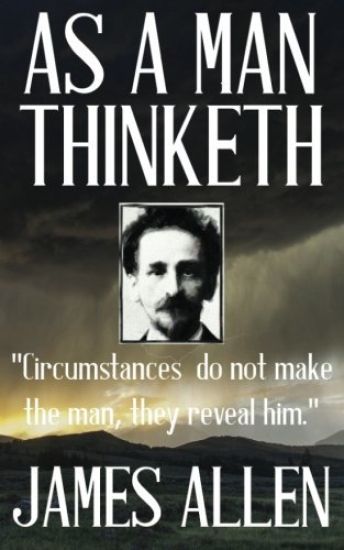
James Allen (28 November 1864 - 24 January 1912) was a British philosophical writer known for his inspirational books and poetry and as a pioneer of the self-help movement. His best known work, As a Man Thinketh, has been mass-produced since its publication in 1903. It has been a source of inspiration to motivational and self-help authors. As a Man Thinketh is a literary essay and book by James Allen, published in 1903. It was described by Allen as "... dealing] with the power of thought, and particularly with the use and application of thought to happy and beautiful issues. I have tried to make the book simple, so that all can easily grasp and follow its teaching, and put into practice the methods which it advises. It shows how, in his own thought-world, each man holds the key to every condition, good or bad, that enters into his life, and that, by working patiently and intelligently upon his thoughts, he may remake his life, and transform his circumstances. The price of the book is only one shilling, and it can be carried in the pocket." It was also described by Allen as "A book that will help you to help yourself", "A pocket companion for thoughtful people", and "A book on the power and right application of thought."
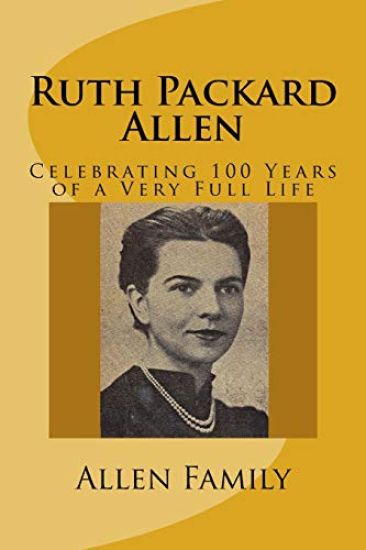
Family memories and photos celebration the 100th birthday of Ruth Packard Allen, mother, mother-in-law, grandmother, great grandmother and great great grandmother.
Allen was born near Kingston, Canada West (known as Ontario after Confederation) - the second son of Catharine Ann Grant and the Rev. Joseph Antisell Allen, a Protestant minister from Dublin, Ireland. His mother was a daughter of the fifth Baron of Longueuil. He was educated at home until, at age 13, he and his parents moved to the United States, then to France and finally to the United Kingdom. 3] He was educated at King Edward's School in Birmingham and at Merton College in Oxford, both in the United Kingdom. After graduation, Allen studied in France, taught at Brighton College in 1870-71 and in his mid-twenties became a professor at Queen's College, a black college in Jamaica. Despite citation needed] his religious father, Allen became an agnostic and a socialist. After leaving his professorship, in 1876 he returned to England, where he turned his talents to writing, gaining a reputation for his essays on science and for literary works. A 2007 book by Oliver Sacks cites with approval one of Allen's early articles, 'Note-Deafness' (a description of what became known as amusia, published in 1878 in the learned journal Mind). His first books dealt with scientific subjects, and include Physiological sthetics (1877) and Flowers and Their Pedigrees (1886). He was first influenced by associationist psychology as expounded by Alexander Bain and by Herbert Spencer, the latter often considered by whom?] the most important individual in the transition from associationist psychology to Darwinian functionalism. In Allen's many articles on flowers and on perception in insects, Darwinian arguments replaced the old Spencerian terms, leading to a radically new vision of plant life that influenced HG Wells and helped transform later botanical research. On a personal level, a long friendship that started when Allen met Spencer on his return from Jamaica grew uneasy over the years. Allen wrote a critical and revealing biographical article on Spencer that was published after Spencer's death.
Allen was born near Kingston, Canada West (known as Ontario after Confederation) - the second son of Catharine Ann Grant and the Rev. Joseph Antisell Allen, a Protestant minister from Dublin, Ireland.His mother was a daughter of the fifth Baron of Longueuil. He was educated at home until, at age 13, he and his parents moved to the United States, then to France and finally to the United Kingdom. 3] He was educated at King Edward's School in Birmingham and at Merton College in Oxford, both in the United Kingdom. After graduation, Allen studied in France, taught at Brighton College in 1870-71 and in his mid-twenties became a professor at Queen's College, a black college in Jamaica. Despite citation needed] his religious father, Allen became an agnostic and a socialist. After leaving his professorship, in 1876 he returned to England, where he turned his talents to writing, gaining a reputation for his essays on science and for literary works. A 2007 book by Oliver Sacks cites with approval one of Allen's early articles, 'Note-Deafness' (a description of what became known as amusia, published in 1878 in the learned journal Mind). His first books dealt with scientific subjects, and include Physiological sthetics (1877) and Flowers and Their Pedigrees (1886). He was first influenced by associationist psychology as expounded by Alexander Bain and by Herbert Spencer, the latter often considered by whom?] the most important individual in the transition from associationist psychology to Darwinian functionalism. In Allen's many articles on flowers and on perception in insects, Darwinian arguments replaced the old Spencerian terms, leading to a radically new vision of plant life that influenced HG Wells and helped transform later botanical research. On a personal level, a long friendship that started when Allen met Spencer on his return from Jamaica grew uneasy over the years. Allen wrote a critical and revealing biographical article on Spencer that was published after Spencer's death.
Allen was born near Kingston, Canada West (known as Ontario after Confederation) - the second son of Catharine Ann Grant and the Rev. Joseph Antisell Allen, a Protestant minister from Dublin, Ireland. His mother was a daughter of the fifth Baron of Longueuil. He was educated at home until, at age 13, he and his parents moved to the United States, then to France and finally to the United Kingdom. 3] He was educated at King Edward's School in Birmingham and at Merton College in Oxford, both in the United Kingdom. After graduation, Allen studied in France, taught at Brighton College in 1870-71 and in his mid-twenties became a professor at Queen's College, a black college in Jamaica. Despite citation needed] his religious father, Allen became an agnostic and a socialist. After leaving his professorship, in 1876 he returned to England, where he turned his talents to writing, gaining a reputation for his essays on science and for literary works. A 2007 book by Oliver Sacks cites with approval one of Allen's early articles, 'Note-Deafness' (a description of what became known as amusia, published in 1878 in the learned journal Mind). His first books dealt with scientific subjects, and include Physiological sthetics (1877) and Flowers and Their Pedigrees (1886). He was first influenced by associationist psychology as expounded by Alexander Bain and by Herbert Spencer, the latter often considered by whom?] the most important individual in the transition from associationist psychology to Darwinian functionalism. In Allen's many articles on flowers and on perception in insects, Darwinian arguments replaced the old Spencerian terms, leading to a radically new vision of plant life that influenced HG Wells and helped transform later botanical research. On a personal level, a long friendship that started when Allen met Spencer on his return from Jamaica grew uneasy over the years. Allen wrote a critical and revealing biographical article on Spencer that was published after Spencer's death.
Charles Grant Blairfindie Allen (February 24, 1848 - October 25, 1899) was a Canadian science writer and novelist, and a proponent of the theory of evolution.Allen was born near Kingston, Canada West (known as Ontario after Confederation) - the second son of Catharine Ann Grant and the Rev. Joseph Antisell Allen, a Protestant minister from Dublin, Ireland.His mother was a daughter of the fifth Baron of Longueuil. He was educated at home until, at age 13, he and his parents moved to the United States, then to France and finally to the United Kingdom.He was educated at King Edward's School in Birmingham and at Merton College in Oxford, both in the United Kingdom.After graduation, Allen studied in France, taught at Brighton College in 1870-71 and in his mid-twenties became a professor at Queen's College, a black college in Jamaica. Despite citation needed] his religious father, Allen became an agnostic and a socialist. After leaving his professorship, in 1876 he returned to England, where he turned his talents to writing, gaining a reputation for his essays on science and for literary works. A 2007 book by Oliver Sacks cites with approval one of Allen's early articles, 'Note-Deafness' (a description of what became known as amusia, published in 1878 in the learned journal Mind). His first books dealt with scientific subjects, and include Physiological esthetics (1877) and Flowers and Their Pedigrees (1886). He was first influenced by associationist psychology as expounded by Alexander Bain and by Herbert Spencer, the latter often considered by whom?] the most important individual in the transition from associationist psychology to Darwinian functionalism. In Allen's many articles on flowers and on perception in insects, Darwinian arguments replaced the old Spencerian terms, leading to a radically new vision of plant life that influenced HG Wells and helped transform later botanical research. On a personal level, a long friendship that started when Allen met Spencer on his return from Jamaica grew uneasy over the years. Allen wrote a critical and revealing biographical article on Spencer that was published after Spencer's death.After assisting Sir W. W. Hunter in his Gazeteer of India in the early 1880s, Allen turned his attention to fiction, and between 1884 and 1899 produced about 30 novels. In 1895, his scandalous book titled The Woman Who Did, promulgating certain startling views on marriage and kindred questions, became a bestseller. The book told the story of an independent woman who has a child out of wedlock.In his career, Allen wrote two novels under female pseudonyms. One of these, the short novel The Type-writer Girl, he wrote under the name Olive Pratt Rayner. Another work, The Evolution of the Idea of God (1897), propounding a theory of religion on heterodox citation needed] lines, has the disadvantage original research?] of endeavoring to explain everything by one theory. This "ghost theory" was often seen by whom?] as a derivative of Herbert Spencer's theory. However, it was well known and brief references to it appear in a review by Marcel Mauss, Durkheim's nephew, in the articles of William James and in the works of Sigmund Freud. The young G. K. Chesterton wrote on what he considered the flawed premise of the idea, arguing that the idea of God preceded human mythologies, rather than developing from them. Chesterton said of Grant Allen's book on the evolution of the idea of God "it would be much more interesting if God wrote a book on the evolution of the idea of Grant Allen".
Charles Grant Blairfindie Allen (February 24, 1848 - October 25, 1899) was a Canadian science writer and novelist, and a proponent of the theory of evolution. Allen was born near Kingston, Canada West (known as Ontario after Confederation) - the second son of Catharine Ann Grant and the Rev. Joseph Antisell Allen, a Protestant minister from Dublin, Ireland.His mother was a daughter of the fifth Baron of Longueuil. He was educated at home until, at age 13, he and his parents moved to the United States, then to France and finally to the United Kingdom.He was educated at King Edward's School in Birmingham and at Merton College in Oxford, both in the United Kingdom.After graduation, Allen studied in France, taught at Brighton College in 1870-71 and in his mid-twenties became a professor at Queen's College, a black college in Jamaica.Despite citation needed] his religious father, Allen became an agnostic and a socialist. After leaving his professorship, in 1876 he returned to England, where he turned his talents to writing, gaining a reputation for his essays on science and for literary works. A 2007 book by Oliver Sacks cites with approval one of Allen's early articles, 'Note-Deafness' (a description of what became known as amusia, published in 1878 in the learned journal Mind). His first books dealt with scientific subjects, and include Physiological sthetics (1877) and Flowers and Their Pedigrees (1886). He was first influenced by associationist psychology as expounded by Alexander Bain and by Herbert Spencer, the latter often considered by whom?] the most important individual in the transition from associationist psychology to Darwinian functionalism. In Allen's many articles on flowers and on perception in insects, Darwinian arguments replaced the old Spencerian terms, leading to a radically new vision of plant life that influenced HG Wells and helped transform later botanical research. On a personal level, a long friendship that started when Allen met Spencer on his return from Jamaica grew uneasy over the years. Allen wrote a critical and revealing biographical article on Spencer that was published after Spencer's death. After assisting Sir W. W. Hunter in his Gazeteer of India in the early 1880s, Allen turned his attention to fiction, and between 1884 and 1899 produced about 30 novels. In 1895, his scandalous book titled The Woman Who Did, promulgating certain startling views on marriage and kindred questions, became a bestseller. The book told the story of an independent woman who has a child out of wedlock.In his career, Allen wrote two novels under female pseudonyms. One of these, the short novel The Type-writer Girl, he wrote under the name Olive Pratt Rayner. Another work, The Evolution of the Idea of God (1897), propounding a theory of religion on heterodox citation needed] lines, has the disadvantage original research?] of endeavoring to explain everything by one theory. This "ghost theory" was often seen by whom?] as a derivative of Herbert Spencer's theory. However, it was well known and brief references to it appear in a review by Marcel Mauss, Durkheim's nephew, in the articles of William James and in the works of Sigmund Freud. The young G. K. Chesterton wrote on what he considered the flawed premise of the idea, arguing that the idea of God preceded human mythologies, rather than developing from them. Chesterton said of Grant Allen's book on the evolution of the idea of God "it would be much more interesting if God wrote a book on the evolution of the idea of Grant Allen".
Charles Grant Blairfindie Allen (February 24, 1848 - October 25, 1899) was a Canadian science writer and novelist, and a proponent of the theory of evolution. Allen was born near Kingston, Canada West (known as Ontario after Confederation) - the second son of Catharine Ann Grant and the Rev. Joseph Antisell Allen, a Protestant minister from Dublin, Ireland.His mother was a daughter of the fifth Baron of Longueuil. He was educated at home until, at age 13, he and his parents moved to the United States, then to France and finally to the United Kingdom.He was educated at King Edward's School in Birmingham and at Merton College in Oxford, both in the United Kingdom.After graduation, Allen studied in France, taught at Brighton College in 1870-71 and in his mid-twenties became a professor at Queen's College, a black college in Jamaica.Despite citation needed] his religious father, Allen became an agnostic and a socialist. After leaving his professorship, in 1876 he returned to England, where he turned his talents to writing, gaining a reputation for his essays on science and for literary works. A 2007 book by Oliver Sacks cites with approval one of Allen's early articles, 'Note-Deafness' (a description of what became known as amusia, published in 1878 in the learned journal Mind). His first books dealt with scientific subjects, and include Physiological sthetics (1877) and Flowers and Their Pedigrees (1886). He was first influenced by associationist psychology as expounded by Alexander Bain and by Herbert Spencer, the latter often considered by whom?] the most important individual in the transition from associationist psychology to Darwinian functionalism. In Allen's many articles on flowers and on perception in insects, Darwinian arguments replaced the old Spencerian terms, leading to a radically new vision of plant life that influenced HG Wells and helped transform later botanical research. On a personal level, a long friendship that started when Allen met Spencer on his return from Jamaica grew uneasy over the years. Allen wrote a critical and revealing biographical article on Spencer that was published after Spencer's death. After assisting Sir W. W. Hunter in his Gazeteer of India in the early 1880s, Allen turned his attention to fiction, and between 1884 and 1899 produced about 30 novels. In 1895, his scandalous book titled The Woman Who Did, promulgating certain startling views on marriage and kindred questions, became a bestseller. The book told the story of an independent woman who has a child out of wedlock.In his career, Allen wrote two novels under female pseudonyms. One of these, the short novel The Type-writer Girl, he wrote under the name Olive Pratt Rayner. Another work, The Evolution of the Idea of God (1897), propounding a theory of religion on heterodox citation needed] lines, has the disadvantage original research?] of endeavoring to explain everything by one theory. This "ghost theory" was often seen by whom?] as a derivative of Herbert Spencer's theory. However, it was well known and brief references to it appear in a review by Marcel Mauss, Durkheim's nephew, in the articles of William James and in the works of Sigmund Freud. The young G. K. Chesterton wrote on what he considered the flawed premise of the idea, arguing that the idea of God preceded human mythologies, rather than developing from them. Chesterton said of Grant Allen's book on the evolution of the idea of God "it would be much more interesting if God wrote a book on the evolution of the idea of Grant Allen".
Charles Grant Blairfindie Allen (February 24, 1848 - October 25, 1899) was a Canadian science writer and novelist, and a proponent of the theory of evolution. Allen was born near Kingston, Canada West (known as Ontario after Confederation) - the second son of Catharine Ann Grant and the Rev. Joseph Antisell Allen, a Protestant minister from Dublin, Ireland.His mother was a daughter of the fifth Baron of Longueuil. He was educated at home until, at age 13, he and his parents moved to the United States, then to France and finally to the United Kingdom.He was educated at King Edward's School in Birmingham and at Merton College in Oxford, both in the United Kingdom.After graduation, Allen studied in France, taught at Brighton College in 1870-71 and in his mid-twenties became a professor at Queen's College, a black college in Jamaica.Despite citation needed] his religious father, Allen became an agnostic and a socialist. After leaving his professorship, in 1876 he returned to England, where he turned his talents to writing, gaining a reputation for his essays on science and for literary works. A 2007 book by Oliver Sacks cites with approval one of Allen's early articles, 'Note-Deafness' (a description of what became known as amusia, published in 1878 in the learned journal Mind). His first books dealt with scientific subjects, and include Physiological sthetics (1877) and Flowers and Their Pedigrees (1886). He was first influenced by associationist psychology as expounded by Alexander Bain and by Herbert Spencer, the latter often considered by whom?] the most important individual in the transition from associationist psychology to Darwinian functionalism. In Allen's many articles on flowers and on perception in insects, Darwinian arguments replaced the old Spencerian terms, leading to a radically new vision of plant life that influenced HG Wells and helped transform later botanical research. On a personal level, a long friendship that started when Allen met Spencer on his return from Jamaica grew uneasy over the years. Allen wrote a critical and revealing biographical article on Spencer that was published after Spencer's death. After assisting Sir W. W. Hunter in his Gazeteer of India in the early 1880s, Allen turned his attention to fiction, and between 1884 and 1899 produced about 30 novels. In 1895, his scandalous book titled The Woman Who Did, promulgating certain startling views on marriage and kindred questions, became a bestseller. The book told the story of an independent woman who has a child out of wedlock.In his career, Allen wrote two novels under female pseudonyms. One of these, the short novel The Type-writer Girl, he wrote under the name Olive Pratt Rayner. Another work, The Evolution of the Idea of God (1897), propounding a theory of religion on heterodox citation needed] lines, has the disadvantage original research?] of endeavoring to explain everything by one theory. This "ghost theory" was often seen by whom?] as a derivative of Herbert Spencer's theory. However, it was well known and brief references to it appear in a review by Marcel Mauss, Durkheim's nephew, in the articles of William James and in the works of Sigmund Freud. The young G. K. Chesterton wrote on what he considered the flawed premise of the idea, arguing that the idea of God preceded human mythologies, rather than developing from them. Chesterton said of Grant Allen's book on the evolution of the idea of God "it would be much more interesting if God wrote a book on the evolution of the idea of Grant Allen".