Kirjojen hintavertailu. Mukana 12 459 402 kirjaa ja 12 kauppaa.

Kirjahaku

Etsi kirjoja tekijän nimen, kirjan nimen tai ISBN:n perusteella.

1000 tulosta hakusanalla Alphonse Castaing

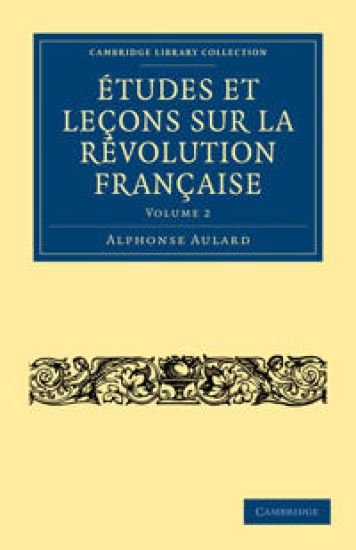
Études et leçons sur la Révolution Française

Études et leçons sur la Révolution Française

Alphonse Aulard

Cambridge University Press
2011
pokkari
Alphonse Aulard (1849–1928) was the first French historian to use nineteenth-century historicist methods in the study of the French Revolution. Pioneered by German historians such as Leopold van Ranke, this approach emphasised empiricism, objectivity and the scientific pursuit of facts, rather than the philosophical and literary concerns that had guided earlier scholars. Aulard's commitment to archival investigation is evidenced by the many edited collections of primary sources that appear in his extensive publication record. In these eight volumes of papers analysing the French Revolution (published 1893–1921), Aulard sought to apply the principles of historicism to reveal the truth and dispel myths. The work draws on earlier journal articles and lectures which Aulard delivered as Professor of the History of the French Revolution at the Sorbonne, a post he had held since 1885. Volume 2 (1898) covers the September Massacres of 1792 and the establishment of the Consulate in 1799.
Études et leçons sur la Révolution Française

Études et leçons sur la Révolution Française

Alphonse Aulard

Cambridge University Press
2011
pokkari
Alphonse Aulard (1849–1928) was the first French historian to use nineteenth-century historicist methods in the study of the French Revolution. Pioneered by German historians such as Leopold van Ranke, this approach emphasised empiricism, objectivity and the scientific pursuit of facts. Aulard's commitment to archival investigation is evidenced by the many edited collections of primary sources that appear in his extensive publication record. In these eight volumes of papers analysing the French Revolution (published 1893–1921), Aulard sought to apply the principles of historicism to reveal the truth and dispel myths. The work draws on earlier journal articles and lectures which Aulard delivered as Professor of the History of the French Revolution at the Sorbonne, a post he had held since 1885. Volume 3 (1902) surveys the history of the French provinces, the role of the Committee of Public Safety during the Terror, and the unification of Monaco with France in 1793.
Études et leçons sur la Révolution Française

Études et leçons sur la Révolution Française

Alphonse Aulard

Cambridge University Press
2011
pokkari
Alphonse Aulard (1849–1928) was the first French historian to use nineteenth-century historicist methods in the study of the French Revolution. Pioneered by German historians such as Leopold van Ranke, this approach emphasised empiricism, objectivity and the scientific pursuit of facts, rather than philosophical or literary concerns. Aulard's commitment to archival investigation is evidenced by the many edited collections of primary sources that appear in his extensive publication record. In these eight volumes of papers analysing the French Revolution (published 1893–1921), Aulard sought to apply the principles of historicism to reveal the truth. The work draws on earlier journal articles and lectures which Aulard delivered as Professor of the History of the French Revolution at the Sorbonne, a post he had held since 1885. Volume 4 (1904) covers education under the Terror, the rise of socialism, and the life of Georges Jacques Danton, a leading figure in the Revolution.
Études et leçons sur la Révolution Française

Études et leçons sur la Révolution Française

Alphonse Aulard

Cambridge University Press
2011
pokkari
Alphonse Aulard (1849–1928) was the first French historian to use nineteenth-century historicist methods in the study of the French Revolution. Pioneered by German historians such as Leopold van Ranke, this approach emphasised empiricism, objectivity and the scientific pursuit of facts. Aulard's commitment to archival investigation is evidenced by the many edited collections of primary sources that appear in his extensive publication record. In these eight volumes of papers analysing the French Revolution (published 1893–1921), Aulard sought to apply the principles of historicism to reveal the truth. The work draws on earlier journal articles and lectures which Aulard delivered as Professor of the History of the French Revolution at the Sorbonne, a post he had held since 1885. Volume 5 (1907) covers the separation of church and state and the Concordat of 1801 which redefined the status of the Roman Catholic Church in France, giving more power to the state.
Études et leçons sur la Révolution Française

Études et leçons sur la Révolution Française

Alphonse Aulard

Cambridge University Press
2011
pokkari
Alphonse Aulard (1849–1928) was the first French historian to use nineteenth-century historicist methods in the study of the French Revolution. Pioneered by German historians such as Leopold van Ranke, this approach emphasised empiricism, objectivity and the scientific pursuit of facts, rather than philosophical and literary concerns. Aulard's commitment to archival investigation is evidenced by the many edited collections of primary sources that appear in his extensive publication record. In these eight volumes of papers analysing the French Revolution (published 1893–1921), Aulard sought to apply the principles of historicism to reveal the truth. The work draws on earlier journal articles and lectures which Aulard delivered as Professor of the History of the French Revolution at the Sorbonne, a post he had held since 1885. Volume 6 (1910) describes the development of the motto 'Liberty, Equality, Fraternity', and assesses the accuracy of early accounts of the Revolution.
Études et leçons sur la Révolution Française

Études et leçons sur la Révolution Française

Alphonse Aulard

Cambridge University Press
2011
pokkari
Alphonse Aulard (1849–1928) was the first French historian to use nineteenth-century historicist methods in the study of the French Revolution. Pioneered by German historians such as Leopold van Ranke, this approach emphasised empiricism, objectivity and the scientific pursuit of facts. Aulard's commitment to archival investigation is evidenced by the many edited collections of primary sources that appear in his extensive publication record. In these eight volumes of papers analysing the French Revolution (published 1893–1921), Aulard sought to apply the principles of historicism to reveal the truth. The work draws on earlier journal articles and lectures which Aulard delivered as Professor of the History of the French Revolution at the Sorbonne, a post he had held since 1885. Volume 7 (1913) includes essays on feudalism under Louis XVI, regionalism, centralisation, Carlyle's history of the Revolution (also reissued in this series), economic history, and Aulard's personal reflections on his teaching career.
Études et leçons sur la Révolution Française

Études et leçons sur la Révolution Française

Alphonse Aulard

Cambridge University Press
2011
pokkari
Alphonse Aulard (1849–1928) was the first French historian to use nineteenth-century historicist methods in the study of the French Revolution. Pioneered by German historians such as Leopold van Ranke, this approach emphasised empiricism, objectivity and the scientific pursuit of facts, rather than the philosophical and literary concerns that had guided earlier scholars. Aulard's commitment to archival investigation is evidenced by the many edited collections of primary sources that appear in his extensive publication record. In these eight volumes of papers analysing the French Revolution (published 1893–1921), Aulard sought to apply the principles of historicism to reveal the truth. The work draws on earlier journal articles and lectures which Aulard delivered as Professor of the History of the French Revolution at the Sorbonne, a post he had held since 1885. Volume 8 (1921) describes the annexation by France of land in the Rhine Valley, and compares the French and American Revolutions.
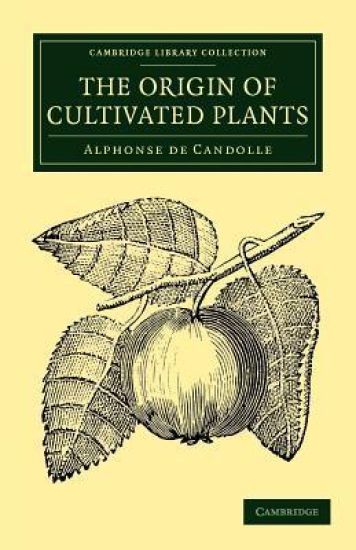
The Origin of Cultivated Plants

The Origin of Cultivated Plants

Alphonse De Candolle

Cambridge University Press
2011
pokkari
Alphonse de Candolle (1806–93) was a French-Swiss botanist who was an important figure in the study of the origins of plants and the reasons for their geographic distribution. He also created the first Code of Botanical Nomenclature. Despite initially studying law, he took over both the chair of botany at the University of Geneva, and the directorship of Geneva's botanical gardens from his father Augustin de Candolle (1778–1841). He published numerous botanical books, and edited ten volumes of the Prodromus, a seventeen-volume reference text intended to cover the key properties of all known seed plants. This work, reissued in the second edition of the English translation of 1886, is his most famous and influential book, tracing the geographic origins of plants known to have been cultivated by humans. It is one of the earliest studies of the history of crop domestication, and an important contribution to phytogeography.