Kirjojen hintavertailu. Mukana 12 016 292 kirjaa ja 12 kauppaa.

Kirjahaku

Etsi kirjoja tekijän nimen, kirjan nimen tai ISBN:n perusteella.

1000 tulosta hakusanalla Alvin Addison

Ariel and the Fountain of Seven Graces
When the language was young and full of wonder, it crafted illustrious tales of beauty about once unimaginable immortal loves that unexpectedly lost their ardor across the battlefield of time, human frailties, and broken hopes. A thousand loves were born in the bosom of every legend and a thousand more died under bated breath in the feeble arms of aging myths. Like the mercurial forces of nature and man's own mortality, every auspicious thought of human imagination was subjected to the same cycle of love, beauty, decay, ruin and death. And from this spinning wheel of creation, bliss, and chaos, emotions and words were delicately weaved into poetry.
Sinfonia 9

Sinfonia 9

Alvin Conway

Lulu.com
2012
pokkari
If the Age of Reason was the masculine Yang, then it can be said Romanticism, invariably, was its creative feminine counterpoint, the Yin. Plato's argumentative philosophical essays in The Republic on the dynamism and contrast between sense (the head) and sensibility (the heart) was Kant's discourse on phenomenon and its antipode, noumenon. Mathematics is abstract form but it is not beauty. A rose is beauty but it is not abstract form. The language of mathematics in scientific realism became a central component of the Age of Reason. In contrast, the language of the rose expressing abstract sentiment became a central component of Romanticism. Blake's tyger is seen as raging and burning bright while Poe's dreams come quietly in the dark of night. Both poets used Romantic language and allegories to convey different aspects of reason, sentiment, and intuition. The poet could not live his experience with his audience symbiotically but they could share in his experience empathically through his gift of words.
The 7th Protocol

The 7th Protocol

Alvin Conway

Lulu.com
2013
pokkari
Early in the solar system's history, a series of violent apocalyptic explosions occurred in interplanetary space that have never been fully documented or explained by science. Phaeton, the giant planet between Jupiter and Mars exploded. Moons were crushed and planets were overturned in the celestial upheaval. The amount of energy released in the series of mysterious blasts was equal to the power of 10 Earth Suns. There is no force known to modern science that could account for the widespread devastation scattered over a region of space encompassing some 7.4 billion kilometers yet the tantalizing clues about the possible causes for the event are there and have been uncovered by our astrophysical investigation. In the ruins on far-flung moons, on distant scarred planets, and on Earth, we found evidence and prophetic warnings that this 'unthinkable' cosmic event will happen again.
Hazard: the Extinction Protocol Guide to Risk Mitigation
"Major disasters like the Japanese earthquake, the Joplin tornadoes, and Sandy are likely to become more frequent, and global governments must prepare for an uncertain future," said the 2011 report issued by the International Development Ministry in Britain. Scientists, in the report, said recent natural disasters are "the beginnings of a new kind of future in which mega-disasters are going to be more frequent. The scale, frequency and severity of rapid onset humanitarian disasters will continue to grow in the coming years, and at an accelerating pace." What would you do if you were faced with the imminent threat of a mega-earthquake or tsunami, the threat of a thermo-nuclear war, a nuclear plant melt-down, a volcanic eruption, a chemical or biological terror attack or a global pandemic? How do you protect yourself and your family from the ever-increasing set of calamitous hazards facing our modern world? What are the planet's low risk zones and where do you find them?
Sparkle: God and the Science of a Compassionate Universe
Our world is mired in chaos, disorder, and endless conflict. We have depleted the planet's natural resources to a point of scarcity. Wars now threaten to erupt over Earth's last dwindling natural resources: fossil fuel, water, arable land, and rare-earth minerals. We have used the fear of mutual assured annihilation by destructive weapons to achieve a tenuous and shaky peace in the world. Our financial institutions are imploding, as nations sink beneath oceans of debt. It is becoming clear that the entire model human civilization was built upon is flawed and destined to soon catastrophically unravel. Is this humanity's destiny or did we lose our way in a maze of material distractions? We needn't languish in the shadows of despair, failure, and mediocrity. We can achieve greatness, and bring harmony back to the world by emulating the patterns God has woven into nature. Nature's patterns are rooted in the science of compassion. We can triumph in life's darkest and most trying hour. We, too, can sparkle.
Marketing Strategy Pack

Marketing Strategy Pack

Alvin Lee; Mark G. Edwards

Cambridge University Press
2013
muu
This pack contains both the textbook and casebook. Marketing Strategy: A Life-Cycle Approach takes a fresh approach to teaching students how to devise, implement and monitor strategies for superior performance in the market with a focus on themes of sustainability and ethics. The concepts and principles of strategic marketing are introduced from a product and business life-cycle perspective. Within that framework, the book explains the nature of strategic thinking, covers the theory and practical application of analytics, explores the considerations, constraints and possible strategic marketing choices available at each stage of the product life-cycle and outlines how to monitor and modify the performance of strategies. With a matching structure and topical emphasis, the accompanying Marketing Strategy Casebook is a collection of contemporary case studies designed to develop students' capacity to analyse challenging situations and to implement strategies to overcome them. The case studies are based on real-world scenarios and are drawn from diverse regions, industries and technologies.
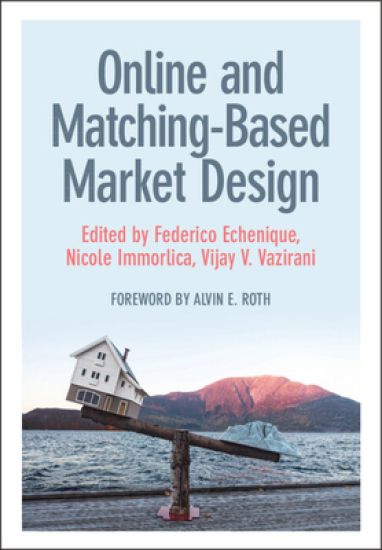
Online and Matching-Based Market Design

Online and Matching-Based Market Design

Alvin E. Roth

Cambridge University Press
2023
sidottu
The rich, multi-faceted and multi-disciplinary field of matching-based market design is an active and important one due to its highly successful applications with economic and sociological impact. Its home is economics, but with intimate connections to algorithm design and operations research. With chapters contributed by over fifty top researchers from all three disciplines, this volume is unique in its breadth and depth, while still being a cohesive and unified picture of the field, suitable for the uninitiated as well as the expert. It explains the dominant ideas from computer science and economics underlying the most important results on market design and introduces the main algorithmic questions and combinatorial structures. Methodologies and applications from both the pre-Internet and post-Internet eras are covered in detail. Key chapters discuss the basic notions of efficiency, fairness and incentives, and the way market design seeks solutions guided by normative criteria borrowed from social choice theory.
Saving Black Colleges

Saving Black Colleges

Alvin J. Schexnider

Palgrave Macmillan
2013
sidottu
Saving Black Colleges makes clear the challenges, opportunities, and prospects for change historically black colleges and universities now face. Schexnider, the former chancellor of Winston-Salem State University, details what he could and could not accomplish, examines how these issues affect other HBCUs, and outlines a practical way forward.Alvin J. Schexnider is the president of Schexnider & Associates, LLC. He previously served as the president of Thomas Nelson Community College and as the executive vice president and interim president of Norfolk State University.
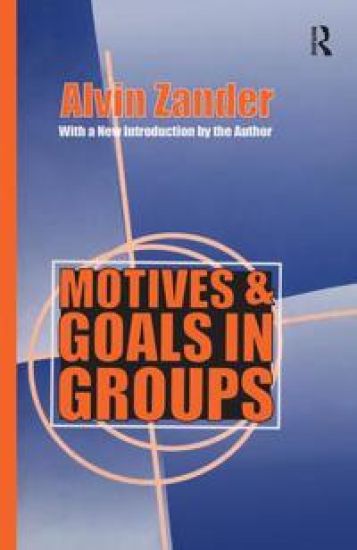
Motives and Goals in Groups

Motives and Goals in Groups

Alvin Zander

Routledge
2018
sidottu
The qualities and effectiveness of working groups are determined by the goals of the group and the motives of its members. In Motives and Goals In Groups, Alvin Zander studies the effects of group goals and the reasons why particular group goals are chosen. He examines the origins of such goals, determines their value in terms of the work of the group, and analyzes how goals are affected by members' aspirations to achieve success. Zander assumes the idea that the motives of members are not merely dispositions to obtain personal satisfaction, but are also inclinations to achieve group success.Earlier studies defined and clarified concepts about group achievement. They report on work in the laboratory, using high school students as subjects. In later investigations, these concepts were tested in groups outside the laboratory classrooms, executive boards, industrial crews, and business departments.In the new introduction, Zander brings his book up to date by analyzing members' motives and groups' goals from 1971 to the present day. He examines how current findings amplify results reported in the original book. Among the topics covered are: measurability of a group's objective; the degree of members' confidence in attaining the group's goal; the importance of a group's purpose; external pressures on a group's aspirations; and the reaction of members to their group's performance.Motives and Goals in Groups brings together earlier research for the first careful, scientific study of goals In groups. It is of continuing importance to psychologists, educators, social workers, executives, therapists, and all others who work either in or with groups.
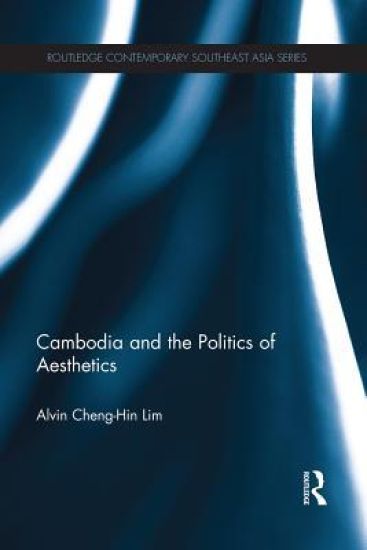
Cambodia and the Politics of Aesthetics
Illuminating developments in contemporary Cambodia with political and aesthetic theory, this book analyses the country’s violent transition from socialism to capitalism through an innovative method that combines the aesthetic approach and critical theory. To understand the particularities of the country’s transition and Cambodia’s unfolding encounter with neoliberal capitalism, the book pursues the circuits of desire connecting the constellation of objects and relations, which is identified as Cambodia. Chapters focus on the pre-colonial empire of Angkor, the invasions of Siam and Vietnam in the nineteenth century, the devastation of the Khmer Rouge genocide and the subsequent Vietnamese occupation, and the present rapacity of Hun Sen’s neoliberal government.A creative combination of auto-ethnography, critical theory, and area studies and the analysis of a historical moment, the book is of interest to academics working on comparative politics, Asian studies, holocaust studies, critical theory, and in the politics of aesthetics.
Natural and Artificial Bodies in Early Modern England
This book brings contemporary ways of reconceptualizing the human relationship to things into conversation with seventeenth-century writing, exploring how the literature of the period intersected with changing understandings of the conceptual structure of matter and how human beings might reconfigure their place in a web of nonhuman relations. Focusing on texts that cross the frontier between literature and science, Snider recovers the material and body worlds of seventeenth-century culture as treated in poetry, natural philosophy, medical treatises, comedy, and prose fiction. He shows how a range of writers understood and theorized “matter,” “bodies,” and “spirits” as characters in complex and sometimes bizarre scenarios involving human relationships to the phenomenal world. The logic that made matter subject to uniform theorizing facilitated a crossing of boundaries between the human and nonhuman and became a persistent figure of explanation at the time when distinctions between the natural and the artificial were undergoing reformulation.
Hypertension and Stress

Hypertension and Stress

Alvin P. Shapiro

Routledge
2021
nidottu
Understanding and treating hypertension has progressed significantly during the past 40 to 50 years. This progress has made a major contribution to health care concerns such as quality of life, prevention of disability, and mortality. In the past, hypertension and hypertensive disease had been a "silent scourge," but it is presently an industry. Research on hypertension has expanded into a variety of fields including epidemiology, endocrinology, surgery, pharmacology, and behavioral medicine. Therapeutic accomplishments have made hypertension a leading source of income for the pharmaceutical industry; the field of clinical pharmacology originated with the development of drugs to treat hypertension. Increasingly, specific drugs to treat specific mechanisms which raise blood pressure have moved from the laboratory to the bedside. A constant awareness has been present that emotional stress, both from within the individual as well as from environmental sources, plays a role in the "three Ps" -- predisposition,precipitation, and perpetuation -- of hypertension. Arguments range from stating that such stress may be the major cause of at least some forms of hypertension, to allowing that although some effect is present from stress, it is only a minor perturbation of no significance in the overall pattern of the disease. Advocates of stress theory may be biased by a lack of detailed knowledge or experience with the physiology and biochemistry involved in the establishment of this disorder. On the other hand, those who deny the importance of stress factors may be unaware of the large body of data that indicate the role of these factors in any comprehensive understanding of hypertension. Following the Mosaic Theory, this book's approach to hypertension shows that multiple factors can be invoked in understanding the etiology and management of hypertension, where the strength of individual factors vary depending on genetic background, acquired diseases, and environmental influences. Stress can be involved in predisposition by affecting a genetically programmed person, in precipitation by supplying the stimulus to bring the disease to a clinical level, and in perpetuation by maintaining or exacerbating the clinical disease. This volume attempts to integrate what is known about the effects of stress on blood pressure with the overall mosaic of hypertension making use of the aforementioned "three Ps" as part of the framework for this integration.