Wholeness and health are a lifetime journey encompassing so much more than a traditional medical model for treatment. Integrative modalities can help bridge the gap that lead to fulfilling the goal of living a truly fulfilled life - physically, mentally and spiritually. Dr. Barbara's personal story, case histories and practical information can empower and inspire you on the road to true health. Explore insightful and inspiring information in this new book about: Osteopathy Acupuncture Yoga Breathwork Dietary Principles The Journey Work and much more
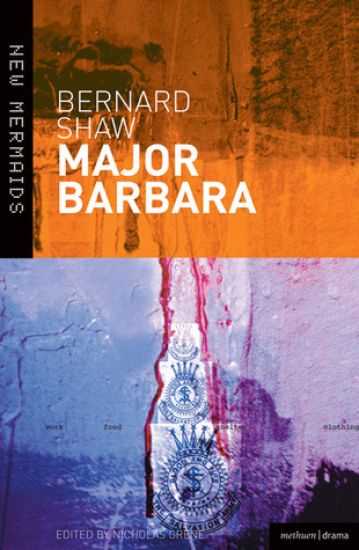
"There are two things necessary to salvation ...money and gunpowder" Major Barbara, Bernard Shaw's story of the conversion contest between the arms manufacturer Andrew Undershaft and his daughter, the Salvation Army Major, is a provocative dramatization of the relationship between money, power, and moral purpose. A landmark in the history of British theatre when first produced at the Royal Court in 1905, it remains strikingly relevant today, when recent history has repeatedly highlighted the power of the arms industry in shaping government policy, and globalization has accentuated the political and ethical issues of social welfare and international capital raised by the play. This edition includes Shaw's definitive text and provides the most comprehensive scholarly treatment of the play to date. A lengthy Introduction traces the history of the text from manuscript drafts to the famous 1941 wartime film version starring Wendy Hiller and Rex Harrison and on to modern stagings. It reveals Major Barbara as one of Shaw's most exciting and challenging plays for actors, directors, and readers.
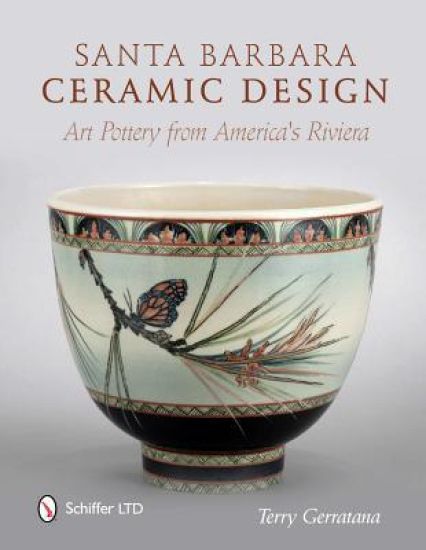
With pottery production migrating to Asia in the latter part of the twentieth century, Santa Barbara Ceramic Design (SBCD) was something of an anomaly–a homegrown studio producing unique decorative and functional ceramic art. This is the story of SBCD and how a studio pottery defined by one person producing hand-thrown, hand -decorated pottery evolved into a full-blown production pottery with distinct colorways, shapes, and designs. Complete with copious primary sources and company ephemera, this profile captures the voices of the creative forces behind SBCD, its company culture, and works that in many ways invoke the Arts and Crafts movement and earlier American potteries like Weller and Roseville. Featuring chapters on studio marks, an introduction by owner and founder Ray Markow,and a year-by-year review from 1973 to 1987, this is the definitive volume on SBCD for the ceramics collector, dealer, student, artist, and historian.
From the humble beginnings of Barbra Streisand s career in 1963 to full-fledged stardom in 1966, renowned Life magazine photographer Bill Eppridge had full access to the young singer. He photographed Streisand shopping in a thrift shop; trying on outfits in her apartment; and there s an appearance on the The Tonight Show with Johnny Carson then live from New York. Eppridge documented Streisand meeting with producer David Merrick, who wanted her for the starring role in Broadway s Funny Girl, which catapulted her to celebrity status. By the time Eppridge caught up with Streisand in 1966, she was a star in full orbit. Funny Girl had just wrapped, CBS had signed her to star in three television specials, five of her albums had gone gold and one platinum, and she had received three Grammys and an Emmy. Eppridge photographed Streisand throughout her CBS rehearsals and recording sessions, then went to Paris where he covered her at fashion shows with Marlene Dietrich and Coco Chanel, and captured a Richard Avedon shoot of her for French Vogue. Eppridge s photographs are vivid, candid, and a truly intriguing and unprecedented look at the beginnings of Streisand s career an intimate photo album by a master photographer of one of the most talented performers of our time.
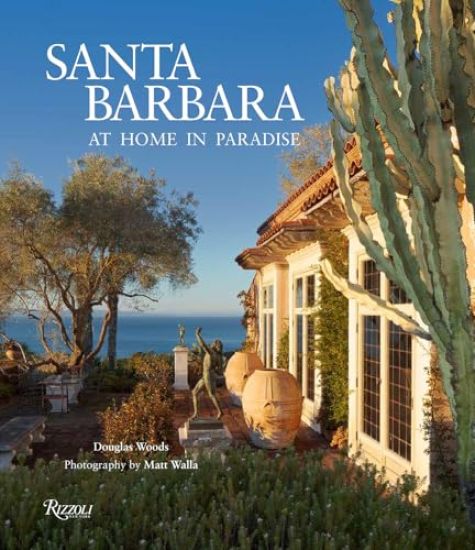
With all-new photographs of traditionally styled houses, from 1838 to today, in this extraordinary paradise on earth, this book celebrates a tradition in architecture and in living whose appeal has proven irresistible and with good reason. With its perfect climate and abundant California sunshine, Santa Barbara represents an enduring ideal and one that s happily real, and at hand. At its heart is the historic downtown, which features pristine white-washed Mediterranean-style stucco buildings with red tile roofs that harken back to the city s Spanish colonial heritage and the iconic Santa Barbara Mission of 1787, whose austere beauty set the tone for all that would later surround it. Known world-wide as the Santa Barbara style, the town epitomizes a type of building at once elegant and suffused with poetry, here kept in an extraordinary state of preservation. From its earliest days, the influence of this special place has been felt and has since radiated across the sunbelt; it remains to this day a model of emulation and inspiration. But it is the houses and the dream of living in Santa Barbara and its sister communities of Ojai, Carpenteria, Summerland, Goleta, and Montecito, that casts the most profound spell. Featuring a wide range of these houses, estates, and gardens, many previously unpublished and unphotographed, the book is a celebration of this wonderous eden. From the landmarked Rancho Santa Clara del Norte of 1838, with its beautiful classical gardens and evocative mountain views, to the traditionally styled contemporary treasure Villa Corbeau of 2006, the reader is at once surprised, delighted, and invited in. The work of noted architects, including the legendary George Washington Smith and Lutah Maria Riggs, is featured beside that of charming anonymous builders. From historic treasures reinterpreted for today to contemporary interpretations of tradition, the book is, like Santa Barbara, a treasure to behold and a magical place within which one finds enchantment.
Edited by Elizabeth T. Forter, this edition of Major Barbara for performance and study includes Shaw's complete "Preface." The text follows Shaw's spelling and punctuation. It also includes a highly regarded twenty-four page introduction, a list of the principal dates in the life of Bernard Shaw, and a selected bibliography.
George Bernard Shaw (1856-1950) was an Irish playwright, critic, polemicist and political activist. Born in Dublin, he moved to London when he turned twenty. Having rejected formal schooling, he educated himself by independent study in the reading room of the British Museum; he also began his career there by writing novels for which he could not find a publisher. His first success was as a music and literary critic, but he was drawn to drama and authored more than sixty plays during his career. Typically his work is leavened by a delightful vein of comedy, but nearly all of it bears earnest messages. He remains the only person to have been awarded both a Nobel Prize (1925) for his contribution to literature and an Oscar (1938) for Pygmalion.
George Bernard Shaw's "Major Barbara" is a powerful didactic drama exploring the complex relationship between morality, wealth, and salvation. This enduring work of social commentary delves into themes of religious hypocrisy, poverty, and political maneuvering, challenging conventional notions of good and evil. Through sharp wit and incisive dialogue, Shaw crafts a compelling narrative that questions the true cost of virtue and the compromises demanded by a flawed world. A cornerstone of European drama, "Major Barbara" remains a potent satire, provoking thoughtful reflection on the nature of power and the enduring human struggle for meaning. This meticulously prepared edition offers a timeless exploration of enduring social and ethical dilemmas.This work has been selected by scholars as being culturally important, and is part of the knowledge base of civilization as we know it.This work is in the public domain in the United States of America, and possibly other nations. Within the United States, you may freely copy and distribute this work, as no entity (individual or corporate) has a copyright on the body of the work.Scholars believe, and we concur, that this work is important enough to be preserved, reproduced, and made generally available to the public. We appreciate your support of the preservation process, and thank you for being an important part of keeping this knowledge alive and relevant.
Santa Barbara's Royal Rancho: The Fabulous History Of Los Dos Pueblos is a book written by Walker A. Tompkins that explores the fascinating history of the Los Dos Pueblos ranch in Santa Barbara, California. The book provides a detailed account of the ranch's origins, its development over time, and the many colorful characters who have played a role in its history.The story of Los Dos Pueblos begins in the early 19th century, when the land was owned by the Spanish government and used as a grazing ground for cattle. Over time, the ranch was acquired by a number of wealthy landowners, including the famous Hollywood actor Douglas Fairbanks Sr.Throughout its history, Los Dos Pueblos has been home to a wide variety of people, from wealthy landowners to hardworking ranch hands. The book explores the lives of these individuals, as well as the many challenges they faced over the years, including droughts, wildfires, and economic downturns.In addition to its historical content, Santa Barbara's Royal Rancho: The Fabulous History Of Los Dos Pueblos also features a wealth of photographs, maps, and other illustrations that help bring the story to life. Whether you are a history buff, a fan of California's rich ranching heritage, or simply interested in learning more about this fascinating piece of American history, this book is sure to provide a compelling and informative read.This scarce antiquarian book is a facsimile reprint of the old original and may contain some imperfections such as library marks and notations. Because we believe this work is culturally important, we have made it available as part of our commitment for protecting, preserving, and promoting the world's literature in affordable, high quality, modern editions, that are true to their original work.







![Santa Barbara, Etc. [Tales.] by Ouida.](/covers/9781241213718.jpg)