Kirjojen hintavertailu. Mukana 12 075 010 kirjaa ja 12 kauppaa.

Kirjahaku

Etsi kirjoja tekijän nimen, kirjan nimen tai ISBN:n perusteella.

1000 tulosta hakusanalla Benedict Boo

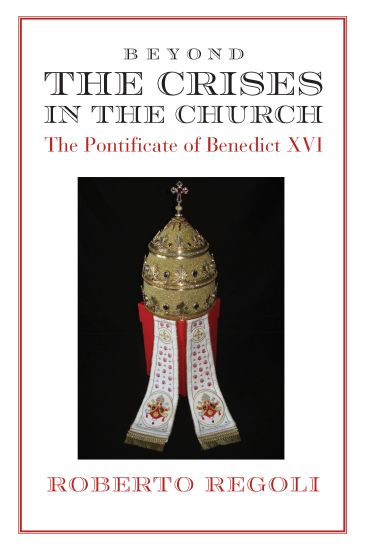
Beyond the Crises – The Pontificate of Benedict XVI
"I have felt like Saint Peter with the Apostles in the boat on the Sea of Galilee: the Lord has given us so many days of sun and of light winds, days when the catch was abundant; there were also moments when the waters were rough and the winds against us, as throughout the Church’s history, and the Lord seemed to be sleeping. But I have always known that the Lord is in that boat, and I have always known that the barque of the Church is not mine but his. Nor does the Lord let it sink; it is he who guides it, surely also through those whom he has chosen, because he so wished. This has been, and is, a certainty which nothing can shake." ––Benedict XVI, General Audience, 27 February 2013 Roberto Regoli offers a keen and comprehensive preview of Pope Benedict XVI's pontificate, which will be better understood only after time has passed and more becomes available. As an historian, Regoli provides ample context to frame the theology and pastoral priorities of a pope, professor, priest, and figure of history who has been shaped by his times, and who will undoubtedly be remembered as deeply orienting the Church toward the future. The perspective and questions offered by Regoli will likewise be a key component to the scholarship surrounding Pope Benedict's pontificate for decades to come, and he significantly broadens what has already been compiled by Anglophone writers.
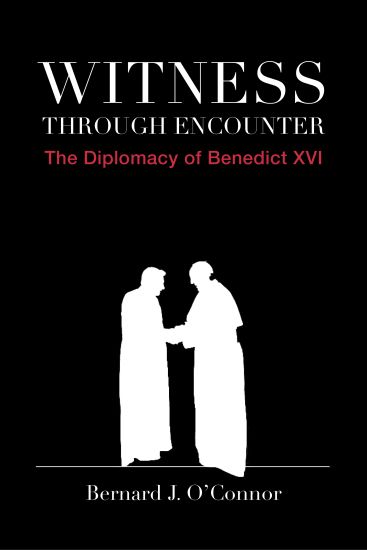
Witness through Encounter – The Diplomacy of Benedict XVI

Witness through Encounter – The Diplomacy of Benedict XVI

Bernard J. O`connor

ST AUGUSTINE'S PRESS
2021
sidottu
Appealing to dialogue is often just a safe way of referring to something negative, or at best blandly neutral: the avoidance of conflict, the denial of similarity, not stirring deep-seated disagreement, etc. When Bernard o’Connor says pope Benedict XVI facilitated dialogue, however, he means something quite positive, very much tangible and certainly transformative. In providing an account of the pope’s interactions with various groups of the international community, O’Connor attempts to convey Benedict XVI’s diplomacy as encounter, where even in the sphere of international relations exhortations to “dialogue” are invitations to see more clearly and be moved as much as move. To dialogue is to embrace, revise perception such that our approaches to the great questions of our day are not simply shared but correct. As O’Connor writes, “Pope Benedict attempts to promote the outlook that a renewed emphasis upon objective, critical and structured philosophical reasoning positions practice, diplomatic and otherwise, to regain its lost foundation and framework. the quest for integrity, if nothing else, should motivate our fidelity to academic pursuit, to intellectual investigation, and to rigorous interdisciplinary inquiry. so influenced, practice will then reject what is arbitrary and be guided by what is time-tested and enduring.”O’Connor illustrates true dialogue emerging from the encounter, and in turn provides scores of characteristics of this encounter as it unfolds in papal diplomacy. In providing scores of addresses and speeches to various bodies, O’Connor presents pope Benedict XVI as an example of effective diplomacy that treats the meetings on the world stage as engaging in true dialogue. encounter is the true basis of dialogue and one that allows it to open to what is truly a catalyst for change toward cooperation––witness, both personal and collective. As o’Connor shows, “where there is authentic encounter, as meeting in mutual trust, what arises is context for witness.” If authentic even the diplomatic encounter has the means to deepen and transform one’s being.Witness Through Encounter intends to fulfill multiple needs. the diplomatic approach exemplified herein is singular and worthy of study among political scientists, sociologists, philosophers and diplomats eager to embrace a worldview that is more personal than simply humanistic. this work will also be useful in inter-religious settings. An additional advantage of O’Connor’s presentation of Benedict XVI’s diplomatic approach, his witness through encounter, is that it contains insight valuable to the scholar alongside the resources used.
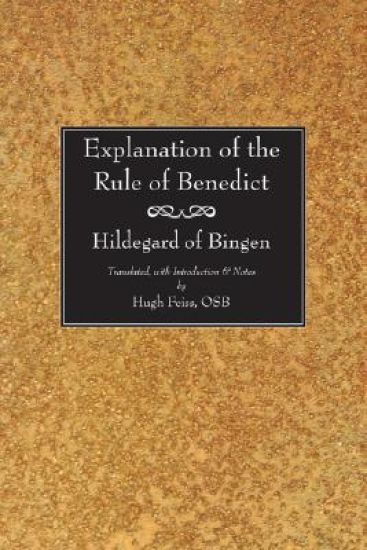
Explanation of the Rule of Benedict

Explanation of the Rule of Benedict

Hildegard Of Bingen; Jo Ann McNamara

Wipf Stock Publishers
2005
pokkari
Hildegard of Bingen (1098 - 1179) was the outstanding female religious figure of twelfth-century Germany. A Benedictine nun, she was consulted by bishops, popes, and kings, and wrote copiously for her fellow monastics: mystical and visionary material, liturgical music, biblical commentaries, saints' lives, and theological explanations of various aspects of church doctrine, as well as treatises on natural science and the healing arts. Her story is important to all students of spirituality, medieval history, and culture. Fr. Hugh Feiss is a Benedictine monk, scholar, and Latin translator, and the author of 'Essential Monastic Wisdom'. Jo Ann McNamara is Professor Emerita of History at Hunter College and at the Graduate Center of the City University of New York, and the author of 'Sisters in Arms: Catholic Nuns through Two Millennia'.
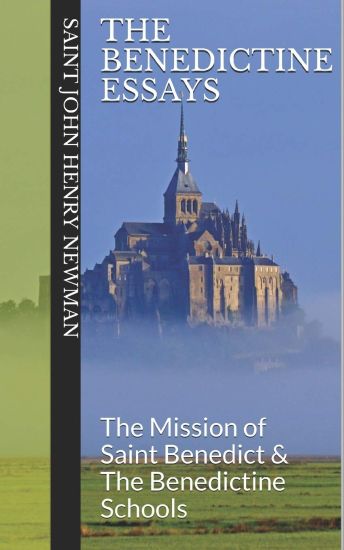
The Benedictine Essays: The Mission of Saint Benedict & The Benedictine Schools
St. Benedict was the "Father of many nations." He has been styled "the Patriarch of the West," a title which there are many reasons for ascribing to him. Not only was he the first to establish a perpetual monastic order in Western Christendom; but his Rule is the monastic norm of the first thousand years of the Church, and gave foundational shape to the whole of Western Christianity. Newly published as a standalone volume, the Benedictine Essays of St. John Henry Newman was previously only available as part of the Historical Sketches appended to The Rise and Progress of Universities. Now for the first time ever, these two scholarly essays are brought together to highlight the powerful impact that St. Benedict and the Benedictine monastic way of life had in shaping the history of Western Civilization, expounded upon through the brilliant genius of the Catholic Church's most recently canonized saint: John Henry Cardinal Newman.Benedictine monasticism has been poured out over the earth, rather than been sent, with a silent mysterious operation, while men slept, and through the romantic adventures of individuals, which are well nigh without record; and thus it has come down to us, not risen up among us, and is found rather than established. Its separate and scattered monasteries occupy the land, each in its place, with a majesty parallel, but superior, to that of old aristocratic houses.This volume has been properly edited and formatted for modern readers (not merely photopied images of old print), complete with original footnotes, for use both in scholarly/academic settings, and also for personal enrichment. Newman's mastery of English language is in full force in this pair of essays dedicated to the history and spirit of Benedictine Monasticism and the original meaning of the idea of the "Benedict Option".About the Author John Henry Newman (1801-1890) was an Anglican clergyman and leader of the Oxford Movement who eventually undertook the long and arduous journey that led to his conversion to the Roman Catholic Church. He was ordained a Catholic priest and became founder of the English Oratory of St. Philip Neri. Cardinal Newman is one of the preeminent masters of the English language, and his life and spiritual writings have led countless people into the Church. St. John Henry Newman has been acclaimed by the highest authorities as the consummate exemplar of a Saint for modern times.
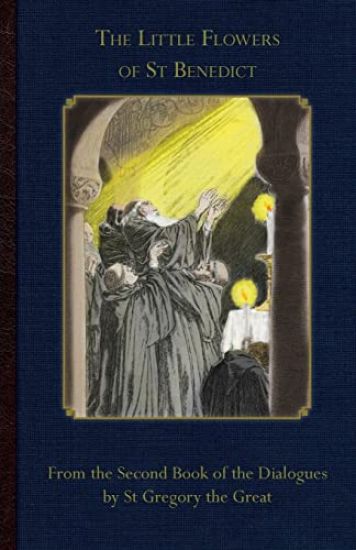
The Little Flowers of St Benedict

The Little Flowers of St Benedict

St Gregory The Great

The Cenacle Press at Silverstream Priory
2023
pokkari
While the figure of St Benedict looms large in the landscape of saints, it is more on account of his Rule and his order than his person. Yet the life of St Benedict stands second only to the Rule itself in guiding the order throughout the course of history, "for the holy man could not otherwise teach than he himself lived." Therefore, the Little Flowers sets forth the true spirit of the order for all. Filled with stories reminiscent of the great Patriarchs and Apostles, the Little Flowers of St Benedict unveils the heart of one "filled with the spirit of all the just," the heart of one entirely devoted to God. May the present volume stand alongside all other great spiritual biographies in lighting a sure path to holiness.
The Life and Miracles of St Benedict: Large Print Edition

The Life and Miracles of St Benedict: Large Print Edition

St Gregory the Great

Createspace Independent Publishing Platform
2017
nidottu
Excerpt: THERE was a man of venerable life, Benedict by name and grace, who from the time of his very childhood carried the heart of an old man. His demeanour indeed surpassing his age, he gave himself no disport or pleasure, but living here upon earth he despised the world with all the glory thereof, at such time as he might have most freely enjoyed it. He was born in the province of Nursia of honourable parentage and sent to Rome to study the liberal sciences. But when he saw there many through the uneven paths of vice run headlong to their own ruin, he drew back his foot, but new-set in the world, lest, in the search of human knowledge, he might also fall into the same dangerous precipice. Contemning therefore learning and studies and abandoning his father's house and goods, he desired only to please God in a virtuous life. Therefore he departed skilfully ignorant and wisely unlearned. I have not attained unto all this man did, but the few things which I here setdown, were related to me by four of his disciples; namely, Constantine, a very reverend man, who succeeded him in the government of the Monastery; Valentinian, who for many years bore rule in the Monastery of Lateran; Simplicius, who was the third superior of that congregation after him; and Honoratus who yet governeth the Monastery which he first inhabited. CHAPTER I. Benedict having now left the schools resolved to betake himself to the desert, accompanied only by his nurse who most tenderly loved him. Coming therefore to a place called Affile, and remaining for some time in the Church of St. Peter by the charitable invitement of many virtuous people who lived there for devotion, so it chanced that his nurse borrowed of a neighbour a sieve to cleanse wheat, which being left carelessly upon the table was found broken in two pieces. Therefore on her return finding it broke, she began to weep bitterly because it was only lent her. But the religious and pious boy, Benedict, seeing his nurse lament was moved with compassion, and taking with him the two pieces of the broken sieve, with tears he gave himself to prayer, which no sooner ended, but he found the sieve whole, and found not any sign that it had been broken. Then presently he restored the sieve which had been broken, whole to his nurse, to her exceeding comfort. This matter was divulged unto all that lived thereabout, and so much admired by all, that the inhabitants of that place caused the sieve to be hanged up in the Church porch, that not only those present, but all posterity might know with how great gifts of grace Benedict had been endowed from the beginning of his conversion. The sieve remained to be seen for many years after, and hung over the Church door even until the times of the Longobards. But Benedict more desirous to suffer afflictions than covetous of praise; and rather willing to undergo labours for the honour of God, than to be extolled with the favours of this world, fled secretly from his nurse to a remote place in the desert called Subiaco, distant about forty miles from Rome, in which a fountain springing with cool and crystal waters, extendeth itself at first into a broad lake, and running farther with increase of waters becometh at the last a river.
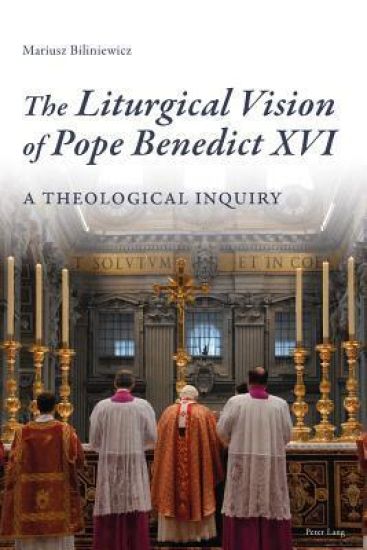
The Liturgical Vision of Pope Benedict XVI

The Liturgical Vision of Pope Benedict XVI

Mariusz Biliniewicz

Peter Lang AG, Internationaler Verlag der Wissenschaften
2013
nidottu
This book presents and evaluates the liturgical vision of Pope Benedict XVI and the theological background underlying that vision. It describes the main features of Joseph Ratzinger’s theology of the liturgy and analyses them within the context of his theology as a whole. Ratzinger’s evaluation of the contemporary Roman Catholic liturgy is explored in relation to his overall assessment of the post-Vatican II era in the Church, alongside an examination of his project of liturgical renewal (‘reform of the reform’) and its practical implementation during his pontificate. The author discusses the various critical voices which have been raised against the Pope’s liturgical agenda and against certain aspects of his general theology. Overall, the book offers an assessment of the importance of Ratzinger’s vision for the Church at the threshold of the third millennium.
The Treason and Death of Benedict Arnold: A Play for a Greek Theatre (Edition1)
The Story of Our Country;Every Child Can Read, is a classical book and has been considered important throughout the human history. So that this book is never forgotten we at Alpha Editions have made efforts in its preservation by republishing this again in a modern format book for present and future generations. This whole book has been reformatted, retyped and designed. These books are not made of scanned copies of their original work and hence the text is clear and readable.