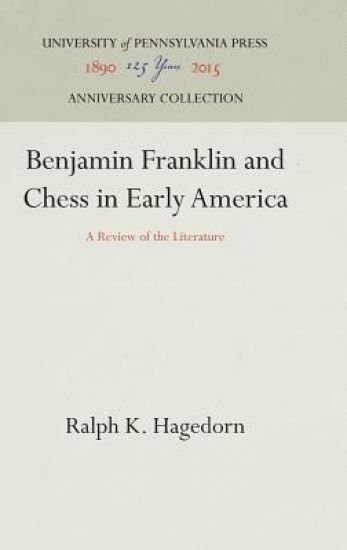
"Playing at Chess is the most ancient and the most universal game among men, for its original is beyond the memory of history." Benjamin Franklin penned these words as an introduction to his famous essay "The Morals of Chess." Franklin's approach to the game was in distinct contrast to his predecessors, who seriously advocated all the subtle treacheries of the art of poor sportsmanship with the sole end of attaining victory. To Franklin, however, the game of chess was not mere idle amusement but a sport reflective of life itself-"for life is a kind of chess, in which we have often points to gain and competitors or adversaries to contend with"-which requires the utilization of all the finest mental and moral qualities of which man is capable. This volume reproduces Franklin's celebrated essay and includes an analysis of everything Franklin ever had to say about chess. The second part of the book contains an extensive bibliography of chess in America to the year 1859. The two sections of the volume combine to form an essential sourcebook for the historian of American chess.
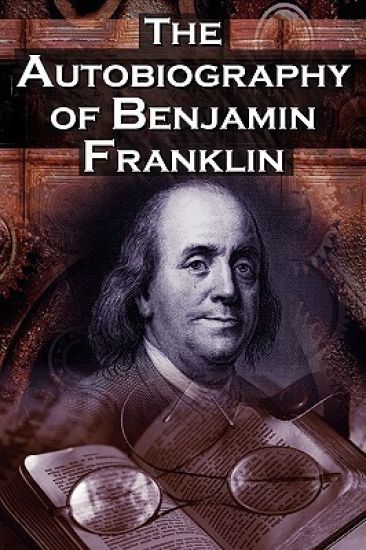
Benjamin Franklin is a man who has so much history behind him. He was born during a time when there were a lot of changes being made and had a direct influence on the Revolutionary War in America. Some people know him as a scientist, an inventor who worked as an ambassador in Europe, who ran his own printing press, and a politician who contributed to the formation of the Constitution. This guidebook is going to take some time to look at this historical figure and to learn why his legacy continues to live on. There is a lot to learn about Benjamin Franklin and how he influenced the world. Some of the things that you will learn about in this guidebook about this man include: - The early life that he had with his family in Boston. - How his life changed once he ran away from home and moved to Philadelphia. - Some of his scientific inventions and how he changed the world. - Some of the public life of Franklin such as his time abroad and how he helped out the revolution. - Some information on his private life, including his family. - The controversy with slavery and Franklin. - A few unknown facts about this fascinating man. - How Franklin died and some of the legacy he left behind. There is so much about this amazing man that it can take a long time to take it all in. Use this guidebook to learn everything that is listed above and more and get ready for your next history lesson
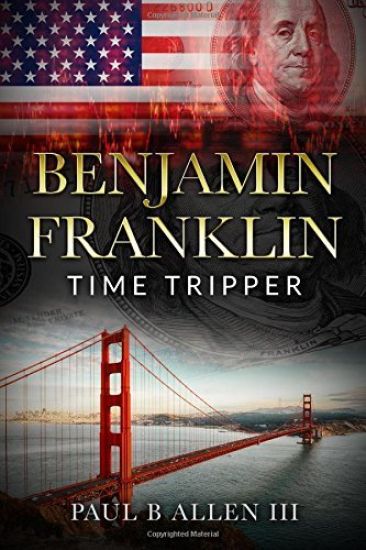
Benjamin Franklin eating at McDonald's, "expanding his mind" with help from Dr. Timothy Leary, and jamming with Stevie Wonder? Why would he ever want to go back to the 1700s?Before he became the Benjamin Franklin we know and love, there was one big lesson that Ben had to learn, and for that to happen, Divine Providence was forced to step in, suddenly transporting Franklin to San Francisco, during the 1960's Hippie / Flower Child era. There, befriended by a young Black man, Franklin is exposed to a completely different way of life, and a United States of America that he has never imagined in his wildest dreams. The adventures of Franklin and his new friend, Jeff, are comical, and Franklin is having the time of his life. But, every second that he is lost in the future, things in America are drastically changing for the worse, and Franklin realizes that if he doesn't return to the past, and soon, his entire family line, and the United States of America itself, will be completely wiped out of existence Will Franklin learn his lesson in time? And, if he does, how will he get back home?Benjamin Franklin: Time Tripper, blends history, fantasy, time travel, and comedy in this uniquely entertaining tale. Enjoy
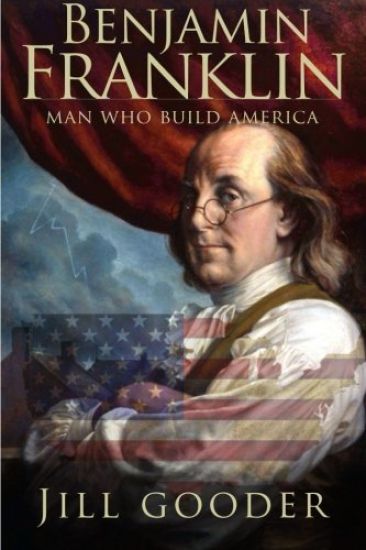
Benjamin Franklin is the man who builds America, he had lots of trouble while growing up but nothing is able to shake his will. Although he born on time when revolutionary war influence at it's peek. This book is his life journey as inventor to thinker, and how he shape America's future so it can become a greatest nation in this world. How his life become ordinary to extra ordinary. His Journey form press to parliament. What make him inspire to contribute to the constitution? This book is quick guide that will tell you what make him become ordinary to extraordinary. There is so much history about. Benjamin Franklin is one of the most beloved founding fathers in the United States. Maybe it was his famous twinkling eyes, or maybe it was his ease with people. Regardless, he embodied several characteristics that inevitably led to his success during his lifetime. One can learn a lot from Benjamin here is some quality he has You will also learn about his early life and how he over come every obstacle he came in his life. There are a lot to learn about him you will also find his life history in this book some of the major turning point in his life like-: - His early life struggle. - What was his life in Philadelphia. - What motivate him to his invention. - Private and public life of Benjamin Franklin. - Franklin's view on slavery. - And much more.... There are so much to know about Benjamin I try my best to capture the essence of this great personality, in this book don't miss the chance to know this amazing personality.
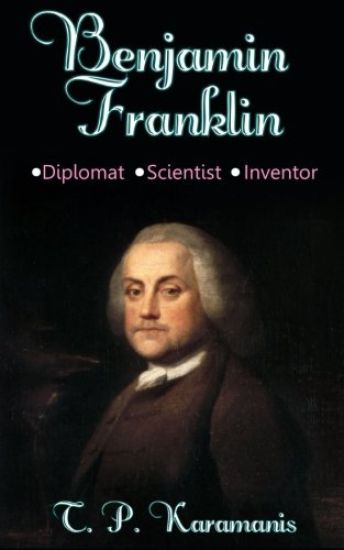
Turning the pages of history, we can find many different personifications of legends and heroes all of which relate to some particular aspect of human life. There are very few who can be treated as heroes along multiple legacies and various domains. In particular, to the American Historical archive, one such heroic figure of multidimensional legend appears to be that of Benjamin Franklin who is surely remembered as a great inventor, publisher, diplomat and the founding father of the nation of America. Knowing about the life history and happening of such hero like Benjamin is a matter of interest but side by side it is a kind of tribute to the great legend who had spent all the years of life in making achievements for the collective benefit. This biography will unveil the following aspects of Benjamin Franklin's life: -The introductory remarks to make the reader well aware of the vast domain of achievements held by Benjamin Franklin -An account of early life, stating the childhood life of major events happened in that period -A complete narration about the major voyages of Benjamin which turned the ages of his life into a new reality -A detailed discussion about all areas of his expertise as a diplomat, printer, scientist, and inventor.
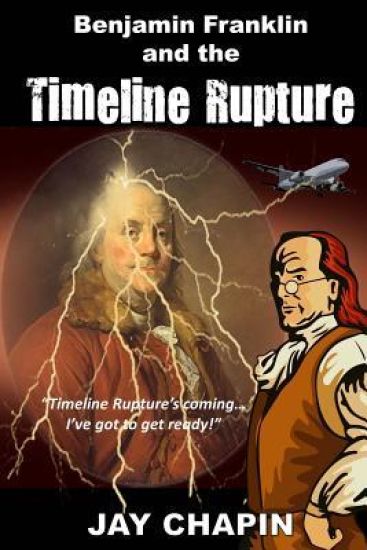
Back in the spring of 1752, on the eve of his incredible discovery of electricity, founding father Benjamin Franklin suddenly finds himself in the year 2014. It seems that a descendant of Ben's, Thomas Franklin, a college physics professor at the University of Pennsylvania, recently built a time machine, in an attempt to save his wife from the 9-11 attacks. But due to an inaccurate control panel setting, Ben ends up traveling through time. Tom and his assistants finally come to the realization, that Ben's presence has severely ruptured the earth's timeline and the entire world has now changed in a horrific manner.Not only are their own lives in jeopardy, but the fate of the entire world now rests on their shoulders.Will Tom and his assistants figure out how to send Ben back, and restore the timeline? And will Tom ever see his deceased wife again? And Tom's budding romance with his beautiful new assistant Zoe, may not be helping his ultimate goal either This is a fascinating, epic adventure filled novel for the whole family, filled with some quirky, yet fun loving characters, as well as lots of surprises, romance, intrigue, mysteries, and yes... Time Travel So, sit back, relax and enjoy
John Torrey Morse (1840-1937) was an American historian and biographer. He was born in Boston, Massachusetts on Jan. 9, 1840, and lived in that city as a lawyer. Morse was the editor of the 'American Statesmen Series, ' and published biographies of Alexander Hamilton in two volumes, considered his most significant work, He also wrote biographies on John and J. Q. Adams, Jefferson, Lincoln, Franklin, and Dr. Holmes. Morse also authored Banks and Banking, Arbitration and Award and Famous Trials....... Benjamin Franklin (January 17, 1706 O.S. January 6, 1705] - April 17, 1790) was one of the Founding Fathers of the United States. Franklin was a renowned polymath and a leading author, printer, political theorist, politician, freemason, postmaster, scientist, inventor, civic activist, statesman, and diplomat. As a scientist, he was a major figure in the American Enlightenment and the history of physics for his discoveries and theories regarding electricity. As an inventor, he is known for the lightning rod, bifocals, and the Franklin stove, among other inventions.He facilitated many civic organizations, including Philadelphia's fire department and The University of Pennsylvania, an Ivy League institution. Franklin earned the title of "The First American" for his early and indefatigable campaigning for colonial unity, initially as an author and spokesman in London for several colonies. As the first United States Ambassador to France, he exemplified the emerging American nation.Franklin was foundational in defining the American ethos as a marriage of the practical values of thrift, hard work, education, community spirit, self-governing institutions, and opposition to authoritarianism both political and religious, with the scientific and tolerant values of the Enlightenment. In the words of historian Henry Steele Commager, "In a Franklin could be merged the virtues of Puritanism without its defects, the illumination of the Enlightenment without its heat."To Walter Isaacson, this makes Franklin "the most accomplished American of his age and the most influential in inventing the type of society America would become." Franklin became a successful newspaper editor and printer in Philadelphia, the leading city in the colonies, publishing the Pennsylvania Gazette at the age of 23.He became wealthy publishing this and Poor Richard's Almanack, which he authored under the pseudonym "Richard Saunders". After 1767, he was associated with the Pennsylvania Chronicle, a newspaper that was known for its revolutionary sentiments and criticisms of the British policies. He pioneered and was first president of the The Academy and College of Philadelphia which opened in 1751 and later became the University of Pennsylvania. He organised and was the first secretary of the American Philosophical Society and was elected president in 1769. Franklin became a national hero in America as an agent for several colonies when he spearheaded an effort in London to have the Parliament of Great Britain repeal the unpopular Stamp Act. An accomplished diplomat, he was widely admired among the French as American minister to Paris and was a major figure in the development of positive Franco-American relations. His efforts proved vital for the American Revolution in securing shipments of crucial munitions from France. He was promoted to deputy postmaster-general for the British colonies in 1753, having been Philadelphia postmaster for many years, and this enabled him to set up the first national communications network. After the Revolution, he became the first US Postmaster General. He was active in community affairs and colonial and state politics, as well as national and international affairs. From 1785 to 1788, he served as governor of Pennsylvania. He initially owned and dealt in slaves but, by the 1750s, he argued against slavery from an economic perspective and became one of the most prominent abolitionists....
A thorough examination of Benjamin Franklin's works on philosophy and politics, arguing that Franklin was a philosopher of natural right Benjamin Franklin's writings on politics are voluminous, and his own politics are well known, yet scholars debate -- often fiercely -- whether he had a political philosophy and, if so, what it was. Benjamin Franklin, Natural Right, and the Art of Virtue is a study of Franklin's political and philosophical writings, tracing the development of his political thought and elucidating the political philosophy he came to embrace and put into practice. Kevin Slack argues that Franklin, despite his reputation as a wit and clever politician, examined the nature of politics, virtue, and morality more deeply than any scholar has given him credit for. Franklin, as Slack demonstrates, rejected metaphysics during a period of youthful skepticism, adopting radical skepticism, but later abandoned that view for a third alternative, Shaftesbury's common-sense philosophy. Engaging in a rigorous critique of religious and political authorities, Franklin rejected all authoritative claims but that of reason, which he used to investigate the nature of justice, or natural right. Slack shows here that Franklin was a thinker in the traditionof Socrates, and thus a political philosopher in the truest and highest sense. Kevin Slack is assistant professor of politics at Hillsdale College.
How Benjamin Franklin's life and legacy have been used, misused, interpreted, and reinterpreted throughout American history and popular culture A teenage runaway whose face later appeared on the one-hundred-dollar bill, as well as the man who penned Poor Richard's Almanac and later helped shape the Declaration of Independence and the Constitution, Benjamin Franklin lived a life of wide-ranging dimension, talent, contradiction, and change. A printer, writer, publisher, inventor, scientist, philanthropist, and diplomat, he was a quintessential Renaissance man. Down-to-earth and pragmatic, self-educated and versatile, inquisitive and resourceful, witty and humorous, irreverent and rebellious, Franklin has come to embody emphatically American characteristics. How people have used, misused, interpreted, and reinterpreted his life and legacy provides a fascinating window through which to understand American history. Nian-Sheng Huang studies the historical figure of Franklin, not as an icon on a pedestal, but through the eyes, voices, perceptions, and public activities of ordinary Americans, in popular culture and across generations.
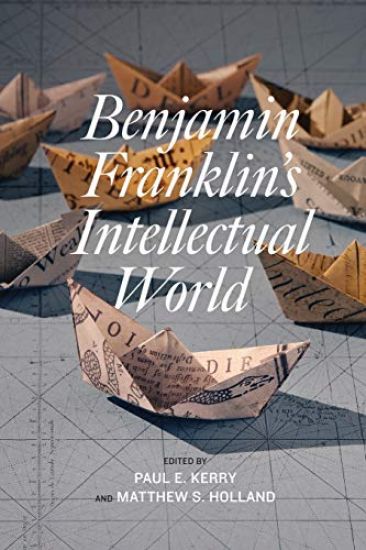
This volume attempts to throw fresh light on two areas of Benjamin Franklin’s intellectual world, namely: his self-fashioning and his political thought. It is an odd thing that for all of Franklin’s voluminous writings—a fantastically well-documented correspondence over many years, scientific treatises that made his name amongst the brightest minds of Europe, newspaper articles, satires, and of course his signature on the Declaration of Independence and the U.S. Constitution—and yet scholars debate how to get at his political thought, indeed, if he had any political philosophy at all. It could be argued, that he is perhaps the American Founder most closely associated with the Enlightenment. Similarly, for a man who left so much evidence about his life—as a printer, bookseller, postmaster, inventor, diplomat, politician, scientist, among other professions—one who wrote an autobiography that has become a piece of American national literature and, indeed, a contribution to world culture; the question of who Ben Franklin continues to engage scholars and those who read about his life. His identity seems so stable that we associate it with certain virtues that apply to the way we live our lives, time management, for example. The image of the stable figure of Franklin is applied to create a sense of trust in everything from financial institutions to plumbers. His constant drive to improve and fashion himself reveal, however, a man whose identity was not static and fixed, but was focused on growth, on bettering his understanding of himself and the world he lived in and attempted to influence and improve.
This volume attempts to throw fresh light on two areas of Benjamin Franklin’s intellectual world, namely: his self-fashioning and his political thought. It is an odd thing that for all of Franklin’s voluminous writings—a fantastically well-documented correspondence over many years, scientific treatises that made his name amongst the brightest minds of Europe, newspaper articles, satires, and of course his signature on the Declaration of Independence and the U.S. Constitution—and yet scholars debate how to get at his political thought, indeed, if he had any political philosophy at all. It could be argued, that he is perhaps the American Founder most closely associated with the Enlightenment. Similarly, for a man who left so much evidence about his life as a printer, bookseller, postmaster, inventor, diplomat, politician, scientist, among other professions, one who wrote an autobiography that has become a piece of American national literature and, indeed, a contribution to world culture, the question of who Ben Franklin continues to engage scholars and those who read about his life. His identity seems so stable that we associate it with certain virtues that apply to the way we live our lives, time management, for example. The image of the stable figure of Franklin is applied to create a sense of trust in everything from financial institutions to plumbers. His constant drive to improve and fashion himself reveal, however, a man whose identity was not static and fixed, but was focused on growth, on bettering his understanding of himself and the world he lived in and attempted to influence and improve.





![Benjamin Franklin (1889). By: John T. (Torrey) Morse: Benjamin Franklin (January 17, 1706 [O.S. January 6, 1705] - April 17, 1790) was one of the Fo](/covers/9781540823199.jpg)