Kirjojen hintavertailu. Mukana 11 244 527 kirjaa ja 12 kauppaa.

Kirjahaku

Etsi kirjoja tekijän nimen, kirjan nimen tai ISBN:n perusteella.

1000 tulosta hakusanalla Bruce Harding

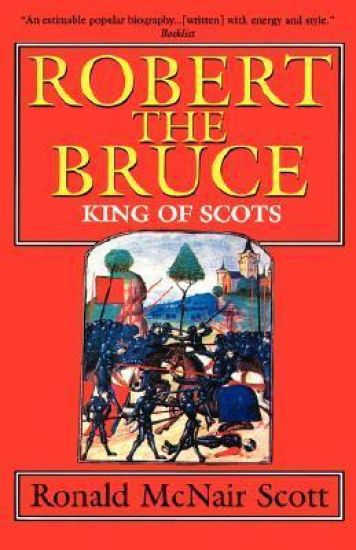
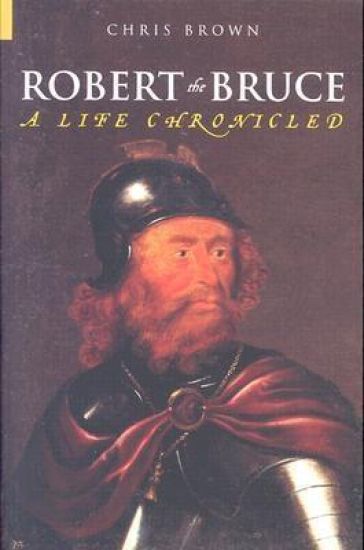
Robert the Bruce

Robert the Bruce

Chris Brown

The History Press Ltd
2004
nidottu
Much is known about Robert the Bruce's military campaigns for Scottish Independence in Scotland and England but what about his expeditions to Ireland? In the early summer of 1315 a fleet-load of Scots veterans of Bannockburn put ashore on the coast of what is now County Antrim. The Anglo-Scottish conflict had transferred itself to Irish soil.The expedition was led by Edward Bruce, Robert the Bruce's brother, and recently ratified as heir-presumptive to the Scottish throne. By any standards, it was a major undertaking, planned well in advance, to which a significant proportion of Scotland's hard-pressed resources were devoted. It amounted to a full scale invasion. What the Bruce brothers hoped to achieve from their Irish venture is hotly debated. Did the Bruces envisage turning the invasion into a permanent conquest?Was the aim to exploit Irish dissidence to push Edward II into acknowledging Robert's claim to Scotland? Or had Robert been hoping for the former but been content with the latter? This lavishly illustrated study attempts to answer these questions and tells the story of the invasion itself and the battles that followed.
Robert the Bruce's Forgotten Victory

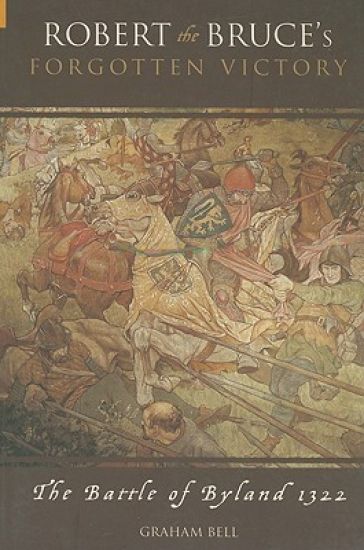
Robert the Bruce's Forgotten Victory

Graham Bell

The History Press Ltd
2005
nidottu
Waged on 14 October 1322, the battle of Byland (an area north-east of Thirsk) was fought between the two monarchs, Edward II and Robert the Bruce, and their forces. The Scots' motive for the engagement was to force the English into accepting the independence that Bannockburn hadn't actually achieved, the aim being to capture the King and force his hand. The plan nearly worked, and Edward II had to make a humiliating escape, losing his baggage train (again), putting his queen, Isabella, dangerously close to capture, and allowing the the Scots to pursue him to the gates of York. This new history of one of Robert the Bruce's most significant victories shows how close the Scots came to capturing the King.
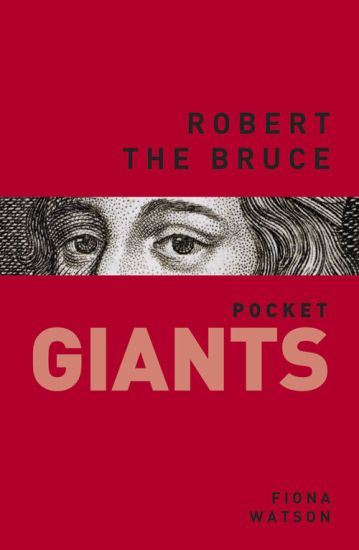
Robert the Bruce: pocket GIANTS

Robert the Bruce: pocket GIANTS

Fiona Watson

The History Press Ltd
2014
nidottu
From disastrous beginnings after he took the throne of Scotland, having murdered a powerful rival, Robert I became a military leader of consummate genius. Throwing away the rulebook of medieval warfare, which favoured the mounted knight, he remodelled the Scottish army as a disciplined, audacious band of brothers capable of surprising castles, raiding and extracting blackmail as far south as Yorkshire and even defeating a mighty English army in pitched battle. Ruthless, charismatic, indomitable and lucky, the ‘Bruce’ is a towering example of an underdog capable of turning disadvantage into advantage and winning the day through talent and sheer determination. The English turned the lessons they learnt from him to good effect in their Hundred Years war against France.
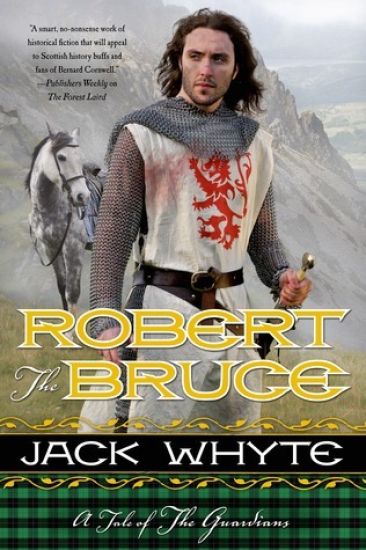
Robert the Bruce: A Tale of the Guardians
From author Jack Whyte comes the true story of Robert the Bruce: a passionate man. An incredible warrior. And one of Scotland's finest. Robert I, or as he is known to a grateful Scottish nation, Robert the Bruce, was one of Scotland's greatest kings, as well as one of the most famous warriors of his generation. He spearheaded the valiant Scots in their quest for freedom, leading his people during the Wars of Scottish Independence against the Kingdom of England during the middle ages. His reign saw the recognition of Scotland as an independent nation, and today Bruce is remembered in Scotland as a national hero. It was by no means a fair and easy road for this indomitable fighter. As a young man he saw the English king Edward I award the vacant Crown of Scotland to John Balliol. The nation quickly splintered into factions and this spurred Robert and his father to at first side with Edward and then against John, whom many of the nobles did not feel was the correct person to guide the nation. Thus began a decades-long path for Scottish freedom. To achieve this goal, Robert sometimes had to delicately balance the power of the nobles against the might of the English. He was a tireless campaigner and after a full life of battle and diplomacy, in May 1328, King Edward III signed the Treaty of Edinburgh-Northampton, which recognized Scotland as an independent kingdom and Bruce as its king. "We now have the Arthurian legend the way the noncoms saw it: tough and gritty and compelling."--Tom Shippey, former Professor of English Language and Medieval English Literature, University of Leeds on The Skystone
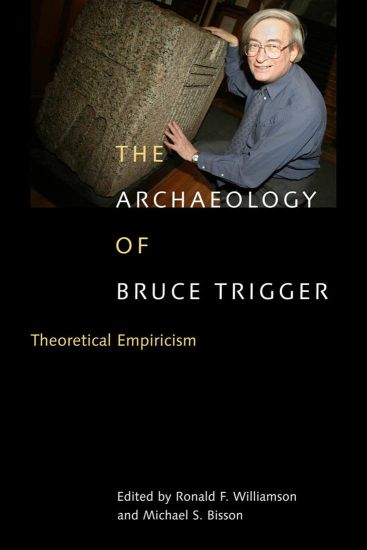
The Archaeology of Bruce Trigger

The Archaeology of Bruce Trigger

Ronald F. Williamson; Michael S. Bisson

McGill-Queen's University Press
2006
sidottu
Bruce Trigger has merged the history of archaeology with new perspectives on how to understand the past. He is a critical analyst and architect of social evolutionary theory, an Egyptologist, and an authority on aboriginal cultures in north-eastern North America. His contextualization of archaeology within broader society has encouraged appreciation of the power of archaeological knowledge and he has been an effective voice for non-oppositional forms of argument in archaeological theory. In The Archaeology of Bruce Trigger, leading scholars discuss their own approaches to the interpretation of archaeological data in relation to Trigger's fundamental intellectual contributions Contributors include Michael Bisson (McGill), Stephen Chrisomalis (Toronto), Jerimy J. Cunningham (Calgary), Brian Fagan (Lindbrior Corporation), Clare Fawcett (St. Francis Xavier), Junko Habu (California at Berkeley), Ian Hodder (Stanford), Jane Kelley (Calgary), Martha Latta (Toronto), Robert MacDonald (Archaeological Services Inc.) , Randall McGuire (Binghamton), Lynn Meskell (Columbia), Toby Morantz (McGill), Robert Pearce (London Museum of Archaeology), David Smith (Toronto), Peter Timmins (Timmins Martelle Heritage Consultants), Silvia Tomaskova (North Carolina), Bruce G. Trigger (McGill), Alexander von Gernet (Toronto), Gary Warrick (Wilfrid Laurier), Ronald F. Williamson (Archaeological Services Inc.), Alison Wylie (Washington), and Eldon Yellowhorn (Simon Frasier)
The Archaeology of Bruce Trigger

The Archaeology of Bruce Trigger

Ronald F. Williamson; Michael S. Bisson

McGill-Queen's University Press
2006
nidottu
Bruce Trigger has merged the history of archaeology with new perspectives on how to understand the past. He is a critical analyst and architect of social evolutionary theory, an Egyptologist, and an authority on aboriginal cultures in north-eastern North America. His contextualization of archaeology within broader society has encouraged appreciation of the power of archaeological knowledge and he has been an effective voice for non-oppositional forms of argument in archaeological theory. In The Archaeology of Bruce Trigger, leading scholars discuss their own approaches to the interpretation of archaeological data in relation to Trigger's fundamental intellectual contributions Contributors include Michael Bisson (McGill), Stephen Chrisomalis (Toronto), Jerimy J. Cunningham (Calgary), Brian Fagan (Lindbrior Corporation), Clare Fawcett (St. Francis Xavier), Junko Habu (California at Berkeley), Ian Hodder (Stanford), Jane Kelley (Calgary), Martha Latta (Toronto), Robert MacDonald (Archaeological Services Inc.) , Randall McGuire (Binghamton), Lynn Meskell (Columbia), Toby Morantz (McGill), Robert Pearce (London Museum of Archaeology), David Smith (Toronto), Peter Timmins (Timmins Martelle Heritage Consultants), Silvia Tomaskova (North Carolina), Bruce G. Trigger (McGill), Alexander von Gernet (Toronto), Gary Warrick (Wilfrid Laurier), Ronald F. Williamson (Archaeological Services Inc.), Alison Wylie (Washington), and Eldon Yellowhorn (Simon Frasier)
John Edward Bruce

John Edward Bruce

Ralph Crowder

New York University Press
2004
sidottu
John Edward Bruce, a premier black journalist from the late 1800's until his death in 1924, was a vital force in the popularization of African American history. "Bruce Grit," as he was called, wrote for such publications as Marcus Garvey's nationalist newspaper, The Negro World, and McGirt's Magazine. Born a slave in Maryland in 1856, Bruce gained his freedom by joining a regiment of Union soldiers passing through on their way to Washington, DC. Bruce was in contact with major figures in African American history, including Henry Highland Garnett and Martin Delany, both instrumental in the development of 19th century Black nationalism and the struggle for Black liberation. Close relationships with Liberian statesman Edward Wilmot Blyden and with Alexander Crummell, a key advocate for the emigration of Blacks to Africa, assisted in Bruce's development into a leading African American spokesman. In 1911, Arthur Alfonso Schomburg and Bruce co-founded the Negro Society for Historical Research, which greatly influenced black book collecting and preservation as well as the study of African American themes.
Stanley Melbourne Bruce

Stanley Melbourne Bruce

David Lee

CONTINUUM PUBLISHING CORPORATION
2010
sidottu
Australia's Prime Minister and premier diplomat in the 1930/1940s, this new biography presents him as a consistent internationalist and places him in a global context. Stanley Melbourne Bruce was at the centre of Imperial politics for more than two decades from the early 1920s until the end of the Second World War. This new biography presents Bruce as a consistent internationalist. Educated in Melbourne and Cambridge, Bruce, as a businessman, was alive to the importance of international commerce, and particularly Anglo-Australian trade. This lay at the core of his internationalism, which took the form in the 1920s of encouraging the political and economic integration of the British Empire. Bruce's punitive treatment of militant Australian trade unionists and his upholding of constitutionalism and law and order in the 1920s was part of an effort to defend one form of internationalism, commitment to the British Empire, against the competing international ideology of communism. While continuing to support a unified British Empire acting as a progressive force in world affairs, Bruce championed stronger international collaboration through the League of Nations and the United Nations and through cooperation between the Empire and the United States.
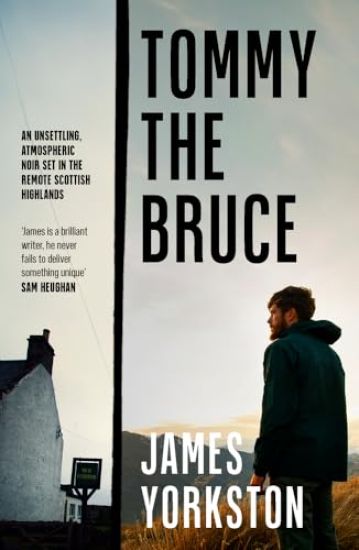
Tommy the Bruce

Tommy the Bruce

James Yorkston

OLDCASTLE BOOKS LTD
2025
pokkari
Meet Tommy Bruce, an anti-hero as unlike his historical namesake as could be imagined - very nearly spineless and not at all the man to save himself, until you push him too far... Tommy Bruce is washed-up in a ramshackle hotel inherited from dead parents in the armpit of Perthshire. Saddled with debt, grotty premises that are falling down around him and a crippling loneliness, Tommy is slowly but determinedly drinking himself and his business out of existence. Until one day, out of the blue, Fiona McLean blows into Tommy's life and the hotel. With the light she brings, Tommy's fortunes might just be turning around. But in her wake has also slipped in darkness - names and faces from the past who mean Tommy no goodwill at all, criminal forces that threaten to ruin him, the hotel and what little happiness he's managed, haplessly, to cobble together.
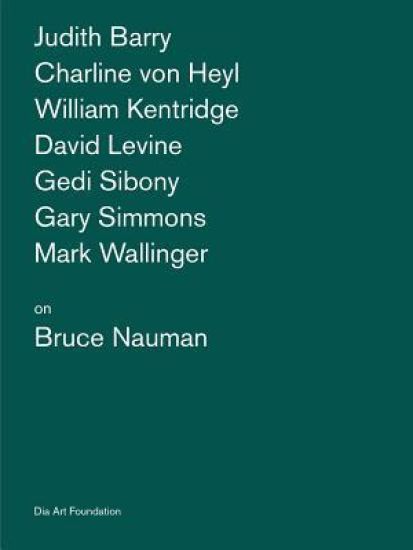
Artists on Bruce Nauman

Artists on Bruce Nauman

Dia Art Foundation,U.S.
2018
nidottu
In the late 1960s, while still a recent graduate with scant means, artist Bruce Nauman (born 1941) explored a trio of interwoven subjects: the studio, the daily practice of making art and the role of the artist. He outlined the latter, for example, in a memorable neon sign, alongside more commercial counterparts affixed to the exterior of his building. The work’s cool spiral letters traced the claim, at once ironic and heartfelt: “The true artist helps the world by revealing mystic truths.” Questioning the role of the spectator and channeling Nauman’s inquisitive attitude, this book features contributions by Judith Barry, William Kentridge, David Levine, Gedi Sibony, Gary Simmons, Charline von Heyl and Mark Wallinger.
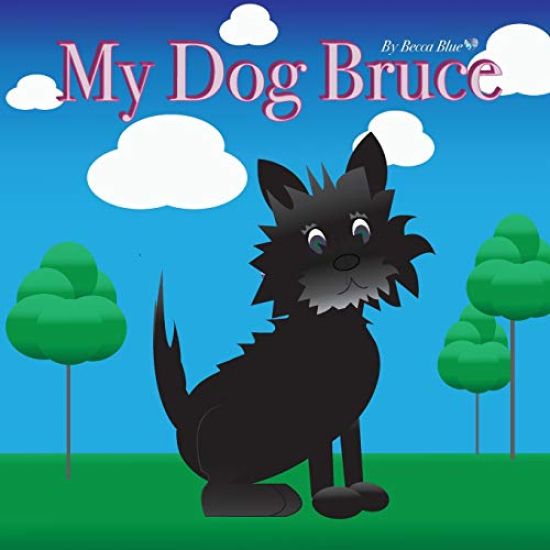
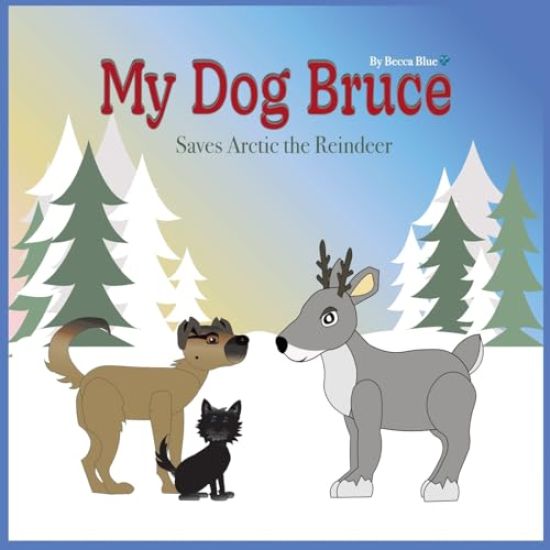
My Dog Bruce

My Dog Bruce

Becca Blue

Becca Blue Studios
2019
pokkari
Bruce is a lovable little dog that has something very special about him. He loves to play, meet new friends and even go on adventures--but he can't do it alone.My dog Bruce is an educational story that teaches children about dog breeds, grooming and general care for their pets.
My Dog Bruce meets Penny Valentine

My Dog Bruce meets Penny Valentine

Rebecca (Becca Blue) Carrigan

Becca Blue Studios
2020
pokkari
After feeling a little lonely playing by himself, my dog Bruce encounters a new dog with a bad reputation.Will Bruce make a new friend on this bright sunny day, or continue to play alone?Join Bruce on this exciting adventure by author Becca Blue, and don't forget to test your knowledge after reading the story with Bruce's skill testing questions in the back of the book
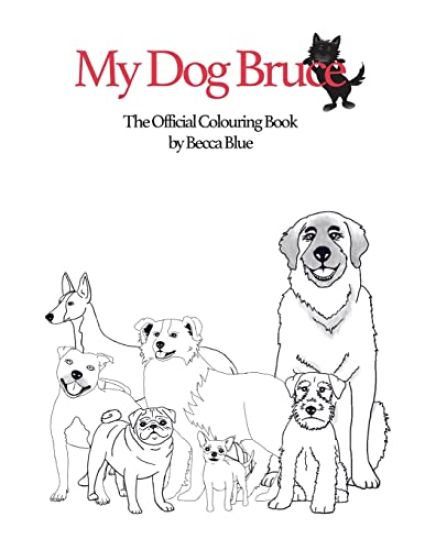
My Dog Bruce Official Colouring Book

My Dog Bruce Official Colouring Book

Rebecca (Becca Blue) Carrigan

Becca Blue Studios
2022
pokkari
This is the first official colouring book by author Becca Blue in her My Dog Bruce series.The series includes many types of books that educates children and families on dog breeds, grooming and general pet care.Kids will enjoy creating art in this wonderful hand drawn book with thirty different dog breeds to learn about.
The Adventure of the Bruce-Partington Plans (Esprios Classics)
Sir Arthur Ignatius Conan Doyle KStJ DL (22 May 1859 - 7 July 1930) was a British writer and medical doctor. He created the character Sherlock Holmes in 1887 for A Study in Scarlet, the first of four novels and fifty-six short stories about Holmes and Dr. Watson. The Sherlock Holmes stories are generally considered milestones in the field of crime fiction. Doyle was a prolific writer; other than Holmes stories, his works include fantasy and science fiction stories about Professor Challenger and humorous stories about the Napoleonic soldier Brigadier Gerard, as well as plays, romances, poetry, non-fiction and historical novels. One of Doyle's early short stories, "J. Habakuk Jephson's Statement" (1884), helped to popularise the mystery of the Mary Celeste.