The iconic actor Charles McGraw appeared in over 140 roles on films and television, including the classic noir pictures The Killers (1946) and The Narrow Margin (1952). Whether portraying tough cops or sadistic killers, McGraw brought a unique authenticity to the screen. Emphasizing his impact on the film noir style, this comprehensive biography examines McGraw's lengthy career against the backdrop of a changing Hollywood. Through numerous personal interviews with his surviving intimates, close acquaintances and co-workers, his tumultuous personal life is detailed from his earliest days to his bizarre, accidental death. Also included are an extensive critical filmography of McGraw's feature film career, a complete list of television appearances and previously unpublished film stills and personal photos.
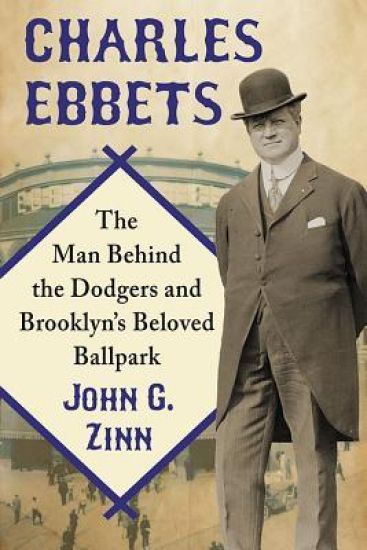
Much has been written about the legendary players and managers of baseball's Deadball Era (1901-1919). Far less attention has been given to the club owners, like Charles Ebbets. In 1898, after a 15 year apprenticeship, he became president of the Brooklyn Dodgers, taking over a chronic second division team in poor financial condition. Over the next 25 years, he organized four pennant-winning clubs and developed one of the most profitable franchises in the game--while building two state-of-the-art ballparks in Brooklyn. Ebbets was also an effective steward of the national pastime, working tirelessly on innovations that would help all teams, not just his own. Despite his success, his personal weaknesses ultimately undermined much of what he had so painstakingly built. This first full length biography provides an in-depth view of his life and career, filling a critical gap in the history of the Deadball Era and the Brooklyn Dodgers.
This two-volume series provides information gathered and compiled by members of the Charles County Maryland Genealogical Society from 168 cemeteries throughout Charles County, Maryland -- a total of 19,309 burial entries. This reference includes church, public, and private Charles County, Maryland, cemeteries and burial sites. It includes names, dates, and other inscriptions found on the headstones, markers, and other resources. This book was compiled during the years 2004 through 2011. The Trinity Memorial Gardens in Waldorf, Maryland, has not been included.An alphabetical list of cemetery names (with cemetery code and cemetery location) precedes the burial entries. Burial records are alphabetically arranged by surname in a convenient table format. Entries include: Last Name, First Name, Middle Name, Date of Birth, Date of Death, Transcription/Notes, and Cemetery Code. The Transcription/Notes column contains a wide variety of information. If there was no headstone or marker but the burial place was known, then the three-letter cemetery code is followed by "NoStone."
This two-volume series provides information gathered and compiled by members of the Charles County Maryland Genealogical Society from 168 cemeteries throughout Charles County, Maryland -- a total of 19,309 burial entries. This reference includes church, public, and private Charles County, Maryland, cemeteries and burial sites. It includes names, dates, and other inscriptions found on the headstones, markers, and other resources. This book was compiled during the years 2004 through 2011. The Trinity Memorial Gardens in Waldorf, Maryland, has not been included.An alphabetical list of cemetery names (with cemetery code and cemetery location) precedes the burial entries. Burial records are alphabetically arranged by surname in a convenient table format. Entries include: Last Name, First Name, Middle Name, Date of Birth, Date of Death, Transcription/Notes, and Cemetery Code. The Transcription/Notes column contains a wide variety of information. If there was no headstone or marker but the burial place was known, then the three-letter cemetery code is followed by "NoStone."
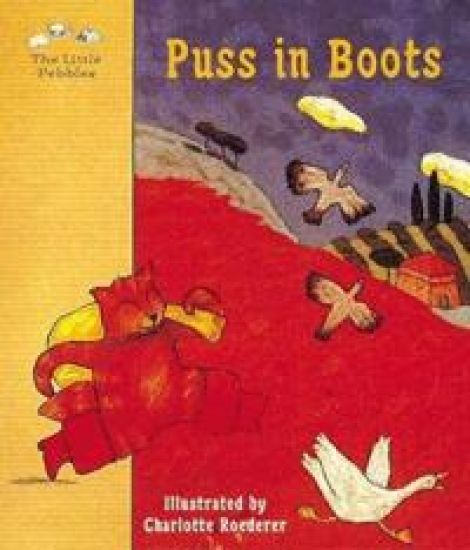
An enterprising cat--with only a bag, a pair of boots, and some audacity--arranges for his owner, a poor farmer, to marry a princess and live happily every after. The stories in the Abbeville Classic Fairy Tales series have been adapted for the children of today while respecting the richness and flavor of the original versions. This charming series retells classic fairy tales with bright illustrations and a clever tone. Children will love the game page at the end of each book, and they will want to read all the books in the series.
Charles Hartshorne's considerable writings have been influential in contem 1 porary religious and philosophical thought. Not only is he regarded as the leading living representative of process thought as well as a much respected interpreter of Whitehead, but he has also established himself as an original 2 and creative thinker in his own right. The literature on his philosophy has been rapidly increasing. His thought and influence have also been the subject 3 of a number of conferences and gatherings of scholars. One of Hartshorne's most notable contributions to contemporary philoso 4 phy and theology is his concept of God. In his writings he has set out "to formulate the idea of deity so as to preserve, perhaps increase, its religious value, while yet avoiding the contradictions which seem inseparable from the 5 idea as customarily defined." The result of his efforts has been the develop ment of the concept of a "dipolar God" (insofar as contrasting metaphysical predicates, e.g. relative/absolute, contingent/necessary, finite/infinite and so on, are affirmed as applicable to God although always in an eminent way). Inasmuch as he has elaborated this concept in close dialogue with classical theism, he also refers to it as "neo-classical". Because of the emphasis he places on the reality of change and becoming in his metaphysics (which regards God as the chief exemplification of metaphysical principles), the term 6 "process" has likewise been used to describe his notion of God.
All of the available letters of Charles Lamb, a master of the English essay, and his sister Mary Anne published in this definitive, scrupulously edited work. The letters, many of them written to illustrious figures of the Romantic period, are generally agreed to rank among the finest in the English language. Transcribing where possible from the originals or facsimiles, Professor Marrs corrects textual errors found in previous editions, and he pays particular attention to establishing precise dates for the correspondence. He includes letters that were omitted from the last collection (published in 1935 and long out of print), and he has uncovered more than eighty letters never published before. The Letters of Charles and Mary Anne Lamb totals five or six volumes, and presents nearly 1200 letters written by Charles and Mary, singly or together. The correspondence is fully annotated, the volumes are illustrated, and the holographic idiosyncrasies of the originals are rendered typographically wherever possible. Rich in revelations about the extraordinary lives of the Lambs, these beautifully written letters are an inexhaustible store of information about the Romantic era and its major figures-Wordsworth, Keats, and Coleridge. The publication of unexpurgated and authoritative texts is an important literary event. The first volume was published in 1975, the bicentenary of Charles Lamb's birth. It contains 102 letters written by Charles, many of them after Mary murdered their mother. Among the recipients were the poets Coleridge, Southey, and Wordsworth. The letters provide shrewd observations on his friends' writings and his own, vivid descriptions of life in London, and compassionate but candid remarks concerning his family and acquaintances. Notes to each letter place it in context, quoting where necessary from the correspondence Lamb is answering. Volume I includes Professor Marrs's extensive Introduction to the entire collection. After supplying a biography of the Lamb family up to the murder, he treats Mary's and Charles's life together until Charles's death, tracing through the letters a relationship that remained warm and affectionate even under the shadow of Mary's insanity. Professor Marrs also gives the publishing history of the letters and sets forth the principles upon which his edition is based.
All of the available letters of Charles Lamb, a master of the English essay, and his sister Mary Anne published in this definitive, scrupulously edited work. The letters, many of them written to illustrious figures of the Romantic period, are generally agreed to rank among the finest in the English language. Transcribing where possible from the originals or facsimiles, Professor Marrs corrects textual errors found in previous editions, and he pays particular attention to establishing precise dates for the correspondence. He includes letters that were omitted from the last collection (published in 1935 and long out of print), and he has uncovered more than eighty letters never published before. The Letters of Charles and Mary Anne Lamb totals five or six volumes, and presents nearly 1200 letters written by Charles and Mary, singly or together. The correspondence is fully annotated, the volumes are illustrated, and the holographic idiosyncrasies of the originals are rendered typographically wherever possible. Rich in revelations about the extraordinary lives of the Lambs, these beautifully written letters are an inexhaustible store of information about the Romantic era and its major figures-Wordsworth, Keats, and Coleridge. The publication of unexpurgated and authoritative texts is an important literary event.
A companion to Charles Darwin's notebooks, 1836-1844 (Cornell U. Pr., 1987). Because Darwin was in the process of formulating his arguments, entries on a single topic might appear in several series of notes at any number of places in various manuscripts. This concordance gathers these citations toge
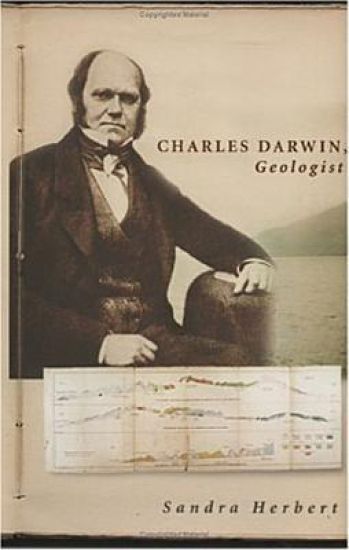
"Pleasure of imagination.... I a geologist have illdefined notion of land covered with ocean, former animals, slow force cracking surface &c truly poetical."—from Charles Darwin's Notebook M, 1838 The early nineteenth century was a golden age for the study of geology. New discoveries in the field were greeted with the same enthusiasm reserved today for advances in the biomedical sciences. In her long-awaited account of Charles Darwin's intellectual development, Sandra Herbert focuses on his geological training, research, and thought, asking both how geology influenced Darwin and how Darwin influenced the science. Elegantly written, extensively illustrated, and informed by the author's prodigious research in Darwin's papers and in the nineteenth-century history of earth sciences, Charles Darwin, Geologist provides a fresh perspective on the life and accomplishments of this exemplary thinker. As Herbert reveals, Darwin's great ambition as a young scientist—one he only partially realized—was to create a "simple" geology based on movements of the earth's crust. (Only one part of his scheme has survived in close to the form in which he imagined it: a theory explaining the structure and distribution of coral reefs.) Darwin collected geological specimens and took extensive notes on geology during all of his travels. His grand adventure as a geologist took place during the circumnavigation of the earth by H.M.S. Beagle (1831–1836)—the same voyage that informed his magnum opus, On the Origin of Species. Upon his return to England it was his geological findings that first excited scientific and public opinion. Geologists, including Darwin's former teachers, proved a receptive audience, the British government sponsored publication of his research, and the general public welcomed his discoveries about the earth's crust. Because of ill health, Darwin's years as a geological traveler ended much too soon: his last major geological fieldwork took place in Wales when he was only thirty-three. However, the experience had been transformative: the methods and hypotheses of Victorian-era geology, Herbert suggests, profoundly shaped Darwin's mind and his scientific methods as he worked toward a full-blown understanding of evolution and natural selection.
When Charles Evans Hughes defeated William Randolph Hearst for the governorship of New York in 1906, the New York State Republican Party was split between the remnants of the rural, conservative Platt political machine in Albany and the forces loyal to the progressive, energetic President and former New York Governor, Teddy Roosevelt. Although Hughes owed his nomination largely to Roosevelt's desire to weaken conservative influences, the aloof and independent governor's moral idealism and legal experience led him to positions more liberal and unyielding than even Roosevelt could endorse.In this thorough study of Hughes's two terms as governor, Robert F. Wesser depicts the tensions of conservativism and liberalism, corruption and moral indignation, which rent the state government under his administration. Making use of unpublished manuscript collections, both personal and organizational, and other primary sources, Wesser evaluates the strengths and weaknesses of Hughes as a political leader and reformer. He shows that despite opposition from his own party, Hughes's governorship produced important reform legislation in three areas: improvement of the machinery and processes of government; extension of the state's regulatory authority over businesses engaged in public services; and expansion of governmental police and welfare functions.These legislative achievements were supplemented by Hughes's relentless dedication to administrative efficiency, which helped shift the focus of New York politics from the legislature and party organization to the office of the governor. But not all Governor Hughes's efforts were successful, and Wesser carefully analyzes his failures as well as his triumphs-including the humiliating defeat at the hands of his own party's bosses in his quest to pass a direct primary voting bill-providing a complete portrait of a significant turning point in the history of New York and of the man who undermined some of the very foundations of the old political order. First published in 1967, Charles Evans Hughes remains an import work of scholarship on the history of New York and of the Progressive Era more broadly.
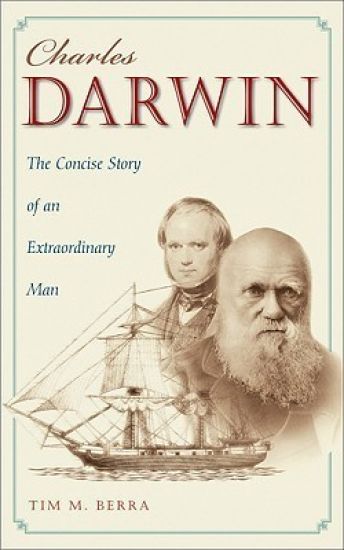
Two hundred years after Charles Darwin's birth (February 12, 1809), this thoroughly illustrated, yet concise biography reveals the great scientist as husband, father, and friend. Tim M. Berra, whose "Darwin: The Man" lectures are in high demand worldwide, tells the fascinating story of the person and the idea that changed everything. Berra discusses Darwin's revolutionary scientific work, its impact on modern-day biological science, and the influence of Darwin's evolutionary theory on Western thought. But Berra digs deeper to reveal Darwin the man by combining anecdotes with carefully selected illustrations and photographs. This small gem of a book includes 20 color plates and 60 black-and-white illustrations, along with an annotated list of Darwin's publications and a chronology of his life.
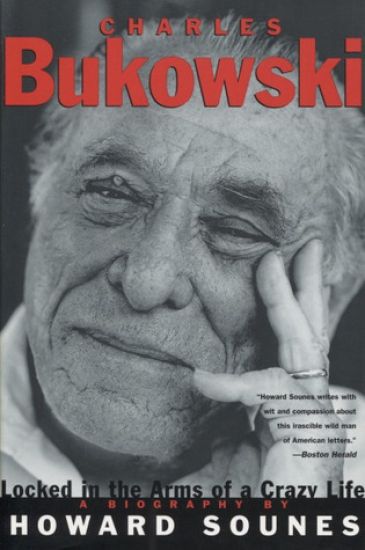
An illustrated biography of the cult writer who transformed his alcohol-soaked life into such novels as "Post Office" and "Women", and whose life was portrayed in the film "Barfly". It follows his sometimes tragic exploits along the rocky road from obscurity to underground sensation.
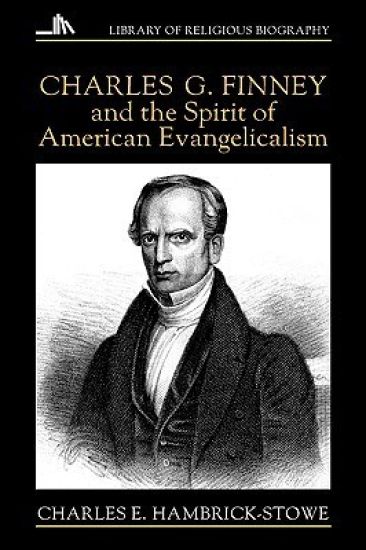
Charles Grandison Finney was the foremost evangelist in the pre-Civil War United States. His revivals in the cities along the Erie Canal; his well-organized campaigns in Philadelphia, New York City, Boston, and the British Isles; his prominent pastorate at New York's Broadway Tabernacle; and his teaching career at Oberlin College exemplify the evangelical spirit that swept the country following the Second Great Awakening. This lively biography by historian Charles E. Hambrick-Stowe tells the story of Finney's remarkable life and offers fresh insights into the nature of evangelicalism and the nineteenth-century American experience. By using the life of the great revivalist and educator as a window into the soul of American evangelicalism, Hambrick-Stowe shows in striking ways how Finney displayed the characteristics of that broader movement, many of which continue to flourish in twentieth-century religious life. Based on a thorough reading of the Finney Papers, Finney's writings, contemporary sources, and modern historiography, this biography exhibits scholarly depth in a popular narrative that is meant to be read and enjoyed as well as studied.A map of Finney's evangelistic travels, portraits, and other illustrations enhance the text.
Lt. Charles B. Gatewood (1853–1896), an educated Virginian, served in the Sixth U.S. Cavalry as the commander of Indian scouts. Gatewood was largely accepted by the Native peoples with whom he worked because of his efforts to understand their cultures. It was this connection that Gatewood formed with the Indians, and with Geronimo and Naiche in particular, that led to his involvement in the last Apache war and his work for Indian rights. Realizing that he had more experience dealing with Native peoples than other lieutenants serving on the frontier, Gatewood decided to record his experiences. Although he died before he completed his project, the work he left behind remains an important firsthand account of his life as a commander of Apache scouts and as a military commandant of the White Mountain Indian Reservation. Louis Kraft presents Gatewood's previously unpublished account, punctuating it with an introduction, additional text that fills in the gaps in Gatewood's narrative, detailed notes, and an epilogue. Kraft's work offers new background information on Gatewood and discusses the manuscript as a fresh account of how Gatewood viewed the events in which he took part.
Lt. Charles B. Gatewood (1853–1896), an educated Virginian, served in the Sixth U.S. Cavalry as the commander of Indian scouts. Gatewood was largely accepted by the Native peoples with whom he worked because of his efforts to understand their cultures. It was this connection that Gatewood formed with the Indians, and with Geronimo and Naiche in particular, that led to his involvement in the last Apache war and his work for Indian rights. Realizing that he had more experience dealing with Native peoples than other lieutenants serving on the frontier, Gatewood decided to record his experiences. Although he died before he completed his project, the work he left behind remains an important firsthand account of his life as a commander of Apache scouts and as a military commandant of the White Mountain Indian Reservation. Louis Kraft presents Gatewood's previously unpublished account, punctuating it with an introduction, additional text that fills in the gaps in Gatewood's narrative, detailed notes, and an epilogue. Kraft's work offers new background information on Gatewood and discusses the manuscript as a fresh account of how Gatewood viewed the events in which he took part.
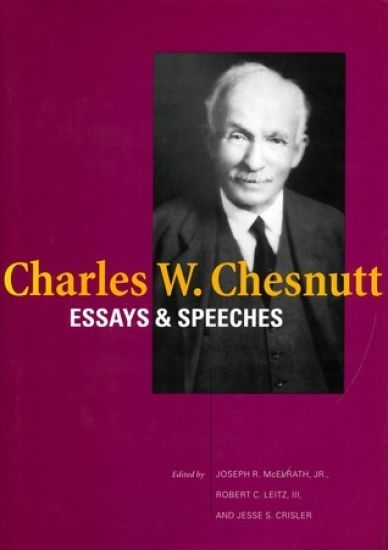
Over the past decade, increasing attention has been paid to the life and work of Charles W. Chesnutt (1858-1932), considered by many the major African-American fiction writer before the Harlem Renaissance by virtue of the three novels and two collections of short stories he published between 1899 and 1905. Less familiar are the essays he wrote for American periodicals from 1899 through 1931, the majority of which are analyses of and protests against white racism. Collected as well in this volume are the addresses he made to both white and black audiences from 1881 through 1931, on topics ranging from race prejudice to the life and literary career of Alexandre Dumas. The 77 works included in this volume comprise all of Chesnutt's known works of nonfiction, 38 of which are reprinted here for the first time. They reveal an ardent and often outraged spokesman for the African American whose militancy increased to such a degree that, by 1903, he had more in common with W. E. B. Du Bois than Booker T. Washington. He was, however, a lifelong integrationist and even an advocate of "race amalgamation," seeing interracial marriage as the ultimate means of solving "the Negro Problem," as it was termed at the end of the century. That he championed the African American during the Jim Crow era while opposing Black Nationalism and other "race pride" movements attests to the way Chesnutt defined himself as a controversial figure, in his time and ours. The essays and speeches in this volume are not, however, limited to polemical writings. An educator, attorney, and man of letters with wide-ranging interests, Chesnutt stands as a humanist addressing subjects of universal interest, including the novels of George Meredith, the accomplishments of Samuel Johnson, and the relationship between literature and life.
Over the past decade, increasing attention has been paid to the life and work of Charles W. Chesnutt (1858-1932), considered by many the major African-American fiction writer before the Harlem Renaissance by virtue of the three novels and two collections of short stories he published between 1899 and 1905. Less familiar are the essays he wrote for American periodicals from 1899 through 1931, the majority of which are analyses of and protests against white racism. Collected as well in this volume are the addresses he made to both white and black audiences from 1881 through 1931, on topics ranging from race prejudice to the life and literary career of Alexandre Dumas. The 77 works included in this volume comprise all of Chesnutt's known works of nonfiction, 38 of which are reprinted here for the first time. They reveal an ardent and often outraged spokesman for the African American whose militancy increased to such a degree that, by 1903, he had more in common with W. E. B. Du Bois than Booker T. Washington. He was, however, a lifelong integrationist and even an advocate of "race amalgamation," seeing interracial marriage as the ultimate means of solving "the Negro Problem," as it was termed at the end of the century. That he championed the African American during the Jim Crow era while opposing Black Nationalism and other "race pride" movements attests to the way Chesnutt defined himself as a controversial figure, in his time and ours. The essays and speeches in this volume are not, however, limited to polemical writings. An educator, attorney, and man of letters with wide-ranging interests, Chesnutt stands as a humanist addressing subjects of universal interest, including the novels of George Meredith, the accomplishments of Samuel Johnson, and the relationship between literature and life.
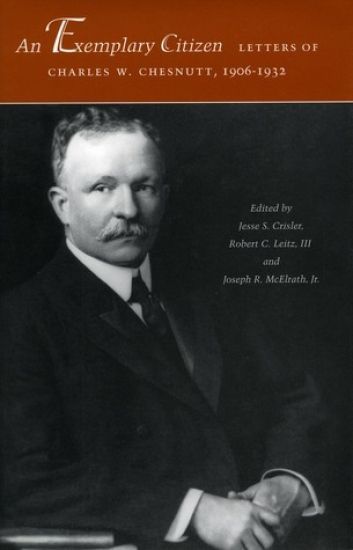
This book collects the letters written between 1906 and 1932 by novelist and civil rights activist Charles W. Chesnutt (1858-1932). Between 1885 and 1905, this pioneer in the African-American literary tradition published three novels, two books of short stories, a biography of Frederick Douglass, and many short stories and essays in prestigious periodicals—at the same time managing a stenography and court reporting firm in Cleveland, Ohio. His works, which featured the experiences of African-Americans in the ante- and post-bellum period, received favorable reviews. But they did not find a large and appreciative audience until many decades later when both the civil rights movement and increased interest in the African-American contribution to American cultural life resulted in the "rediscovering" of Chesnutt's large body of writings. Though he never saw the publication of another of his book-length manuscripts after 1905, Chesnutt continued to write fiction and essays, and to deliver speeches ranging from disenfranchisement to the life and works of Alexandre Dumas, and to act in behalf of the African-American cause through such organizations as the Committee of Twelve and the N.A.A.C.P. A dedicated integrationist opposed to "race-pride" movements of all kinds, Chesnutt in his post-1905 letters includes many references to the unfortunate consequences of racial segregation, addressed to both African-American and white correspondents. These letters also reveal a multi-faceted personality with interests that transcended the issue of race and urged everyone to live life to the fullest. His correspondents included prominent members of the Harlem Renaissance as well as major American political figures Chesnutt sought to influence on behalf of his fellow African-Americans. As a successful businessman enjoying the amenities of upper middle class American life, a family man, and an Episcopalian who worshipped at a "white church," Chesnutt in many respects embodied the realization of the American Dream. He was, as William Dean Howells termed Booker T. Washington, an "exemplary citizen" and a role model for all Americans.