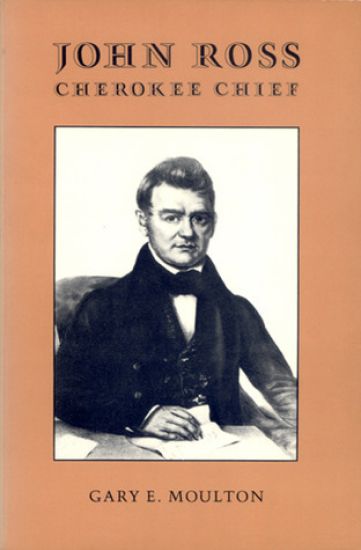
In John Ross, Cherokee Chief, Gary Moulton examines the life of the man who led the Cherokee people during the most trying and tragic period of their long history. Ross was the principal Cherokee negotiator with the encroaching whites during the Georgia gold rush, guided the tribe through the treacherous years of the Civil War, and struggled to preserve unity among his people during their removal westward by the United States government, along the “Trail of Tears.”
Warriors remain an integral part of each society, civilized and uncivilized. A primary role of one group of warriors is assassination for revenge on behalf of his or her society. How do warriors evolve into being specialists in revenge killing and assassinations? How does a highly intelligent, attractive, athletic 32-year old college graduate and fitness instructor become a 21st century assassin or murder-for-hire warrior? This is a story of one such person and one of the many adventures of Alex Cowart, Cherokee Assassin.
In the second adventure of the dramatic new Alex, Cherokee Assassin series, Alex Cowart is on a mission of vengeance.Several Native American grave sites and sacred grounds have been desecrated and the remains and artifacts trafficked around the world.Set in a number of famous sites in the Savannah, Georgia area, Alex will not let this atrocity stand.
This work has been selected by scholars as being culturally important and is part of the knowledge base of civilization as we know it.This work is in the public domain in the United States of America, and possibly other nations. Within the United States, you may freely copy and distribute this work, as no entity (individual or corporate) has a copyright on the body of the work.Scholars believe, and we concur, that this work is important enough to be preserved, reproduced, and made generally available to the public. To ensure a quality reading experience, this work has been proofread and republished using a format that seamlessly blends the original graphical elements with text in an easy-to-read typeface.We appreciate your support of the preservation process, and thank you for being an important part of keeping this knowledge alive and relevant.
""Red Clay and Rattlesnake Springs: A History of the Cherokee Indians of Bradley County, Tennessee"" is a comprehensive account of the Cherokee Indian tribe's history in Bradley County, Tennessee. Written by James Franklin Corn, the book explores the tribe's origins, culture, and traditions, as well as their interactions with European settlers and the United States government.The book begins by tracing the Cherokee's migration to the southeastern United States and their establishment of villages in what is now Bradley County. It then delves into their way of life, including their agriculture, hunting, and religious practices. The author also discusses the Cherokee's involvement in the American Revolution and their efforts to maintain their independence in the face of increasing pressure from white settlers.The book also covers the Cherokee's forced removal from their ancestral lands in the 1830s and their subsequent relocation to Indian Territory. The author explores the devastating impact of the Trail of Tears on the Cherokee people and their efforts to rebuild their lives in a new land.Throughout the book, the author draws on a variety of primary sources, including government documents, personal letters, and oral histories, to paint a vivid picture of the Cherokee's experiences in Bradley County. The book also includes numerous photographs and maps to help readers better understand the tribe's history and culture.Overall, ""Red Clay and Rattlesnake Springs"" is an engaging and informative account of the Cherokee Indians of Bradley County, Tennessee. It offers a valuable perspective on the history of the Cherokee people and their enduring legacy in the region.This scarce antiquarian book is a facsimile reprint of the old original and may contain some imperfections such as library marks and notations. Because we believe this work is culturally important, we have made it available as part of our commitment for protecting, preserving, and promoting the world's literature in affordable, high quality, modern editions, that are true to their original work.
The 18th century was a wealth of knowledge, exploration and rapidly growing technology and expanding record-keeping made possible by advances in the printing press. In its determination to preserve the century of revolution, Gale initiated a revolution of its own: digitization of epic proportions to preserve these invaluable works in the largest archive of its kind. Now for the first time these high-quality digital copies of original 18th century manuscripts are available in print, making them highly accessible to libraries, undergraduate students, and independent scholars.Delve into what it was like to live during the eighteenth century by reading the first-hand accounts of everyday people, including city dwellers and farmers, businessmen and bankers, artisans and merchants, artists and their patrons, politicians and their constituents. Original texts make the American, French, and Industrial revolutions vividly contemporary.++++The below data was compiled from various identification fields in the bibliographic record of this title. This data is provided as an additional tool in helping to insure edition identification: ++++Library of CongressW036187A defense of the South Carolina militia and criticism of Colonel James Grant, the British army officer who conducted the campaigns. Attributed to Christopher Gadsden by Shipton & Mooney. Gadsden's first Philopatrios letter was published in the South Carolina gazette, Dec. 18, 1762. Evans entry 9242 is an imperfect description of the present item.Charles-Town S.C.]: Printed and sold by Peter Timothy, MDCCLXII. 1762]. 88p., 1]folded leaf; 8
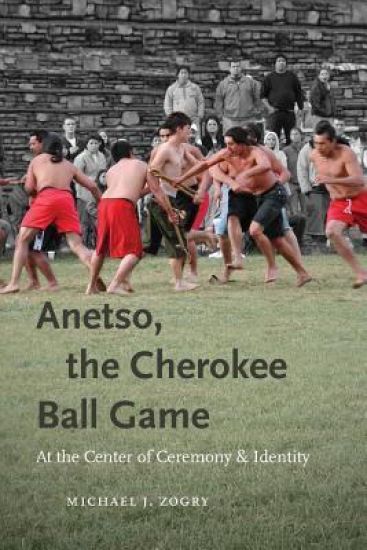
Anetso, a centuries-old Cherokee ball game still played today, is a vigorous, sometimes violent activity that rewards speed, strength, and agility. At the same time, it is the focus of several linked ritual activities. Is it a sport? Is it a religious ritual? Could it possibly be both? Why has it lasted so long, surviving through centuries of upheaval and change?Based on his work in the field and in the archives, Michael J. Zogry argues that members of the Eastern Band of Cherokee Nation continue to perform selected aspects of their cultural identity by engaging in anetso, itself the hub of an extended ceremonial complex, or cycle. A precursor to lacrosse, anetso appears in all manner of Cherokee cultural narratives and has figured prominently in the written accounts of non-Cherokee observers for almost three hundred years. The anetso ceremonial complex incorporates a variety of activities which, taken together, complicate standard scholarly distinctions such as game versus ritual, public display versus private performance, and tradition versus innovation.Zogry's examination provides a striking opportunity for rethinking the understanding of ritual and performance as well as their relationship to cultural identity. It also offers a sharp reappraisal of scholarly discourse on the Cherokee religious system, with particular focus on the Eastern Band of Cherokee Nation.
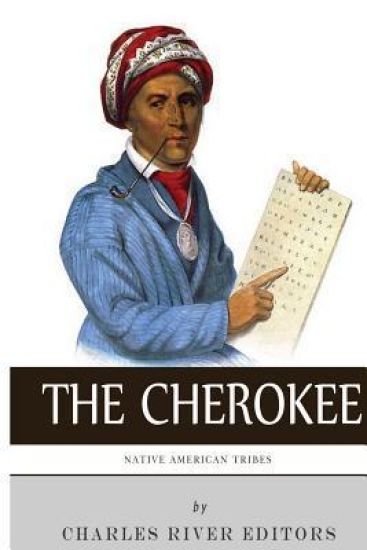
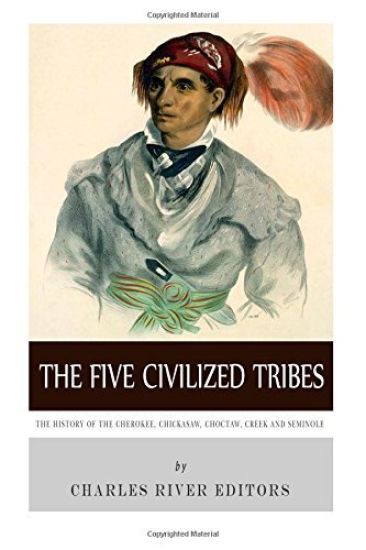
*Includes pictures of important people, places, and events. *Explains the origins, religion, and social structure of the Cherokee *Comprehensively covers the Trail of Tears and includes eyewitness accounts of it. *Includes a Bibliography for further reading. "We are overwhelmed Our hearts are sickened, our utterance is paralyzed, when we reflect on the condition in which we are placed, by the audacious practices of unprincipled men, who have managed their stratagems with so much dexterity as to impose on the Government of the United States, in the face of our earnest, solemn, and reiterated protestations." - Principal Chief John Ross From the "Trail of Tears" to Wounded Knee and Little Bighorn, the narrative of American history is incomplete without the inclusion of the Native Americans that lived on the continent before European settlers arrived in the 16th and 17th centuries. Since the first contact between natives and settlers, tribes like the Sioux, Cherokee, and Navajo have both fascinated and perplexed outsiders with their history, language, and culture. In Charles River Editors' Native American Tribes series, readers can get caught up to speed on the history and culture of North America's most famous native tribes in the time it takes to finish a commute, while learning interesting facts long forgotten or never known. Tragically, the Cherokee is one of America's best known tribes due to the trials and tribulations they suffered by being forcibly moved west along the "Trail of Tears", but that overlooks the contributions they made to American society well before the 19th century. The Cherokee began the process of assimilation into European America very early, even before the establishment of the Unites States, and by the early 19th century they were one of the "Five Civilized Tribes." Ultimately, however, it is unclear what benefits "civilization" brought the tribe. Throughout the colonial period and after the American Revolution, the Cherokee struggled to satisfy the whims and desires of American government officials and settlers, often suffering injustices after complying with their desires. Nevertheless, the Cherokee continued to endure, and after being pushed west, they rose from humble origins as refugees new to the southeastern United States to build themselves back up into a powerhouse both economically and militarily. Even after being forced to leave their traditional homeland again, they once more rose to become a powerful tribe and nation, ruling themselves and building their economic power through wise and skillful leadership. Despite all of the hostilities, the Cherokee ultimately became the first people of non-European descent to become U.S. citizens en masse, and today the Cherokee Nation is the largest federally recognized tribe in the United States, boasting over 300,000 members. Given what they overcame in the last 200 years, the story of the Cherokee Nation is a testament to the resiliency, cohesiveness, and power of the Cherokee people. Native American Tribes: The History and Culture of the Cherokee comprehensively covers the culture and history of the famous tribe, profiling their origins, their famous leaders, and their lasting legacy. Along with pictures of important people, places, and events, you will learn about the Cherokee like you never have before, in no time at all.
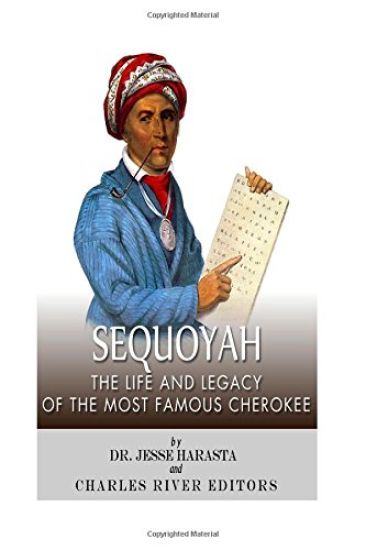
*Includes pictures *Explains how the syllabary works and its influences *Includes footnotes and a bibliography for further reading Tragically, the Cherokee is one of America's best known tribes due to the trials and tribulations they suffered by being forcibly moved west along the "Trail of Tears", but that overlooks the contributions they made to American society well before the 19th century. The Cherokee began the process of assimilation into European America very early, even before the establishment of the Unites States, and by the early 19th century they were one of the "Five Civilized Tribes." Despite all of the hostilities and the Trail of Tears, the Cherokee ultimately became the first people of non-European descent to become U.S. citizens en masse, and today the Cherokee Nation is the largest federally recognized tribe in the United States, boasting over 300,000 members. The Cherokee might be the most famous tribe in the country, and if so, the person most responsible for it is Sequoyah, whose invention of the Cherokee syllabary also played a prominent role in facilitating the assimilation between the Cherokee and Americans. Sequoyah began work on devising the writing and reading system around 1809, and it was instantly popular among the Cherokee, to the extent that it was being used in written publications among the tribe by the 1820s. The syllabary has been in use ever since, both within the tribe and among outsiders. Thanks to his accomplishments, Sequoyah was celebrated in his own lifetime, but due to his obscure roots, accounts of his early years still vary dramatically. Sequoyah: The Life and Legacy of the Most Famous Cherokee looks at the life and work of the man who put the Cherokee language down in print and made it possible for outsiders to both read and write it. This includes analyzing the nature of his invention, the social context in which he lived, and the ongoing legacy he has left for the modern Cherokee. Along with pictures of important people, places, and events, you will learn about Sequoyah like never before, in no time at all.


![Some Observations on the Two Campaigns Against the Cherokee Indians, in 1760 and 1761. in a Second Letter from Philopatrios. [Two Lines of Quotations]](/covers/9781170885666.jpg)
![Some Observations on the Two Campaigns Against the Cherokee Indians, in 1760 and 1761. in a Second Letter from Philopatrios. [two Lines of Quotations]](/covers/9781385427002.jpg)