Kirjojen hintavertailu. Mukana 12 083 983 kirjaa ja 12 kauppaa.

Kirjahaku

Etsi kirjoja tekijän nimen, kirjan nimen tai ISBN:n perusteella.

1000 tulosta hakusanalla Conrad Mbewe

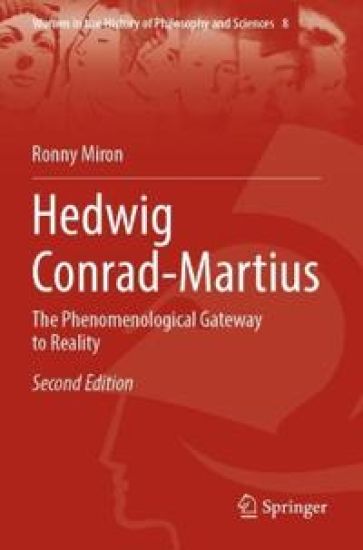
Hedwig Conrad-Martius

Hedwig Conrad-Martius

Ronny Miron

Springer Nature Switzerland AG
2021
sidottu
This volume, the first of its kind written in English, interprets the realistic-phenomenological philosophy of Hedwig Conrad-Martius (1888-1966). She was a prominent figure in the Munich-Göttingen Circle, the first generation of phenomenology after Edmund Husserl (1859-1938), and was known as the “first lady of German philosophy”. The articles included in this collection deal with the two main themes constituting her realistic-metaphysical phenomenology: Being and the I. In addition, the collection includes a comprehensive Preface that describes the personal background and the social and philosophical contexts behind Conrad-Martius’s thought, with an emphasis on the mutual influence and fertilization of the group of early phenomenologists in the Munich-Göttingen Circle. The book will be of interest to scholars of philosophy and educated readers.
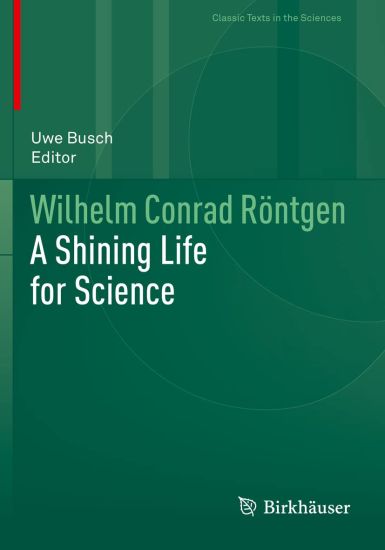
Wilhelm Conrad Röntgen

Wilhelm Conrad Röntgen

Springer Nature Switzerland AG
2021
sidottu
It was one of the great moments of humanity when Wilhelm Conrad Röntgen (1845– 1923) discovered a new kind of radiation on 8 November 1895. He himself modestly called them “X-rays”. Röntgen’s name and his rays became world famous. On 10 December 1901, Röntgen received the ?rst Nobel Prize in Physics. X-rays have lost none of their appeal since then. They still permeate all areas of science, technology and medicine and accompany us in our everyday lives.However, Röntgen’s scienti?c work cannot be reduced to this one great discovery alone. He was an excellent natural scientist, and his spirit of research is still an example for many scientists today. Röntgen’s very special interest in precision physics is also more topical than ever.This carefully curated volume offers a multifaceted view of an outstanding natural scientist and provides insights into his personal legacy.
Wilhelm Conrad Röntgen

Wilhelm Conrad Röntgen

Springer Nature Switzerland AG
2022
nidottu
It was one of the great moments of humanity when Wilhelm Conrad Röntgen (1845– 1923) discovered a new kind of radiation on 8 November 1895. He himself modestly called them “X-rays”. Röntgen’s name and his rays became world famous. On 10 December 1901, Röntgen received the ?rst Nobel Prize in Physics. X-rays have lost none of their appeal since then. They still permeate all areas of science, technology and medicine and accompany us in our everyday lives.However, Röntgen’s scienti?c work cannot be reduced to this one great discovery alone. He was an excellent natural scientist, and his spirit of research is still an example for many scientists today. Röntgen’s very special interest in precision physics is also more topical than ever.This carefully curated volume offers a multifaceted view of an outstanding natural scientist and provides insights into his personal legacy.
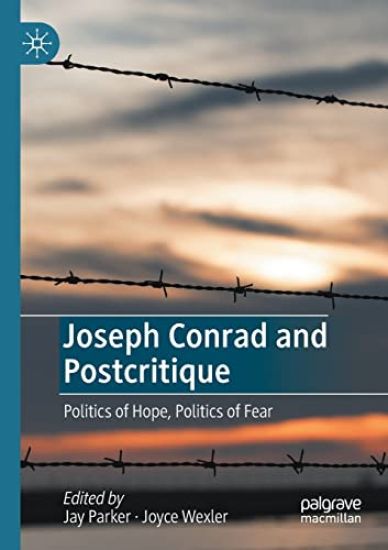
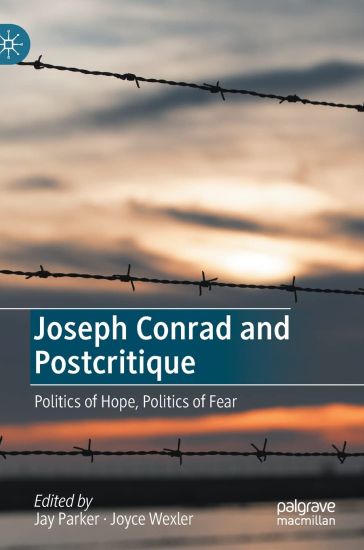
Joseph Conrad and Postcritique

Joseph Conrad and Postcritique

Springer Nature Switzerland AG
2021
sidottu
This book takes a postcritical perspective on Joseph Conrad’s central texts, including Heart of Darkness, The Secret Agent, Under Western Eyes, and Lord Jim. Whereas critique is a form of reading that prioritizes suspicion, unmasking, and demystifying, postcritique ascribes positive value to the knowledge, affect, ethics, and politics that emerge from literature. The essays in this collection recognize the dark elements in Conrad’s fiction—deceit, vanity, avarice, lust, cynicism, and cruelty—yet they perceive hopefulness as well. Conrad’s skepticism unveils the dark heart of politics, and his critical heritage can feed our fear that humanity is incapable of improving. This Conrad is a well-known figure, but there is another, neglected Conrad that this book aims to bring to light, one who delves into the politics of hope as well as the politics of fear. Chapters 1 and 2 are available open access under a Creative Commons Attribution 4.0 International License via link.springer.com
Joseph Conrad and Postcritique

Joseph Conrad and Postcritique

Springer Nature Switzerland AG
2022
nidottu
This book takes a postcritical perspective on Joseph Conrad’s central texts, including Heart of Darkness, The Secret Agent, Under Western Eyes, and Lord Jim. Whereas critique is a form of reading that prioritizes suspicion, unmasking, and demystifying, postcritique ascribes positive value to the knowledge, affect, ethics, and politics that emerge from literature. The essays in this collection recognize the dark elements in Conrad’s fiction—deceit, vanity, avarice, lust, cynicism, and cruelty—yet they perceive hopefulness as well. Conrad’s skepticism unveils the dark heart of politics, and his critical heritage can feed our fear that humanity is incapable of improving. This Conrad is a well-known figure, but there is another, neglected Conrad that this book aims to bring to light, one who delves into the politics of hope as well as the politics of fear. Chapters 1 and 2 are available open access under a Creative Commons Attribution 4.0 International License via link.springer.com
Joseph Conrad and Terrorism Today

Joseph Conrad and Terrorism Today

Joyce Wexler

Springer Nature Switzerland AG
2021
sidottu
This book explores how the anarchist fiction of Joseph Conrad can help us understand terrorism today. Conrad undermines the popular view that terrorists are fanatics. He portrays anarchists and police as counterparts driven by the human desires for autonomy and affiliation, the need to control their own lives and to be part of a group. Postcritique encourages readers to consider the accuracy of such information, and research in Terrorism Studies confirms Conrad’s insights: his characters are more realistic and his political stance is more hopeful than critics have recognized.
Hedwig Conrad-Martius and Edith Stein: Philosophical Encounters and Divides
This book focuses on the unique philosophical relationship between Hedwig Conrad-Martius and Edith Stein. The two phenomenologists discussed and debated insights and ideas about the nature of the soul, phenomenology, personhood and individuality, animal life, nature, being, and God. This book brings together for the first time leading international scholars of phenomenology to explore the philosophical exchange between both Conrad-Martius and Stein. This is an important book for understanding the development of the phenomenological movement and key phenomenological ideas and methods. It provides a critical and comprehensive overview of the key issues that helped frame both phenomenologists’ philosophical trajectories. Additionally, the ideas of Conrad-Martius and Stein are mined to address contemporary questions surrounding such topics as personal identity, animal versus human personhood, contemporary atheism, and the relationship between religion and science. The book will have greatappeal to phenomenologists, philosophers, and historians of philosophy.
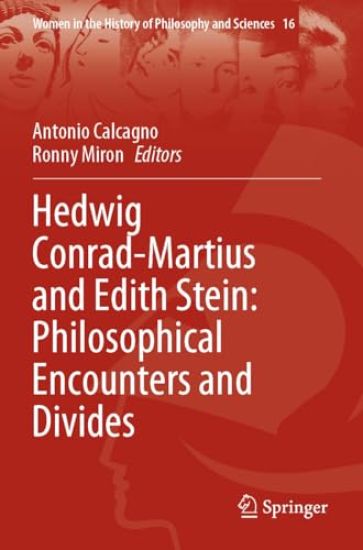
Hedwig Conrad-Martius and Edith Stein: Philosophical Encounters and Divides
This book focuses on the unique philosophical relationship between Hedwig Conrad-Martius and Edith Stein. The two phenomenologists discussed and debated insights and ideas about the nature of the soul, phenomenology, personhood and individuality, animal life, nature, being, and God. This book brings together for the first time leading international scholars of phenomenology to explore the philosophical exchange between both Conrad-Martius and Stein. This is an important book for understanding the development of the phenomenological movement and key phenomenological ideas and methods. It provides a critical and comprehensive overview of the key issues that helped frame both phenomenologists’ philosophical trajectories. Additionally, the ideas of Conrad-Martius and Stein are mined to address contemporary questions surrounding such topics as personal identity, animal versus human personhood, contemporary atheism, and the relationship between religion and science. The book will have greatappeal to phenomenologists, philosophers, and historians of philosophy.
Hedwig Conrad-Martius

Hedwig Conrad-Martius

Ronny Miron

Springer International Publishing AG
2023
sidottu
This volume, the first of its kind written in English, interprets the realistic-phenomenological philosophy of Hedwig Conrad-Martius (1888-1966). She was a prominent figure in the Munich-Göttingen Circle, the first generation of phenomenology after Edmund Husserl (1859-1938), and was known as the “first lady of German philosophy”.The articles included in this collection deal with the two main themes constituting her realistic-metaphysical phenomenology: Being and the I. The new edition includes an additional chapter opening a new path into the study of Conrad-Martius with Heidegger. In addition, the collection includes a comprehensive Introduction that describes the personal background and the social and philosophical contexts behind Conrad-Martius’s thought, with an emphasis on the mutual influence and fertilization of the group of early phenomenologists in the Munich-Göttingen Circle. The book is aimed at scholars of philosophy and educated readers.
Hedwig Conrad-Martius

Hedwig Conrad-Martius

Ronny Miron

Springer International Publishing AG
2024
nidottu
This volume, the first of its kind written in English, interprets the realistic-phenomenological philosophy of Hedwig Conrad-Martius (1888-1966). She was a prominent figure in the Munich-Göttingen Circle, the first generation of phenomenology after Edmund Husserl (1859-1938), and was known as the “first lady of German philosophy”.The articles included in this collection deal with the two main themes constituting her realistic-metaphysical phenomenology: Being and the I. The new edition includes an additional chapter opening a new path into the study of Conrad-Martius with Heidegger. In addition, the collection includes a comprehensive Introduction that describes the personal background and the social and philosophical contexts behind Conrad-Martius’s thought, with an emphasis on the mutual influence and fertilization of the group of early phenomenologists in the Munich-Göttingen Circle. The book is aimed at scholars of philosophy and educated readers.
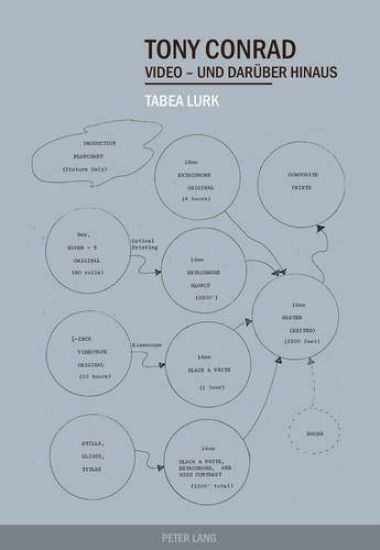
Tony Conrad

Tony Conrad

Tabea Lurk

Peter Lang AG, Internationaler Verlag der Wissenschaften
2015
nidottu
Der US-amerikanische Kunstler Anthony (Tony) Conrad (*1940) ist seit uber 50 Jahren eine feste Groesse im Kunstbetrieb. Gefeiert als Musiker, Filmemacher, Video- und Performance-Kunstler gelingt sein Durchbruch 1966 mit dem Experimentalfilm "The Flicker". Neben den Filmarbeiten (inkl. "Yellow Movies") finden die sogenannten "String Performances" (Solovioline) grosse Anerkennung. Sie erinnern an das Theatre of Eternal Music (1962-1967) und wurden von namhaften Autoren aufgearbeitet. Die vorliegende Monografie konzentriert sich daher auf die ca. 70 Videoarbeiten des Kunstlers, die ab 1977 entstanden und noch nicht wissenschaftlich untersucht wurden. Auf die Erinnerung an Eckpunkte des kunstlerischen Werdegangs (Videografischer Blick auf die Kunstlervita) folgt der UEbergang vom materialistischen Experimentalfilm zum videografischen Bilddenken im Umfeld der Appropriation Art (Video als letzte Aufforderung). Die Reflexion der telematischen Kultur der 1980er Jahre hinterfragt das Wechselspiel zwischen (Video-)Kunst und Gesellschaft (Video als Fernsehkritik). Das letzte Kapitel (Video im Spannungsfeld der Musik) kehrt zum Beginn der kunstlerischen Karriere Tony Conrads zuruck.
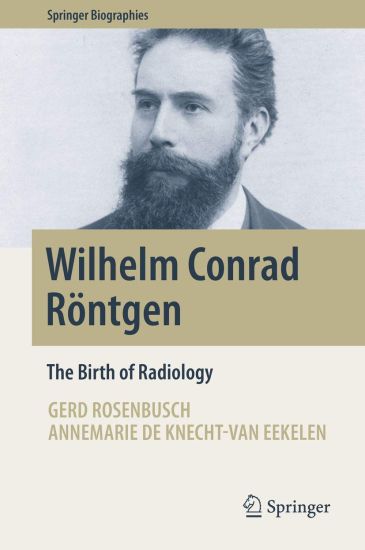
Wilhelm Conrad Röntgen

Wilhelm Conrad Röntgen

Gerd Rosenbusch; Annemarie de Knecht-van Eekelen

Springer International Publishing AG
2019
sidottu
This book, which will appeal to all with an interest in the history of radiology and physics, casts new light on the life and career of Wilhelm Conrad Röntgen, showing how his personality was shaped by his youth in the Netherlands and his teachers in Switzerland. Beyond this, it explores the technical developments relevant to the birth of radiology in the late nineteenth century and examines the impact of the discovery of X-rays on a broad range of scientific research. Röntgen (1845-1923) was born in Lennep, Germany, but emigrated with his family to the Netherlands in 1848. As a 17-year-old he moved to Utrecht, entering the Technical School and living at the home of Dr. Jan Willem Gunning. In this well-educated family he was stimulated to continue his studies at university. In 1868 he received a diploma from the Federal Polytechnic School in Zurich and just a year later completed a PhD in physics. He followed his mentor, August Kundt, to the universities of Würzburg (1870) and Strasburg (1872) and married Anna Ludwig in 1872. In 1879 Röntgen gained his first professorship at a German University, in Giessen, followed by a chair in Würzburg in 1888. Here he discovered X-rays in 1895, for which he received the first Nobel Prize in physics in 1901. From 1900 until his retirement in 1921 he occupied the chair of physics at the Munich University.
Théophile-Conrad Pfeffel de Colmar

Théophile-Conrad Pfeffel de Colmar

Lina Beck-Bernard

Antigonos Verlag
2025
pokkari
R impression inchang e de l' dition originale de 1866. La maison d' dition Antigonos est sp cialis e dans la publication de r impressions de livres historiques. Nous veillons ce que ces ouvrages soient mis la disposition du public dans de bonnes conditions afin de pr server leur patrimoine culturel.
Wilhelm Conrad Röntgen und die Geschichte der Röntgenstrahlen

Wilhelm Conrad Röntgen und die Geschichte der Röntgenstrahlen

Otto Glasser

Springer-Verlag Berlin and Heidelberg GmbH Co. K
2011
nidottu
Den 150. Geburtstag Wilhelm Conrad Röntgens würdigt der Springer-Verlag mit der dritten Auflage der Röntgenbiographie von Otto Glasser. Mit Begeisterung und Detailliebe hat Glasser Informationen, Anekdoten und Persönliches über Röntgen zusammengetragen. Der Leser spürt, wie bahnbrechend Röntgens Entdeckung der neuen Strahlen war. Erweitert wird diese bereits 1957 in zweiter Auflage erschienene Biographie durch einleitende Worte von Professor Peters, Direktor des Instituts für Klinische Radiologie der Universität Münster.Alles in allem ist dieses Buch eine vergnügliche Reise in die Medizingeschichte.