This book explores emerging trends in wearable sensors for sport and highlights the developments taking place. Drawing on the literature both the approaches and principals for the use of sensors in sport are outlined, and together with references to key works the reader finds this useful in considering such endeavours. The development of wearable technologies is fast paced and accompanying that is an exponential growth in the use and development of computing resources, thus while the review is comprehensive on content not all works can be included and given publication times will inevitably be somewhat dated. The illumination through trends, examples and principles are an aid for anyone considering the use of sensors and wearables in sports.
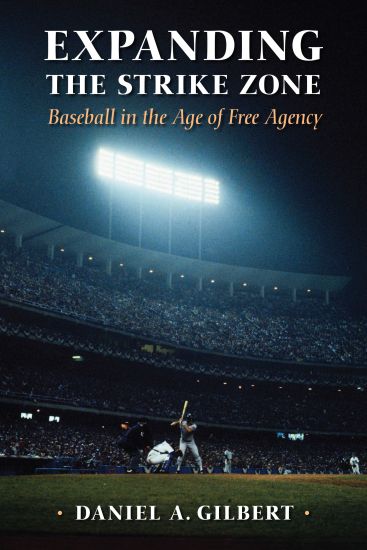
With its iconic stars and gleaming ballparks, baseball has been one of the most captivating forms of modern popular culture. In Expanding the Strike Zone, Daniel A. Gilbert examines the history and meaning of the sport's tumultuous changes since the mid-twentieth century, amid Major League Baseball's growing global influence. From the rise of ballplayer unionism to the emergence of new forms of scouting, broadcasting, and stadium development, Gilbert shows that the baseball world has been home to struggles over work and territory that resonate far beyond the playing field. Readers encounter both legendary and unheralded figures in this sweeping history, which situates Major League Baseball as part of a larger culture industry. The book examines a labor history defined at once by the growing power of big league stars - from Juan Marichal and Curt Flood to Fernando Valenzuela and Ichiro Suzuki - and the collective struggles of players working to make a living throughout the baseball world. It also explores the territorial politics that have defined baseball's development as a form of transnational popular culture, from the impact of Dominican baseball academies to the organized campaign against stadium development by members of Seattle's Asian American community. Based on a rich body of research along with new readings of popular journalism, fiction, and film, Expanding the Strike Zone highlights the ways in which baseball's players, owners, writers, and fans have shaped and reshaped the sport as a central element of popular culture from the postwar boom to the Great Recession.
With its iconic stars and gleaming ballparks, baseball has been one of the most captivating forms of modern popular culture. In Expanding the Strike Zone, Daniel A. Gilbert examines the history and meaning of the sport's tumultuous changes since the mid-twentieth century, amid Major League Baseball's growing global influence. From the rise of ballplayer unionism to the emergence of new forms of scouting, broadcasting, and stadium development, Gilbert shows that the baseball world has been home to struggles over work and territory that resonate far beyond the playing field. Readers encounter both legendary and unheralded figures in this sweeping history, which situates Major League Baseball as part of a larger culture industry. The book examines a labor history defined at once by the growing power of big league stars - from Juan Marichal and Curt Flood to Fernando Valenzuela and Ichiro Suzuki - and the collective struggles of players working to make a living throughout the baseball world. It also explores the territorial politics that have defined baseball's development as a form of transnational popular culture, from the impact of Dominican baseball academies to the organized campaign against stadium development by members of Seattle's Asian American community. Based on a rich body of research along with new readings of popular journalism, fiction, and film, Expanding the Strike Zone highlights the ways in which baseball's players, owners, writers, and fans have shaped and reshaped the sport as a central element of popular culture from the postwar boom to the Great Recession.
The translation of magical power to a created image is a matter well understood in so-called 'archaic' sorcery, in which a mutual embodiment of re-presentation and represented occurs. The carved fetish, for example, participates in a reciprocal process between object and creator that often begins long before chisels and adzes are set to wood, drawn from the atavistic spirit-reservoir of the carver. From the view of magic, the spirit that the idol represents thus participates in its own reification. Many of these forms of image-making were concerned with accessing power, and it was only later, in the context of religious devotion, that their forms densified into 'mere' idols. Witchcraft and the Occult, because of their syncretic nature, partake in multiple infusions of traditional image-making lore, including not only sorcery and religious iconography, but also science, craftsmanship, and the fine arts. However, because much of its images are used privately, and indeed created for consumption by a limited set of observers, they participate in a concentrated alembic of exposure wherein all who experience them do so in the context of magical practice and devotion. This intensity of private magical interaction provides a locus which enables the image to transcend its medium --and indeed that fetish known as 'icon'. First published in book form in 2013 and long out of print, this second edition of Idolatry Restor'd contains additional textual expansion and is newly typeset.
Technical and Ethical Optimization: Challenges and Opportunities for the Modern Engineer and Scientist offers a comprehensive yet accessible exploration of the scientific foundations, moral considerations, and societal implications of existing and emerging technologies. The book addresses key issues such as innovation, responsibility, justice, and sustainability, providing credible references and real-world case studies to illuminate complex debates. The book is organized into insightful chapters covering topics like discovery through design, ethical frameworks, the roles of science and biomedical ethics, environmental concerns, human enhancement, risk assessment, and technological justice. It also discusses sustainability, resilience, and the knowledge needed to navigate technological progress responsibly. Each chapter critically examines the scientific, engineering, and moral underpinnings, fostering a nuanced understanding of the challenges and opportunities posed by modern innovations.Technical and Ethical Optimization: Challenges and Opportunities for the Modern Engineer and Scientist is an essential resource for researchers, educators, policymakers, industry professionals, and students across engineering, science, medicine, environmental studies, security, and philosophy.
Makes the case for the importance of metaphysics in democratic political philosophy. This book challenges two common mistakes in our current political discourse: that religion is merely a private, individual matter or, conversely, that religion should dominate public discourse. Moving beyond these blind alleys requires emphasis on the way of reason in both politics and religion. Democracy itself, the book argues, depends on the way of reason, and contemporary attacks on reason and argument are therefore not unrelated to the recent rise in authoritarianism and other forms of antidemocratic thought. In its effort to secure a metaphysical basis for democratic political theory, the book concentrates on the thought of the philosopher and theologian Franklin I. Gamwell while also relying on Charles Hartshorne in theistic metaphysics and John Rawls in political philosophy. Classical theism is criticized as is relativistic misology, the latter of which conceals a universal claim that all knowledge claims are restricted to a particular lifeworld. Throughout the book there is an effort to understand the necessary and the contingent as they relate to the virtue of toleration of reasonable differences in both religion and politics.
These teenage parents are black, white, and Hispanic; city dwellers and residents of small towns. From conversations with these teenagers, Dr. Coles weaves a subtle yet dramatic narrative that reveals the aspirations and apprehensions of these "youngest parents" whose prospects aren't very promising and whose assumptions aren't always those he, or we, share. Young mothers don't have an easy time ahead of them, but many pregnant teens believe that the babies they carry will lead lives very different from their own, that their babies may find the success that eludes them and may escape the limitations they've suffered. Dr. Coles finds that the fathers' confusion and, sometimes, resentment give way to a deep longing for respect and a desire for a way out of lives limited by poverty and poor education. Dr. Coles's text is accompanied by photographic essays by two outstanding American photographers. Jocelyn Lee, a photographer based in Boston, lived intimately with young families in Massachusetts where she explored the daily lives of young parents. John Moses, a pediatrician and photographer, worked for several years with teenage parents in rural North Carolina, and his pictures show the pride and tenderness they've found in family life.