Kirjojen hintavertailu. Mukana 12 016 292 kirjaa ja 12 kauppaa.

Kirjahaku

Etsi kirjoja tekijän nimen, kirjan nimen tai ISBN:n perusteella.

1000 tulosta hakusanalla Deborah Hopkinson

The Dragon's Gift

The Dragon's Gift

Deborah Brautigam

Oxford University Press
2011
nidottu
Is China a rogue donor, as some media pundits suggest? Or is China helping the developing world pave a pathway out of poverty, as the Chinese claim? In the last few years, China's aid program has leapt out of the shadows. Media reports about huge aid packages, support for pariah regimes, regiments of Chinese labor, and the ruthless exploitation of workers and natural resources in some of the poorest countries in the world sparked fierce debates. These debates, however, took place with very few hard facts. China's tradition of secrecy about its aid fueled rumors and speculation, making it difficult to gauge the risks and opportunities provided by China's growing embrace. This well-timed book, by one of the world's leading experts, provides the first comprehensive account of China's aid and economic cooperation overseas. Deborah Brautigam tackles the myths and realities, explaining what the Chinese are doing, how they do it, how much aid they give, and how it all fits into their "going global" strategy. Drawing on three decades of experience in China and Africa, and hundreds of interviews in Africa, China, Europe and the US, Brautigam shines new light on a topic of great interest. China has ended poverty for hundreds of millions of its own citizens. Will Chinese engagement benefit Africa? Using hard data and a series of vivid stories ranging across agriculture, industry, natural resources, and governance, Brautigam's fascinating book provides an answer. It is essential reading for anyone concerned with China's rise, and what it might mean for the challenge of ending poverty in Africa.
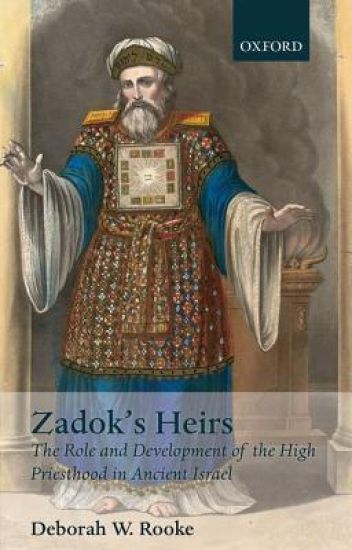
Zadok's Heirs

Zadok's Heirs

Deborah W. Rooke

Oxford University Press
2012
nidottu
This unique study is the first systematic examination to be undertaken of the high priesthood in ancient Israel, from the earliest local chief priests in the pre-monarchic period down to the Hasmonaean priest-kings in the first century BCE. Deborah Rooke argues that, contrary to received scholarly opinion, the high priesthood was fundamentally a religious office which in and of itself bestowed no civil responsibilities upon its holders, and that not until the time of the Maccabean revolt does the high priest appear as the sole figure of leadership for the nation. However, even the Maccabean / Hasmonaean high priesthood was effectively a reversion to the monarchic model of sacral kingship which had existed several centuries earlier in the pre-exilic period, rather than being an extension of the powers of the high priesthood itself. The idea that high priesthood per se bestowed the power to rule should therefore be reconsidered.
The Beauty Bias

The Beauty Bias

Deborah L. Rhode

Oxford University Press Inc
2011
nidottu
"It hurts to be beautiful" has been a cliche for centuries. What has been far less appreciated is how much it hurts not to be beautiful. The Beauty Bias explores our cultural preoccupation with attractiveness, the costs it imposes, and the responses it demands. Beauty may be only skin deep, but the damages associated with its absence go much deeper. Unattractive individuals are less likely to be hired and promoted, and are assumed less likely to have desirable traits, such as goodness, kindness, and honesty. Three quarters of women consider appearance important to their self image and over a third rank it as the most important factor. Although appearance can be a significant source of pleasure, its price can also be excessive, not only in time and money, but also in physical and psychological health. Our annual global investment in appearance totals close to $200 billion. Many individuals experience stigma, discrimination, and related difficulties, such as eating disorders, depression, and risky dieting and cosmetic procedures. Women bear a vastly disproportionate share of these costs, in part because they face standards more exacting than those for men, and pay greater penalties for falling short. The Beauty Bias explores the social, biological, market, and media forces that have contributed to appearance-related problems, as well as feminism's difficulties in confronting them. The book also reviews why it matters. Appearance-related bias infringes fundamental rights, compromises merit principles, reinforces debilitating stereotypes, and compounds the disadvantages of race, class, and gender. Yet only one state and a half dozen localities explicitly prohibit such discrimination. The Beauty Bias provides the first systematic survey of how appearance laws work in practice, and a compelling argument for extending their reach. The book offers case histories of invidious discrimination and a plausible legal and political strategy for addressing them. Our prejudices run deep, but we can do far more to promote realistic and healthy images of attractiveness, and to reduce the price of their pursuit.
Lawyers as Leaders

Lawyers as Leaders

Deborah L. Rhode

Oxford University Press Inc
2013
sidottu
No occupation in America supplies a greater proportion of leaders than law. They obviously lead law firms, but they also sit at the helm of a vast and diverse array of businesses across America, including 10 percent of S & P 500 firms. And of course, a strikingly large percentage of our political leaders are attorneys, including half the members of Congress. This raises two obvious questions: why do we look to lawyers to lead, and why do so many of them prove to be so untrustworthy and unprepared? In Lawyers as Leaders, eminent law professor Deborah Rhode not only answers these questions but crafts an essential manual for attorneys who need to develop better leadership skills. She contends that the legal profession attracts a large number of individuals with the ambition and analytic capabilities to be leaders, but often fails to develop other qualities that are essential to their effectiveness. The focus of legal education and the reward structure of legal practice undervalue the interpersonal skills and ethical commitments necessary for successful leadership. Although some lawyers are sufficiently gifted to need little reinforcement, Rhode shows that the vast majority of law school graduates need to develop the leadership characteristics that she profiles. They know it too. According to one survey, almost 90 percent of attorneys stated that their law schools did not teach them leadership skills. Given the importance of the topic, it is surprising how little the profession has done to develop leadership skills. The first serious treatment of the subject, Lawyers as Leaders will be essential to law school instructors who teach leadership courses (a growing field) and any attorney who finds him or herself in a management position.
Flawed Convictions

Flawed Convictions

Deborah Tuerkheimer

Oxford University Press Inc
2014
sidottu
The emergence of Shaken Baby Syndrome (SBS) presents an object lesson in the dangers that lie at the intersection of science and criminal law. As often occurs in the context of scientific knowledge, understandings of SBS have evolved. We now know that the diagnostic triad alone does not prove beyond a reasonable doubt that an infant was abused, or that the last person with the baby was responsible for the babys condition. Nevertheless, our legal system has failed to absorb this new consensus. As a result, innocent parents and caregivers remain incarcerated and, perhaps more perplexingly, triad-only prosecutions continue even to this day. Flawed Convictions: Shaken Baby Syndrome and the Inertia of Injustice is the first book to survey the scientific, cultural, and legal history of Shaken Baby Syndrome from inception to formal dissolution. It exposes extraordinary failings in the criminal justice systems treatment of what is, in essence, a medical diagnosis of murder. The story of SBS highlights fundamental inadequacies in the legal response to science dependent prosecution. A proposed restructuring of the law contends with the uncertainty of scientific knowledge.
Family Secrets: Shame and Privacy in Modern Britain

Family Secrets: Shame and Privacy in Modern Britain

Deborah Cohen

Oxford University Press
2013
sidottu
We live today in a culture of full disclosure, where tell-all memoirs top the best-seller lists, transparency is lauded, and privacy seems imperiled. But how did we get here? Exploring scores of previously sealed records, Family Secrets offers a sweeping account of how shame--and the relationship between secrecy and openness--has changed over the last two centuries in Britain. Deborah Cohen uses detailed sketches of individual families as the basis for comparing different sorts of social stigma. She takes readers inside an Edinburgh town house, where a genteel maiden frets with her brother over their niece's downy upper lip, a darkening shadow that might betray the girl's Eurasian heritage; to a Liverpool railway platform, where a heartbroken mother hands over her eight-year old illegitimate son for adoption; to a town in the Cotswolds, where a queer vicar brings to his bank vault a diary--sewed up in calico, wrapped in parchment--that chronicles his sexual longings. Cohen explores what families in the past chose to keep secret and why. She excavates the tangled history of privacy and secrecy to explain why privacy is now viewed as a hallowed right while secrets are condemned as destructive. In delving into the dynamics of shame and guilt, Family Secrets explores the part that families, so often regarded as the agents of repression, have played in the transformation of social mores from the Victorian era to the present day. Written with compassion and keen insight, this is a bold new argument about the sea-changes that took place behind closed doors.
Housing First

Housing First

Deborah Padgett; Benjamin Henwood; Sam Tsemberis

Oxford University Press Inc
2015
sidottu
This book is the first to chronicle the story of Housing First (HF), a paradigm-shifting evidence-based approach to ending homelessness that began in New York City in 1992 and rapidly spread to other cities nationally and internationally. The authors report on the rise of a 'homeless industry' of shelters and transitional housing programs that the HF approach directly challenged by rejecting the usual demands of treatment, sobriety and housing readiness. Based upon principles of consumer choice, harm reduction and immediate access to permanent independent housing in the community, HF was initially greeted with skepticism and resistance from the 'industry'. However, rigorous experiments testing HF against 'usual care' produced consistent findings that the approach produced greater housing stability, lower use of drugs, and alcohol and cost savings. This evidence base, in conjunction with media accounts of HF's success, led to widespread adoption in the U.S., Canada, Western Europe, and Australia. The book traces the history of homelessness and the rapid growth of the publically funded homeless industry, an amalgam of religious and philanthropic organizations, advocacy groups, and non-profits that were insufficient to stem the tide of homelessness resulting from dramatic reductions in affordable housing in the 1980s and continuing to the present day. The authors summarize research findings on HF and include a chapter of personal stories of individuals who have experienced HF. Unique to this book is the participation of the founder of HF (Tsemberis) and well-known research on HF by the co-authors (Padgett and Henwood). Also unique is the deployment of theories-organizational, institutional and implementation-to conceptually frame the rise of HF and its wide adoption as well as the resistance that arose in some places. Highly readable yet informative and scholarly, this book addresses wider issues of innovation and systems change in social and human services.
SIOP Model for Teaching Science to English Learners, The

SIOP Model for Teaching Science to English Learners, The

Deborah Short; MaryEllen Vogt; Jana Echevarria

Pearson
2010
nidottu
Enhance your Science content instruction with the SIOP Model and transform the academic English and science skills of your English learners. Based on the best-selling resource, Making Content Comprehensible for English Learners: The SIOP Model by acclaimed authors Jana Echevarria, MaryEllen Vogt, and Deborah Short; teachers, coaches, and intervention teachers have access to research-based, SIOP-tested techniques for lessons specifically for the science classroom. This highly anticipated book, The SIOP Model for Teaching Science to English Learners addresses the issues faced in teaching science to English learners (ELs) at each grade-level. SIOP techniques and activities organized around the eight SIOP components guide educators in promoting academic language development along with comprehensible scientific content. Written for SIOP teachers and those who have learned the SIOP Model, this book includes proven, effective science lessons and comprehensive units. In addition, this book provides ideas to adapt the techniques for students at different levels of English proficiency. This book is sure to become an indispensable resource for science educators of English learners. · Presents a systematic process for teaching both the academic content of science and its associated academic language to English learners. · Offers ideas and activities about teaching science and organizes activities by grade-bands—K-2, 3-5 (or 6), 6-8, and 9-12 and SIOP components. · Provides use-tomorrow ideas and activities for implementing the eight components of the SIOP Model in a science classroom. · Includes lesson plans and comprehensive units that illustrate how a particular activity can be effective for ALL students, not just English learners. · Create the ideal SIOP classroom with other resources from the SIOP Model Series: 99 Ideas and Activities for Teaching English Learners with the SIOP Model; Implementing the SIOP Model through Effective Coaching and Professional Development; The SIOP Model for Administrators; Making Content Comprehensible for Elementary English Learners; and Making Content Comprehensible for Secondary English Learners; The SIOP Model for Teaching Math to English Learners; The SIOP Model for Teaching Social Studies to English Learners; and The SIOP Model for Teaching Science to English Learners (all published by Pearson)
SIOP Model for Teaching History-Social Studies to English Learners, The

SIOP Model for Teaching History-Social Studies to English Learners, The

Deborah Short; MaryEllen Vogt; Jana Echevarria

Pearson
2011
nidottu
Enhance your History-Social Studies content instruction with the SIOP Model and transform the academic English and content area skills of your English learners. Based on the best-selling resource, Making Content Comprehensible for English Learners: The SIOP Model by acclaimed authors Jana Echevarria, MaryEllen Vogt, and Deborah Short; teachers, coaches, and intervention teachers have access to research-based, SIOP-tested techniques for lessons specifically for the History-Social Studies classrooms. This highly anticipated book, The SIOP Model for Teaching History-Social Studies to English Learners addresses the issues faced in teaching history-social studies to English learners (ELs) at each grade-level. SIOP techniques and activities organized around the eight SIOP components guide educators in promoting academic language development along with comprehensible content. Written for SIOP teachers and those who have learned the SIOP Model, this book includes proven, effective lessons and comprehensive units. In addition, this book provides ideas to adapt the techniques for students at different levels of English proficiency. This book is sure to become an indispensable resource for history-social studies educators of English learners. Presents a systematic process for teaching both the academic content of history-social studies and its associated academic language to English learners. Offers ideas and activities about teaching history-social studies and organizes activities by grade-bands–K-2, 3-5 (or 6), 6-8, and 9-12 and SIOP components. Provides use-tomorrow ideas and activities for implementing the eight components of the SIOP Model in a history-social studies classroom. Includes lesson plans and comprehensive units that illustrate how a particular activity can be effective for ALL students, not just English learners. Create the ideal SIOP classroom with other resourcesfrom the SIOP Model Series: 99 Ideas and Activities for Teaching English Learners with the SIOP Model; Implementing the SIOP Model through Effective Coaching and Professional Development; The SIOP Model for Administrators; Making Content Comprehensible for Elementary English Learners; and Making Content Comprehensible for Secondary English Learners ; The SIOP Model for Teaching Math to English Learners; The SIOP Model for Teaching English - Language Arts to English Learners; and The SIOP Model for Teaching Science to English Learners (all published by Pearson)
MyLab Search with Pearson eText -- Standalone Access Card - for Leadership and Management of Human Services Organizations
ALERT: Before you purchase, check with your instructor or review your course syllabus to ensure that you select the correct ISBN. Several versions of Pearson's MyLab & Mastering products exist for each title, including customized versions for individual schools, and registrations are not transferable. In addition, you may need a CourseID, provided by your instructor, to register for and use Pearson's MyLab & Mastering products. Packages Access codes for Pearson's MyLab & Mastering products may not be included when purchasing or renting from companies other than Pearson; check with the seller before completing your purchase. Used or rental books If you rent or purchase a used book with an access code, the access code may have been redeemed previously and you may have to purchase a new access code. Access codes Access codes that are purchased from sellers other than Pearson carry a higher risk of being either the wrong ISBN or a previously redeemed code. Check with the seller prior to purchase. --
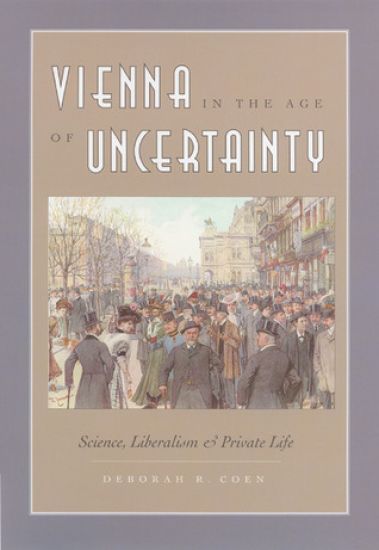
Vienna in the Age of Uncertainty

Vienna in the Age of Uncertainty

Deborah R. Coen

University of Chicago Press
2007
sidottu
"Vienna in the Age of Uncertainty" traces the vital and varied roles of science through the story of three generations of the eminent Exner family, whose members included Nobel Prize - winning biologist Karl Frisch, the teachers of Freud and of physicist Erwin Schrodinger, artists of the Vienna Secession, and a leader of Vienna's women's movement. Training her critical eye on the Exners through the rise and fall of Austrian liberalism and into the rise of the Third Reich, Deborah R. Coen demonstrates the interdependence of the family's scientific and domestic lives, exploring the ways in which public notions of rationality, objectivity, and autonomy were formed in the private sphere. "Vienna in the Age of Uncertainty" presents the story of the Exners as a microcosm of the larger achievements and tragedies of Austrian political and scientific life in the late nineteenth and early twentieth centuries.
Vienna in the Age of Uncertainty

Vienna in the Age of Uncertainty

Deborah R. Coen

University of Chicago Press
2011
nidottu
"Vienna in the Age of Uncertainty" traces the vital and varied roles of science through the story of three generations of the eminent Exner family, whose members included Nobel Prize - winning biologist Karl Frisch, the teachers of Freud and of physicist Erwin Schrodinger, artists of the Vienna Secession, and a leader of Vienna's women's movement. Training her critical eye on the Exners through the rise and fall of Austrian liberalism and into the rise of the Third Reich, Deborah R. Coen demonstrates the interdependence of the family's scientific and domestic lives, exploring the ways in which public notions of rationality, objectivity, and autonomy were formed in the private sphere. "Vienna in the Age of Uncertainty" presents the story of the Exners as a microcosm of the larger achievements and tragedies of Austrian political and scientific life in the late nineteenth and early twentieth centuries.
The Earthquake Observers

The Earthquake Observers

Deborah R. Coen

University of Chicago Press
2012
sidottu
Earthquakes have taught us much about our planet's hidden structure and the forces that have shaped it. This knowledge rests not only on the recordings of seismographs, but also on the observations of eyewitnesses to destruction. During the nineteenth century, a scientific description of an earthquake was built of stories - stories from as many people in as many situations as possible. Sometimes their stories told of fear and devastation, sometimes of wonder and excitement. In "The Earthquake Observers", Deborah R. Coen acquaints readers not only with the century's most eloquent seismic commentators, including Alexander von Humboldt, Charles Darwin, Mark Twain, Charles Dickens, Karl Kraus, Ernst Mach, John Muir, and William James, but also with countless other citizen-observers, many of whom were women. Coen explains how observing networks transformed an instant of panic and confusion into a field for scientific research, turning earthquakes into natural experiments at the nexus of the physical and human sciences. Seismology abandoned this project of citizen science with the introduction of the Richter Scale in the 1930s, only to revive it in the twenty-first century in the face of new hazards and uncertainties. "The Earthquake Observers" tells the history of this interrupted dialogue between scientists and citizens about living with environmental risk.
The Earthquake Observers

The Earthquake Observers

Deborah R. Coen

University of Chicago Press
2014
nidottu
Earthquakes have taught us much about our planet's hidden structure and the forces that have shaped it. This knowledge rests not only on the recordings of seismographs but also on the observations of eyewitnesses to destruction. During the nineteenth century, a scientific description of an earthquake was built of stories - stories from as many people in as many situations as possible. Sometimes their stories told of fear and devastation, sometimes of wonder and excitement. In The Earthquake Observers, Deborah R. Coen acquaints readers not only with the century's most eloquent seismic commentators, including Alexander von. Humboldt, Charles Darwitt, Mark Twain, Charles Dickens, Karl Kraus, Ernst Mach, John Muir, and William James, but also with countless other citizen-observers, many of whom were women. Coen explains how observing networks transformed an instant of panic and confusion into a field for scientific research, turning earthquakes into natural experiments at the nexus of the physical and human sciences. Seismology abandoned this project of citizen science with the introduction of the Richter Scale in the 1950s, only to revive it in the twenty-first century in the face of new hazards and uncertainties. The Earthquake Observers tells the history of this interrupted dialogue between scientists and citizens about living with environmental risk.
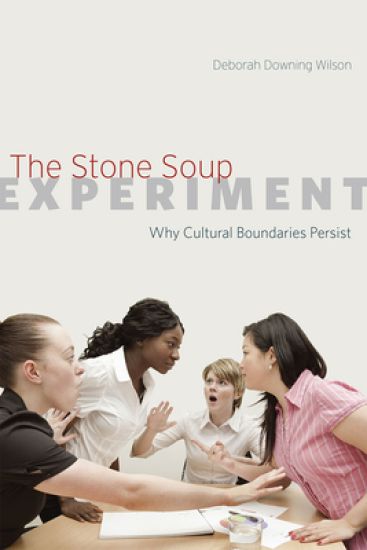
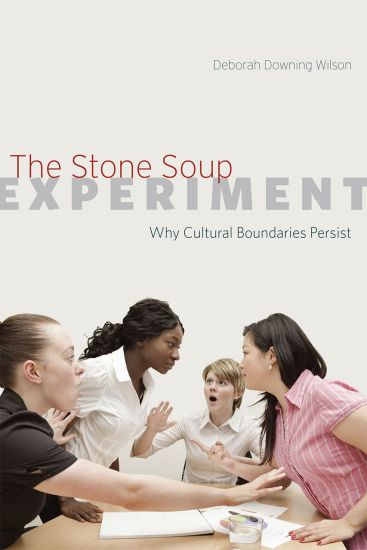
The Stone Soup Experiment

The Stone Soup Experiment

Deborah Downing Wilson

University of Chicago Press
2015
sidottu
The Stone Soup Experiment is a remarkable story of cultural difference, of in-groups, out-groups, and how quickly and strongly the lines between them are drawn. It is also a story about simulation and reality, and how quickly the lines between them can be dismantled. In a compulsively readable account, Deborah Downing Wilson details a ten-week project in which forty university students were split into two different simulated cultures: the carefree Stoners, and the market-driven Traders. Through their eyes we are granted intimate access to the very foundations of human society: how group identities are formed and what happens when opposing ones come into contact. The experience of the Stoners and Traders is a profound testament to human sociality. Even in the form of simulation, even as a game, the participants found themselves quickly-and with real conviction-bound to the ideologies and practices of their in-group. The Stoners enjoyed their days lounging, chatting, and making crafts, while the Traders-through a complex market of playing cards-competed for the highest bankrolls. When they came into contact, misunderstanding, competition, and even manipulation prevailed, to the point that each group became so convinced of its own superiority that even after the simulation's end the students could not reconcile. Throughout her riveting narrative, Downing Wilson interweaves fascinating discussions on the importance of play, emotions, and intergroup interaction in the formation and maintenance of group identities, as well as on the dynamic social processes at work when different cultural groups interact. A fascinating account of social experimentation, the book paints a vivid portrait of our deepest social tendencies and the powers they have over how we make friends and enemies alike.
The Stone Soup Experiment

The Stone Soup Experiment

Deborah Downing Wilson

University of Chicago Press
2015
nidottu
The Stone Soup Experiment is a remarkable story of cultural difference, of in-groups, out-groups, and how quickly and strongly the lines between them are drawn. It is also a story about simulation and reality, and how quickly the lines between them can be dismantled. In a compulsively readable account, Deborah Downing Wilson details a ten-week project in which forty university students were split into two different simulated cultures: the carefree Stoners, and the market-driven Traders. Through their eyes we are granted intimate access to the very foundations of human society: how group identities are formed and what happens when opposing ones come into contact. The experience of the Stoners and Traders is a profound testament to human sociality. Even in the form of simulation, even as a game, the participants found themselves quickly-and with real conviction-bound to the ideologies and practices of their in-group. The Stoners enjoyed their days lounging, chatting, and making crafts, while the Traders-through a complex market of playing cards-competed for the highest bankrolls. When they came into contact, misunderstanding, competition, and even manipulation prevailed, to the point that each group became so convinced of its own superiority that even after the simulation's end the students could not reconcile. Throughout her riveting narrative, Downing Wilson interweaves fascinating discussions on the importance of play, emotions, and intergroup interaction in the formation and maintenance of group identities, as well as on the dynamic social processes at work when different cultural groups interact. A fascinating account of social experimentation, the book paints a vivid portrait of our deepest social tendencies and the powers they have over how we make friends and enemies alike.
Moving Politics

Moving Politics

Deborah B Gould

University of Chicago Press
2009
sidottu
In the late 1980s, after a decade spent engaged in more routine interest-group politics, thousands of lesbians and gay men responded to the AIDS crisis by defiantly and dramatically taking to the streets. But by the early 1990s, the organization they founded, ACT UP, was no more - even as the AIDS epidemic raged on. Weaving together interviews with activists, extensive research, and reflections on the author's time as a member of the organization, "Moving Politics" is the first book to chronicle the rise and fall of ACT UP, highlighting a key factor in its trajectory: emotion. Surprisingly overlooked by many scholars of social movements, emotion, Gould argues, plays a fundamental role in political activism. From anger to hope, pride to shame, and solidarity to despair, feelings played a significant part in ACT UP's provocative style of protest, which included raucous demonstrations, die-ins, and other kinds of street theater. Detailing the movement's public triumphs and private setbacks, "Moving Politics" is the definitive account of ACT UP's origin, development, and decline as well as a searching look at the role of emotion in contentious politics.
Moving Politics – Emotion and ACT UP`s Fight against AIDS

Moving Politics – Emotion and ACT UP`s Fight against AIDS

Deborah B Gould

University of Chicago Press
2009
nidottu
In the late 1980s, after a decade spent engaged in more routine interest-group politics, thousands of lesbians and gay men responded to the AIDS crisis by defiantly and dramatically taking to the streets. But by the early 1990s, the organization they founded, ACT UP, was no more - even as the AIDS epidemic raged on. Weaving together interviews with activists, extensive research, and reflections on the author's time as a member of the organization, "Moving Politics" is the first book to chronicle the rise and fall of ACT UP, highlighting a key factor in its trajectory: emotion. Surprisingly overlooked by many scholars of social movements, emotion, Gould argues, plays a fundamental role in political activism. From anger to hope, pride to shame, and solidarity to despair, feelings played a significant part in ACT UP's provocative style of protest, which included raucous demonstrations, die-ins, and other kinds of street theater. Detailing the movement's public triumphs and private setbacks, "Moving Politics" is the definitive account of ACT UP's origin, development, and decline as well as a searching look at the role of emotion in contentious politics.
China – Visions through the Ages

China – Visions through the Ages

Deborah A. Bekken; Lisa C. Niziolek; Gary M. Feinman; Gary Feinman

University of Chicago Press
2018
sidottu
At the entrance of The Field Museum's Cyrus Tang Hall of China, two Chinese stone guardian lions stand tall, gazing down intently at approaching visitors. One lion's paw rests upon a decorated ball symbolizing power, while the other lion cradles a cub. Traditionally believed to possess attributes of strength and protection, statues such as these once stood guard outside imperial buildings, temples, and wealthy homes in China. Now, centuries later, they guard this incredible permanent exhibition. China's long history is one of the richest and most complex in the known world, and the Cyrus Tang Hall of China offers visitors a wonderful, comprehensive survey of it through some 350 artifacts on display, spanning from the Paleolithic period to present day. Now, with China: Visions through the Ages, anyone can experience the marvels of this exhibition through the book's beautifully designed and detailed pages. Readers will gain deeper insight into The Field Museum's important East Asian collections, the exhibition development process, and research on key aspects of China's fascinating history. This companion book, edited by the exhibition's own curatorial team, takes readers even deeper into the wonders of the Cyrus Tang Hall of China and enables them to study more closely the objects and themes featured in the show. Mirroring the exhibition's layout of five galleries, the volume is divided into five sections. The first section focuses on the Paleolithic and Neolithic periods; the second, the Bronze Age, the first dynasties, and early writing; the third, the imperial system and power; the fourth, religion and performance; and the fifth, interregional trade and the Silk Routes. Each section also includes highlights containing brief stories on objects or themes in the hall, such as the famous Lanting Xu rubbing. With chapters from a diverse set of international authors providing greater context and historical background, China: Visions through the Ages is a richly illustrated volume that allows visitors, curious readers, and China scholars alike a chance to have an enduring exchange with the objects featured in the exhibition and with their multifaceted histories.