Kirjojen hintavertailu. Mukana 12 083 983 kirjaa ja 12 kauppaa.

Kirjahaku

Etsi kirjoja tekijän nimen, kirjan nimen tai ISBN:n perusteella.

1000 tulosta hakusanalla Dimitris Plantzos

how much jest can you take?

how much jest can you take?

Dimitri Karakostas

Lulu.com
2019
nidottu
writing done automatically, writing from the internetso, i'm working on - the writing - uh the writing that doesn't really get read (?)or read outside of it's initial purpose(maybe david markson with wifi)yeah, that's what i'm interested inkeyword stuffing, seo cheatingauto-reply bots, dummy textspeech-recognition-appsai-assisted copy formulasinaccurate predictive textemails from foreign princesuh, i 'trained' docker to write from my search historybut it's all writing that existed to be readit's only job was to existto be textthis is pretty good i think, yeahpeople like this one
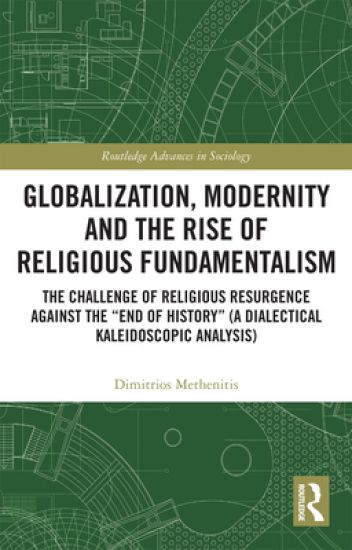
Globalization, Modernity and the Rise of Religious Fundamentalism
The emergence of religious fundamentalism in a globalized, post-colonial world poses a significant challenge to the "End of History" narratives common in academic and non-academic literature alike.Globalization, Modernity and the Rise of Religious Fundamentalism proposes that we must seek new explanations for this phenomenon that recasts the relationship between globalization, modernity and religion. One model through which this possible is that of a dialectical kaleidoscopic methodology – one that applies a variety of theoretical tools and takes a truly multi-dimensional perspective. Through the overlapping and complementary approaches of systems theory, field theory and network theory, this book redefined the concepts of globalization, modernity and religion itself by challenging the inherent misconceptions of ethnocentric biases. It also provides a thorough historical analysis of religious systems from antiquity to the present to show the integration of modern and archaic elements within the structure of religious fundamentalism.Interdisciplinary in nature, Globalization, Modernity and the Rise of Religious Fundamentalism will appeal to students and researchers interested in fields such as geopolitics, history of race and ethnicity, postcolonialism, globalization and sociology of religion.
The Dialectics of Democracy

The Dialectics of Democracy

Dimitrios Kivotidis

TAYLOR FRANCIS LTD
2024
sidottu
This book examines how the democratic form and the struggle for democracy reflects, influences and shapes the struggle for social emancipation.In the context of increased exploitation, rising inequality, and intensified struggle for social justice in the aftermath of the economic crisis, the channelling of populism through liberal democratic institutions has had contradictory effects: giving rise to both Corbyn and Brexit, Sanders and Trump, Syriza and the Golden Dawn, to name but a few. How can we make sense of these developments? In response, this book approaches the idea of democracy from a socialist constitutionalist standpoint and explores institutional forms and principles that challenge and aim at the transformation of the extant social order. This process involves the challenging of well-established ideas of the liberal viewpoint, as well as an unwavering focus on the issue of class rule which enables the highlighting of limitations of -not only mainstream but also heterodox- contemporary approaches to constitutionalism and democracy. Ultimately, democracy is conceived as a process of struggle for creating the conditions, material as well as intellectual, for its actualisation.This significant work of legal and political theory will be of considerable interest to those working in these areas to make sense of contemporary developments, and to further the causes of social justice and social emancipation.
Dictatorship

Dictatorship

Dimitrios Kivotidis

Routledge
2021
sidottu
This book analyses the institution and concept of dictatorship from a legal, historical and theoretical perspective, examining the different types of dictatorship, their relationship to the law, as well as the analytical value of the concept in contemporary world. In particular, it seeks to codify the main theories and conceptions of ‘dictatorship’, with the goal of unearthing their contradictions. The book’s main premise is that the concept of dictatorship and the different types of the dictatorial form have to be assessed and can only be understood in their historical context. On this basis, the elaborations on dictatorship of such diverse thinkers as Carl Schmitt, Donoso Cortes, Karl Marx, Ernst Fraenkel, Franz Neumann, Nicos Poulantzas, and V. I. Lenin, are discussed in their historical context: ‘classical and Caesaristic dictatorship’ in ancient Rome, ‘dictatorship’ in revolutionary France of 1789 and counterrevolutionary France of 1848, ‘fascist dictatorship’ in Nazi Germany, and ‘dictatorship of the proletariat’ in Russia of 1917. The book contributes to the theory of dictatorship as it outlines the contradictions of the different typologies of the dictatorial form and seeks to explain them on the basis of the concept of ‘class dictatorship’. The book’s original claim is that the dictatorial form, as a modality of class rule that relies predominantly on violence and repression, has been essential to the reproduction of bourgeois rule and, consequently, of capitalist social relations. This function has given rise to different types and conceptualisations of dictatorship depending on the level of capitalist development. This book is addressed to anyone with an interest in law, political theory, political history and sociology. It can serve as core text for courses that seek to introduce students to the institution or theory of dictatorship. It may also serve as a reference text for post-graduate programs in law and politics, because of its interdisciplinary and critical approach.
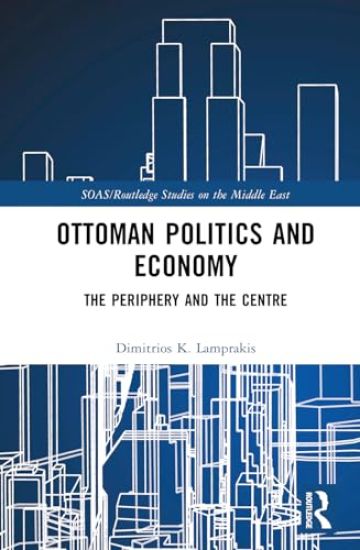
Ottoman Politics and Economy

Ottoman Politics and Economy

Dimitrios K. Lamprakis

TAYLOR FRANCIS LTD
2025
sidottu
This book examines the history of the transformation of the small town of Kozani, situated in modern Greek Macedonia, into a vibrant commercial hub and self-administering community during the period of Ottoman rule, c. 1400–1821.Beginning with a comprehensive examination of the foundation myths as recorded in local amateur historical works, the book then proceeds with a reconstruction of the foundation of Kozani as a small village during the chaotic Ottoman conquest of Macedonia in the fourteenth and fifteenth centuries. It then examines the history of the village using extant Ottoman and Greek documentation, as well as available Ottoman and European travelogues and geographical treatises. Key moments are highlighted in the socio-economic transformation of the village into a thriving commercial hub and religio-political and administrative centre during the sixteenth, seventeenth, and eighteenth centuries. To that end, it discusses the taxation status of Kozani and more particularly the establishment and administration of the malikane life-term tax-farming system. The book also examines local myths about communal strife, applying the scheme of bilateral factionalism to explain the repeated waves of intra-communal violence that almost tore the settlement apart.Shedding new light on an area long overlooked by Ottoman historians, the book is vital reading for those interested in the history, politics, and economy of Ottoman, Islamic, and Balkan towns.
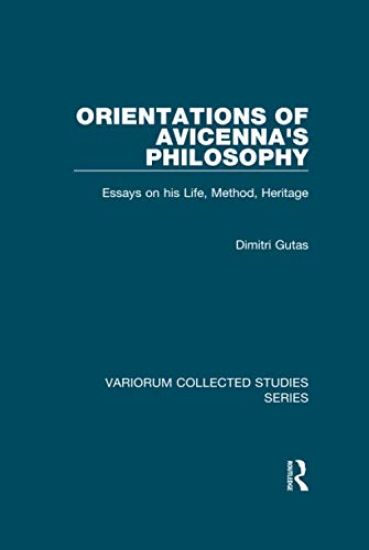
Orientations of Avicenna's Philosophy
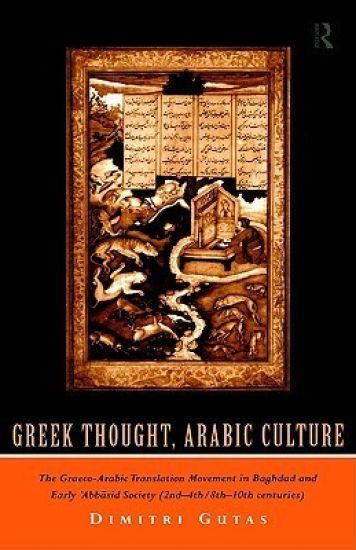
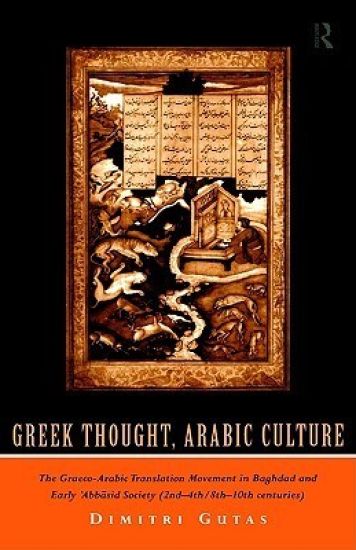
The volume brings together seventeen studies on Avicenna by Dimitri Gutas, written over the past twenty-five years. They aim to establish Avicenna’s historical and philosophical context as a means to determining his philosophical project and the orientations of his thought. They deal with his life and works, his method, his epistemology, and his later reception in the Islamic world, ending with a programmatic essay on the state of the field of Avicennan studies and future agenda. Occasioned by issues raised in Gutas’s monograph on Avicenna and the Aristotelian Tradition (whose second edition has just appeared), they form a substantive complement to it. For this reprint, a number of the essays have been reset and accordingly revised and updated. Provided with exhaustive indexes of names, places, subjects, and technical terms, the volume constitutes a new and major research tool for the study of Avicenna and his heritage. (CS1050).
Dictatorship

Dictatorship

Dimitrios Kivotidis

TAYLOR FRANCIS LTD
2022
nidottu
This book analyses the institution and concept of dictatorship from a legal, historical and theoretical perspective, examining the different types of dictatorship, their relationship to the law, as well as the analytical value of the concept in contemporary world. In particular, it seeks to codify the main theories and conceptions of ‘dictatorship’, with the goal of unearthing their contradictions. The book’s main premise is that the concept of dictatorship and the different types of the dictatorial form have to be assessed and can only be understood in their historical context. On this basis, the elaborations on dictatorship of such diverse thinkers as Carl Schmitt, Donoso Cortes, Karl Marx, Ernst Fraenkel, Franz Neumann, Nicos Poulantzas, and V. I. Lenin, are discussed in their historical context: ‘classical and Caesaristic dictatorship’ in ancient Rome, ‘dictatorship’ in revolutionary France of 1789 and counterrevolutionary France of 1848, ‘fascist dictatorship’ in Nazi Germany, and ‘dictatorship of the proletariat’ in Russia of 1917. The book contributes to the theory of dictatorship as it outlines the contradictions of the different typologies of the dictatorial form and seeks to explain them on the basis of the concept of ‘class dictatorship’. The book’s original claim is that the dictatorial form, as a modality of class rule that relies predominantly on violence and repression, has been essential to the reproduction of bourgeois rule and, consequently, of capitalist social relations. This function has given rise to different types and conceptualisations of dictatorship depending on the level of capitalist development. This book is addressed to anyone with an interest in law, political theory, political history and sociology. It can serve as core text for courses that seek to introduce students to the institution or theory of dictatorship. It may also serve as a reference text for post-graduate programs in law and politics, because of its interdisciplinary and critical approach.

Globalization, Modernity and the Rise of Religious Fundamentalism
The emergence of religious fundamentalism in a globalized, post-colonial world poses a significant challenge to the "End of History" narratives common in academic and non-academic literature alike.Globalization, Modernity and the Rise of Religious Fundamentalism proposes that we must seek new explanations for this phenomenon that recasts the relationship between globalization, modernity and religion. One model through which this possible is that of a dialectical kaleidoscopic methodology – one that applies a variety of theoretical tools and takes a truly multi-dimensional perspective. Through the overlapping and complementary approaches of systems theory, field theory and network theory, this book redefined the concepts of globalization, modernity and religion itself by challenging the inherent misconceptions of ethnocentric biases. It also provides a thorough historical analysis of religious systems from antiquity to the present to show the integration of modern and archaic elements within the structure of religious fundamentalism.Interdisciplinary in nature, Globalization, Modernity and the Rise of Religious Fundamentalism will appeal to students and researchers interested in fields such as geopolitics, history of race and ethnicity, postcolonialism, globalization and sociology of religion.
Toward a Hermeneutic Theory of Social Practices
Recent methodological debates have shown that practice theory can either be developed by combining and slightly extending established theoretical concepts of inter-subjectivity, social normativity, collective behavior, interaction between agents and environment, habits, learning, collective intentionality, and human agency; or by following a strategy that promotes the quest for completely autonomous concepts. In the latter case, one defends a thesis of irreducibility.Toward a Hermeneutic Theory of Social Practices advocates this thesis by approaching the interrelational dynamic of social practices in terms of existential analytic. Indeed, this insightful volume outlines a methodology of the double hermeneutics that allows the study of the entanglement of agential plans, beliefs, and intentions with configured practices; while also demonstrating how interrelated social practices with which agency is entangled articulate cultural forms of life.Suggesting a framework for studying the cultural forms of life within the scope of practice theory, this book will appeal to postgraduate students and postdoctoral researchers interested in fields such as Social Theory, Philosophy of Social Science, and Research Methods for Social and Behavioral Sciences.
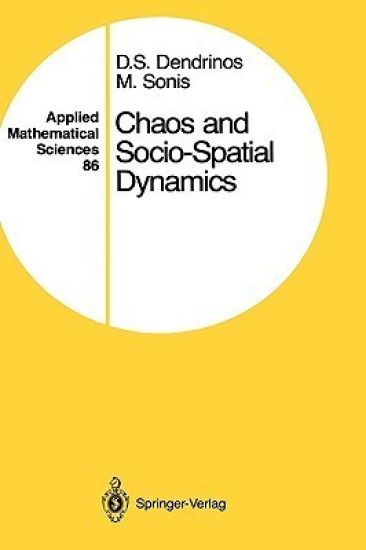
Chaos and Socio-Spatial Dynamics

Chaos and Socio-Spatial Dynamics

Dimitrios S. Dendrinos; Michael Sonis

Springer-Verlag New York Inc.
1990
sidottu
Presents a discrete in time-space universal map of relative dynamics that is used to unfold an extensive catalogue of dynamic events not previously discussed in mathematical or social science literature. With emphasis on the chaotic dynamics that may ensue, the book describes the evolution on the basis of temporal and locational advantages. It explains nonlinear discrete time dynamic maps primarily through numerical simulations. These very rich qualitative dynamics are linked to evolution processes in socio-spatial systems. Important features include: The analytical properties of the one-stock, two- and three-location map; the numerical results from the one- and two-stock, two- and three-location dynamics; and the demonstration of the map's potential applicability in the social sciences through simulating population dynamics of the U.S. Regions over a two-century period. In addition, this book includes new findings: the Hopf equivalent discrete time dynamics bifurcation; the Feigenbaum slope-sequences; the presence of strange local attractors and containers; switching of extreme states; the presence of different types of turbulence; local and global turbulence. Intended for researchers and advanced graduate students in applied mathematics and an interest in dynamics and chaos. Mathematical social scientists in many other fields will also find this book useful.
The Dynamics of Cities

The Dynamics of Cities

Dimitrios Dendrinos

Routledge
1992
sidottu
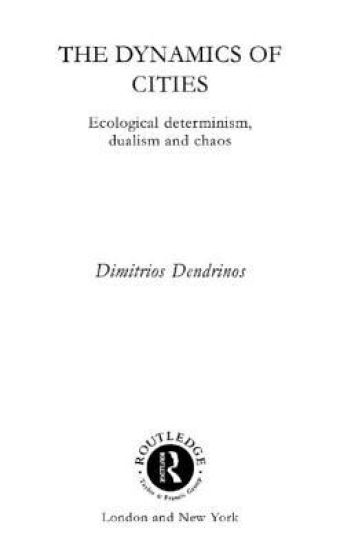
Dimitrios Dendrinos, an expert in the application of non-linear dynamics and chaos theory to the subject of urban and regional dynamics, focuses here on fundamental issues in population growth and decline. He approaches the topic of urban growth and decline within a global system perspective, viewing the rise and fall of cities, industries and nations as the result of global interdependencies which lead to unstable dynamics and widespread dualisms. Professor Dendrinos provides valuable insights into the evolution of human settlements and considers the possible futures open to the giant cities of the world.
Juries in the Japanese Legal System

Juries in the Japanese Legal System

Dimitri Vanoverbeke

Routledge
2015
sidottu
Trial by jury is not a fundamental part of the Japanese legal system, but there has been a recent important move towards this with the introduction in 2009 of the lay assessor system whereby lay people sit with judges in criminal trials. This book considers the debates in Japan which surround this development. It examines the political and socio-legal contexts, contrasting the view that the participation of ordinary citizens in criminal trials is an important manifestation of democracy, with the view that Japan as a society where authority is highly venerated is not natural territory for a system where lay people are likely to express views at odds with expert judges. It discusses Japan’s earlier experiments with jury trials in the late 19th Century, the period 1923-43, and up to 1970 in US-controlled Okinawa, compares developing views in Japan on this issue with views in other countries, where dissatisfaction with the jury system is often evident, and concludes by assessing how the new system in Japan is working out and how it is likely to develop.
The Impact of European Integration on Political Parties
This book traces the positions of national partisan actors towards the development of the European polity in an in-depth comparative analysis covering all member states of the European Union over a period of 60 years. The author examines the approach of the social democratic, radical left, liberal, Christian democratic and radical right party families, eliciting a comprehensive analysis of partisan positions on European integration.Demonstrating that attitudes and programmatic changes towards European integration must be understood both as the product of long-term ideological traditions and domestic opposition or incumbency-seeking strategies, this book examines how far common ideological traditions lead to the emergence of convergent European policies. Based on an interdisciplinary approach that encompasses political science, history and area studies, this book provides background and analysis, and develops theory in an open and accessible style that expands the understanding of party behaviour. Using party programmes and quantitative data, the book reveals considerable cross-family variations regarding the extent to which parties’ genetic origins shape partisan responses to Europe.The Impact of European Integration on Political Parties will be of interest to students and scholars of European politics, European integration, comparative politics and political parties.
The Dynamics of Cities

The Dynamics of Cities

Dimitrios Dendrinos

Routledge
2014
nidottu
Dimitrios Dendrinos, an expert in the application of non-linear dynamics and chaos theory to the subject of urban and regional dynamics, focuses here on fundamental issues in population growth and decline. He approaches the topic of urban growth and decline within a global system perspective, viewing the rise and fall of cities, industries and nations as the result of global interdependencies which lead to unstable dynamics and widespread dualisms. Professor Dendrinos provides valuable insights into the evolution of human settlements and considers the possible futures open to the giant cities of the world.
Greece and Spain in European Foreign Policy
This title was first published in 2001: This in-depth analysis of the foreign policy behaviour of Greece and Spain, draws conclusions on the role and influence that the two southern member states have had at different times. Dimitrios Kavakas concentrates on four aspects: the history; adaptation of domestic structures; patterns of behaviour in participation of the Common Foreign Security Policy (CFSP); and the issue of securitization. Allowing the reader to explore other aspects apart from the study of foreign policy of European Union member states, this invaluable work will find an audience among research and masters students as well as undergraduates. It is also suitable for courses of European foreign policy, comparative policy analysis and specialist courses on politics, international relations and European studies.