Kirjojen hintavertailu. Mukana 12 016 292 kirjaa ja 12 kauppaa.

Kirjahaku

Etsi kirjoja tekijän nimen, kirjan nimen tai ISBN:n perusteella.

1000 tulosta hakusanalla E. W. Simson

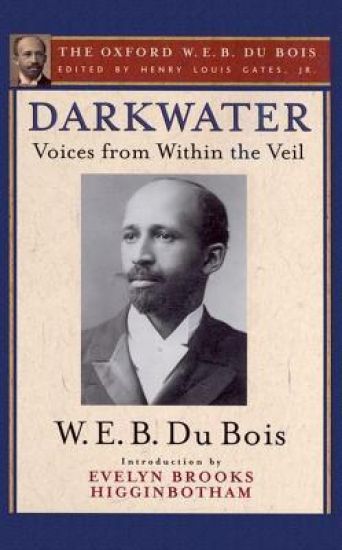
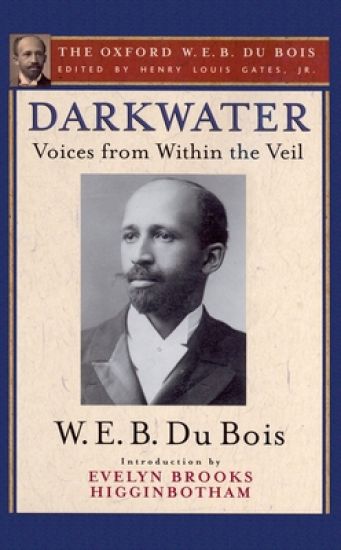
Darkwater (The Oxford W. E. B. Du Bois)

Darkwater (The Oxford W. E. B. Du Bois)

W. E. B. Du Bois

Oxford University Press Inc
2016
sidottu
W. E. B. Du Bois was a public intellectual, sociologist, and activist on behalf of the African American community. He profoundly shaped black political culture in the United States through his founding role in the NAACP, as well as internationally through the Pan-African movement. Du Bois's sociological and historical research on African-American communities and culture broke ground in many areas, including the history of the post-Civil War Reconstruction period. Du Bois was also a prolific author of novels, autobiographical accounts, innumerable editorials and journalistic pieces, and several works of history. Considered a sequel to Du Bois's wildly popular The Souls of Black Folks, Darkwater revisits many of the same themes with a more militant edge, even revising previously published essays and poems to include in this newer volume. Published in 1920, Darkwater focuses on the political climate following World War I. In ten carefully crafted chapters, Du Bois explores the important issues of that period- labor, capital, politics, gender, education, and international relations-in tandem with an overarching theme of race. Blending lyrical autobiography with political thoughts and even poetry, Du Bois makes a powerful, forceful argument regarding race and the color line. With a series introduction by editor Henry Louis Gates, Jr., and an introduction by Evelyn Brooks Higginbotham, this edition is essential for anyone interested in African American history.
The Autobiography of W. E. B. Du Bois (The Oxford W. E. B. Du Bois)
W. E. B. Du Bois was a public intellectual, sociologist, and activist on behalf of the African American community. He profoundly shaped black political culture in the United States through his founding role in the NAACP, as well as internationally through the Pan-African movement. Du Bois's sociological and historical research on African-American communities and culture broke ground in many areas, including the history of the post-Civil War Reconstruction period. Du Bois was also a prolific author of novels, autobiographical accounts, innumerable editorials and journalistic pieces, and several works of history. Published posthumously in 1968, The Autobiography of W. E. B. Du Bois is his last and most complete autobiography. Covering his life over almost a century of living in America, it's the closest thing we have to a true autobiography of this important scholar and activist. The book, broken up into three parts, delves into the 90-year-old Du Bois's thoughts on everything from his relationship with sex to his storied association with the NAACP to his political persecution during the Cold War years to his many travels abroad. As Du Bois writes, he takes the reader on a journey to "view my life as frankly and fully as I can." With a series introduction by editor Henry Louis Gates, Jr., and an introduction by Werner Sollors, this edition is essential for anyone interested in African American history.
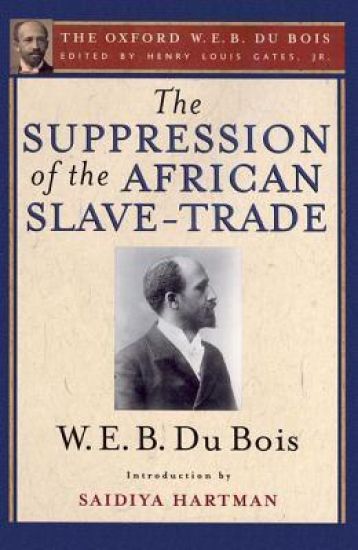
The Suppression of the African Slave-Trade to the United States of America (The Oxford W. E. B. Du Bois)
W. E. B. Du Bois was a public intellectual, sociologist, and activist on behalf of the African American community. He profoundly shaped black political culture in the United States through his founding role in the NAACP, as well as internationally through the Pan-African movement. DuBois's sociological and historical research on African-American communities and culture broke ground in many areas, including the history of the post-Civil War Reconstruction period. Du Bois was also a prolific author of novels, autobiographical accounts, innumerable editorials and journalistic pieces, and several works of history. The Suppression of the African Slave Trade to the United States of America, 1638-1870, W. E. B. Du Bois's groundbreaking monograph, recounts the moral failures and missed opportunities of the American Revolution and the consequences of compromising with slavery. As Du Bois's first published work and doctoral dissertation, Suppression lays the groundwork for his early commitment to the study of the African American experience. At the time of its publication in 1896, Du Bois's monograph was at the forefront of developments in historiography, embodying a new, empirical approach to history. Suppression is integral to understanding Du Bois's early theories and his evolution into a leading scholar and activist. With a series introduction by editor Henry Louis Gates, Jr., and an introduction by Saidiya Hartman, this edition is essential for anyone interested in African American history.
The Autobiography of W. E. B. Du Bois (The Oxford W. E. B. Du Bois)

The Autobiography of W. E. B. Du Bois (The Oxford W. E. B. Du Bois)

W. E. B. Du Bois; Werner Sollors

Oxford University Press Inc
2014
nidottu
W. E. B. Du Bois was a public intellectual, sociologist, and activist on behalf of the African American community. He profoundly shaped black political culture in the United States through his founding role in the NAACP, as well as internationally through the Pan-African movement. Du Bois's sociological and historical research on African-American communities and culture broke ground in many areas, including the history of the post-Civil War Reconstruction period. Du Bois was also a prolific author of novels, autobiographical accounts, innumerable editorials and journalistic pieces, and several works of history. Published posthumously in 1968, The Autobiography of W. E. B. Du Bois is his last and most complete autobiography. Covering his life over almost a century of living in America, it's the closest thing we have to a true autobiography of this important scholar and activist. The book, broken up into three parts, delves into the 90-year-old Du Bois's thoughts on everything from his relationship with sex to his storied association with the NAACP to his political persecution during the Cold War years to his many travels abroad. As Du Bois writes, he takes the reader on a journey to "view my life as frankly and fully as I can." With a series introduction by editor Henry Louis Gates, Jr., and an introduction by Werner Sollors, this edition is essential for anyone interested in African American history.
Darkwater (The Oxford W. E. B. Du Bois)

Darkwater (The Oxford W. E. B. Du Bois)

W. E. B. Du Bois; Evelyn Brooks Higginbotham

Oxford University Press Inc
2014
nidottu
W. E. B. Du Bois was a public intellectual, sociologist, and activist on behalf of the African American community. He profoundly shaped black political culture in the United States through his founding role in the NAACP, as well as internationally through the Pan-African movement. Du Bois's sociological and historical research on African-American communities and culture broke ground in many areas, including the history of the post-Civil War Reconstruction period. Du Bois was also a prolific author of novels, autobiographical accounts, innumerable editorials and journalistic pieces, and several works of history. Considered a sequel to Du Bois's wildly popular The Souls of Black Folks, Darkwater revisits many of the same themes with a more militant edge, even revising previously published essays and poems to include in this newer volume. Published in 1920, Darkwater focuses on the political climate following World War I. In ten carefully crafted chapters, Du Bois explores the important issues of that period- labor, capital, politics, gender, education, and international relations-in tandem with an overarching theme of race. Blending lyrical autobiography with political thoughts and even poetry, Du Bois makes a powerful, forceful argument regarding race and the color line. With a series introduction by editor Henry Louis Gates, Jr., and an introduction by Evelyn Brooks Higginbotham, this edition is essential for anyone interested in African American history.
An Introduction to W. E. B. Du Bois

An Introduction to W. E. B. Du Bois

Kalasia S. Ojeh; Earl Wright II

TAYLOR FRANCIS LTD
2024
sidottu
An Introduction to W. E. B. Du Bois examines the historical contributions to social science and the continuing relevance of the work of W. E. B. Du Bois in an accessible manner. The first volume of its kind, it places the theories of Du Bois in context, showing how the socio-racial environment in which he grew up and came of age influenced the development of his thought. In addition to covering well-known concepts such as double consciousness, the veil, and religious fatalism, the authors discuss Du Bois’ uncoined theories emanating from the Atlanta University Studies, as well as his contributions to the development of Black sociology and research methodology. A groundbreaking contextualization and summary of the importance of Du Bois’ work to sociology and sociological theory, this book constitutes a much-needed resource for scholars and students seeking to understand this scholar’s significance to the social sciences beyond the elementary level.
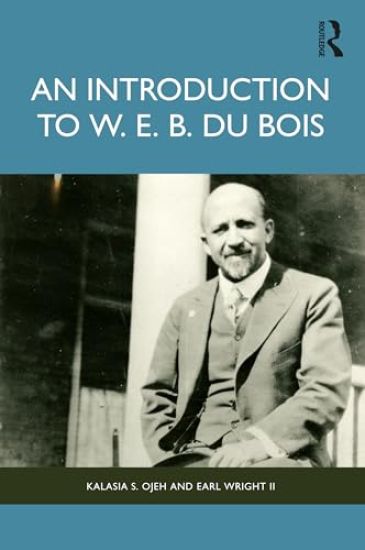
An Introduction to W. E. B. Du Bois

An Introduction to W. E. B. Du Bois

Kalasia S. Ojeh; Earl Wright II

TAYLOR FRANCIS LTD
2024
nidottu
An Introduction to W. E. B. Du Bois examines the historical contributions to social science and the continuing relevance of the work of W. E. B. Du Bois in an accessible manner. The first volume of its kind, it places the theories of Du Bois in context, showing how the socio-racial environment in which he grew up and came of age influenced the development of his thought. In addition to covering well-known concepts such as double consciousness, the veil, and religious fatalism, the authors discuss Du Bois’ uncoined theories emanating from the Atlanta University Studies, as well as his contributions to the development of Black sociology and research methodology. A groundbreaking contextualization and summary of the importance of Du Bois’ work to sociology and sociological theory, this book constitutes a much-needed resource for scholars and students seeking to understand this scholar’s significance to the social sciences beyond the elementary level.
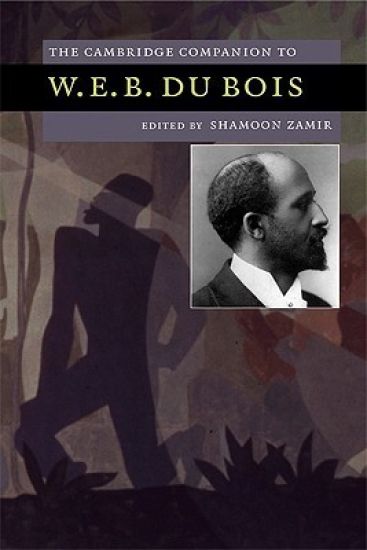
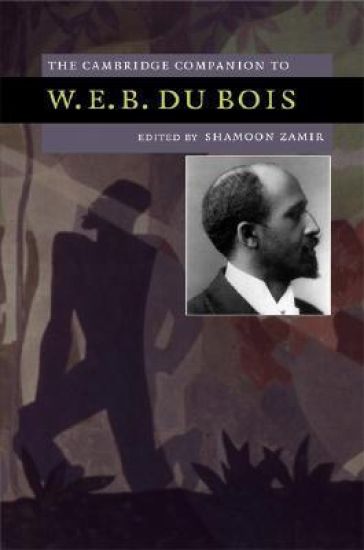
The Cambridge Companion to W. E. B. Du Bois
W. E. B. Du Bois was the pre-eminent African American intellectual of the twentieth century. As a pioneering historian, sociologist and civil rights activist, and as a novelist and autobiographer, he made the problem of race central to an understanding of the United States within both national and transnational contexts; his masterwork The Souls of Black Folk (1903) is today among the most widely read and most often quoted works of American literature. This Companion presents ten specially commissioned essays by an international team of scholars which explore key aspects of Du Bois's work. The book offers students a critical introduction to Du Bois, as well as opening new pathways into the further study of his remarkable career. It will be of interest to all those working in African American studies, American literature, and American studies generally.
The Cambridge Companion to W. E. B. Du Bois
W. E. B. Du Bois was the pre-eminent African American intellectual of the twentieth century. As a pioneering historian, sociologist and civil rights activist, and as a novelist and autobiographer, he made the problem of race central to an understanding of the United States within both national and transnational contexts; his masterwork The Souls of Black Folk (1903) is today among the most widely read and most often quoted works of American literature. This Companion presents ten specially commissioned essays by an international team of scholars which explore key aspects of Du Bois's work. The book offers students a critical introduction to Du Bois, as well as opening new pathways into the further study of his remarkable career. It will be of interest to all those working in African American studies, American literature, and American studies generally.
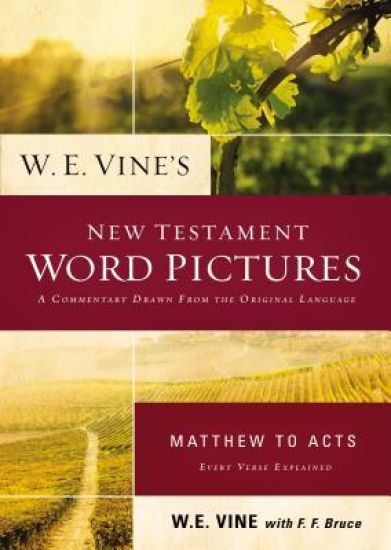
W. E. Vine's New Testament Word Pictures: Matthew to Acts
Study the meaning of biblical words in the original languages without spending years learning Greek. W. E. Vine’s New Testament Word Pictures places every key word from Vine’s classic Expository Dictionary of New Testament Words in Bible book and verse-by-verse order. The text of the King James Version of the Bible is included for context, but W. E. Vine’s New Testament Word Pictures is keyed to the Strong’s numbering system and can be used with any Bible translation.A great tool for students, pastors, teachers, and anyone who enjoys biblical word studies, this unique resource explains the meaning behind the key words and contains elements of a dictionary, concordance, and commentary. Edited by Martin Manser, W. E. Vine’s New Testament Word Pictures is available in two companion volumes: Matthew to Acts and Romans to Revelation.Features include: Every key word from Vine’s Expository Dictionary of New Testament Words explainedVerse-by-verse order for ease of useKing James Version text with keys to Strong’s numbersW.E. Vine's original comments on alternative readings from the Revised Standard Version of the BibleInspirational quotes to add a fresh edge to teaching