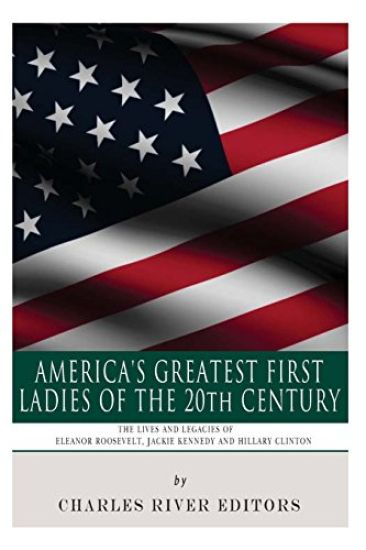
*Includes pictures of Eleanor, Jackie, Hillary and important people, places, and events in their lives. American presidents have shaped the course of global affairs for generations, but as the saying goes, behind every great man there's a great woman. While the First Ladies often remain overshadowed by their husbands, some have carved unique niches in their time and left their own lasting legacy. Dolley Madison helped establish the role of the First Lady in the early 1800s, Eleanor Roosevelt gave voice to policy issues in a way that made her a forerunner of First Ladies like Hillary Clinton, and Jackie Kennedy created glamorous trends that made her more popular than her husband. If Dolley Madison was instrumental in molding the role of First Lady in the 19th century, credit can be given to Eleanor Roosevelt for revolutionizing the political nature of the role in the 20th and 21st centuries and making it possible for presidents like Bill Clinton to enlist their wives to handle political duties. At the same time, history might remember Eleanor more for what she did outside of the White House, as she became a critically acclaimed and world famous international author and advocate of civil rights, women's rights. By the time she had finished working for the United Nations, working on the Universal Declaration of Human Rights, President Truman rightly called her "The First Lady of the World." In 1961, President John F. Kennedy made it seem like anything was possible, and Americans were eager to believe him. The next three years would be fondly and famously labeled "Camelot," suggesting an almost mythical quality about the young President and his family. The famous label came from John's fashionable and beautiful wife, Jackie, whose elegance and grace made her the most popular woman in the world. Her popularity threatened to eclipse even her husband's, who famously quipped on one presidential trip to France that he was "the man who accompanied Jacqueline Kennedy to Paris." Americans were fascinated by the young First Lady's style, and the manner in which she glamorously positioned both the First Family and the White House in those years, and Jackie remains one of the country's most popular First Ladies. But it was in the face of adversity that she truly made her lasting mark, with the country taking its cue from her in the aftermath of the president's assassination. Having devised and lit the eternal flame at JFK's tombstone, Jackie also set about securing her husband's legacy, a time still fondly and mythically remembered as Camelot today, despite his legendary transgressions and infidelities. During the presidential campaign in 1992, Democratic challenger Bill Clinton announced that by voting for him, Americans would get two presidents "for the price of one." The reference to his wife Hillary signified that she would be no ordinary First Lady, and indeed she was employed frequently by her husband in the White House to try to push legislation through Congress, most notably universal healthcare. While that proved to be one of the Clinton Administration's greatest failures, Hillary and her staff continued to act as a political surrogate for the president during his two terms. Of course, describing Hillary Clinton as just a First Lady belittles all of her accomplishments. Today she is the most powerful woman in the world and one of the most recognizable. America's Greatest First Ladies of the 20th Century explores the lives and legacies of the three women, analyzing their relationships with their husbands and the work they did as First Lady. Along with pictures of important people, places, and events, you will learn about Eleanor, Jackie and Hillary like you never have before.
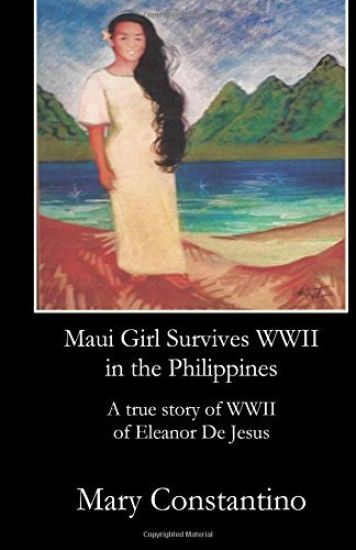
This is the story of a small child who lived through the horrors of World War II under the Japanese occupation of the Philippine Islands. The story is told in simplicity and truth. The hardships are described that she endured after taking an innocent trip to visit relatives. These events are what Eleanor lived through as a young girl and her teenage years. She knew she could not dwell on the past and to ensure her future, her bravery and strong faith in God gave her courage and strength to survive. She enjoys playing the ukulele and singing Karaoke. She has lived a long full life and gives credit to God for her survival. Presently she lives in Kailua Kona, Hawaii with two of her three sons. She is a long-time member of Saint Michael's Catholic Church and is respected and loved by all. Mary ConstantinoAuthor of Peeking into my Garden
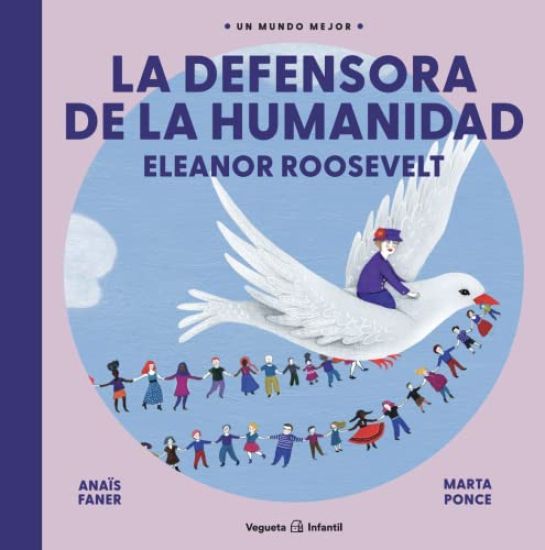
Eleanor Roosevelt, first lady of the United States, writer and activist, fought for everyone who needed her. We owe it to her that we can leave the country and then return, choose where we want to live; that all people - including, for the first time, women - are equal, but recognizing the differences between one and the other. And, so that we never forget what is truly important, he wrote it down for us in the Universal Declaration of Human Rights. Based on a true story.
NATIONAL BOOK AWARD NOMINEE - The riveting history of how Pauli Murray--a brilliant writer-turned-activist--and First Lady Eleanor Roosevelt forged an enduring friendship that helped to alter the course of race and racism in America. "A definitive biography of Murray, a trailblazing legal scholar and a tremendous influence on Mrs. Roosevelt." --Essence In 1938, the twenty-eight-year-old Pauli Murray wrote a letter to the President and First Lady, Franklin and Eleanor Roosevelt, protesting racial segregation in the South. Eleanor wrote back. So began a friendship that would last for a quarter of a century, as Pauli became a lawyer, principal strategist in the fight to protect Title VII of the 1964 Civil Rights Act and a co-founder of the National Organization of Women, and Eleanor became a diplomat and first chair of the United Nations Commission on Human Rights.
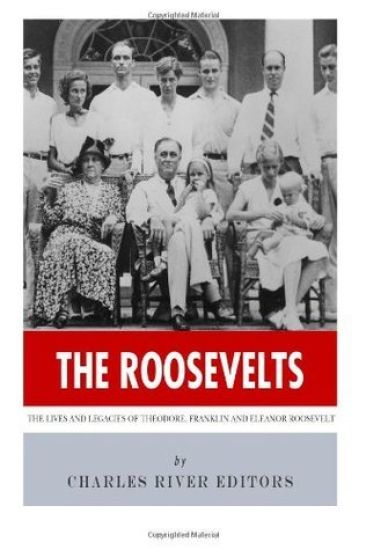
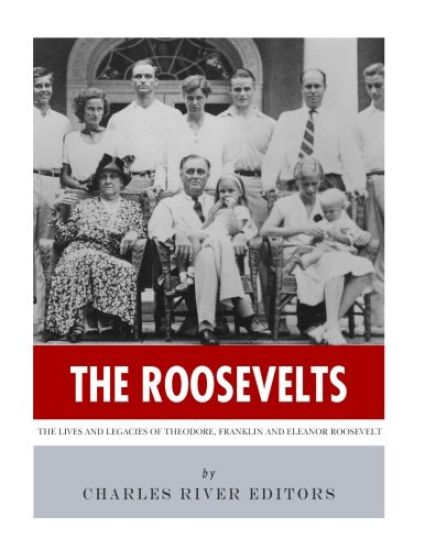
*Includes pictures of Teddy, FDR, Eleanor, and important people, places and events in their lives. *Explains the relationships among the Roosevelts and their family history. They were American legends who revolutionized the roles in the White House and the way the government deals with its citizens. They also happened to be related. For a man who grew up to become the "Bull Moose," Theodore Roosevelt was a sickly child, suffering from asthma and other maladies. But his physical weakness actually drove him to be more active, which also fostered an interest in nature. It also helped that Teddy's family was wealthy, allowing him privileges including home school and the ability to attend Harvard, where he was an athlete and took an interest in naval affairs. After finishing at Harvard, Teddy entered politics, but it didn't stop him from writing The Naval War of 1812 in 1882, establishing himself as a professional writer and historian. In the 1890s, it was Teddy's turn to make history, leading the Rough Riders during the Spanish-American War and being decorated for his service with a Medal of Honor. He parlayed his glory into the governorship of New York and then the Vice Presidency under William McKinley. When McKinley was assassinated in 1901, young Teddy was thrust into the presidency, one that would earn him a place on Mount Rushmore, Roosevelt's "Square Deal" domestic policies favored average citizens while busting trusts and monopolies. Roosevelt also promoted conservation as an environmental stance, while his "speak softly and carry a big stick" foreign policy is still an oft used phrase today. Roosevelt even earned a Nobel Prize during his presidency. If Teddy wasn't the greatest president of the 20th century, it might be due to his own relative. FDR was certainly the most unique. A well-connected relative of Theodore Roosevelt, FDR was groomed for greatness until he was struck down by what was widely believed to be polio at the time. Nevertheless, he persevered, rising through New York politics to reach the White House just as the country faced its greatest challenge since the Civil War, beginning his presidency with one of the most iconic lines ever spoken during an inaugural address. For over a decade, President Roosevelt threw everything he had at the Great Depression, and then threw everything the country had at the Axis powers during World War II. Ultimately, he succumbed to illness in the middle of his fourth term, just before the Allies won the war. If Dolley Madison was instrumental in molding the role of First Lady in the 19th century, credit can be given to Eleanor Roosevelt for revolutionizing the political nature of the role in the 20th and 21st centuries and making it possible for presidents like Bill Clinton to enlist their wives to handle political duties. At the same time, history might remember Eleanor more for what she did outside of the White House, as she became a critically acclaimed and world famous international author and advocate of civil rights, women's rights. By the time she had finished working for the United Nations, working on the Universal Declaration of Human Rights, President Truman rightly called her "The First Lady of the World." The Roosevelts chronicles the amazing lives and careers of the Teddy, FDR and Eleanor and analyzes their relationships and legacies, but it also humanizes the Bull Moose, the man who was doggedly determined to conquer his enemies, and the dutiful wife who persevered through her husband's marital infidelities to become one of his most important political allies and spokesmen. Along with pictures of important people, places, and events, you will learn about the Roosevelts like you never have before.
Bursting with often tragic moments, this book answers the following questions: Why was Eleanor Roosevelt so endearing to the Black community? Who were the Harlem Hellfighters and why were most black soldiers not allowed to see combat during World War I? Why did Blacks move North during the early 1900's? Why were up to 1.8 million Mexican Americans and Mexican immigrants forced to repatriate to Mexico during the Great Depression? For people of color, for those wanting to appear "woke," or for those who read seldom talked about periods in history, this book is definitely for you...
*Includes pictures of Teddy, FDR, Eleanor, and important people, places and events in their lives. *Explains the relationships among the Roosevelts and their family history. They were American legends who revolutionized the roles in the White House and the way the government deals with its citizens. They also happened to be related. For a man who grew up to become the "Bull Moose", Theodore Roosevelt was a sickly child, suffering from asthma and other maladies. But his physical weakness actually drove him to be more active, which also fostered an interest in nature. It also helped that Teddy's family was wealthy, allowing him privileges including home school and the ability to attend Harvard, where he was an athlete and took an interest in naval affairs. After finishing at Harvard, Teddy entered politics, but it didn't stop him from writing The Naval War of 1812 in 1882, establishing himself as a professional writer and historian. In the 1890s, it was Teddy's turn to make history, leading the Rough Riders during the Spanish-American War and being decorated for his service with a Medal of Honor. He parlayed his glory into the governorship of New York and then the Vice Presidency under William McKinley. When McKinley was assassinated in 1901, young Teddy was thrust into the presidency, one that would earn him a place on Mount Rushmore, Roosevelt's "Square Deal" domestic policies favored average citizens while busting trusts and monopolies. Roosevelt also promoted conservation as an environmental stance, while his "speak softly and carry a big stick" foreign policy is still an oft used phrase today. Roosevelt even earned a Nobel Prize during his presidency. If Teddy wasn't the greatest president of the 20th century, it might be due to his own relative. FDR was certainly the most unique. A well-connected relative of Theodore Roosevelt, FDR was groomed for greatness until he was struck down by what was widely believed to be polio at the time. Nevertheless, he persevered, rising through New York politics to reach the White House just as the country faced its greatest challenge since the Civil War, beginning his presidency with one of the most iconic lines ever spoken during an inaugural address. For over a decade, President Roosevelt threw everything he had at the Great Depression, and then threw everything the country had at the Axis powers during World War II. Ultimately, he succumbed to illness in the middle of his fourth term, just before the Allies won the war. If Dolley Madison was instrumental in molding the role of First Lady in the 19th century, credit can be given to Eleanor Roosevelt for revolutionizing the political nature of the role in the 20th and 21st centuries and making it possible for presidents like Bill Clinton to enlist their wives to handle political duties. At the same time, history might remember Eleanor more for what she did outside of the White House, as she became a critically acclaimed and world famous international author and advocate of civil rights, women's rights. By the time she had finished working for the United Nations, working on the Universal Declaration of Human Rights, President Truman rightly called her "The First Lady of the World." The Roosevelts chronicles the amazing lives and careers of the Teddy, FDR and Eleanor and analyzes their relationships and legacies, but it also humanizes the Bull Moose, the man who was doggedly determined to conquer his enemies, and the dutiful wife who persevered through her husband's marital infidelities to become one of his most important political allies and spokesmen. Along with pictures of important people, places, and events, you will learn about the Roosevelts like you never have before.