Kirjojen hintavertailu. Mukana 11 699 587 kirjaa ja 12 kauppaa.

Kirjahaku

Etsi kirjoja tekijän nimen, kirjan nimen tai ISBN:n perusteella.

880 tulosta hakusanalla Emerich Sumser

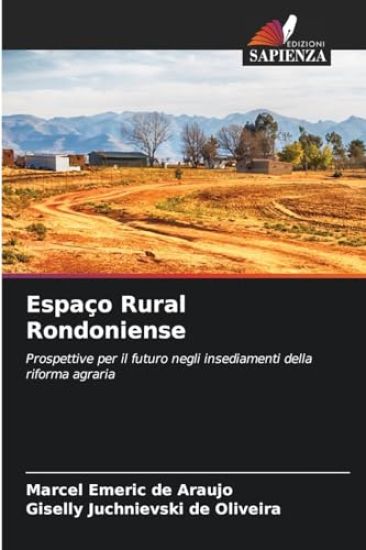
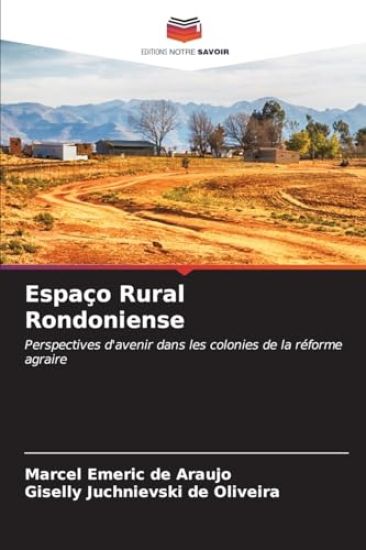
Espaço Rural Rondoniense

Espaço Rural Rondoniense

Marcel Emeric de Araujo; Giselly Juchnievski de Oliveira

Editions Notre Savoir
2024
pokkari
Espa o Rural Rondoniense: Perspectivas de futuro em Assentamentos de Reforma Agr ria - Colonie de Vanessa (Guaraj s) Corumbiara et Colonie de Margarida Alves Nova Uni o, Rond nia - Pr senter les nouvelles formes de durabilit conomique, sociale et environnementale dans les colonies de r forme agraire de Rond nia (Amazonie, Br sil) est le moyen de montrer les perspectives d'avenir des agriculteurs familiaux qui y sont pr sents. C'est l'objectif de ce livre, qui est constitu d'une courte collection d'articles de divers auteurs (en plus des auteurs, des tudiants en agronomie impliqu s dans la recherche) sur le Rond nia rural.
Espaço Rural Rondoniense

Espaço Rural Rondoniense

Marcel Emeric de Araujo; Giselly Juchnievski de Oliveira

Edizioni Sapienza
2024
pokkari
Espa o Rural Rondoniense: Perspectivas de futuro em Assentamentos de Reforma Agr ria - Vanessa Settlement (Guaraj s) in Corumbiara and Margarida Alves Settlement in Nova Uni o, Rond nia - Presentare le nuove forme di sostenibilit economica, sociale e ambientale negli insediamenti della Riforma Agraria in Rond nia (Amazzonia, Brasile) il modo per mostrare le prospettive future delle famiglie di agricoltori ivi presenti. Questo l'obiettivo di questo libro, che costituito da una breve raccolta di articoli di vari autori (oltre agli autori, studenti di Agronomia coinvolti nella ricerca) sulla Rondonia rurale.
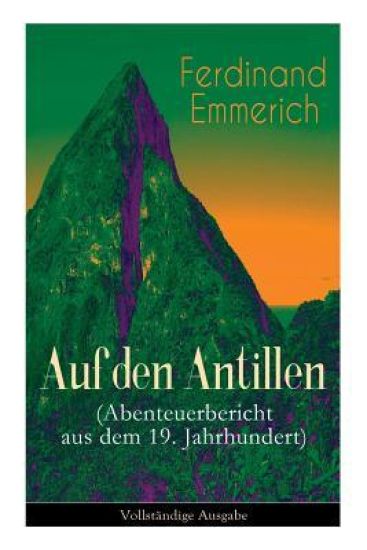
Auf den Antillen (Abenteuerbericht aus dem 19. Jahrhundert)
Ferdinand Emmerich, auch Ferdinand Emmerich-Hoegen (1858-1930) war ein deutscher Forscher, Abenteuerer und Reiseschriftsteller. Er hatte 1886 in Palermo ein Medizinstudium abgeschlossen. In den folgenden Jahren war er als Weltreisender unterwegs. Wegen des Weltkrieges kehrt er 1915 nach Deutschland zur ck und begann dann mit der schriftstellerischen Auswertung seiner Reisen. Er verfasste berwiegend Jugendromane im Stil von Expeditions- und Abenteuerberichten. Aus dem Buch: "Der Dampfer, ein alter Kasten, den die Reederei wohl nur aus Anla des lockenden Verdienstes wieder in die Fahrt eingestellt hatte, brauchte sechs Tage bis Port of Spain. Da gerade ein starker S dwest wehte, wagte er sich nicht in die N he des gew hnlichen Liegeplatzes der Dampfer, sondern hielt sich weit au erhalb der Korallenb nke, es den Passagieren berlassend, wie sie in der hohen See von oder an Land gelangen konnten. Ich versuchte durch eine Weigerung, mich in dem starken Seegang einem Boot anzuvertrauen, an Bord zu bleiben, und h tte es auch vielleicht durchgesetzt, wenn nicht gerade der Mieter meiner Kabine ein hoher englischer Beamter gewesen w re. Der wurde nat rlich mit einem Dampfer herausgebracht, auf dem sich auch die brigen Passagiere befanden."
Handbook of Charcoal Making

Handbook of Charcoal Making

Walter Emrich

Springer
2010
nidottu
We are happy to introduce the Handbook of Charcoal-Making, a comprehensive survey written by a competent expert with international experience. The book was prepared by the Commission of the European Communities in the frame of its R + D programme on biomass. In the European Community today the biomass option is only little developed: a huge resource is waiting for use. Actually, there is ample scope for biomass utilisation as it bears promise in some of the vital sectors of modern society. Development of indigenous and renewable energy sources, creation of new employment, recycling of wastes and improvement of the environment, restructuring of European agriculture, development of the Third World, they are all concerned. It is important to note that the exploitation of the biomass resource is largely related to its conversion into a marketable product. However, as many of the conversion technologies are not yet well established or need improvement, R + D is more than ever the critical pathway to get access to the benefits of biomass utilisation. In the European Communities I R + D programme, thermal conversion of biomass is developed with priority. Gasification as well as pyrolysis development projects are being supported by the Commission in European industry and universities. Pyrolysis is particularly attractive because the conversion products charcoal and pyrolytic oil are very convenient in use, technologies are relatively simple and projected pay-back times favourable. -v- Charcoal making is just the simplest and oldest form of pyrolysis.
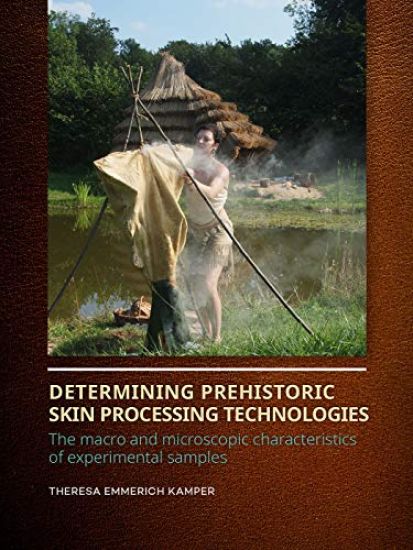
Determining Prehistoric Skin Processing Technologies

Determining Prehistoric Skin Processing Technologies

Theresa Emmerich Kamper

Sidestone Press
2020
nidottu
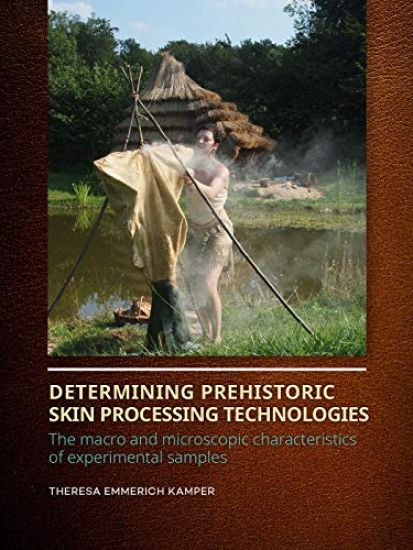
The importance of skin processing technologies in the history and expansion of humankind cannot be overstated, yet these technologies can be difficult to identify in the archaeological record. This research outlines the development of a systematic, non-destructive method for identifying the tanning technologies used to produce prehistoric skin artefacts. The approach combines extensive archaeological research and over 25 years of the author’s personal tanning experience.The method employs observations of an extensive sample reference collection, both macroscopic and microscopic, to produce a database of defining characteristics for six tannage types, from a large geographic area and time frame. The primary collection contains 22 species identified as economically important from both Europe and North America. A secondary collection of clothing and utilitarian items, made from traditionally processed skins, was used to add ‘in-life use’ traces to the database. The method was tested against both archaeological items from a variety of preservation contexts, and ethnographic items from museum collections across North America and Europe. This analysis confirmed that defining characteristics do exist between the primary tannage technologies, and that at least some defining characteristics survived in all preservation contexts. These can be recorded at multiple levels of observation, and often provide insight into small sections of the artefact’s production sequence and life history.This research shows definitively that processed skin items from vastly different preservation contexts can provide a wealth of information about prehistoric tannage technologies, as well as information on manufacturing sequences and the conditions of use an item experienced. The method is a valuable analytical tool for those involved in conservation, curation or analysis of archaeological or ethnographic skin products. It provides a consolidated source of information for artisans working with traditional tanning, or re-enactors interested in the history or science of skin products. Finally, it serves as an example of the targeted use of experimental archaeology in a large-scale research project, and will be beneficial to anyone involved in experimental or experiential archaeology.
Determining Prehistoric Skin Processing Technologies

Determining Prehistoric Skin Processing Technologies

Theresa Emmerich Kamper

Sidestone Press
2020
sidottu
The importance of skin processing technologies in the history and expansion of humankind cannot be overstated, yet these technologies can be difficult to identify in the archaeological record. This research outlines the development of a systematic, non-destructive method for identifying the tanning technologies used to produce prehistoric skin artefacts. The approach combines extensive archaeological research and over 25 years of the author’s personal tanning experience.The method employs observations of an extensive sample reference collection, both macroscopic and microscopic, to produce a database of defining characteristics for six tannage types, from a large geographic area and time frame. The primary collection contains 22 species identified as economically important from both Europe and North America. A secondary collection of clothing and utilitarian items, made from traditionally processed skins, was used to add ‘in-life use’ traces to the database. The method was tested against both archaeological items from a variety of preservation contexts, and ethnographic items from museum collections across North America and Europe. This analysis confirmed that defining characteristics do exist between the primary tannage technologies, and that at least some defining characteristics survived in all preservation contexts. These can be recorded at multiple levels of observation, and often provide insight into small sections of the artefact’s production sequence and life history.This research shows definitively that processed skin items from vastly different preservation contexts can provide a wealth of information about prehistoric tannage technologies, as well as information on manufacturing sequences and the conditions of use an item experienced. The method is a valuable analytical tool for those involved in conservation, curation or analysis of archaeological or ethnographic skin products. It provides a consolidated source of information for artisans working with traditional tanning, or re-enactors interested in the history or science of skin products. Finally, it serves as an example of the targeted use of experimental archaeology in a large-scale research project, and will be beneficial to anyone involved in experimental or experiential archaeology.
Atopic Dermatitis - Eczema

Atopic Dermatitis - Eczema

Kilian Eyerich; Johannes Ring

Springer International Publishing AG
2024
nidottu
This entirely revised edition of the successful work presents the state of the art in clinics, research and practical management of atopic dermatitis - eczema. The wide variability in clinical morphology including differences between age groups and ethnicities is illustrated by color pictures including the typical minimal manifestations or “stigmata” suggestive of atopy. The dramatic rise in the prevalence of this disease over the last few decades is reflected by detailed analyses of epidemiological data from all over the world. In-depth descriptions of key pathophysiological mechanisms including epidermal barrier, molecular genetics, itch pathophysiology and modern cellular immunology offer readers a deeper understanding of the complex events leading to the often excruciating symptoms. Treatment – and management – comprises all aspects from elicitor avoidance to basic emollient skin care, immuno-modulating treatments both topical and systemic, up to the latest advances in kinase inhibitors and biologics.In turn, the book discusses the role of the microbiome and antimicrobial treatments as well as phototherapy, provides dietary recommendations for individuals with food allergies, and explores psychosocial aspects of the disease. Environmental influences are considered with regard to irritants and allergens. All recommendations are based on current national and international guidelines. The complex management strategies for this disease have led to the emergence of educational programs (Eczema Schools), which the authors have developed and promoted at the national and international level. This new revised edition of Atopic Dermatitis - Eczema will be an invaluable asset for dermatologists, allergists, pediatricians and general practitioners, but also for all related health personnel and patient organizations interested in gaining a fuller understanding of this widespread skin disease.